Understanding RBT Supervision

Starting a career as a Registered Behavior Technician (RBT) means stepping into a structured field where guidance is essential. The RBT supervision requirements set by the Behavior Analyst Certification Board (BACB) ensure that every technician receives proper oversight, professional support, and ethical training.
Supervision helps RBTs maintain consistent performance, deliver high-quality applied behavior analysis supervision, and follow approved behavioral procedures.
Pass Your RBT® Exam on the First Attempt
Practice with 1,000+ realistic scenario questions, multiple full-length timed mock exams, and detailed rationales formatted exactly like the real Pearson VUE test.

Under the watch of a Board Certified Behavior Analyst (BCBA) or Board Certified Assistant Behavior Analyst (BCaBA), RBTs refine their skills and strengthen their professional conduct.
Meeting these supervision standards not only protects clients but also ensures ongoing growth and compliance within the ABA therapy supervision framework.
Why Supervision Matters for Every RBT
You might wonder why the emphasis on “how much supervision does an RBT need” matters. The answer is that without regular oversight, even well-trained RBTs risk error, burnout, or drift away from best practices.
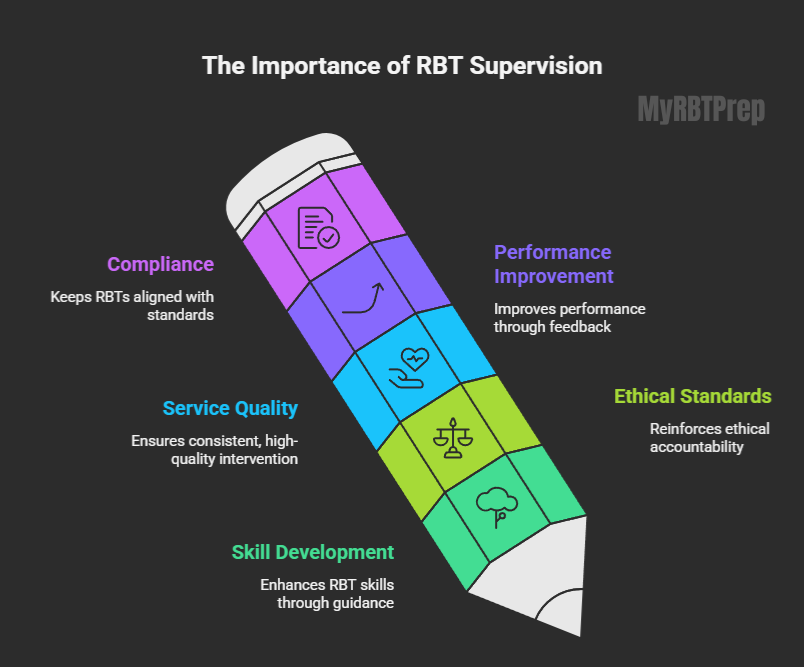
Robust supervision enhances RBT skill development, ensures your ABA therapy supervision meets standards, and ensures you deliver consistent, high-quality intervention. It also reinforces ethical standards, so you remain accountable for how you apply behavior analysis principles.
For the individuals you serve—often children or adults with various needs—consistent supervision means that the behavior technician supervision you receive translates into accurate, effective services.

RBT® Exam Flashcards & Study App (3rd Edition)
Master essential ABA terminology and clinical discrimination across all 6 BACB task list areas with 500+ printable and digital flashcards, real exam cues, and full mobile app access.
The supervisory structure helps you improve your performance through RBT performance feedback, keeps you aligned with evidence-based practices, and reinforces the importance of meeting supervision tracking for RBTs and other documentation requirements.
BACB Supervision Requirements Explained
The cornerstone of understanding supervision is grasping the official rules: the RBT 5 percent rule states that each month your supervision must equal at least 5% of your total service hours.
For example, if you log 100 hours providing ABA services in a month, you must receive at least 5 hours of supervision. (connectncareaba.com) The BACB’s RBT supervision hours requirement includes real-time supervision contacts and states that at least two face-to-face sessions must occur each month. (allstaraba.org)
Your supervisor must be a qualified supervisor for RBTs, typically a BCBA, BCaBA or (in some cases) a supervisor with oversight.
The supervision also must be documented thoroughly: dates, duration, type (individual vs. group), supervisor credentials and content covered. A sample table for tracking could look like this:
|
Failing to meet these requirements may risk inactive RBT certification status, so compliance is non-negotiable.
Types of Supervision Sessions

There are distinct formats that fulfill your RBT supervision requirements by BACB. One is individual supervision sessions, where the supervisor meets one-on-one with you. This is the ideal mode for personalized feedback and deep skill refinement.
Another is group supervision sessions, where you meet alongside other RBTs (typically not more than ten) under a supervisor’s facilitation. The mix of individual and group aligns with the “types of supervision in ABA therapy” question many ask.
Remote or in-person modalities both count, as long as they meet real-time interaction standards.
In fact, many providers now integrate tele-supervision to increase supervision frequency in ABA settings. Moreover, direct observation of you working with a client must occur within the supervision framework—it’s a hands-on part of ensuring the behavior plan implementation is accurate and effective.
Key Activities During RBT Supervision
In your supervision meetings you will engage in several critical tasks that advance your professional growth. You and your supervisor will review your work: examine data, evaluate interventions, refine your use of ABA techniques.
You’ll participate in role-play, receive RBT performance feedback, and revise how you engage clients. You’ll also discuss ethical supervision in ABA, reflecting on real-world dilemmas and how your decisions affect outcomes.
This ongoing supervision mechanism promotes RBT ongoing supervision as a growth platform rather than just ticking a compliance box.
Your supervisor will monitor how you apply behavior-analytic principles in real settings, how you collect and interpret data, and how you adapt to changing client needs. All of this connects back to your competency and professionalism in the role.
Real-World Step-by-Step
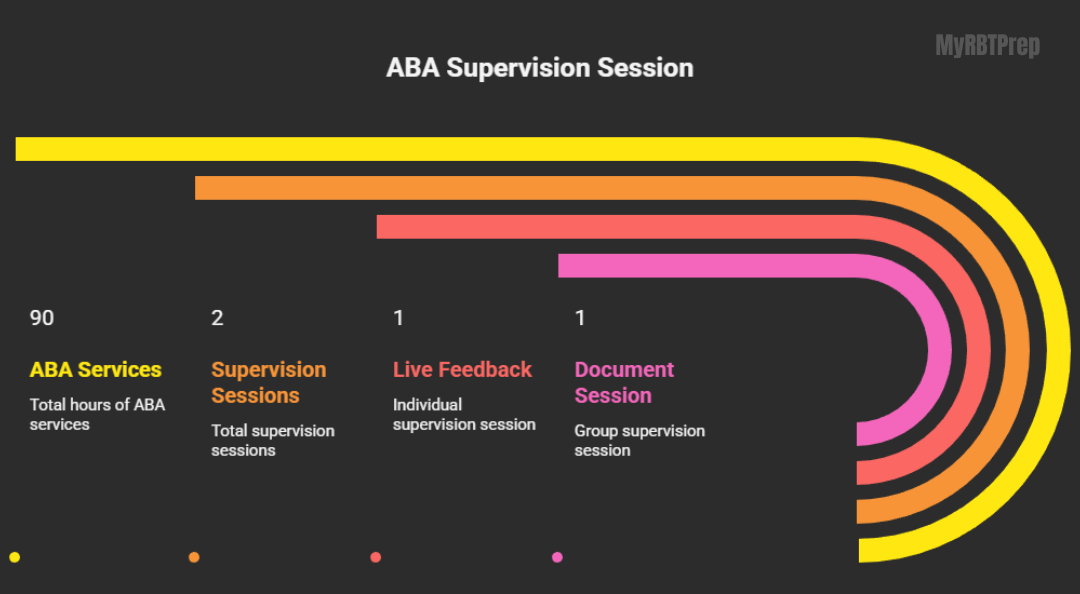
Imagine your month begins with you delivering 90 hours of ABA services. You have two face-to-face supervision sessions: one individual and one group.
During one session the supervisor observes you working with a child with autism, offers live feedback on prompting techniques, discusses results, and next steps.
You later document the session: date, hours, supervisor name, key topics. This ensures supervision compliance and keeps you aligned with the expectations of “supervision in applied behavior analysis”.
Common Mistakes RBTs Make with Supervision
Many RBTs stumble by treating supervision as a checkbox instead of a learning opportunity. One common error is neglecting to accurately record their RBT supervision documentation process, which can undermine their eligibility.
Another error involves allowing the relationship with their supervisor to become passive—no questions asked, no feedback sought, no proactive growth. That’s the opposite of “supervision best practices for RBTs”.
Ignoring the detailed breakdown of the 5% rule or delaying face-to-face contacts can result in non-compliance.
For example, if you skip documentation or your supervisor isn’t properly credentialed (e.g., a BCBA-D supervision without meeting necessary criteria), you may compromise your certification status. Understanding these pitfalls helps you stay ahead and maintain solid professional footing.
Real-Life Example of RBT Supervision
Consider the case of “Sarah,” who works 100 hours in a month and must log at least RBT supervision hours of 5 (5% rule). Her BCBA supervisor observes her during therapy with a child, gives feedback on how she manages tantrums, and leads a role-play scenario to improve de-escalation skills.
Sarah later uses that feedback to adjust how she implements the behavior plan, sees improved outcomes, and tracks her progress.
This supervision case example shows how compliant, meaningful supervision leads to growth.
Sarah documented each session, uploaded her logs, and discussed her professional goals with her supervisor. The result: she strengthened her role, fulfilled RBT certification requirements, adhered to supervision compliance, and increased confidence in her clinical abilities.
Important questions
What happens if I miss supervision hours? This question—“what happens if I miss supervision hours”—is critical. If you fall below the monthly 5% requirement, your certification may become inactive, meaning you cannot legally represent yourself as an RBT or bill for services.
Next, “can an RBT receive more than 5% supervision”? Yes, more supervision is allowed and often beneficial for RBT skill development and professional growth. The question “how many RBTs can a BCBA supervise”? The BACB does not set a strict cap, but the supervisor must ensure each RBT receives the required attention and documentation.
Then there’s “who can supervise an RBT” which clarifies that supervisors must be qualified (BCBA or BCaBA) and hold the proper training. These FAQs help clarify what many RBTs mean by “BCBA and RBT working relationship” and “ABA fieldwork and supervision”.
Tips for Successful RBT Supervision
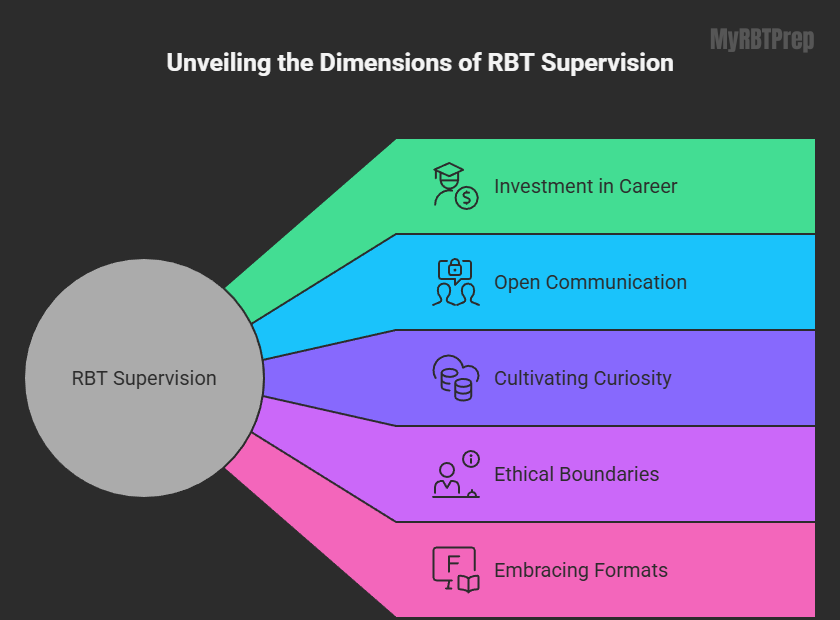
Start by treating supervision as an investment in your career, not just another requirement. Keep a dedicated supervision log where you enter dates, duration, and key topics—making your RBT documentation requirements simpler.
Communicate openly with your supervisor about your goals, challenges, and schedule—this supports your behavior technician supervision experience and strengthens your professional collaboration.
Cultivate curiosity: ask questions, invite RBT performance feedback, reflect on observed sessions, share your observations and growth needs.
Respect the ethical boundaries of your role, and work with your supervisor to review RBT supervision ethical requirements.
Embrace both individual and group formats; they each add value toward your applied behavior analysis supervision journey and your ultimate goal of providing high-quality service.
Understanding the Purpose of RBT Supervision.
The RBT coat or supervise is more than fulfilling BCBAs BACB supervision criteria but rather developing professionals in applied behavior analysis supervision. Each Registered Behavior Technician (RBT) work directly with clients. These clients are often individuals with autism. So, it is important that RBTs be accurate, empathetic and follow evidence based practice. RBTs require a supervisor to systematically provide them feedback on their work performance to be able to use it to see if and how they can do better in implementing a behavior plan and any issues with that task. Their supervisors must be qualified such as BCBAs or BCaBAs. Supervise regularly through one-on-one meetings as well as wider group sessions where you can present cases and review the data.
Conclusion – The Importance of Staying Supervised
In closing, understanding and adhering to the RBT supervision requirements is essential for your success and the welfare of the clients you serve.
Proper supervision safeguards your certification, elevates your competence, and anchors your practice in ethical, evidence-based methods. Commit to the process, engage with your supervisor consistently, and use every session as a step toward excellence in ABA therapy.
When you view supervision not simply as compliance but as a path to professional mastery, you ensure you’re doing right by your clients and by yourself.
Faqs
How often is a RBT required to do supervision?
An RBT must receive supervision for at least 5% of their total service hours each month, with a minimum of two contacts.
What are the five rules in supervision?
They include regular observation, documentation, feedback, ethical guidance, and compliance with BACB supervision requirements.
What is a supervision requirement?
It’s the mandatory oversight ensuring RBTs receive guidance, training, and performance monitoring under a qualified BCBA or BCaBA.
What does an RBT supervisor do?
They observe, train, and guide RBTs, offering performance feedback and ensuring ethical, effective practice.
How to conduct RBT supervision?
Conduct it through individual or group sessions involving observation, data review, and feedback based on RBT supervision requirements.

Everything You Need to Pass Your RBT® Exam
Study with our complete, all-in-one preparation package covering every task on the BACB Task List 3.0:
- 1,000+ Practice Questions & Timed Simulator
- 3rd Edition Task List Study Guide & Workbook
- Active Recall Flashcards System + Mobile App
- 20-Task Competency Assessment Mastery Guide