
Preparing for the RBT exam and want to assess how well you understand behavior-reduction procedures? This Behavior Reduction Quiz includes 14 realistic, scenario-based questions aligned with the BACB RBT Task List 3.0 (2026).
Behavior reduction is a critical part of ABA practice. Research consistently shows that effective reduction plans rely on identifying the correct function of behavior, teaching appropriate replacement skills, and implementing strategies consistently across sessions. This quiz helps you practice those exact skills, so you feel more prepared during the exam and in real ABA environments.
Quiz Complete!
Short free quizzes only scratch the surface. Passing the actual 85-question Pearson test requires building your pacing and stamina with full practice.
- Only 6 sample questions
- No timed exam simulator
- No detailed rationales
- Cannot test full pacing
- Multiple Full Mocks (85Q)
- 1,000+ realistic scenario questions
- Step-by-step rationales
- Full app access + printable PDFs
You've completed 5 questions. You have 1 final sample question before the free preview ends.
- 🎯Multiple Full-Length Timed Mocks — exactly like the real Pearson VUE exam
- 📋1,000+ Practice Questions — covering all 2026 BACB Task List 3.0 tasks
- 🧠Detailed Rationales — learn why right answers work and avoid traps
- 📱Exam Simulator App Access — practice anytime on your phone or laptop
You've completed your 6 free sample questions. The real test is 85 questions long with tricky scenarios. Get full practice now so nothing surprises you on test day.
- Multiple Full-Length Timed Mocks — practice with real 85-question exams timed like Pearson VUE
- 1,000+ Scenario Questions — master real clinical situations across all 6 BACB domains
- Crystal-Clear Explanations — understand exactly why each answer is right and how to avoid trick choices
- Full Simulator App + Printable PDFs — practice on your phone in bed or print worksheets
- Complete Exam Prep Materials — build your pacing, endurance, and exam readiness on your schedule
Most candidates who fail admit they only practiced short free quizzes. Give yourself the best chance to pass on your very first try.
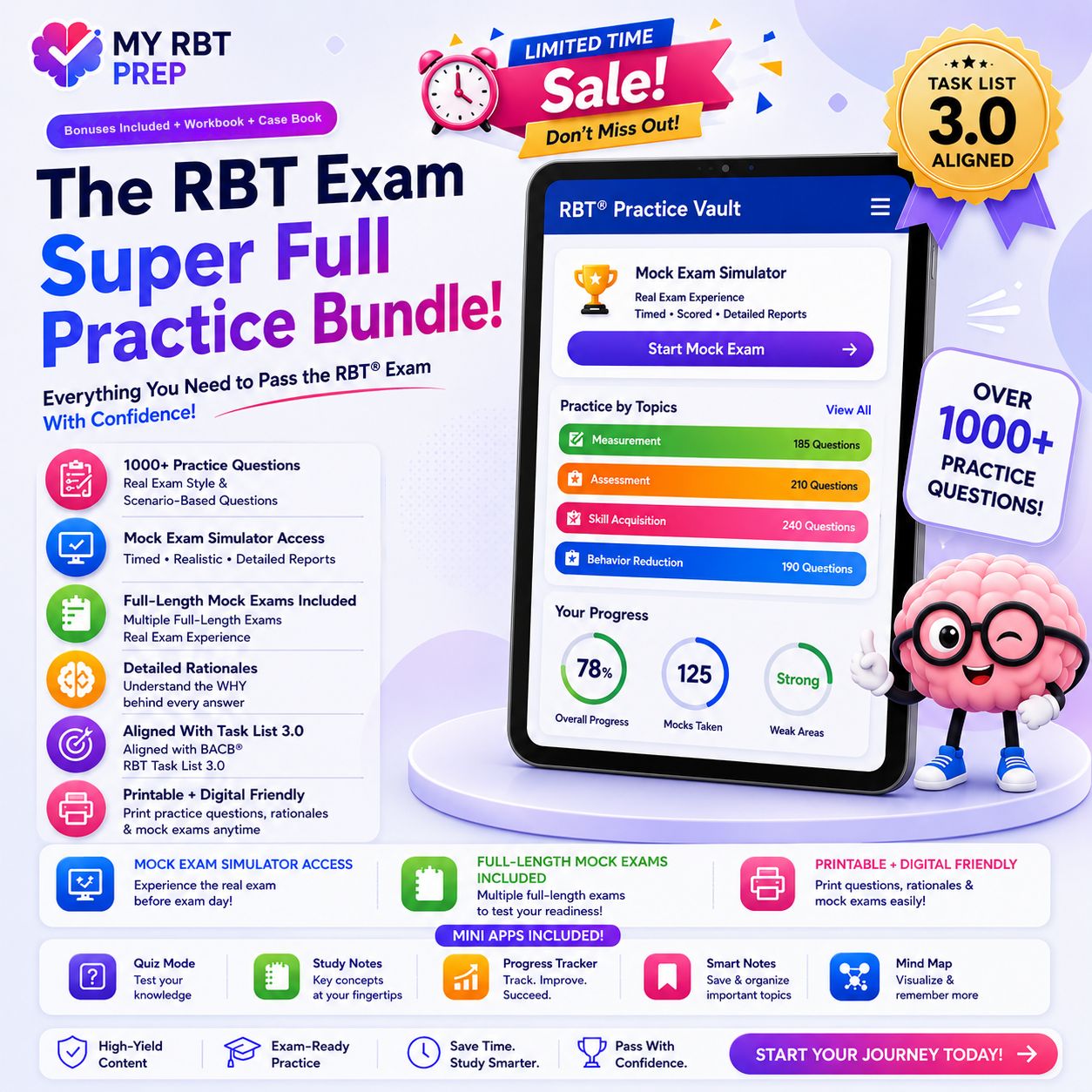
Pass Your RBT® Exam on the First Attempt
Practice with 1,000+ realistic scenario questions, multiple full-length timed mock exams, and detailed rationales formatted exactly like the real Pearson VUE test.
It helps you evaluate your understanding of behavior functions, extinction, differential reinforcement, crisis procedures, and ethical implementation of reduction strategies under BCBA supervision and the RBT practice test page.
What You’ll Strengthen With This Quiz?
-
Identifying the four main functions of behavior
(attention, escape, access to tangibles, automatic reinforcement) -
Understanding how to apply differential reinforcement
(DRA, DRI, DRO, DRL, DRH) -
Knowing when and how to use extinction procedures safely
-
Recognizing replacement behaviors and teaching alternatives
-
Following crisis procedures and BCBA safety plans
-
Avoiding reinforcement of challenging behavior by accident
 Active Recall Study System
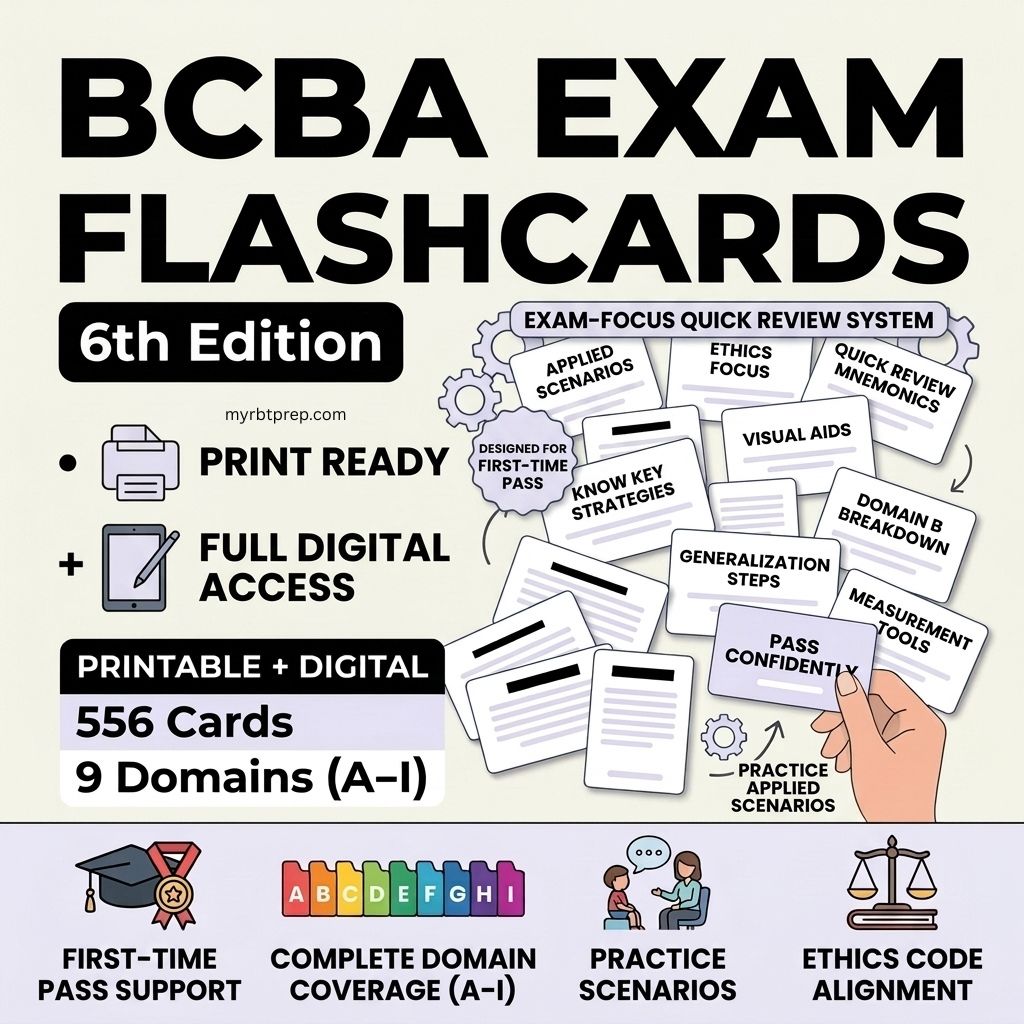
RBT® Exam Flashcards & Study App (3rd Edition)
Master essential ABA terminology and clinical discrimination across all 6 BACB task list areas with 500+ printable and digital flashcards, real exam cues, and full mobile app access.
Get Flashcards & App Access → ⚡ Master Key Terms & Definitions Fast -
Maintaining treatment integrity and recording behavior objectively
-
Supporting function-based interventions backed by ABA research
Why Function-Based Interventions Matter?
Studies in applied behavior analysis consistently show that function-based interventions are more effective than strategies that only suppress behavior. When a behavior continues to meet a need for attention, escape, sensory stimulation, or access, the behavior is likely to persist. This is why RBTs are trained to help identify patterns through ABC data and support interventions that match the function. Practicing these scenarios sharpens your ability to recognize those patterns quickly.
Building Safe and Ethical Behavior Reduction Skills
Behavior reduction must always be done safely, ethically, and under BCBA supervision. RBTs never design reduction plans themselves, but they are responsible for carrying them out correctly. This includes delivering reinforcement at the right time, avoiding unplanned punishment, following safety protocols, and documenting behavior without emotion or assumptions. The scenarios in this quiz help you develop that consistency.
Strengthen Your Preparation Through Regular Practice
Challenging behavior can be unpredictable, which is why frequent practice with reduction scenarios builds confidence. Working through these 14 questions will help you recognize common triggers, apply correct procedures, and understand the logic behind each intervention. This leads to better exam performance and stronger real-world implementation.
Core Study Guide: Behavior Reduction Procedures (Task List 3.0)
Behavior reduction plans (BIPs) must always pair reduction techniques with functional replacement skills. Under the BACB Task List 3.0, RBTs implement antecedent modifications, differential reinforcement, and extinction protocols designed to decrease challenging behavior while preserving client dignity.
1. The 4 Functions of Behavior (SEAT)
Every behavior serves one or more environmental functions:
- Sensory / Automatic: The physical sensation produced by the behavior itself provides reinforcement (e.g., thumb sucking, vocal stereotypy).
- Escape / Avoidance: The behavior terminates or delays a non-preferred task, person, or setting (e.g., throwing task materials when presented with math problems).
- Attention: Gaining verbal, visual, or physical reactions from caregivers, peers, or staff (e.g., shouting during group lessons).
- Tangible: Gaining access to desired items, activities, or foods (e.g., grabbing a tablet from another child).
2. Differential Reinforcement & Extinction
Differential reinforcement combines reinforcement for desirable behaviors with extinction for target challenging behaviors:
- DRA (Alternative Behavior): Reinforcing an appropriate replacement behavior that fulfills the identical function (e.g., handing an “I need a break” card to escape task demands).
- DRI (Incompatible Behavior): Reinforcing a behavior that cannot physically be performed at the same time as the problem behavior (e.g., keeping hands in pockets instead of skin picking).
- DRO (Other Behavior): Reinforcing the absence of problem behavior over a specified interval, regardless of what other appropriate behavior occurs.
When applying extinction, previously delivered reinforcement is systematically withheld. RBTs must anticipate an extinction burst—a temporary increase in the rate, duration, and intensity of the behavior before long-term reduction occurs.
3. Antecedent Interventions & Crisis Safety
Proactive antecedent strategies modify the environment before challenging behavior occurs. Common techniques include Non-Contingent Reinforcement (NCR)—providing scheduled access to reinforcing stimuli regardless of behavior to reduce motivation to engage in problem behaviors—and the High-Probability (High-p) Request Sequence, which builds behavioral momentum by presenting 2–3 easy tasks before a demanding instruction. For safety emergencies, RBTs follow individualized crisis management plans, prioritizing client and staff safety through calm de-escalation without unauthorized physical restraint.

Everything You Need to Pass Your RBT® Exam
Study with our complete, all-in-one preparation package covering every task on the BACB Task List 3.0:
- 1,000+ Practice Questions & Timed Simulator
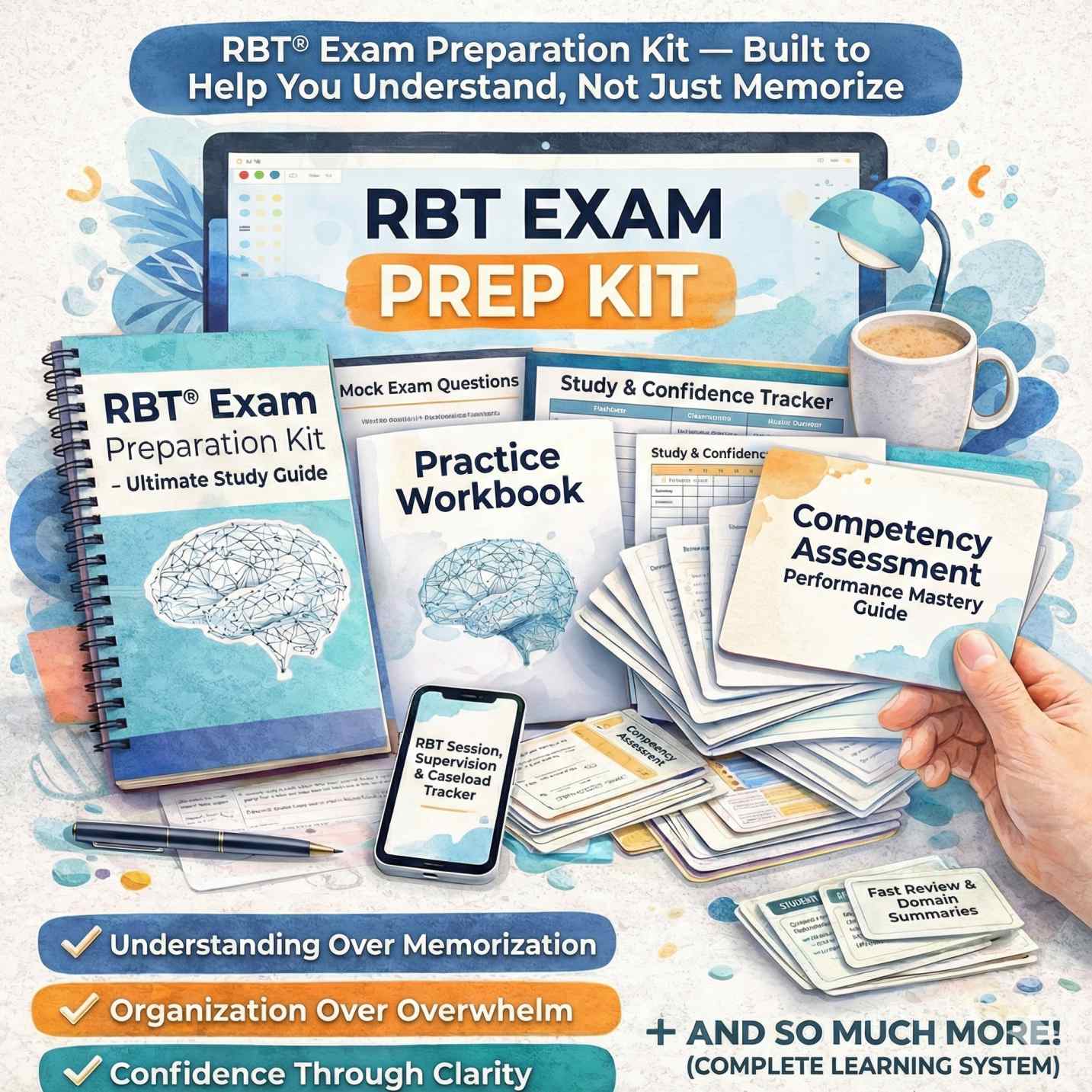
- 3rd Edition Task List Study Guide & Workbook
- Active Recall Flashcards System + Mobile App
- 20-Task Competency Assessment Mastery Guide