
Preparing for the RBT exam and want to evaluate how well you understand ethical responsibilities, scope of practice, and professional boundaries? This RBT Ethics Quiz includes 11 scenario-based questions aligned with the BACB RBT Task List 3.0 (2026). It helps you practice ethical decision-making, identify red flags in supervision, and apply professional standards during real ABA sessions.
Ethics is the core of ABA. Research across healthcare and behavioral sciences shows that ethical conduct improves treatment quality, maintains client trust, and reduces harmful errors.
Ethics Practice Quiz
Quiz Complete!
Short free quizzes only scratch the surface. Passing the actual 85-question Pearson test requires building your pacing and stamina with full practice.
- Only 6 sample questions
- No timed exam simulator
- No detailed rationales
- Cannot test full pacing
- Multiple Full Mocks (85Q)
- 1,000+ realistic scenario questions
- Step-by-step rationales
- Full app access + printable PDFs
You've completed 5 questions. You have 1 final sample question before the free preview ends.
- 🎯Multiple Full-Length Timed Mocks — exactly like the real Pearson VUE exam
- 📋1,000+ Practice Questions — covering all 2026 BACB Task List 3.0 tasks
- 🧠Detailed Rationales — learn why right answers work and avoid traps
- 📱Exam Simulator App Access — practice anytime on your phone or laptop
You've completed your 6 free sample questions. The real test is 85 questions long with tricky scenarios. Get full practice now so nothing surprises you on test day.
- Multiple Full-Length Timed Mocks — practice with real 85-question exams timed like Pearson VUE
- 1,000+ Scenario Questions — master real clinical situations across all 6 BACB domains
- Crystal-Clear Explanations — understand exactly why each answer is right and how to avoid trick choices
- Full Simulator App + Printable PDFs — practice on your phone in bed or print worksheets
- Complete Exam Prep Materials — build your pacing, endurance, and exam readiness on your schedule
Most candidates who fail admit they only practiced short free quizzes. Give yourself the best chance to pass on your very first try.
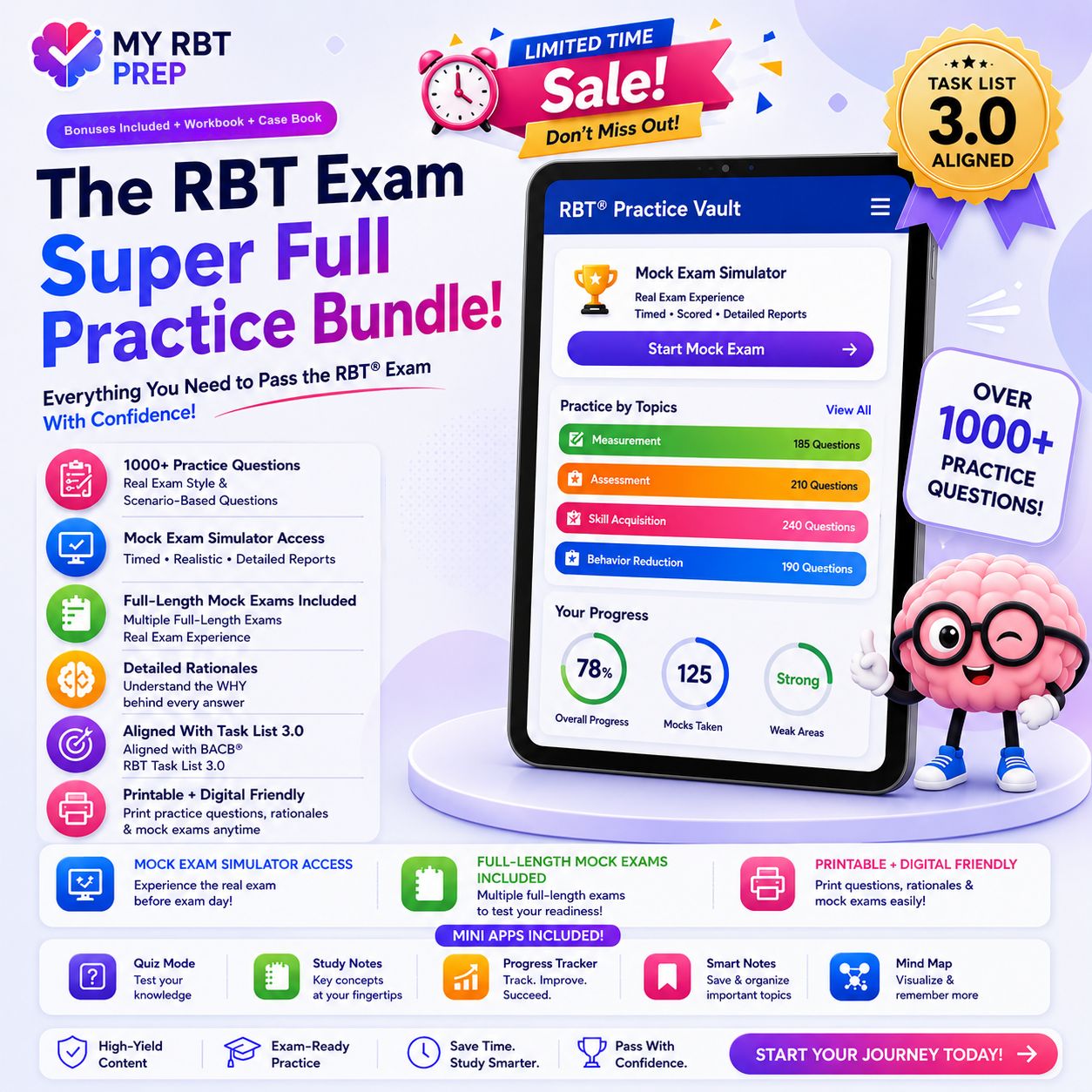
Pass Your RBT® Exam on the First Attempt
Practice with 1,000+ realistic scenario questions, multiple full-length timed mock exams, and detailed rationales formatted exactly like the real Pearson VUE test.
RBTs are expected to follow the BACB Code of Ethics, maintain clear boundaries, and communicate honestly with their supervisors. The scenarios in this quiz reflect situations you will face as an active RBT and on the certification exam, and start your free RBT practice test.
What You’ll Strengthen With This Quiz
-
Understanding your scope of practice as an RBT
-
Recognizing ethical limits and avoiding activities outside your training
-
Identifying dual relationships and boundary violations
-
Knowing when and how to seek supervision
-
Following proper professional communication standards
-
Protecting client dignity, privacy, and data security
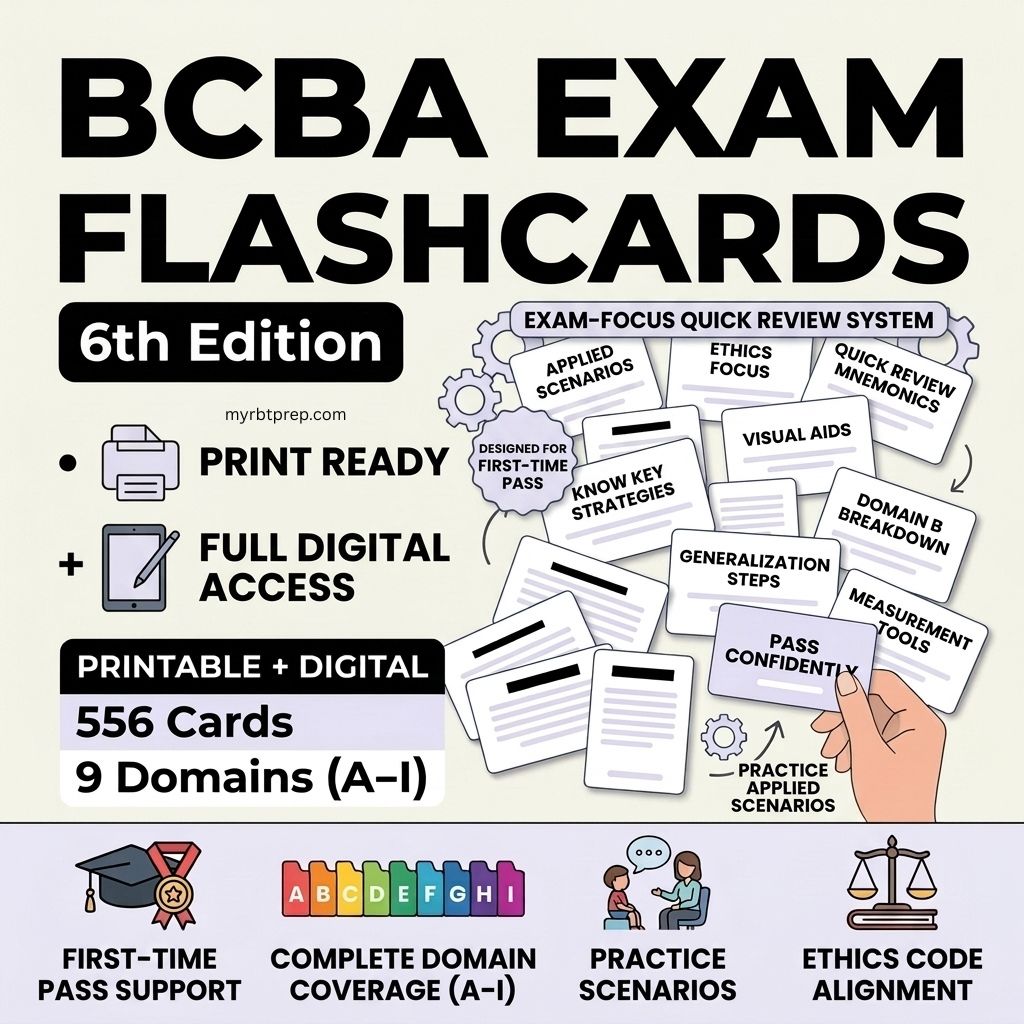
 Active Recall Study System
RBT® Exam Flashcards & Study App (3rd Edition)
Master essential ABA terminology and clinical discrimination across all 6 BACB task list areas with 500+ printable and digital flashcards, real exam cues, and full mobile app access.
Get Flashcards & App Access → ⚡ Master Key Terms & Definitions Fast -
Reporting concerns ethically and immediately
-
Maintaining treatment integrity under BCBA guidance
Why This Quiz Strengthens Your RBT Exam Prep
-
Uses real-world ABA scenarios that mirror exam questions
-
Reinforces the ethical principles behind Task List 3.0
-
Helps you recognize boundary violations quickly
-
Builds confidence in making ethical decisions under pressure
-
Clarifies what requires immediate supervisor attention
-
Strengthens your understanding of confidentiality and professionalism
Research Insight: Why Ethics Is Non-Negotiable in ABA
Studies across applied behavior analysis, clinical psychology, and healthcare demonstrate that ethical lapses directly reduce treatment effectiveness. Inconsistent boundaries, improper data handling, or working outside scope can lead to client harm, legal issues, and invalid treatment outcomes. The RBT role exists to ensure that interventions are delivered safely and correctly always under BCBA supervision.
Ethics isn’t just a passing topic; it’s the foundation of everything you do as an RBT.
Practicing Ethical Decision-Making in Real Sessions
RBTs often face subtle situations where the “right” choice isn’t immediately clear. A parent may offer a gift. A supervisor may not be available. A behavior plan may include steps you don’t fully understand. This quiz helps you practice identifying the correct ethical response before facing it in the field.
Through repetition, ethical judgment becomes more automatic—something every high-quality RBT needs.
Strengthening Your Professional Conduct Through Practice
Ethical behavior is a skill built through repetition. These 11 questions help you understand how to respond when boundaries are crossed, when confidentiality is at risk, or when supervision is needed. With practice, you’ll develop reliable instincts that support safe and professional ABA services.
FAQ
1. What is the main role of ethics in ABA for RBTs?
Ethics guides how RBTs interact with clients, collect data, follow teaching plans, and communicate with supervisors. Ethical conduct protects the client, supports effective treatment, and keeps services compliant with BACB guidelines.
2. What should an RBT do if a parent or caregiver asks them to change something in the behavior plan?
You must not change anything yourself. RBTs report the request to the supervising BCBA immediately and continue using the current plan until the BCBA updates it.
3. Are RBTs allowed to work independently without supervision?
No. RBTs must work under ongoing, documented supervision from a BCBA or BCaBA. Working independently is outside the scope of practice.
4. What counts as a boundary violation?
Accepting gifts, giving personal advice, developing friendships, spending time with clients outside sessions, or any personal–professional overlap. Even small boundary crossings can affect treatment quality.
5. What should RBTs document as part of ethical reporting?
RBTs must document session events objectively, report variables that affect behavior, and notify their supervisor immediately about safety concerns, medication changes, or unexpected behavior spikes.
6. When should an RBT report concerns to a supervisor?
Immediately. This includes safety issues, suspected abuse, ethical violations, unclear instructions, or anything outside the RBT’s competence.
7. How should RBTs protect client confidentiality?
By keeping records secure, avoiding sharing client information in public or on social media, and discussing cases only with authorized members of the treatment team.
Scope of Practice
Tasks an RBT is trained and authorized to perform. Anything outside this scope must be referred to the supervising BCBA.
Treatment Integrity
Implementing the behavior plan exactly as written. High integrity leads to better outcomes and ethical compliance.
Dual Relationship
When a personal and professional relationship overlap (friendship, favors, social interactions). These relationships must be avoided.
Confidentiality
Protecting private client information in all formats (verbal, written, digital). Required for ethical and legal compliance.
Professional Boundaries
Clear limits that protect the therapeutic relationship. Includes avoiding gifts, personal discussions, or attachments that compromise objectivity.
Supervision
Ongoing guidance from a BCBA to ensure ethical practice, correct implementation, and client safety.
Mandatory Reporting
Legal obligation to report concerns such as suspected abuse or neglect to the proper authorities and the supervising BCBA.
Data Dignity
Collecting, storing, and sharing data respectfully and ethically, ensuring all client information is handled with care.
Core Study Guide: Professional Conduct & Ethics (Task List 3.0)
The RBT Ethics Code governs clinical conduct, therapeutic boundaries, and client advocacy. Maintaining compliance with BACB standards protects clients, families, and your professional certification from disciplinary sanctions.
1. Dual Relationships & Professional Boundaries
A multiple or dual relationship occurs when an RBT maintains both a professional role and a secondary relationship with a client or family member. These boundaries are strictly enforced:
- No Personal Favors or Babysitting: RBTs cannot accept babysitting jobs, provide rides, or socialize outside formal therapy sessions. Dual roles impair clinical objectivity and create conflicts of interest.
- Declining Gifts: The BACB strictly prohibits accepting gifts, favors, or financial tokens from clients and families to maintain therapeutic neutrality. Politely explain: “Thank you so much, but professional BACB ethical guidelines prevent me from accepting personal gifts.”
- Social Media Boundaries: Do not accept friend or connection requests from current clients or their guardians on personal social media platforms.
2. Scope of Practice & Client Dignity
RBTs operate exclusively under the ongoing clinical supervision of a qualified BCBA, BCaBA, or approved supervisor (maintaining minimum 5% monthly supervised hours). RBTs do not create treatment plans, select assessment instruments, or introduce unapproved behavioral interventions independently.
Finally, always protect Client Dignity by preserving physical privacy during hygiene tasks, offering age-appropriate choices, speaking about the client respectfully, and presuming competence in every interaction.
3. Mandatory Self-Reporting & Clinical Feedback
RBTs must notify the BACB within 30 days of any legal charge, conviction, physical or mental health impairment affecting client care, or disciplinary action by an employer or state agency. Finally, an essential mark of professional excellence is responding constructively to supervisor feedback: viewing corrective guidance as a tool for skill refinement, immediately implementing demonstrated procedures, and communicating openly whenever clinical protocols are unclear.

Everything You Need to Pass Your RBT® Exam
Study with our complete, all-in-one preparation package covering every task on the BACB Task List 3.0:
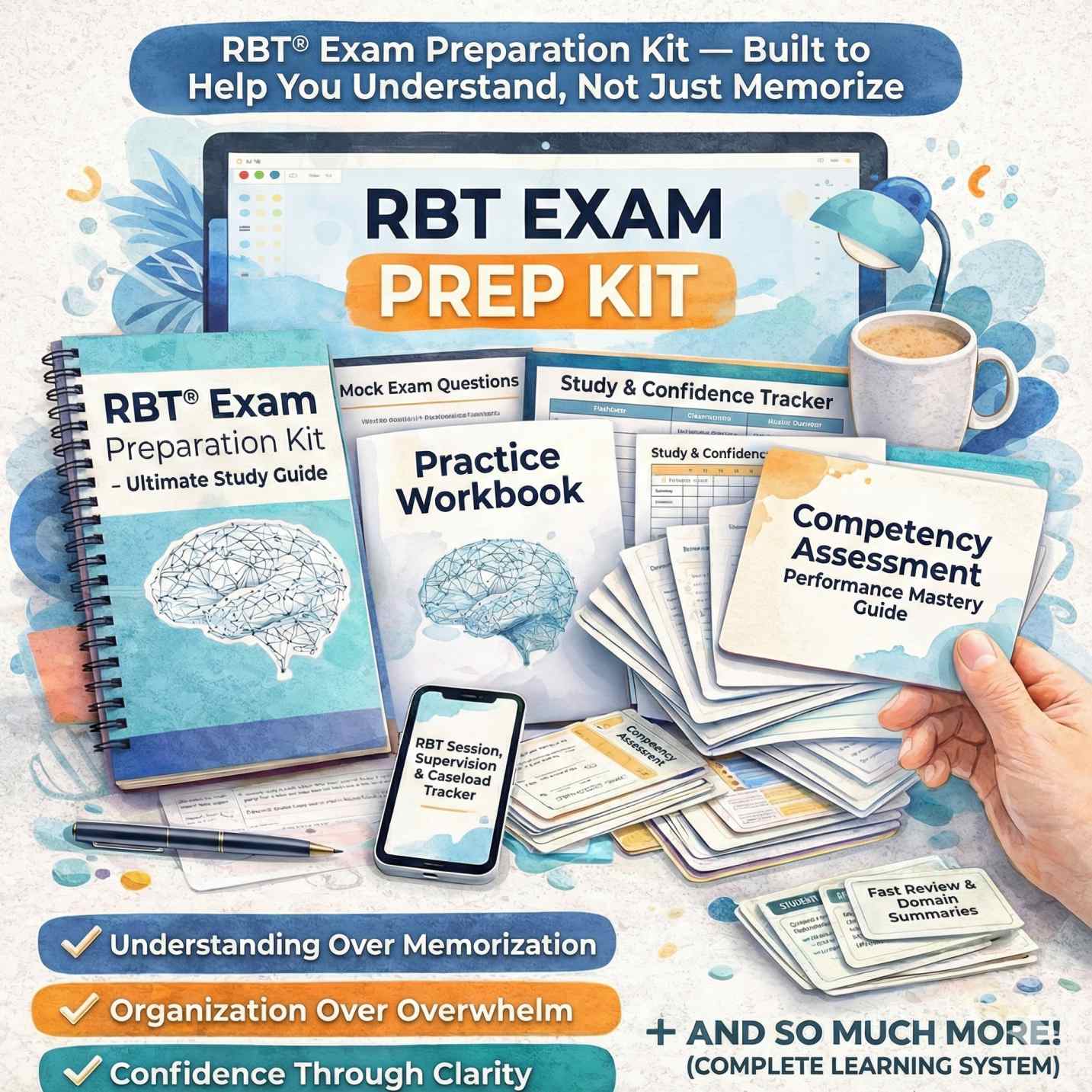
- 1,000+ Practice Questions & Timed Simulator
- 3rd Edition Task List Study Guide & Workbook
- Active Recall Flashcards System + Mobile App
- 20-Task Competency Assessment Mastery Guide