Understanding how RBT salary varies by role is essential for career planning in Applied Behavior Analysis (ABA). Registered Behavior Technicians (RBTs) can start in entry-level positions, gaining hands-on experience, and gradually progress to lead RBT roles with greater responsibility and higher pay.
Knowing the differences between these roles helps aspiring RBTs make informed decisions about training, certification, and career progression. Salary depends on factors like experience impact on salary, employer type and salary, location, and advanced credentials in ABA.
Entry-level RBTs often focus on direct support and basic hands-on behavioral therapy, while lead RBTs take on supervisory duties, mentorship, and complex intervention planning. This career progression can significantly impact RBT hourly wage, annual salary, and opportunities for leadership within clinics, schools, or home-based therapy programs.
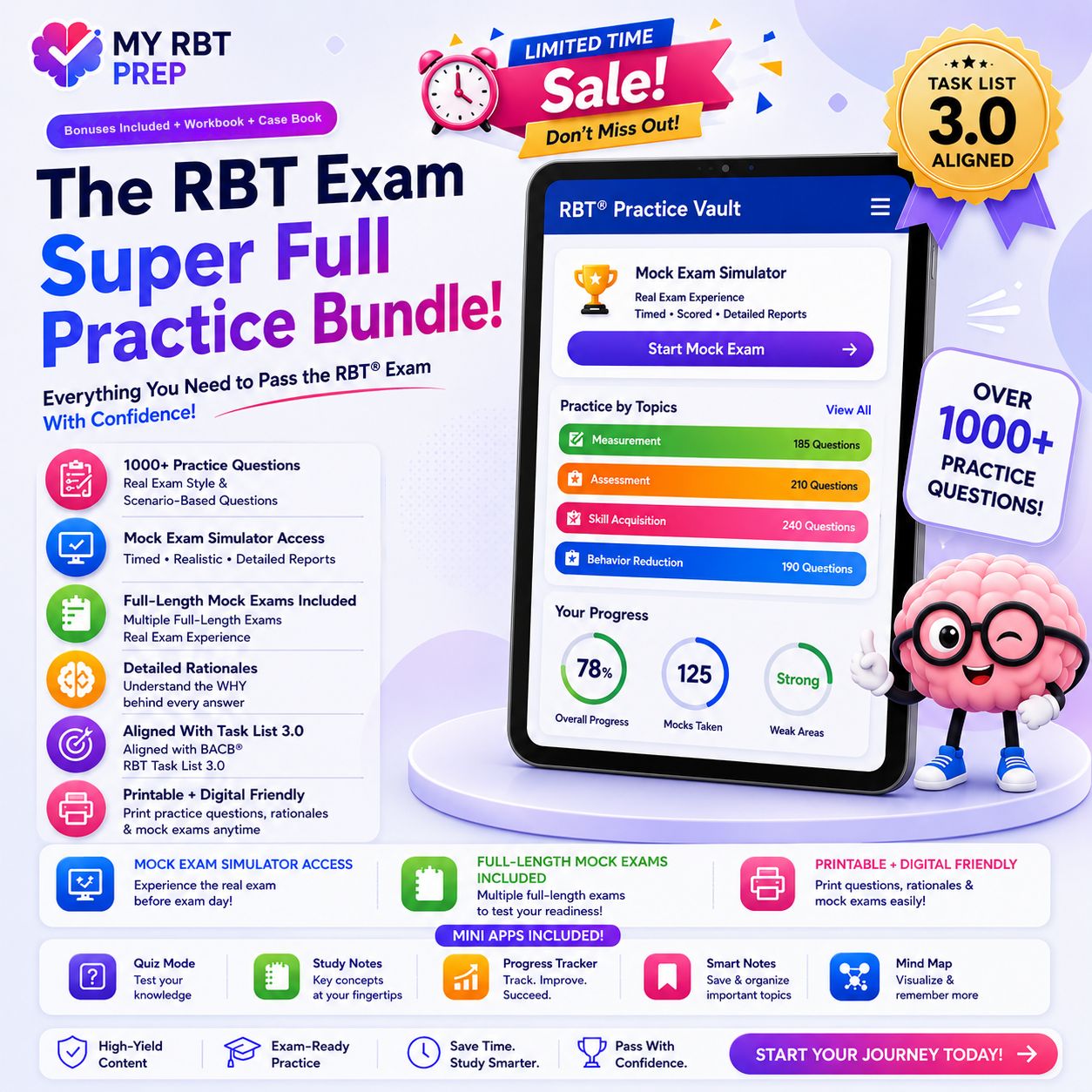
Pass Your RBT® Exam on the First Attempt
Practice with 1,000+ realistic scenario questions, multiple full-length timed mock exams, and detailed rationales formatted exactly like the real Pearson VUE test.
Entry-Level RBT Roles and Responsibilities
Entry-level RBTs work under close supervision from Board Certified Behavior Analysts (BCBA) or Board Certified Assistant Behavior Analysts (BCaBA). Daily tasks include delivering evidence-based behavior interventions, collecting data in ABA sessions, and supporting social and communication skill development for clients.
Entry-level positions often appear in school district RBT roles, clinic-based RBT positions, or home-based RBT therapy, offering foundational experience. While the salary may be lower, these roles provide the necessary exposure to direct support professional (DSP) roles, mentorship, and consistent supervision in ABA practices, setting the stage for future career growth.
| Factor | Entry-Level RBT | Lead RBT | Details / Notes |
| Hourly Wage | $15–$20 | $25–$32 | Depends on experience, location, and employer type. |
| Annual Salary | $40,000–$42,500 | $52,000–$60,000 | Lead RBTs earn more due to supervisory responsibilities and specialized skills. |
| Employer Type | School district, clinic, home-based therapy | Clinic-based, specialized programs, telehealth | Employer impacts pay, benefits, travel, and professional development opportunities. |
| Experience Impact | Limited experience; gaining hands-on behavioral therapy skills | Advanced experience; mentoring, supervising, and program oversight | Experience affects RBT hourly wage, ability to lead teams, and career progression. |
| Professional Development | Basic RBT certification, practical supervision hours | Advanced certifications in ABA, specialized training (verbal behavior, feeding therapy) | Advanced certifications and specialized skills increase pay potential and open leadership roles. |
| Work-Life Balance / Schedule | Structured support, predictable hours | Flexible schedule, higher responsibility, some variable hours | Schools offer predictability; clinics and telehealth may offer higher pay but require flexibility. |
| Geographic / Cost of Living Impact | Moderate pay in most states | High pay in states with high cost of living (CA, NY, MA, HI) | Salaries vary based on regional demand for ABA services and cost of living. |
| Bonuses & Incentives | Rare or limited | Often available | Lead RBTs may earn extra through bonuses and incentives for RBTs and overtime pay. |
Lead RBT Roles and Responsibilities
Lead RBTs carry advanced responsibilities, including supervising other RBTs, mentoring trainees, and assisting with program planning. They often implement specialized interventions such as verbal behavior or feeding therapy, oversee client progress tracking, and ensure adherence to high-quality hands-on behavioral therapy standards.
Lead RBTs are typically found in larger clinic-based RBT positions, specialized school programs, or agencies offering telehealth RBT jobs. These positions provide higher salaries, bonuses, and incentives for experience, certifications, and leadership, reflecting the advanced level of responsibility and expertise required.
| Role | Hourly Wage | Annual Salary | Typical Settings |
| Entry-Level RBT | $15–$20 | $40,000–$42,500 | School districts, clinics, home-based therapy |
| Mid-Career RBT | $20–$25 | $45,000–$50,000 | Clinics, schools, telehealth |
| Lead RBT | $25–$32 | $52,000–$60,000 | Clinics, specialized programs, agencies |
Salary depends on employer type and salary, location, advanced certifications in ABA, and experience. States with higher cost of living impact on RBT pay tend to offer larger wages for lead RBTs.

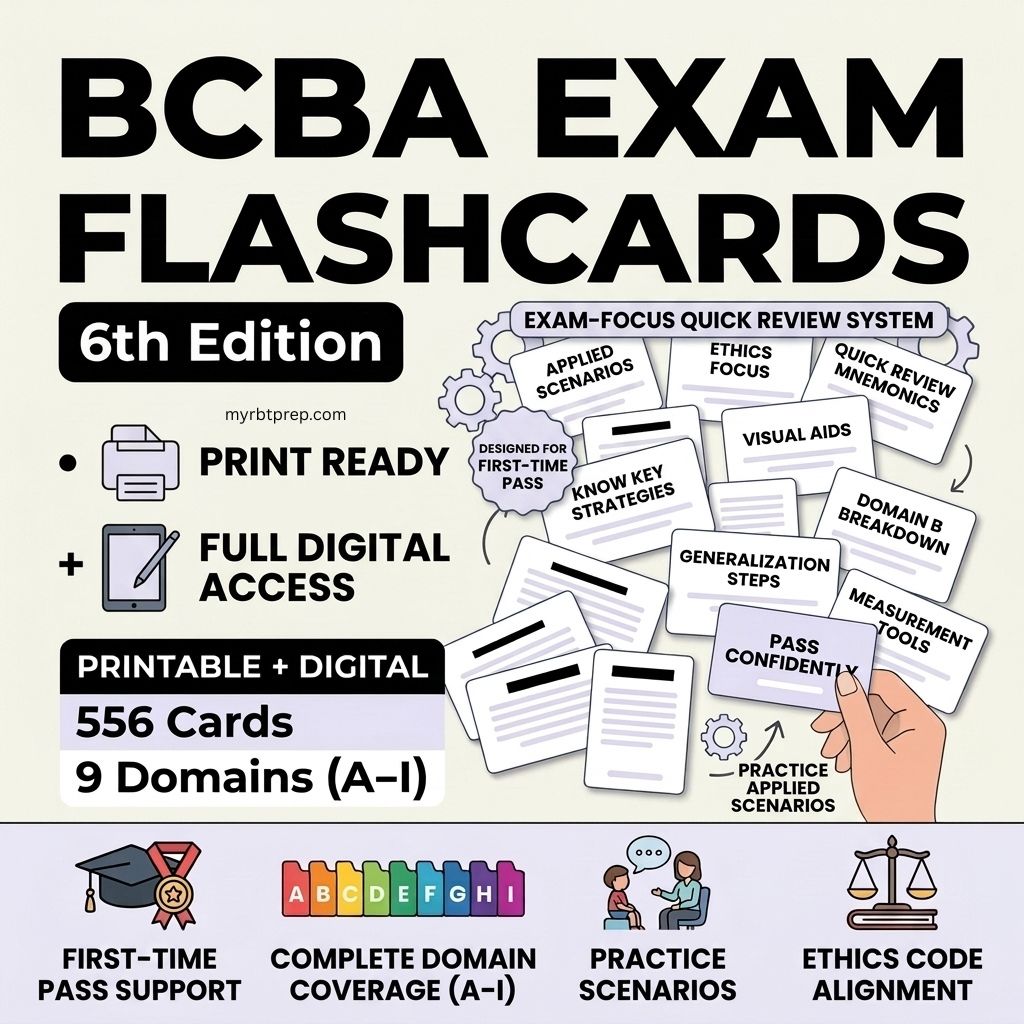
RBT® Exam Flashcards & Study App (3rd Edition)
Master essential ABA terminology and clinical discrimination across all 6 BACB task list areas with 500+ printable and digital flashcards, real exam cues, and full mobile app access.
Factors Affecting RBT Salary by Role
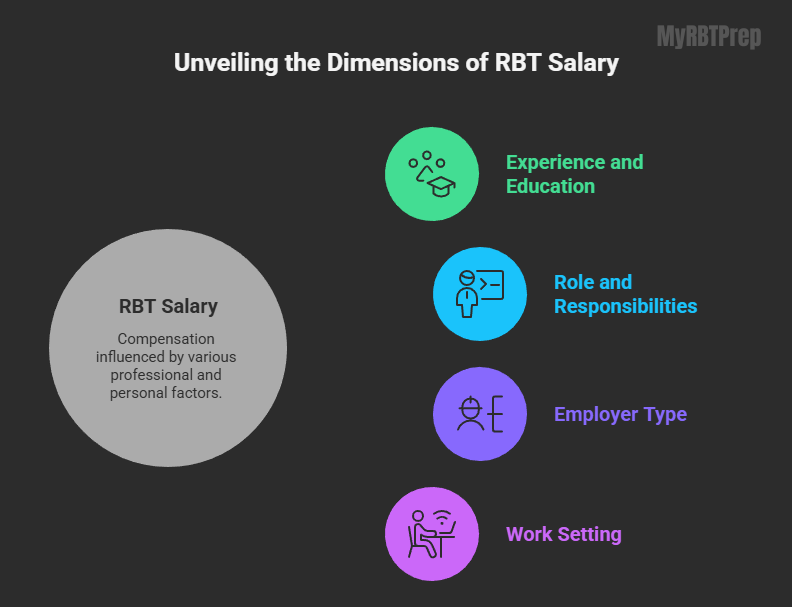
Several factors influence RBT pay, including experience, tenure, education, and employer type. Entry-level RBT pay is lower but grows steadily with experience and additional specialized training. Lead RBT roles often require advanced skills, leadership, and certifications like BCaBA, increasing both RBT hourly wage and overall compensation.
Other factors include the type of setting—school district RBT roles may offer stability and benefits, while clinic-based RBT positions often pay more per hour with bonus opportunities. Telehealth RBT jobs allow remote work with competitive wages and flexible schedules.
Career Advancement Opportunities
Advancing from entry-level to lead RBT requires mentorship, supervision, and ongoing professional development. Completing advanced certifications in ABA, gaining experience in hands-on behavioral therapy, and pursuing specialized training can enhance career progression for RBTs.
Lead RBTs often take on roles such as program coordinators, clinical supervisors, or trainers. These positions not only increase pay but also strengthen professional skills, making them competitive candidates for future Board Certified Assistant Behavior Analyst (BCaBA) or Board Certified Behavior Analyst (BCBA) roles.
| Career Stage | Opportunities / Roles | Requirements / Skills | Salary & Benefits Impact |
| Entry-Level RBT | Direct support, hands-on behavioral therapy | RBT certification, practical supervision hours, data collection, client progress tracking | Base RBT hourly wage; foundational experience for future growth |
| Mid-Career RBT | Mentorship, specialized training | Advanced certifications in ABA, experience in hands-on behavioral therapy, specialized training (verbal behavior, feeding therapy) | Higher RBT hourly wage; potential for bonuses and incentives |
| Lead RBT | Program coordinator, clinical supervisor, trainer | Supervisory skills, program planning, mentoring, advanced ABA expertise | Significantly higher salary, leadership bonuses, professional recognition |
| Advanced / BCaBA / BCBA Path | Supervisory or analyst roles, managing multiple programs | Board Certified Assistant Behavior Analyst (BCaBA) or Board Certified Behavior Analyst (BCBA) certification, advanced experience, leadership | Top-tier pay, career stability, and long-term professional growth |
Work-Life Balance and Job Satisfaction
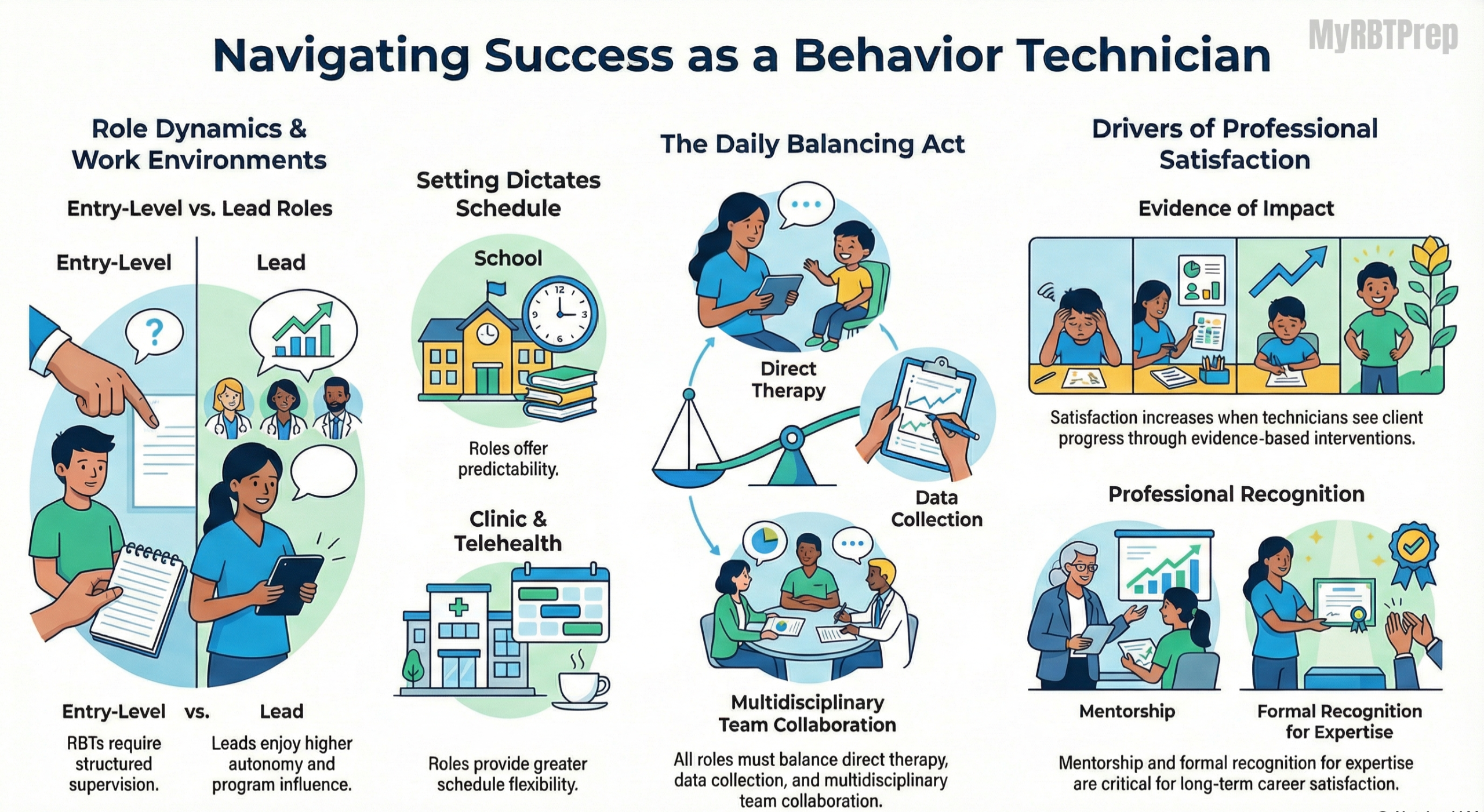
Entry-level RBTs benefit from structured support and supervision, while lead RBTs experience more autonomy and influence over program outcomes. Both roles require balancing direct therapy, data collection, and collaboration with multidisciplinary teams. Work-life balance varies by employer type; school positions often provide predictable hours, while clinics and telehealth roles may offer flexible schedules.
Satisfaction increases when RBTs see the impact of evidence-based behavior interventions on client progress and receive mentorship and recognition for their expertise.
Impact of Experience and Tenure on RBT Salary
Experience plays a major role in determining RBT salary and career growth. Entry-level RBTs typically start with lower pay, ranging between $15–$20 per hour, while mid-career and senior technicians can see significant increases. Accumulating years of experience enhances hands-on behavioral therapy skills, client progress tracking, and the ability to implement complex evidence-based behavior interventions. Lead RBTs often supervise entry-level staff, making mentorship and oversight critical skills.
Tenure not only impacts RBT hourly wage but also positions technicians for additional responsibilities, such as designing individualized programs and coordinating with multidisciplinary teams. Employers value experience for ensuring consistent quality care, which can translate into bonuses and incentives for RBTs, overtime pay, and access to better benefits packages.
Additionally, consistent tenure demonstrates reliability and commitment, often influencing future opportunities for advancement into Board Certified Assistant Behavior Analyst (BCaBA) or even Board Certified Behavior Analyst (BCBA) roles. For many RBTs, longevity paired with continuous skill development directly correlates with higher salaries and more career stability across schools, clinics, and telehealth positions.
| Experience Level | Hourly Wage Range | Key Responsibilities / Skills | Impact on Career & Salary |
| Entry-Level RBT | $15–$20 | Hands-on behavioral therapy, data collection in ABA sessions, social and communication skill support | Foundational experience; prepares for mid-career advancement and skill building |
| Mid-Career RBT | $20–$25 | Supervising small tasks, mentoring, complex evidence-based behavior interventions | Higher pay, opportunities for bonuses and incentives for RBTs, and overtime pay |
| Senior / Lead RBT | $25–$32 | Mentorship of entry-level staff, program design, coordination with multidisciplinary teams | Leadership roles, access to better benefits packages, and increased likelihood of progressing to BCaBA or BCBA |
| Tenured RBT (5+ years) | Variable (higher than senior) | Extensive experience, reliability, program oversight, advanced behavioral interventions | Long-term salary growth, stability, and competitive advantage for supervisory and advanced ABA roles |
Employer Type and Its Effect on Pay
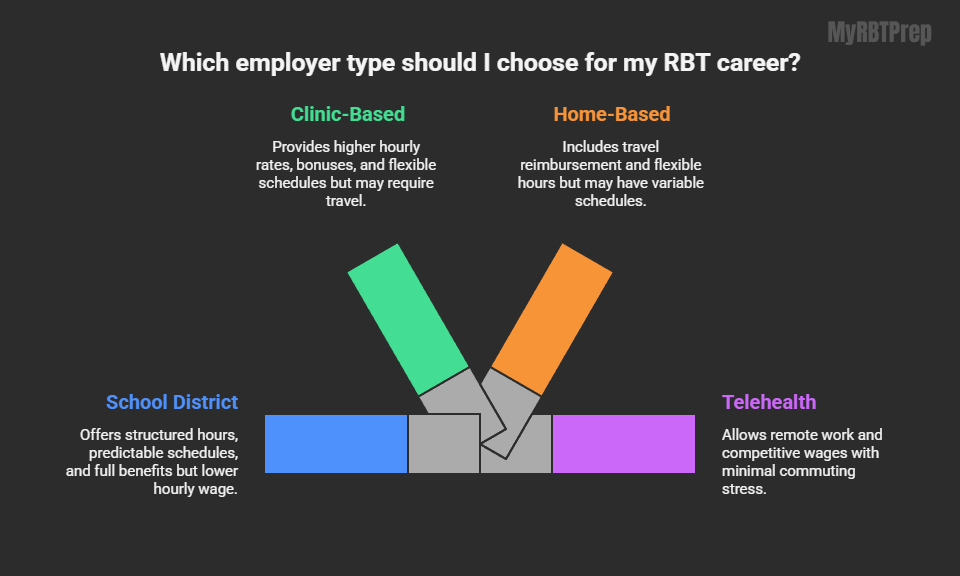
The type of employer greatly affects RBT salary and benefits. School district RBT roles provide structured hours, predictable schedules, and full benefits packages, but the hourly wage tends to be lower than private sectors. In contrast, clinic-based RBT positions often offer higher hourly rates, opportunities for bonuses and incentives for RBTs, and flexible schedules, but may require travel or variable hours.
Home-based RBT therapy positions typically include travel reimbursement, while telehealth RBT jobs allow remote work and can provide competitive wages with minimal commuting stress.
Employers also differ in professional development opportunities. Private clinics often support advanced training in verbal behavior or feeding therapy, helping RBTs increase both their skills and salary potential. Schools may offer leadership or mentoring pathways, which gradually lead to lead RBT roles.
Choosing the right employer depends on individual priorities—some RBTs prefer predictable hours and structured support, while others prioritize higher pay, bonuses, and career growth opportunities. Understanding employer type is key to maximizing income and professional satisfaction.
Advanced Certifications and Salary Growth
Obtaining advanced certifications in ABA can significantly boost RBT hourly wage and career opportunities. While entry-level RBTs start with basic certification, pursuing specialized credentials such as verbal behavior training or feeding therapy programs positions technicians for higher-paying roles. Lead RBTs often leverage these certifications to supervise teams, manage programs, or provide training to new staff, increasing both salary and professional influence.
Advanced certifications also provide opportunities to transition into consulting, private practice, or program coordination. These roles may offer higher wages than traditional school or clinic positions and allow for more autonomy in scheduling and client selection. Employers value certified RBTs for their expertise in hands-on behavioral therapy and evidence-based behavior interventions, which can justify higher pay and lead to leadership responsibilities. For ambitious technicians, combining experience with specialized certifications can result in salary increases of 10–20% over base rates, while also strengthening long-term career stability and advancement potential.
| Certification Level | RBT Role / Opportunity | Skills / Responsibilities | Impact on Salary & Career |
| Basic RBT Certification | Entry-Level RBT | Hands-on behavioral therapy, data collection, client progress tracking | Entry-level pay; foundational experience for career progression |
| Specialized Certifications (Verbal Behavior, Feeding Therapy) | Mid-Career RBT / Lead RBT | Supervising teams, managing programs, providing staff or parent training | Higher RBT hourly wage, leadership responsibilities, and potential for bonuses or incentives |
| Advanced Certification + Experience | Lead RBT / Consultant / Private Practice | Program coordination, advanced intervention planning, independent client work | 10–20% higher pay over base rates, greater autonomy, professional recognition, long-term career stability |
| Consulting & Private Practice Opportunities | Senior / Lead RBT | Behavior intervention planning, niche services, client and staff training | Highest earning potential; flexible schedule; multiple contract opportunities; enhanced professional growth |
Geographic Location and Cost of Living Impact
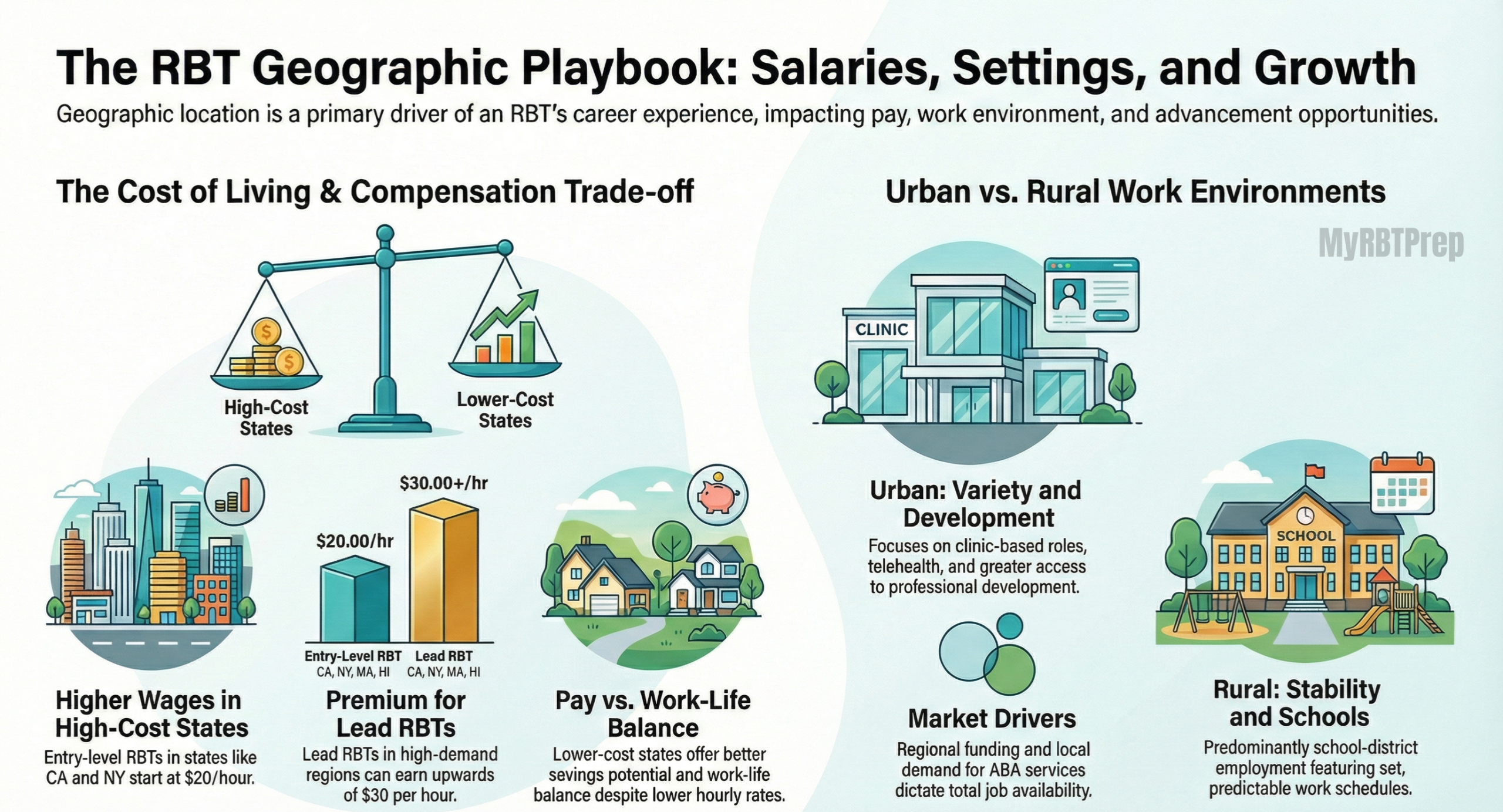
The salary of a Registered Behavior Technician (RBT) varies according to geographical location. For example, higher-cost states, such as California, New York, Massachusetts, and Hawaii, tend to attract qualified RBTs by offering higher salaries (starting at $20/hour for entry-level RBTs) to entice those individuals to those regions. In addition, lead RBTs earn an average of greater than $30/hour in those same states; conversely, lower-cost states may pay slightly less, but the employee has the potential to save money due to lower living costs and to enjoy a greater work-life balance.
Moreover, the types of job openings that exist for RBTs can differ based on geographic area. Most urban areas will have a significant number of clinic-based RBT roles, telehealth opportunities, and greater access to professional development; on the other hand, most rural areas depend primarily on school district employment and have set work schedules.
In addition, factors such as local demand for ABA services, travel time, and regional funding all impact the salaries paid and the number of job opportunities available to RBTs. Knowing these different geographic factors enables RBTs to select job locations that allow them to fulfil their career aspirations, earn the highest possible salaries and secure entry-level or senior RBT positions with continuing opportunities for advancement.
FAQs
What is the pay difference between entry-level and lead RBTs?
Entry-level RBTs earn $40,000–$42,500 annually, while lead RBTs can make $52,000–$60,000 depending on experience and certifications.
Which settings pay lead RBTs the most?
Clinic-based RBT positions and specialized programs typically offer the highest salaries, followed by telehealth roles.
How can entry-level RBTs advance to lead roles?
Through mentorship, advanced certifications in ABA, supervised practical hours, and gaining experience in hands-on behavioral therapy.
Does location affect RBT salary by role?
Yes, high-cost-of-living states like California, New York, and Massachusetts generally pay higher wages for both entry-level and lead RBTs.
Can RBTs earn more by specializing in certain skills?
Yes, RBTs who complete specialized training in areas like verbal behavior, feeding therapy, or social skill development can increase their RBT hourly wage.

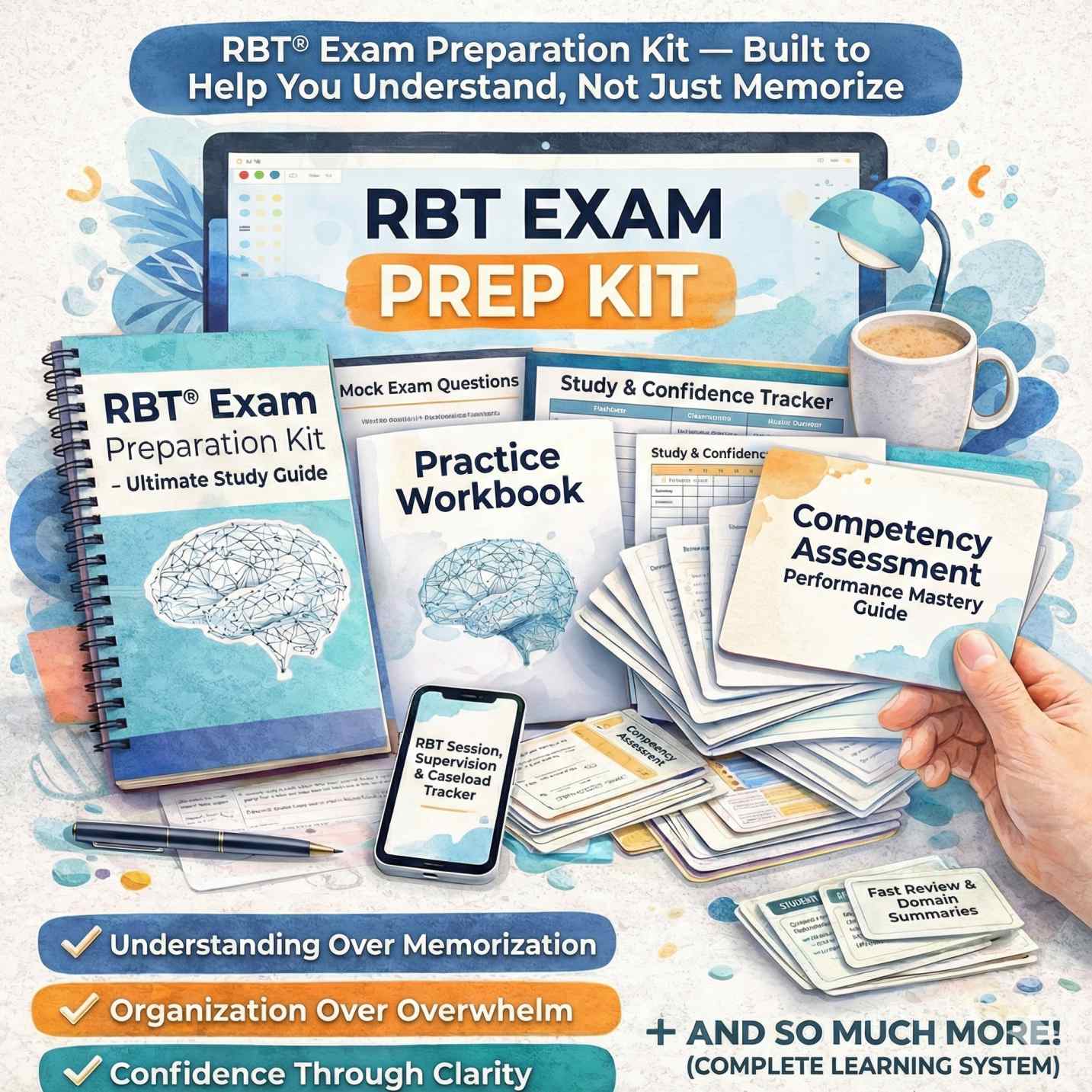
Everything You Need to Pass Your RBT® Exam
Study with our complete, all-in-one preparation package covering every task on the BACB Task List 3.0:
- 1,000+ Practice Questions & Timed Simulator
- 3rd Edition Task List Study Guide & Workbook
- Active Recall Flashcards System + Mobile App
- 20-Task Competency Assessment Mastery Guide