
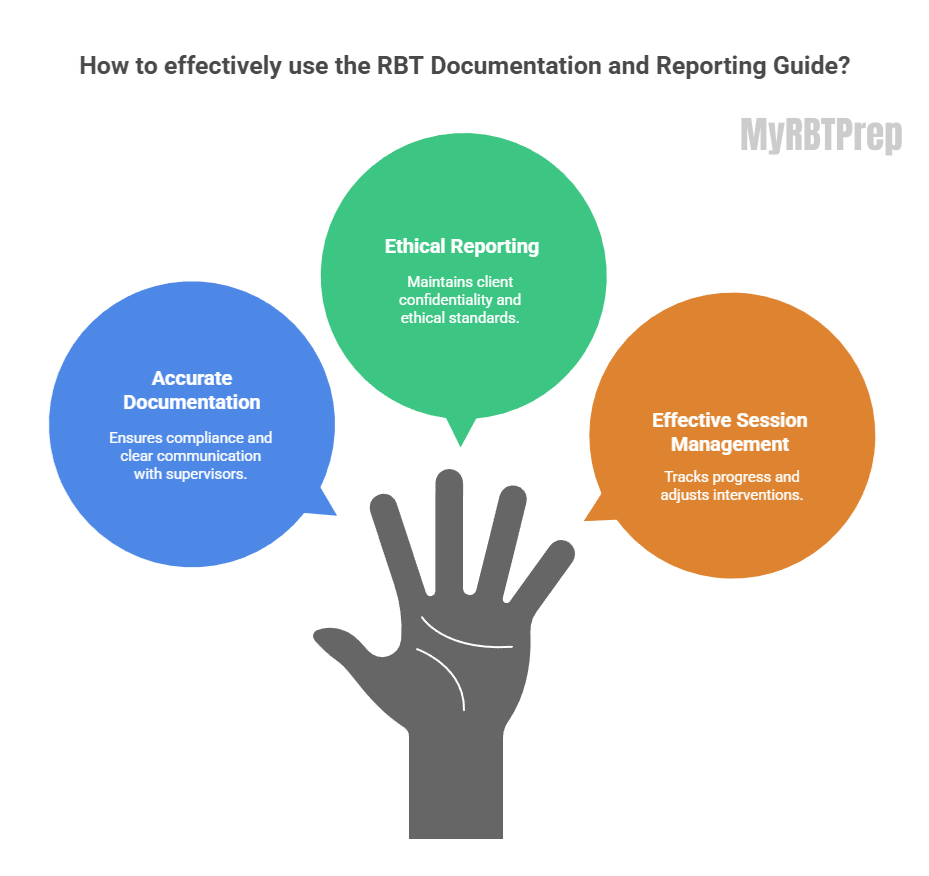
The RBT Documentation and Reporting Guide is an essential resource for every Registered Behavior Technician (RBT) aiming to master accurate RBT Documentation, ethical RBT Reporting, and effective session management.
This guide simplifies complex procedures from Task List 3.0 (2026), helping RBTs communicate clearly with supervisors, track variables affecting client progress, and maintain secure record handling. It emphasizes objective recording and timely reporting, ensuring compliance with legal, regulatory, and workplace documentation standards.
By following this guide, RBTs can confidently record session notes, relay caregiver observations, and adjust interventions. Whether preparing for the RBT exam or daily ABA practice, this guide is a vital tool for success.
Pass Your RBT® Exam on the First Attempt
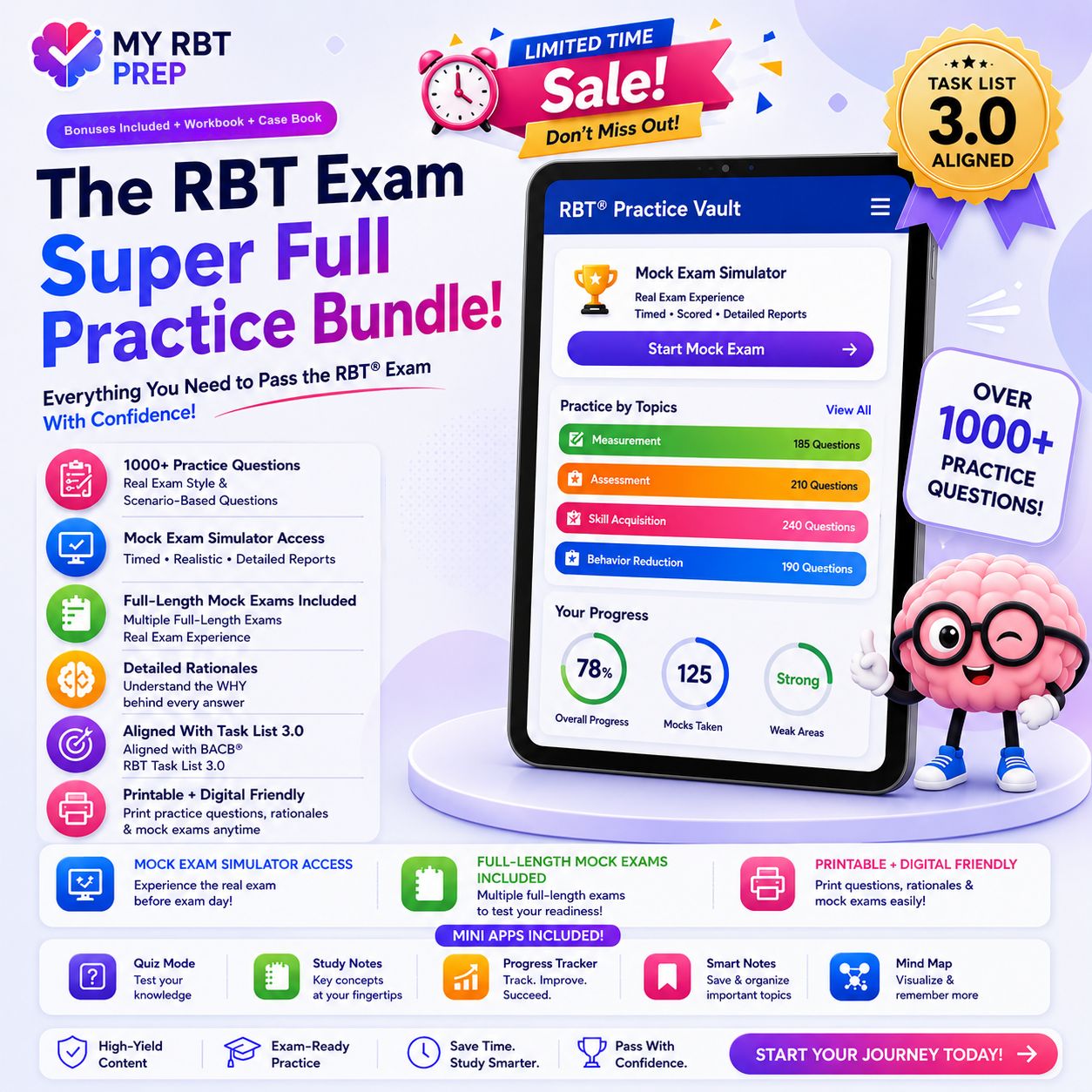
Practice with 1,000+ realistic scenario questions, multiple full-length timed mock exams, and detailed rationales formatted exactly like the real Pearson VUE test.
What Will You Learn?
This guide equips RBTs with the skills needed to communicate concerns, report objectively, and document sessions effectively. You will learn how to prioritize tasks, seek clinical guidance, and relay information clearly within the framework of Task List 3.0 (2026).
By mastering these competencies, RBTs enhance client outcomes and support supervisors in making informed treatment decisions. Practical knowledge includes responding to unusual data trends, recognizing patterns, and adjusting strategies based on objective analysis.
RBTs will also learn to record variables affecting client progress, such as illness, sleep disruption, or environmental factors. Skills like observe and document, flag unusual data, and adjust session targets are emphasized.
Real-world scenarios, such as a client refusing breakfast or experiencing anxiety during transitions, provide context for ethical documentation practices. These experiences improve your ability to provide timely and accurate RBT Reporting, strengthening both your professional expertise and the overall quality of ABA interventions.


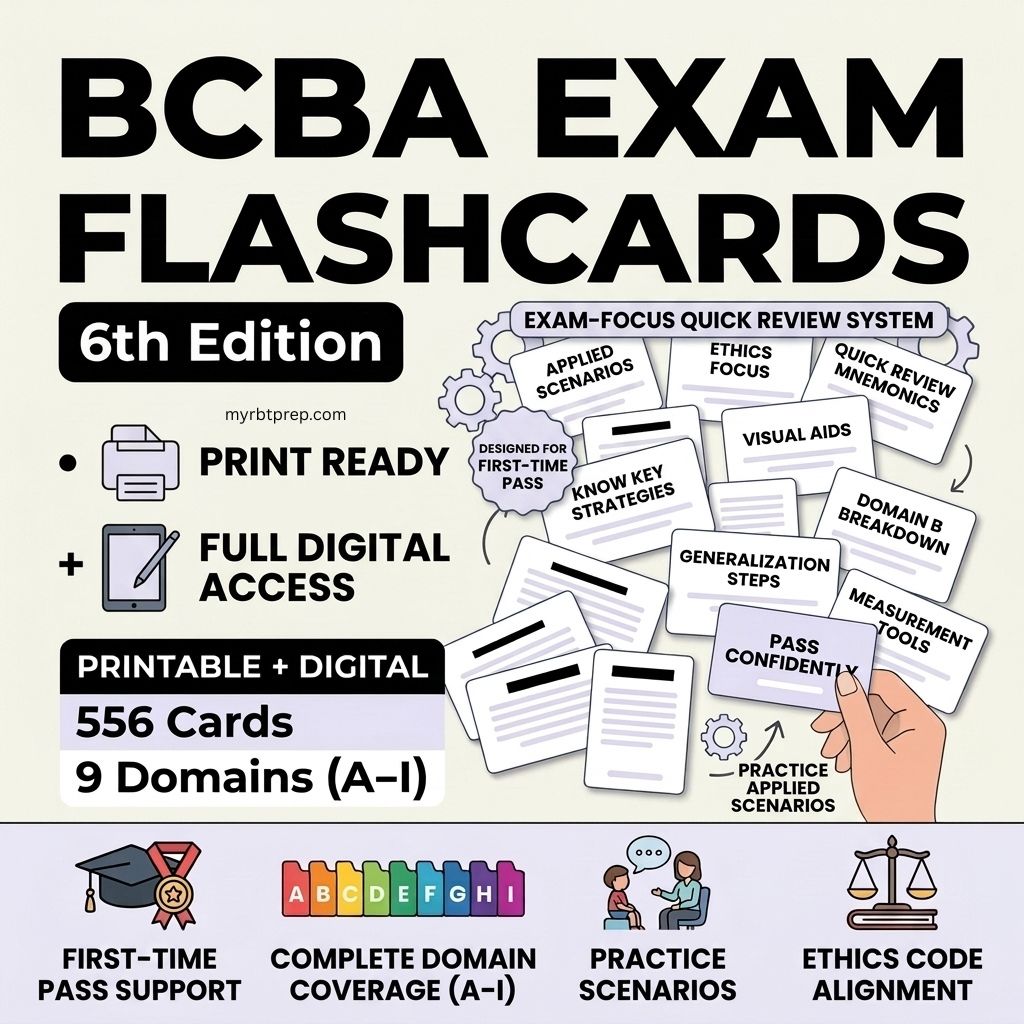
RBT® Exam Flashcards & Study App (3rd Edition)
Master essential ABA terminology and clinical discrimination across all 6 BACB task list areas with 500+ printable and digital flashcards, real exam cues, and full mobile app access.
RBT Documentation and Reporting Key Terms
Understanding key terminology is crucial for consistent RBT Reporting. Data irregularity refers to unusual patterns, sudden spikes, or missing data that can distort progress assessments. Chain of command ensures communication reaches the correct supervisor in a structured manner.
RBTs must practice objective session communication, recording only factual information without personal opinions, which supports clinical supervision and maintains professional standards.
Other terms, such as addendum / late entry, provide a mechanism to clarify or correct prior records while maintaining transparency. Secure record handling ensures that sensitive client data is collected, stored, and transmitted in compliance with regulatory requirements. Incident reports document unexpected events immediately, allowing supervisors to address concerns promptly.
|
Mastering these terms not only facilitates ethical documentation but also strengthens the RBT’s ability to contribute effectively to the intervention team communication process.
E.1 Communicate Concerns and Suggestions from the Intervention Team with a Supervisor
RBTs serve as the essential link between caregivers, instructors, and supervisors. They must communicate concerns promptly, ensuring all observations are objective recording of behaviors, environmental influences, and session outcomes.
Timely communication allows supervisors to relay information effectively, enabling immediate adjustments to treatment protocols. This process also reinforces the importance of follow directions while implementing consistent interventions.
For example, if a caregiver reports that a client only slept three hours, the RBT should record: “The caregiver reported that the client slept three hours last night, which may impact engagement and endurance during early sessions.”
Such session notes allow supervisors to adjust session targets and provide appropriate reinforcers while maintaining ethical documentation. Documenting context alongside behavior ensures the intervention team has a full picture, supporting the monitor client progress goal and enhancing overall treatment effectiveness.
|
E.2 Seek and Prioritize Clinical Direction from a Supervisor
RBTs must seek clinical guidance whenever procedures are unclear or unusual patterns are observed. Prioritizing supervisory direction is essential, especially when client safety, health, or behavior is at stake.
Timely action ensures client outcomes are protected, and incident reports are filed appropriately. When unusual events occur, timely reporting allows the intervention team to respond effectively and maintain regulatory requirements compliance.
For example, if a client exhibits sudden aggression or an adverse reaction to a new medication, RBTs must report schedule or setting changes, track safety and health events, and notify supervisors immediately.
Additionally, clarifying training needs before implementing unfamiliar protocols is critical. Documenting every communication and instruction strengthens the chain of command, ensures ethical documentation, and prevents errors in daily RBT Reporting practices.
|
E.3 Report/Document Variables Affecting Client Progress
External variables, such as illness, family transitions, or classroom changes, significantly influence client behavior. RBTs must record variables meticulously and capture environmental changes that could impact progress.
Reports should clearly state who observed the variable, what happened, when it began, and why it is relevant for the session. Accurate documentation ensures that interventions are adjusted appropriately to maintain client outcomes.
For instance, if a client begins a new therapy program or experiences sleep disruption, the RBT must monitor client progress and flag unusual data. Recording medication changes or altered schedules helps supervisors make informed decisions.
|
This systematic approach ensures objective recording, supports intervention team communication, and meets regulatory requirements.
E.4 Communicate Objectively During Sessions
During sessions, RBTs must observe and document behavior precisely. Include the date, targeted goals, implemented procedures, client responses, barriers, and any addendum / late entry if corrections are necessary. Maintain confidentiality at all times while following secure record handling procedures.
Objective session notes should also capture document medication changes, environmental influences, or incidents. Providing accurate session notes ensures legal compliance and guides clinical supervision decisions.
|
Accurate RBT Reporting helps the team refine strategies, adjust session pacing, and maximize client outcomes.
Task List 3.0 Updates (2026)
Task List 3.0 (2026) refined RBT Documentation and Reporting expectations to emphasize clear and timely communication. Topics like E.2 Seek and prioritize clinical direction, E.3 Report/document variables, and E.4 Communicate objectively were retained, while responsibilities for data storage compliance were embedded into daily documentation practices.
Communication under E.1 was expanded to define expectations between the intervention team communication network and supervisors. RBTs must practice timely reporting, objective recording, and ethical documentation to meet the standards of Task List 3.0.
|
These updates clarify responsibilities and support better RBT Reporting in practice.
Best Practices for RBT Documentation and Reporting
RBTs should document sessions immediately, using precise, clear language. Always follow directions from supervisors, record variables carefully, and observe and document all relevant details. Avoid subjective language or assumptions. This ensures ethical documentation and improves client outcomes.
Consistency is key. Double-check session notes for accuracy, and ensure all corrections are noted using addendum / late entry procedures. Monitor client progress continuously, flag unusual data, and maintain secure record handling.
|
Practicing these habits supports clinical supervision and enhances overall team effectiveness in ABA (Applied Behavior Analysis) programs.
Enhancing Client Outcomes Through Precise RBT Documentation and Reporting
Precise RBT Documentation and Reporting does not simply serve as a due process. Rather, it represents a critical resource for supporting client outcomes in ABA therapy. Each observation, note, and report, inform a clearer understand of a client’s response to intervention, changes in the environment, and daily activities.
When RBTs observe and document behavior in detail, the supervisor is able to change session targets, reinforce progress, or address a new challenge in the moment. The process requires timely reporting, monitoring important variables impacting change, and maintaining a respectful handling of records to protect sensitive information and adhere to compliance policies.
Additionally, documenting objectively offers a way for the intervention team to observe nuances, patterns, or anomalies in the client’s depression of the behavior, including sudden spikes in behavior or data that may indicate an irregularity in daily living.
Including documented observations of caregivers, details in notes from sessions, and everyday reporting provide a robust context for the treatment plan and for treatment continuity across clinical practitioners and settings.
RBTs who utilize daily documentation processes are able to identify and anticipate potential challenges before they become problematic, contributed to a treatment target, and share timely insight with supervisors. Ultimately, effective RBT Reporting and Documentation supports turning observations about the session into a strategic change in each client’s long-term intervention, helping to enhance each client’s services based on unique needs in each session.

Next Steps and Preparing for RBT Competency Assessment
RBTs should apply this guide in real sessions, practicing timely reporting, relay information, and seek clinical guidance. Completing practice quizzes based on Task List 3.0 (2026) helps identify knowledge gaps. Reviewing caregiver observations, documenting environmental changes, and tracking variables prepares RBTs for competency assessments.
For exam readiness, RBTs should integrate all skills learned: observe and document, record variables, adjust session targets, and report objectively. Regular supervision, feedback, and reflection on session notes strengthen mastery.
Applying these practices consistently ensures compliance with regulatory requirements, enhances client outcomes, and supports professional development within ABA practice.
Faqs
What is the best RBT study guide?
The best guide is the RBT Documentation and Reporting Guide aligned with Task List 3.0 (2026), covering documentation, reporting, and supervision skills.
How to document RBT supervision?
Record session dates, supervisor feedback, tasks observed, and any clinical guidance received to maintain clear session notes.
How many questions can I miss on the RBT exam?
You can typically miss up to 10-12 questions and still pass, depending on the total number of scored questions.
What is the hardest part of being an RBT?
Maintaining ethical documentation, managing challenging behaviors, and timely reporting while balancing multiple responsibilities is often the toughest part.
What is the 80/20 rule in ABA?
The 80/20 rule means 80% of progress comes from 20% of interventions, emphasizing focus on high-impact strategies.

Everything You Need to Pass Your RBT® Exam
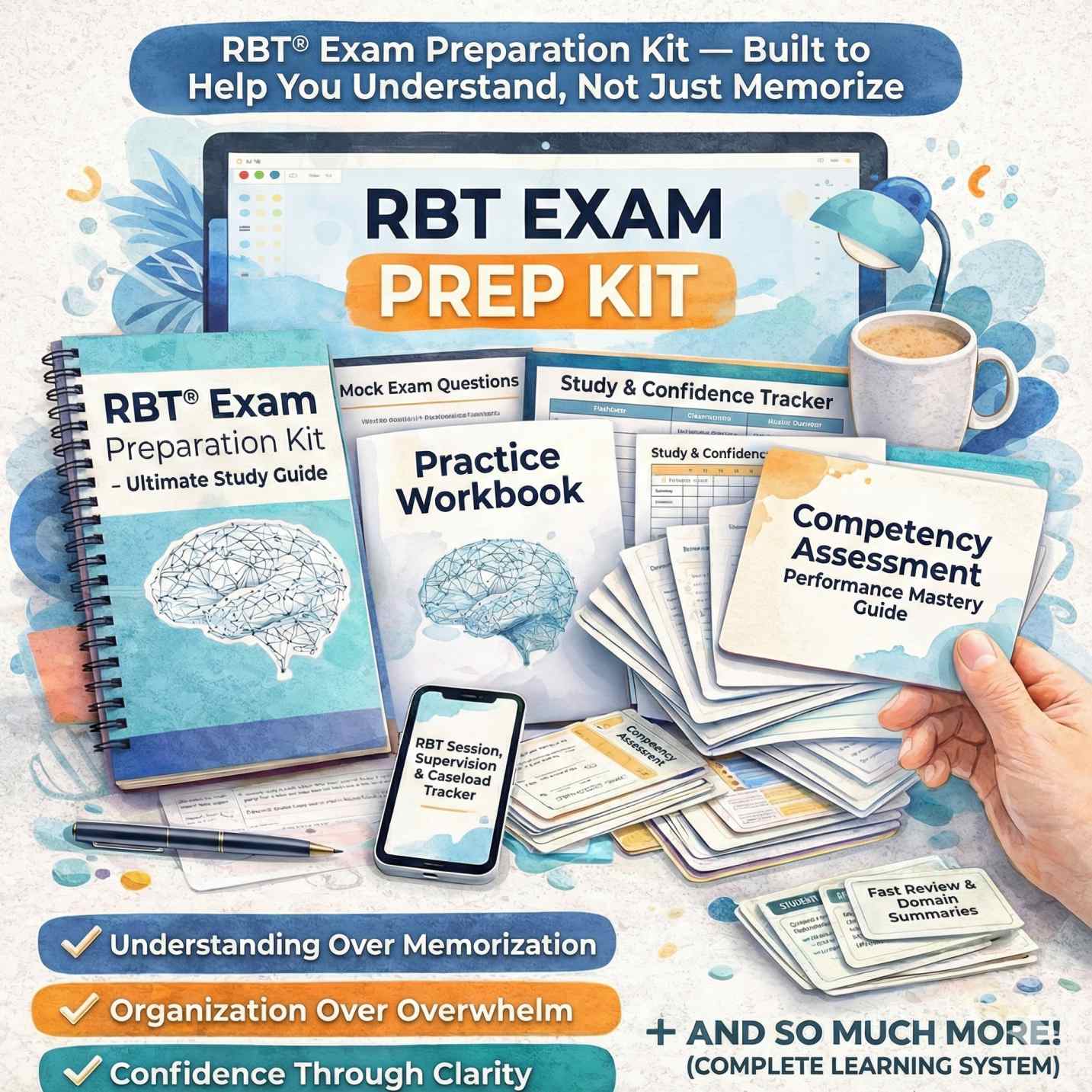
Study with our complete, all-in-one preparation package covering every task on the BACB Task List 3.0:
- 1,000+ Practice Questions & Timed Simulator
- 3rd Edition Task List Study Guide & Workbook
- Active Recall Flashcards System + Mobile App
- 20-Task Competency Assessment Mastery Guide