
The RBT Ethics Guide is an essential resource for Registered Behavior Technicians aiming to provide safe, effective, and professional services. It outlines core ethics principles that help RBTs make informed decisions while maintaining client-centered practice.
By following the guide, technicians can ensure confidentiality, adhere to professional standards, and avoid dual relationships that may compromise ethical integrity. The guide also emphasizes cultural awareness, ethical supervision, and proper documentation to uphold ethical compliance in all ABA services.
Whether handling gifts, public statements, or complex client situations, this guide equips RBTs with the knowledge to navigate daily challenges while protecting clients and fostering trust. Practice with the Full RBT Exam simulation.
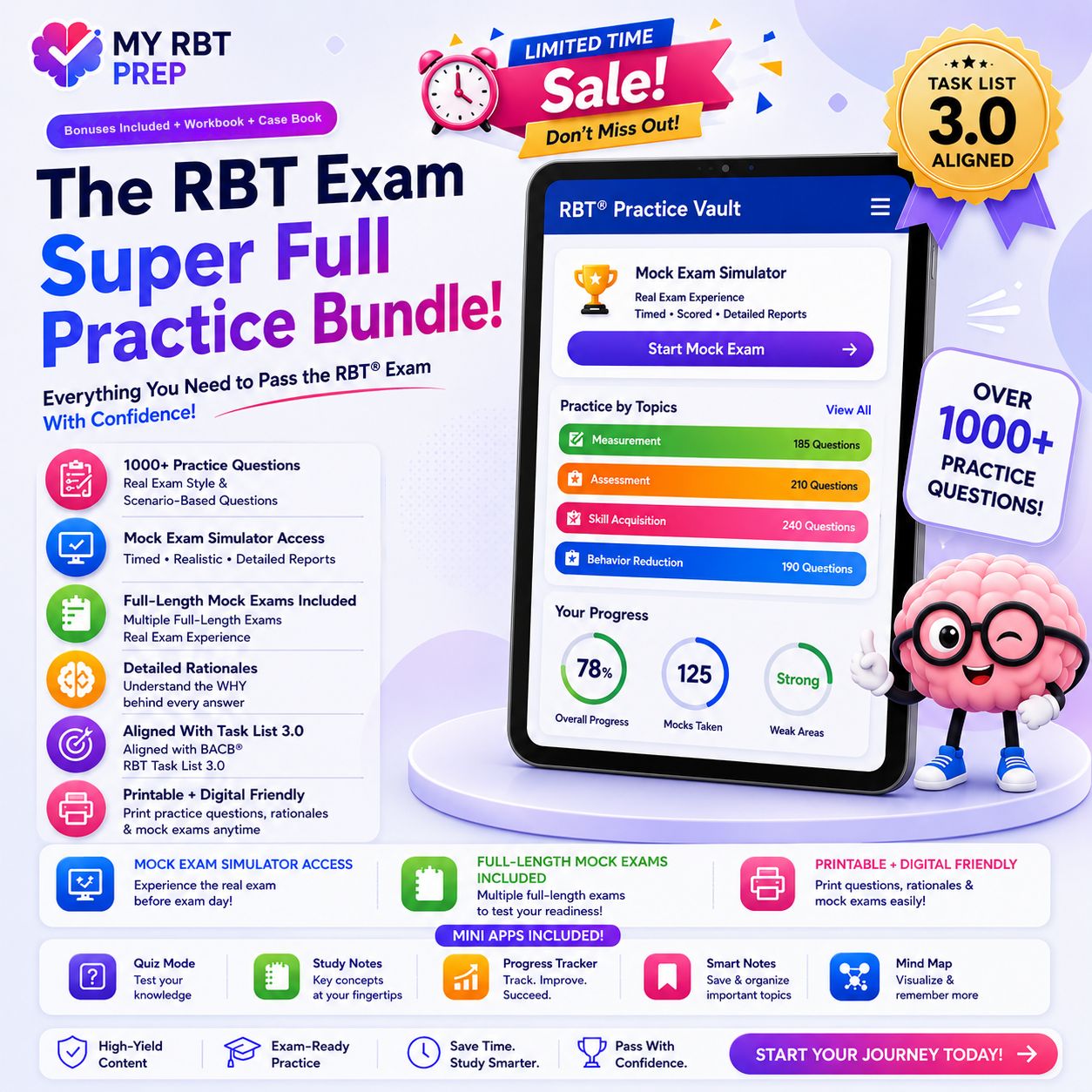
Pass Your RBT® Exam on the First Attempt
Practice with 1,000+ realistic scenario questions, multiple full-length timed mock exams, and detailed rationales formatted exactly like the real Pearson VUE test.

Key Learning Outcomes of RBT Ethics
By studying RBT ethics, you develop skills that go far beyond passing an exam. You learn how to deliver behavioral technician services responsibly while maintaining competence before service.
This includes knowing how to follow effective supervision practices, uphold professional conduct, and interact with clients in ways that respect both their individuality and family dynamics. Ethical knowledge guides your communication, decision-making, and service delivery in practical, real-world ABA settings.
In addition, you will master how to handle dual relationships, avoid conflicts of interest, and respect privacy obligations. You will understand how to document interventions, track progress through data collection and reporting, and communicate results without compromising confidentiality.
Awareness of cultural responsiveness and cultural humility allows you to adapt teaching methods to client needs. By the end of your study, you will confidently navigate complex ethical scenarios, ensuring that your services reflect ethical practice in ABA while remaining highly effective and client-focused.


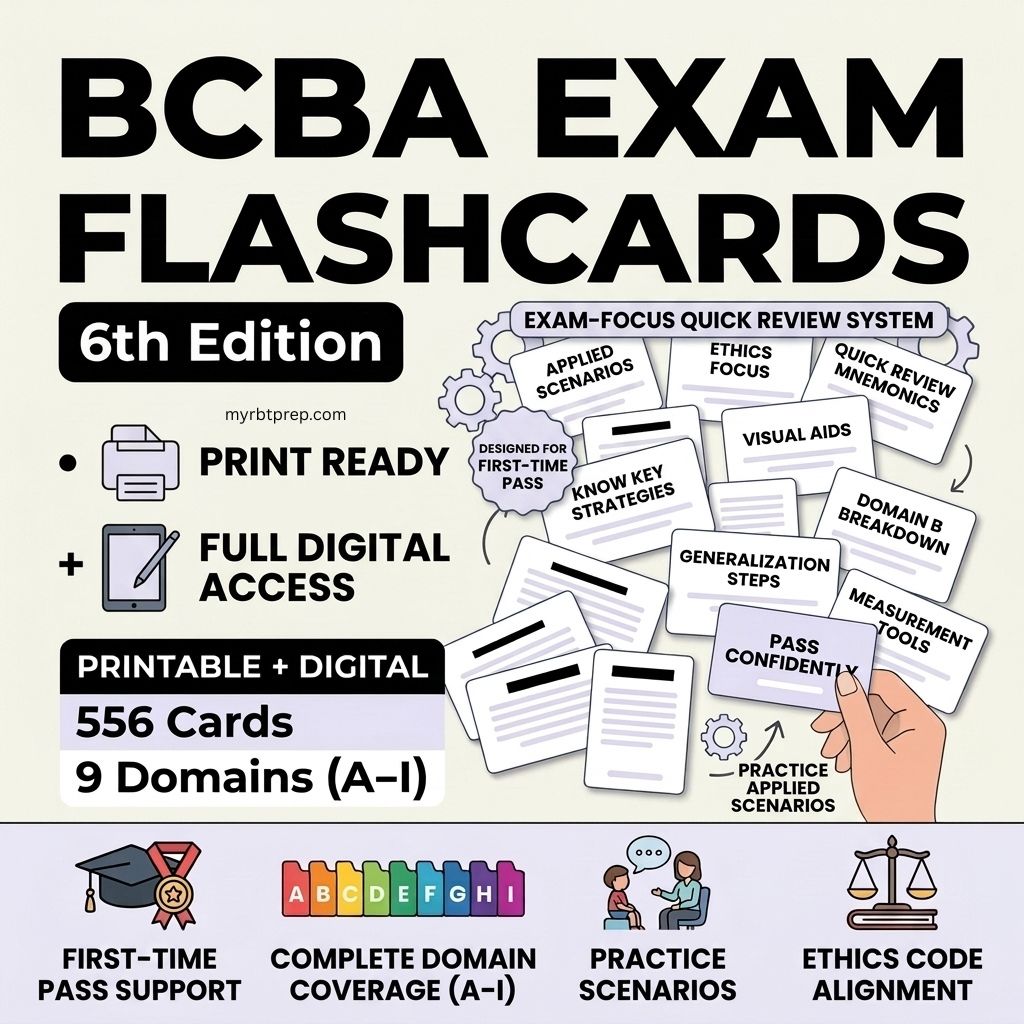
RBT® Exam Flashcards & Study App (3rd Edition)
Master essential ABA terminology and clinical discrimination across all 6 BACB task list areas with 500+ printable and digital flashcards, real exam cues, and full mobile app access.
Essential RBT Ethics Terms You Must Know
To practice ethically, you must first understand the key terminology. Confidentiality ensures that client data is never shared without proper authorization. Dual relationships happen when a professional role overlaps with personal or social connections, increasing the risk of bias or conflict. A conflict of interest arises when personal benefits may influence your decisions, which must always be disclosed and mitigated.
Other crucial terms include public statements, mandated reporting, and documentation integrity. For instance, if you observe signs of abuse, mandated reporting requires immediate action following your organization’s protocols.
Documentation integrity means recording sessions honestly, even if progress is slow, and making error correction through proper addenda instead of overwriting data. Understanding these terms forms the foundation of ethical compliance and guides RBTs in applying standards effectively in daily practice.
|
Core Ethical Principles for RBTs (F.1)
The F.1 task focuses on applying core ethics principles in every interaction. Prioritizing client well-being, treating them with dignity, and respecting cultural preferences is crucial. For example, a client’s reinforcement schedule should reflect their individual needs rather than what is easiest for you to implement.
Ethical decisions should balance immediate and long-term benefits while always aligning with professional standards. Documentation plays a key role in demonstrating ethical practice in ABA. Recording sessions accurately in approved data systems shows transparency and documentation integrity.
If mistakes occur, making error correction using addenda maintains honesty and compliance. In real-world practice, following these principles also means consulting supervisors when faced with challenging decisions, protecting clients through client-centered practice, and ensuring treatment plan adherence.
Exam Tips
Always prioritize client safety and welfare when choosing exam answers. Use real-time feedback from supervisors and practice scenarios to internalize ethical decision-making. Remember that knowing the BACB Ethics Code thoroughly will help you distinguish between correct and incorrect professional behaviors.
Competence and Supervised Practice (F.2 & F.3)
F.2 emphasizes that you should deliver behavioral technician services only after demonstrating competence before service. Completing role-play practice, reviewing step-by-step procedures, and receiving behavior-based feedback ensures your interventions are accurate.
Real-world ABA sessions demand precision, so practicing in controlled environments under supervision is vital. F.3 reinforces the importance of ongoing supervision. Following a supervision cycle ensures consistent guidance, feedback, and evaluation of your performance.
Supervisors observe sessions, provide feedback and observation, and ensure your work aligns with service delivery guidelines. Maintaining these standards helps you avoid ethical pitfalls, ensures client protection, and fosters continuous skill improvement.
Effective Supervision and Professional Conduct (F.4, F.5 & F.6)
F.4 highlights effective supervision practices like modeling and rehearsal. Supervisors demonstrate interventions, then RBTs practice while receiving behavior-based feedback. This ensures observation fidelity and consistent implementation.
F.5 emphasizes privacy obligations, ensuring client data remains secure at all times. F.6 focuses on public statements, requiring RBTs to communicate professionally and only within their role.
A table demonstrates practical steps for ethical supervision:
|
Following these practices reinforces professional conduct and ensures ethical compliance in all interventions.
Managing Relationships and Conflicts of Interest (F.7 & F.8)
F.7 teaches RBTs to manage multiple relationships mitigation carefully. Recognizing dual relationships and setting clear boundaries prevents bias and protects clients.
Ethical scenarios include refusing to tutor a client privately or maintaining impartiality with neighbors who are clients’ family members. F.8 outlines gift giving and receiving guidelines. Even small gifts can create pressure or perceived favoritism.
Politely declining gifts while acknowledging the gesture ensures professional conduct. By following these guidelines, RBTs maintain trust, prevent ethical breaches, and demonstrate consistent ethical practice in ABA.
Professional Skills and Cultural Responsiveness (F.9 & F.10)
F.9 emphasizes interpersonal skills and professional communication. Clear reporting, active listening, and collaboration with caregivers and team members support client-centered practice. Applying feedback immediately reinforces treatment plan adherence and strengthens professional credibility.
F.10 focuses on cultural humility and cultural responsiveness. Adjusting prompts, reinforcers, and teaching methods to fit family values and routines ensures respect for client backgrounds. This approach fosters engagement, improves outcomes, and supports ethical and inclusive ABA practice.

Changes in Task List 3.0 (2026)
The 2026 update emphasizes competence before service, effective supervision practices, and ethical compliance. Some tasks were expanded, others consolidated or moved. F.1 to F.10 now focus on practical application rather than theoretical knowledge alone, reflecting modern ABA demands.
|
These changes highlight how RBTs must apply principles daily, ensuring safe, ethical, and effective behavioral technician services.
Practical Tips for Exam Success
Exam success relies on applying principles to realistic scenarios. Practice decision-making, review approved data systems, and analyze previous cases.
Focus on ethical decision-making, understanding supervision processes, and managing dual relationships. Regularly using real-time feedback, practicing role-play practice, and applying step-by-step procedures helps retain knowledge.
Case studies and scenario exercises reinforce ethical compliance, while focusing on client protection and maintaining boundaries ensures exam answers reflect true ABA practice.
Mastering Ethical Practice: A Practical Guide for RBTs
Ethical practice forms the basis of every Registered Behavior Technician’s work to help ensure that interventions are safe, effective, and respectful and take into consideration the individual needs of each client.
Adhering to the RBT Ethics Guide allows behavior technicians to work through complex situations, clearly outlining expectations such as confidentiality, dual relationships, and potential or perceived conflicts of interest.
Ethical practice is more than following compliance; ethical practice creates a space of trust where clients feel valued and respected. This can only happen when the RBT applies their professional standards to their daily decision making, follows service delivery specifications, and maintains documentation integrity.
An important component of ethical behavior is understanding scope of competence. RBTs are expected to provide the service only after they have demonstrated that they are able to perform the skills through role-playing practice and adhering to the feedback from direct observations to the sessions.
Active simple direct observations of adult-child interactions, as well as, immediate feedback from direct supervision provide assurance that the service delivery data is accurate and safe. In addition, components of cultural awareness, such as cultural responsiveness and cultural humility, allow the RBT to offer broader implementation arrangements without compromising family values or routines and support client engagement and meaningful progress.
By mastering ethical principles in RBT practice, transparent communication, and appropriate ethical compliance, RBTs will not only comply with BACB expected behavior, but will also build and maintain enduring trust with those they serve throughout their careers.
Next Steps After Learning RBT Ethics
After mastering RBT ethics, focus on applying knowledge in real sessions. Maintain professional conduct, follow supervision cycles, and prioritize client protection. Apply cultural responsiveness consistently, adapting teaching methods to fit family values and routines.
Continuing to review documentation integrity and following treatment plan adherence ensures safe, ethical ABA interventions. Completing the 2026 RBT Ethics Quiz and reflecting on your performance provides a benchmark, allowing ongoing improvement and professional growth in ethical ABA practice.
Faqs
What are the ethical guidelines for RBT?
RBT ethical guidelines include maintaining confidentiality, following professional standards, providing services under supervision, and prioritizing client-centered practice.
What are the 7 steps in Forester, Miller, and Davis’ ethical decision making model?
The 7 steps include identifying the problem, reviewing relevant ethics codes, consulting colleagues, evaluating options, considering consequences, making a decision, and reflecting on the outcome.
What are the 5 codes of ethics?
The 5 codes of ethics typically cover beneficence, non-maleficence, autonomy, justice, and fidelity.
What are the ethical guidelines for ABA?
ABA ethics require confidentiality, informed consent, treatment adherence, supervision compliance, and avoidance of dual relationships.
What are the 5 P’s of ethics?
The 5 P’s of ethics are Purpose, Principles, People, Process, and Professional conduct, guiding decision-making in complex situations.

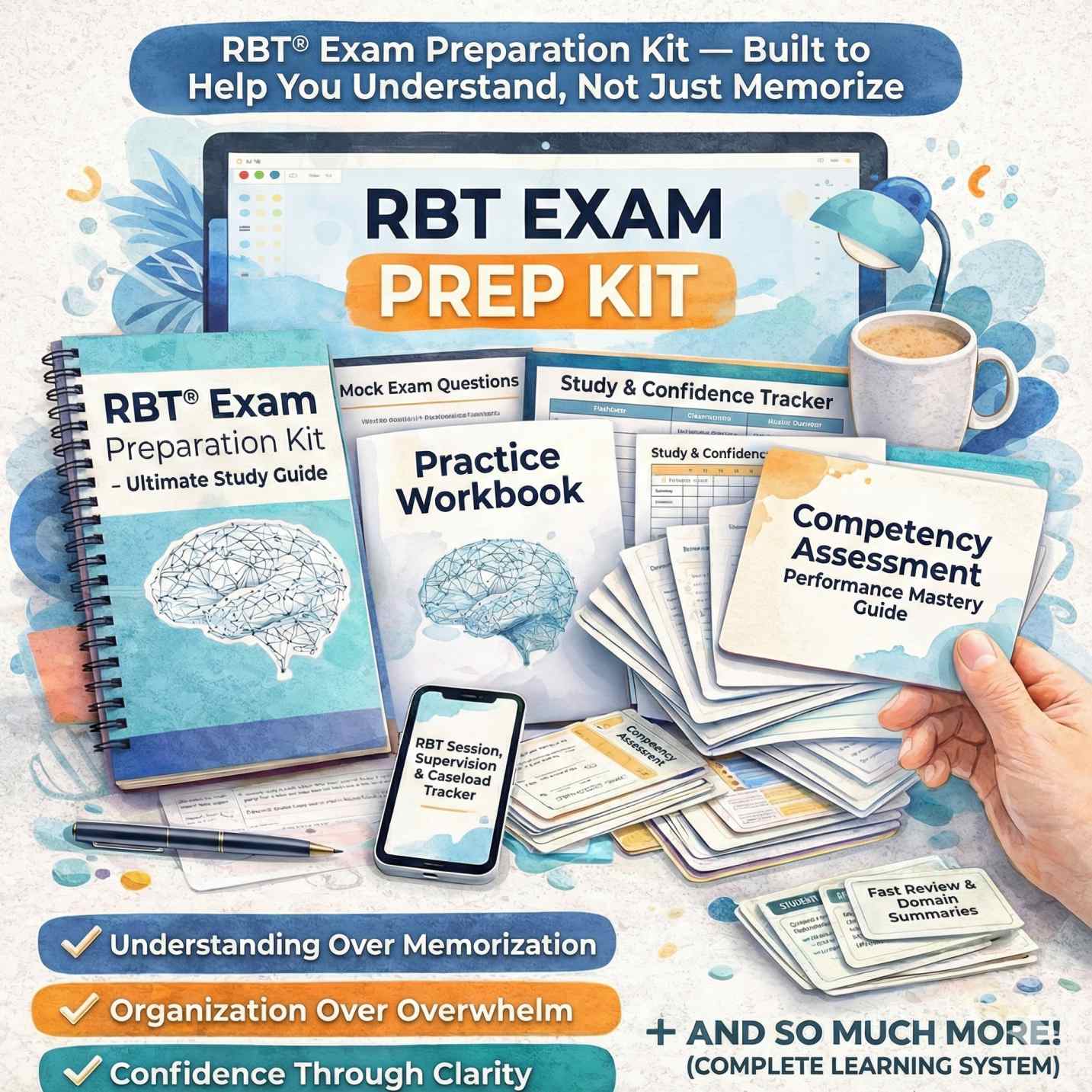
Everything You Need to Pass Your RBT® Exam
Study with our complete, all-in-one preparation package covering every task on the BACB Task List 3.0:
- 1,000+ Practice Questions & Timed Simulator
- 3rd Edition Task List Study Guide & Workbook
- Active Recall Flashcards System + Mobile App
- 20-Task Competency Assessment Mastery Guide