The field of Applied Behavior Analysis (ABA) continues to grow rapidly, and maintaining your Registered Behavior Technician (RBT) credential is essential for staying active in the profession. Whether you work in clinics, schools, home-based therapy, or healthcare settings, renewing your certification on time ensures you remain compliant with the standards established by the Behavior Analyst Certification Board (BACB).
Many RBTs become confused about renewal timelines, competency assessments, supervision requirements, and the new 2026 changes. This guide breaks everything down in a simple, step-by-step format so you can renew your certification smoothly and avoid delays or expiration.
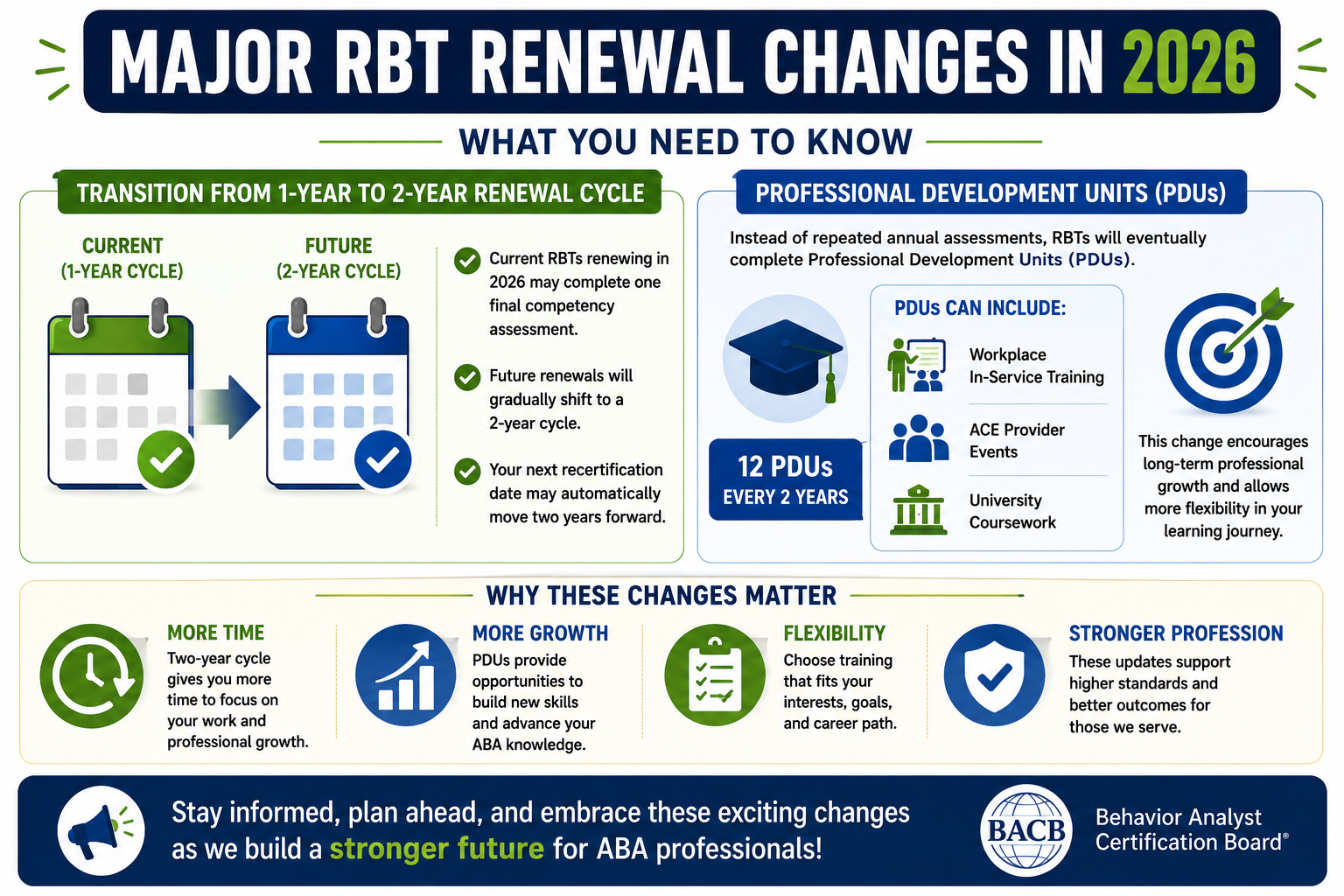
According to the BACB, significant changes are being introduced to the RBT recertification process, including a transition from annual renewals to a two-year renewal cycle and the eventual use of Professional Development Units (PDUs). (Behavior Analyst Certification Board)
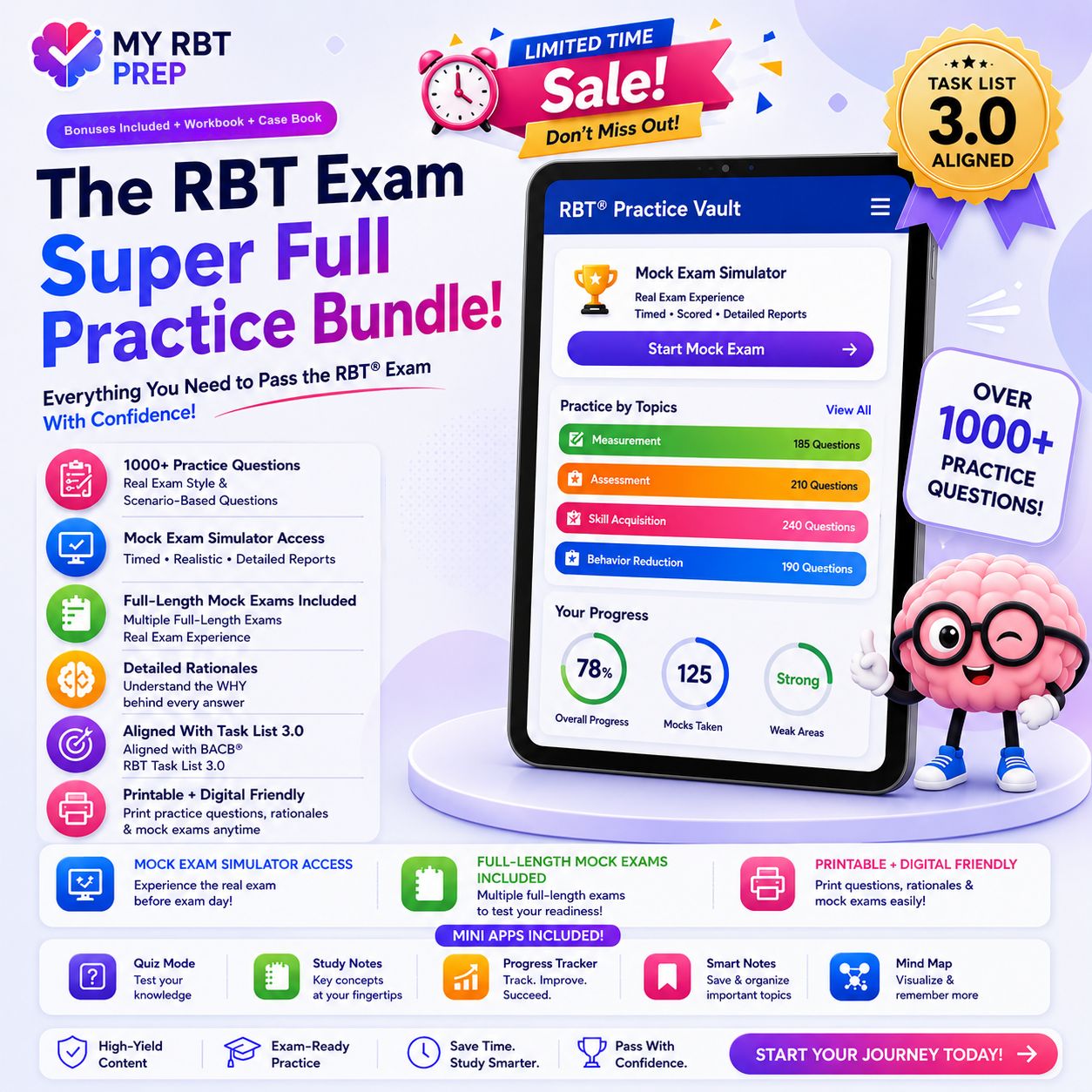
Pass Your RBT® Exam on the First Attempt
Practice with 1,000+ realistic scenario questions, multiple full-length timed mock exams, and detailed rationales formatted exactly like the real Pearson VUE test.
What Is RBT Certification Renewal?
RBT certification renewal is the process of maintaining your active credential after becoming certified as a Registered Behavior Technician. Renewal demonstrates that you:
- Continue to meet BACB standards
- Are practicing ethically
- Remain under proper supervision
- Maintain competency in ABA services
Without renewal, your certification can expire, which may prevent you from legally working as an RBT under many employers and ABA organizations.
You can learn more about official RBT requirements on the BACB RBT Page. (Behavior Analyst Certification Board)
Major RBT Renewal Changes in 2026
Transition From 1-Year to 2-Year Renewal Cycle
One of the biggest changes announced by the BACB is the move from annual recertification to a two-year renewal cycle. (Behavior Analyst Certification Board)
This means:

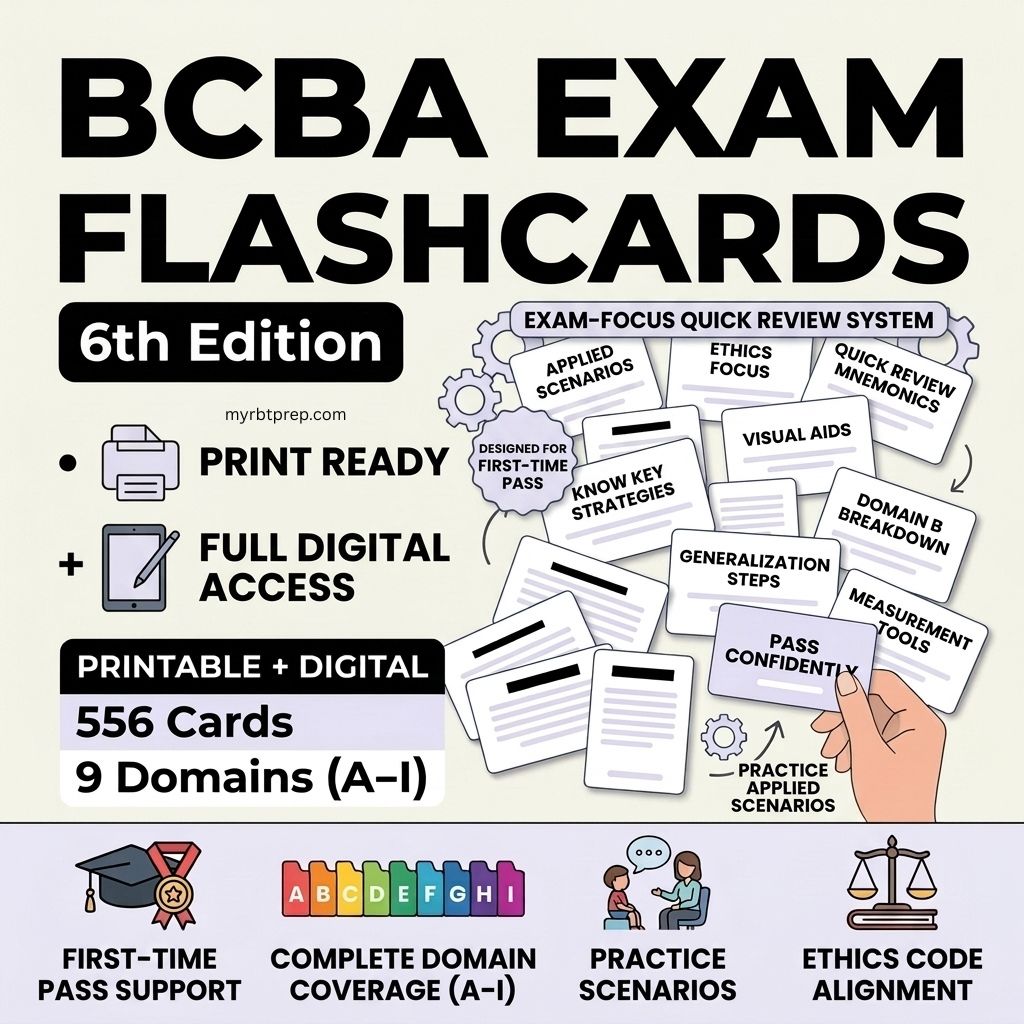
RBT® Exam Flashcards & Study App (3rd Edition)
Master essential ABA terminology and clinical discrimination across all 6 BACB task list areas with 500+ printable and digital flashcards, real exam cues, and full mobile app access.
- Current RBTs renewing in 2026 may complete one final competency assessment
- Future renewals will gradually shift toward a 2-year cycle
- The next recertification date may automatically move two years forward
Professional Development Units (PDUs)
Instead of repeated annual competency assessments, RBTs will eventually need to complete Professional Development Units (PDUs). (Do Better Collective)
The BACB transition guidance currently indicates:
- 12 PDUs every 2 years
- Training can include:
- Workplace in-service training
- ACE provider events
- University coursework
This change aims to encourage long-term professional growth instead of repetitive yearly evaluations.
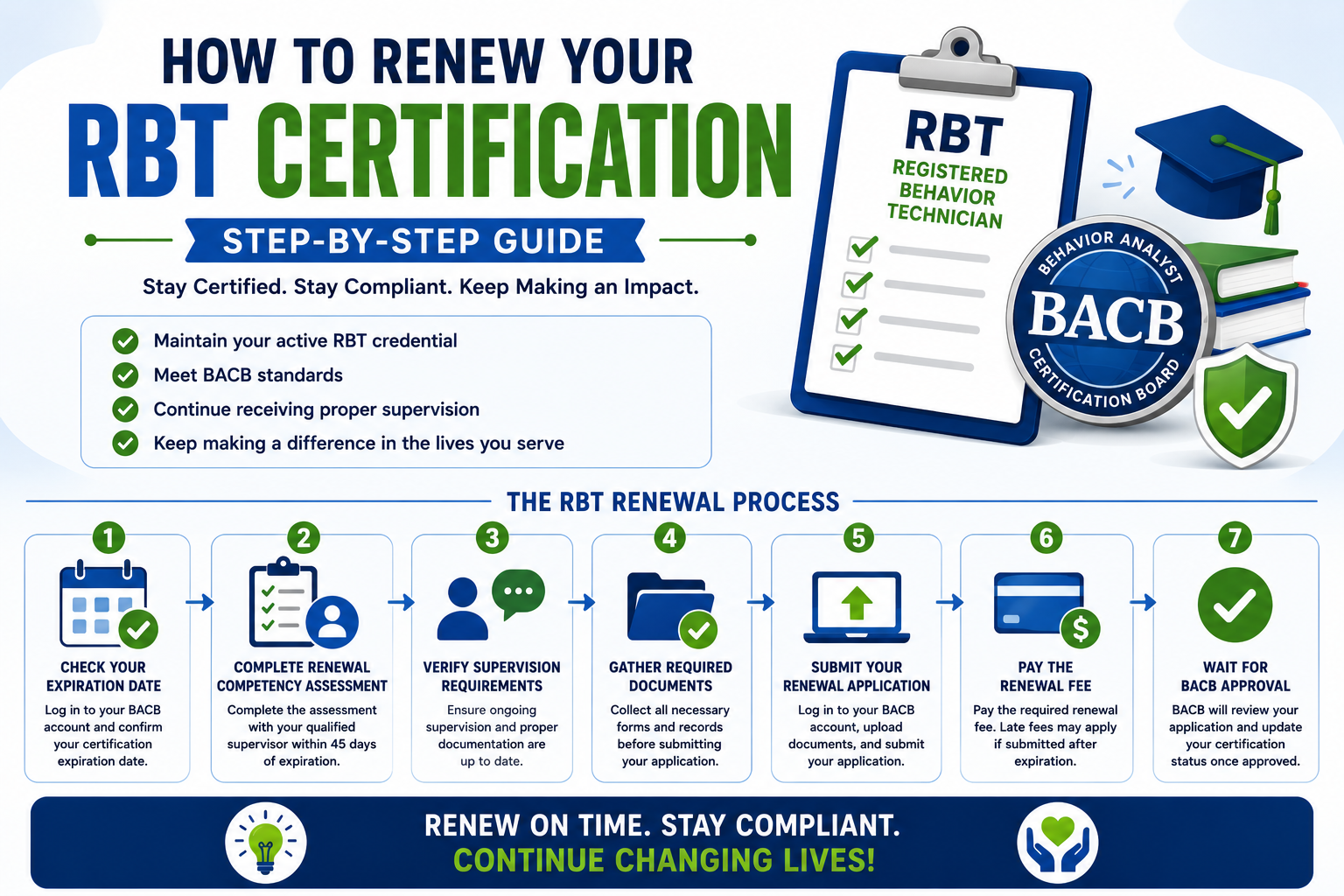
Step-by-Step Guide to Renew Your RBT Certification
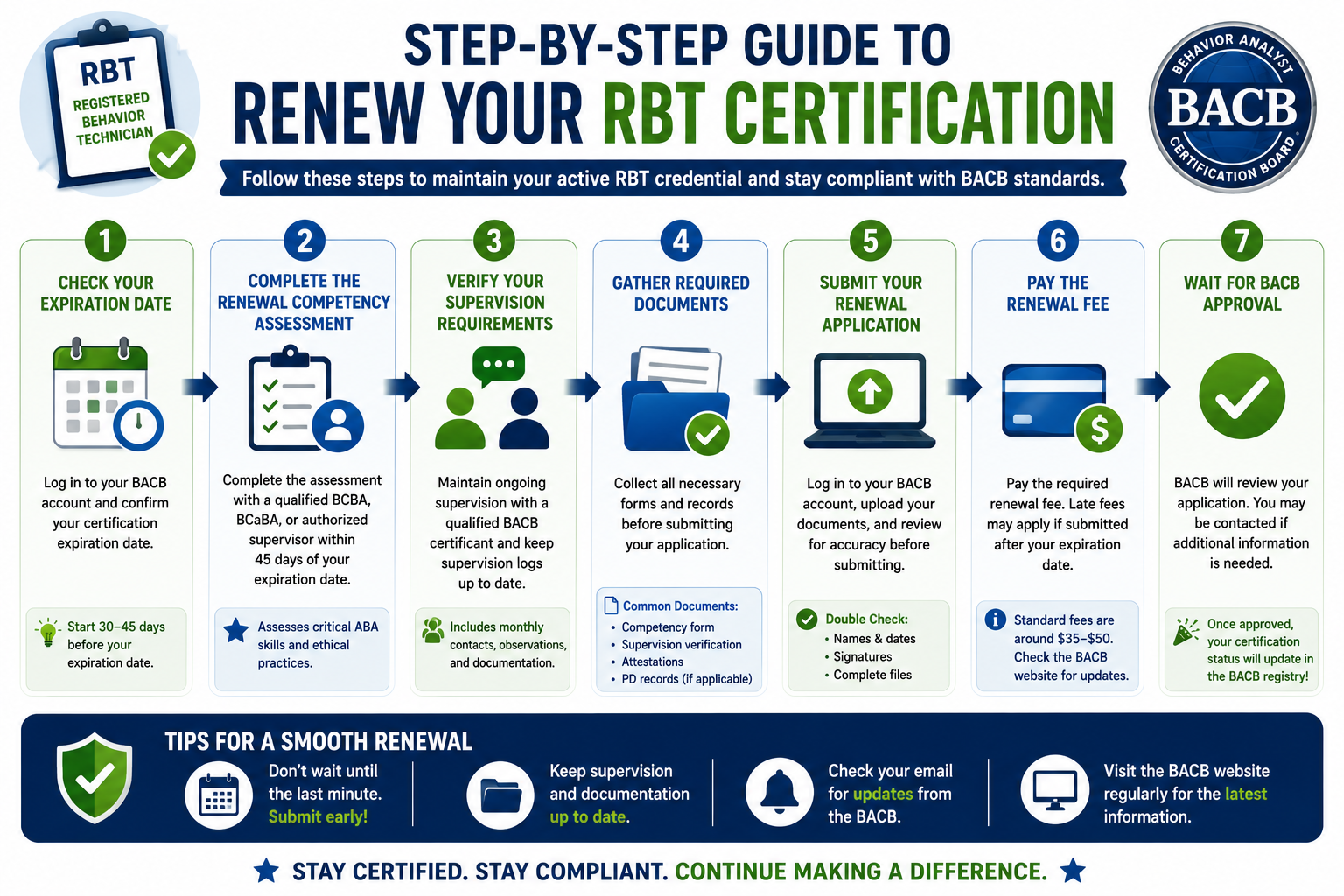
Step 1: Check Your Certification Expiration Date
Before beginning the renewal process, log into your BACB account and verify your certification expiration date.
Your renewal application should ideally begin:
- 30–45 days before expiration
- Earlier if documentation or supervision forms are pending
Missing your renewal deadline can lead to inactive or expired certification status.
You can access your BACB portal through the official BACB Gateway.
Step 2: Complete the Renewal Competency Assessment
For many RBTs renewing during the transition period, the Renewal Competency Assessment is still required. (Steady Strides ABA)
Important Requirement
The assessment must typically be completed within 45 days of your certification expiration date. (Behavior Analyst Certification Board)
Who Can Conduct the Assessment?
The assessment must be completed by a qualified:
- BCBA
- BCaBA
- Authorized supervisor
The assessor evaluates your competency in critical ABA skills and ethical practices. If you are preparing for your annual review, our RBT Competency Assessment Study Guide provides full task walkthroughs and assessment rubrics to help you pass with confidence.
Skills Usually Assessed
- Data collection
- Behavior reduction procedures
- Skill acquisition
- Professional conduct
- Documentation accuracy
- Reinforcement procedures
Step 3: Verify Your Supervision Requirements
To maintain active certification, you must remain under ongoing supervision from a qualified BACB certificant.
Supervision generally includes:
- Monthly supervision contacts
- Observation of service delivery
- Documentation and supervision logs
The BACB has also emphasized stricter supervision verification requirements moving into 2026. (Steady Strides ABA)
If supervision is not properly documented, your certification status may become inactive.
Step 4: Gather Required Documents
Before submitting your application, prepare all necessary documentation.
Common Documents Include
- Renewal Competency Assessment form
- Supervision verification
- Attestation forms
- Professional development records (if applicable)
- Updated personal information
According to BACB guidance, incomplete forms are one of the most common reasons applications get delayed. (Behavior Analyst Certification Board)
Step 5: Submit Your Renewal Application
Log into your BACB account and navigate to the recertification section.
Upload all required documents carefully and verify:
- Names match official records
- Dates are accurate
- Signatures are included
- Files are complete and readable
The BACB recommends submitting early to avoid processing delays. (Behavior Analyst Certification Board)
Step 6: Pay the Renewal Fee
The renewal application requires payment of the BACB recertification fee.
Recent sources indicate:
- Standard renewal fees range around $35–$50 depending on the transition cycle and timing. (Steady Strides ABA)
- Late fees may apply if renewal is submitted after expiration. (Mindful Sprouts)
Always verify updated fee schedules directly through the official BACB Website.
Step 7: Wait for BACB Approval
After submission:
- BACB reviews your application
- Processing times vary
- You may receive requests for corrections or additional documents
BACB publishes updated application processing timelines online. (Behavior Analyst Certification Board)
Once approved, your certification status updates in the BACB registry.
Common Mistakes That Delay RBT Renewal
1. Waiting Until the Last Week
Last-minute submissions increase the risk of expiration if documents are incomplete.
2. Missing Signatures
Unsigned competency assessments are commonly rejected.
3. Incorrect Supervision Documentation
Improper supervision records can result in inactive certification status.
4. Using Old Forms
Always use the newest BACB forms and requirements because the renewal system is changing significantly in 2026. (Behavior Analyst Certification Board)
What Happens If Your RBT Certification Expires?
If your certification expires:
- You may temporarily lose active RBT status
- Employers may suspend clinical responsibilities
- You could need reinstatement procedures
- In some cases, you may need to restart parts of the certification process
Some late reinstatement periods may still allow renewal with additional fees, but policies vary depending on timing and BACB rules. (Mindful Sprouts)
Tips for Smooth RBT Recertification
Stay Organized
Keep digital copies of:
- Supervision logs
- Assessments
- Certificates
- Training records
Track Deadlines Early
Set reminders:
- 60 days before expiration
- 45 days before expiration
- 30 days before expiration
Continue Professional Development
Even before PDUs become mandatory for everyone, continuing education helps improve:
- Clinical effectiveness
- Ethical decision-making
- Career advancement opportunities
Communicate With Your Supervisor
Many renewal delays happen because supervisors are unavailable to sign forms near deadlines.
Why Maintaining Your RBT Credential Matters
Maintaining your RBT credential provides several long-term benefits:
- Professional credibility
- Better employment opportunities
- Higher earning potential
- Compliance with ABA industry standards
- Preparation for future BCaBA or BCBA pathways
As ABA services continue expanding worldwide, certified professionals remain in high demand. (abcachieve.com)
Frequently Asked Questions (FAQs)
How Often Do I Need to Renew My RBT Certification?
The BACB is transitioning from annual renewals to a two-year cycle beginning in 2026. (Behavior Analyst Certification Board)
Do I Still Need a Competency Assessment?
Many RBTs renewing during the transition period still need one final competency assessment before moving fully into the new PDU-based system. (Do Better Collective)
How Many PDUs Will RBTs Need?
The BACB transition guidance currently references 12 PDUs every two years. (Do Better Collective)
What Happens If I Miss My Renewal Deadline?
You may face:
- Late fees
- Inactive status
- Possible reinstatement requirements
- Expired certification
Final Thoughts
Renewing your RBT certification in 2026 is becoming more streamlined, but the process still requires careful attention to deadlines, supervision requirements, and updated BACB policies.
The transition toward a two-year cycle and Professional Development Units represents a major shift in how RBTs maintain certification. Staying proactive, organized, and informed will help you avoid unnecessary delays and continue growing in the ABA field.
Whether you are renewing for the first time or preparing for the new PDU system, following the steps in this guide can help ensure your RBT credential remains active and compliant for years to come.

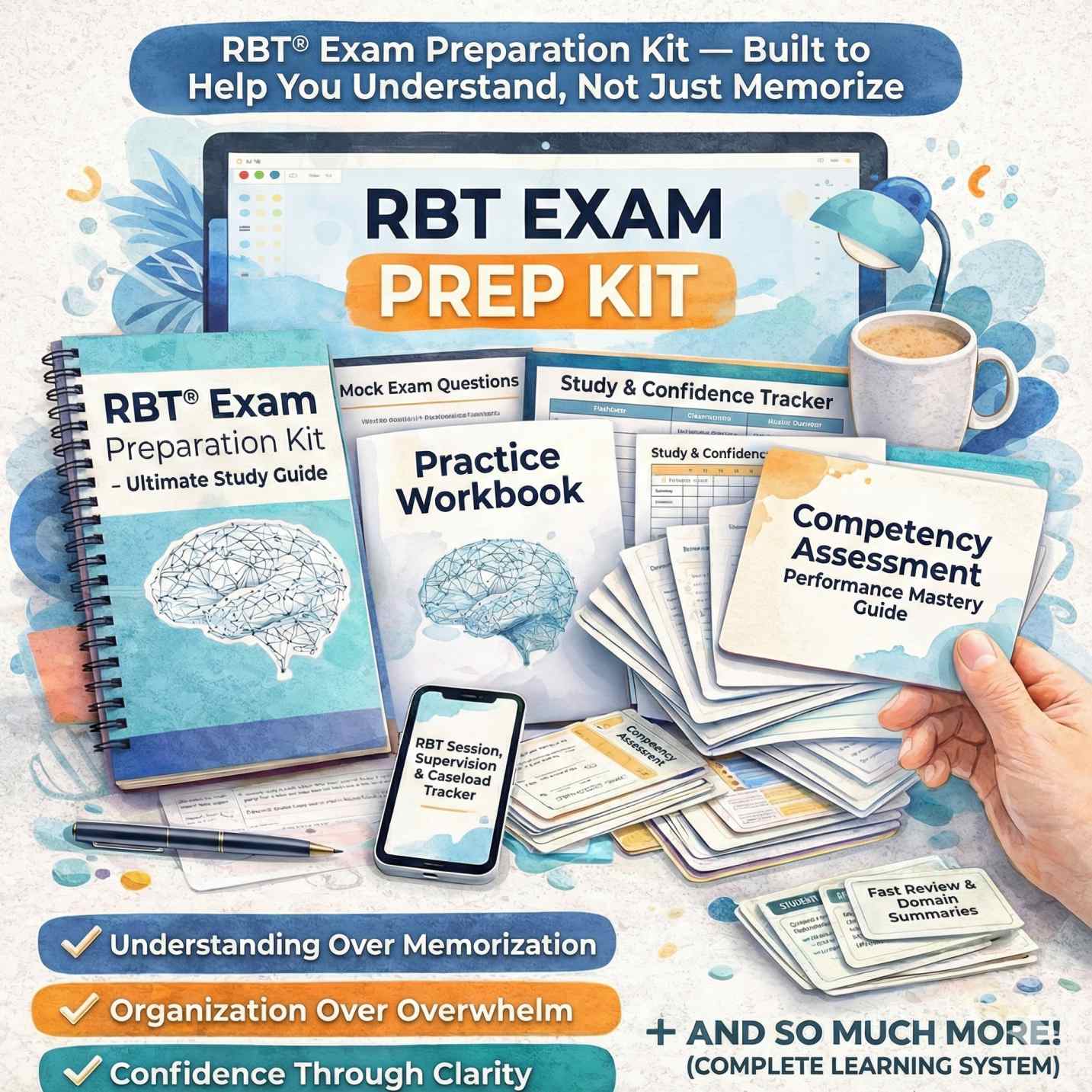
Everything You Need to Pass Your RBT® Exam
Study with our complete, all-in-one preparation package covering every task on the BACB Task List 3.0:
- 1,000+ Practice Questions & Timed Simulator
- 3rd Edition Task List Study Guide & Workbook
- Active Recall Flashcards System + Mobile App
- 20-Task Competency Assessment Mastery Guide