The RBT Supervision Requirements (BACB 2026 Task List Update) are designed to ensure that Registered Behavior Technicians deliver high-quality Applied Behavior Analysis standards while working under competent guidance. These updates clarify the expectations for RBT supervision requirements, including frequency, documentation, and supervisor qualifications. Under the new guidelines, supervisors must provide direct observation, performance feedback, and coaching to RBTs to maintain core ethical principles for RBTs.
This structured supervision ensures consistent skill development, adherence to ethical practices, and improved client outcomes. Understanding these requirements is crucial for both new and experienced RBTs to maintain certification, comply with the Behavior Analyst Certification Board (BACB) regulations, and foster continuous professional growth.
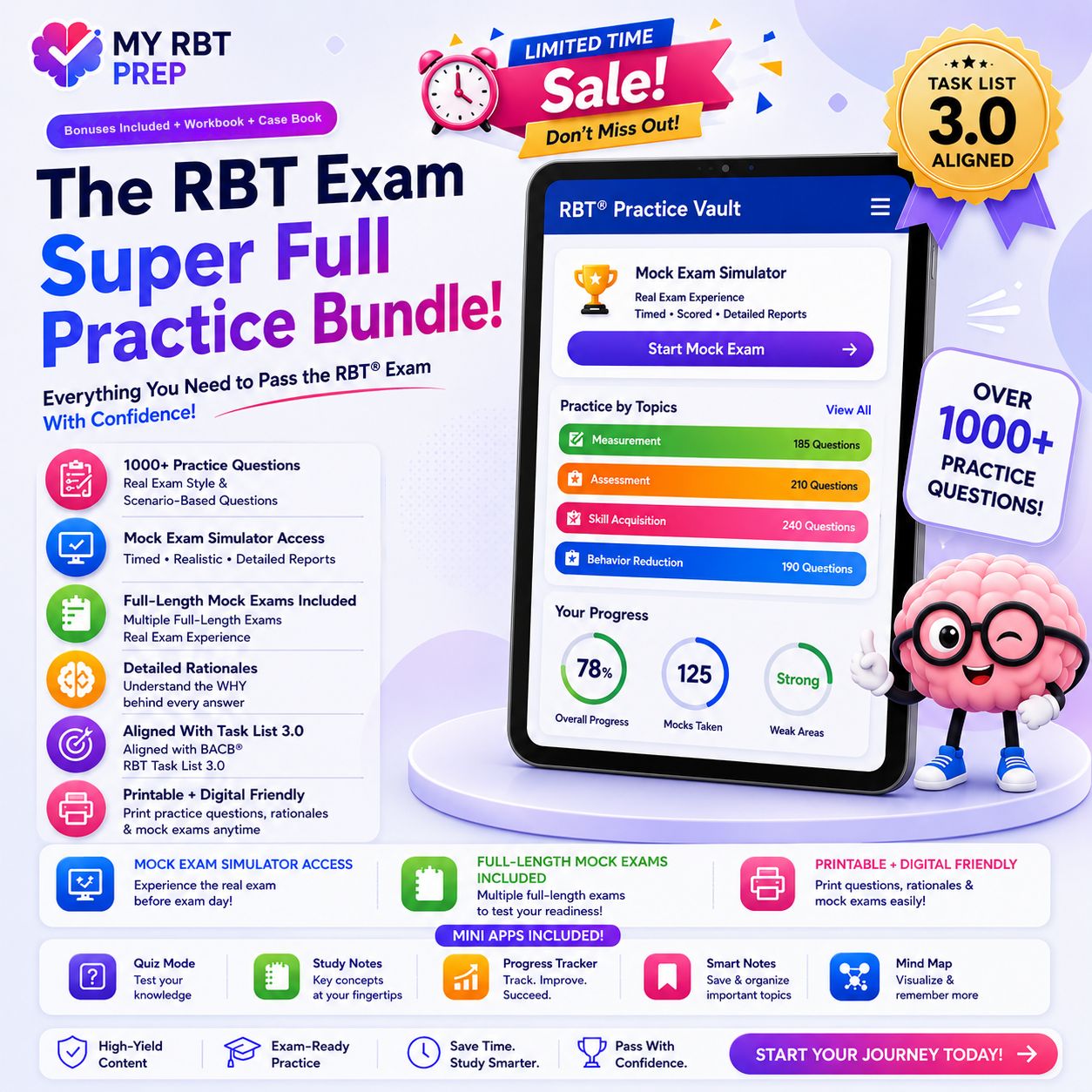
Pass Your RBT® Exam on the First Attempt
Practice with 1,000+ realistic scenario questions, multiple full-length timed mock exams, and detailed rationales formatted exactly like the real Pearson VUE test.
What Is the RBT Certification and Task List?
The RBT certification is a credential for professionals who deliver behavioral services under supervision. It ensures that Responsibilities of a Registered Behavior Technician meet Applied Behavior Analysis standards. The RBT Task List outlines the knowledge and skills necessary for competent practice. It covers domains like Behavior Assessment, Behavior Acquisition, Behavior Reduction, Data Collection and Graphing, and Ethics in ABA.
For example, a new RBT may need to identify trends in graphed data, implement positive and negative punishment procedures, or follow ethical guidelines when working with clients. The 40-hour RBT training serves as the foundation for building these competencies. Understanding the Task List ensures that RBTs are prepared to perform their duties safely, ethically, and effectively under supervision.
| Aspect | Details |
| Credential | RBT Certification – for professionals delivering behavioral services under supervision. |
| Purpose | Ensures Responsibilities of a Registered Behavior Technician meet Applied Behavior Analysis standards. |
| Task List | Outlines knowledge and skills for competent practice. Covers domains: Behavior Assessment, Behavior Acquisition, Behavior Reduction, Data Collection and Graphing, Ethics in ABA. |
| Example Tasks | Identify trends in graphed data, implement positive and negative punishment procedures, follow ethical guidelines. |
| Training Foundation | 40-hour RBT training builds core competencies. |
| Outcome | Prepares RBTs to perform duties safely, ethically, and effectively under supervision. |
Key Differences Between RBT Task List 2.0 and 3.0
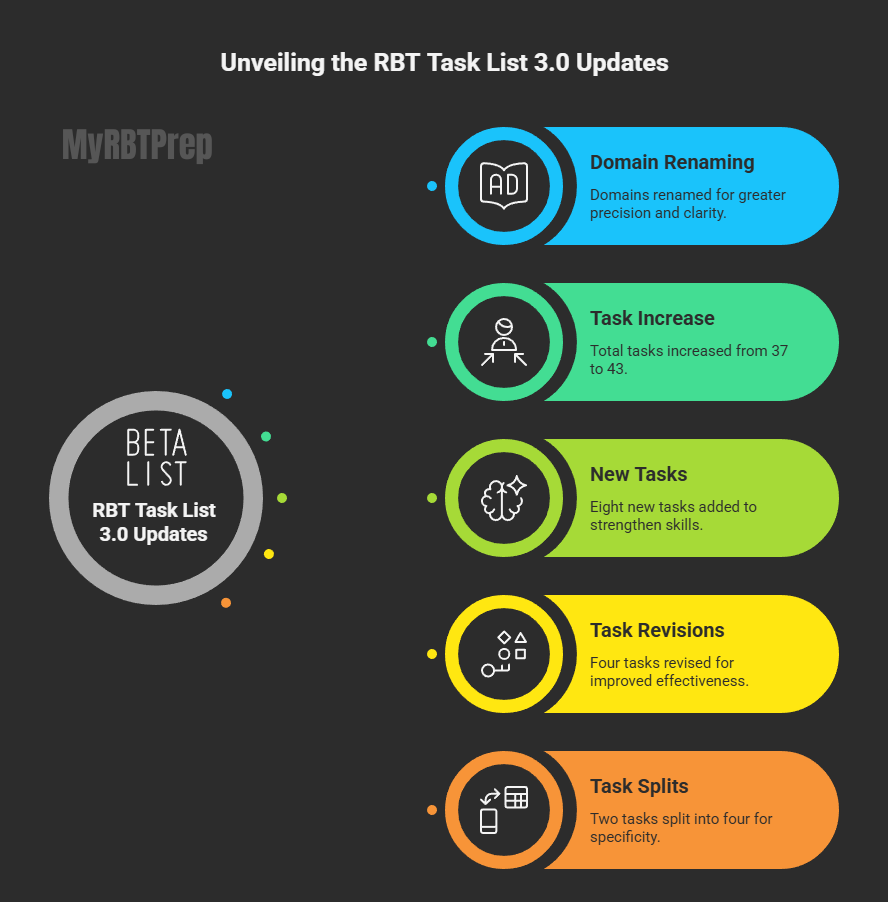
The new RBT Task List 3.0 includes several updates to improve clarity and align with modern practices. Domains have been renamed to be more precise. For instance, Measurement is now Data Collection and Graphing, and Professional Conduct and Scope of Practice is now Ethics. The total number of tasks increased from 37 to 43, reflecting growing responsibilities in ABA practice.
Eight new tasks were added to strengthen skills in areas like cultural humility in ABA, ethical decision-making, and analyzing trends in graphed ABA data. Four tasks were revised, and two were split into four for more specificity. These changes enhance both practical competence and professional judgment, making RBTs better equipped to handle the complexities of real-world behavioral interventions.

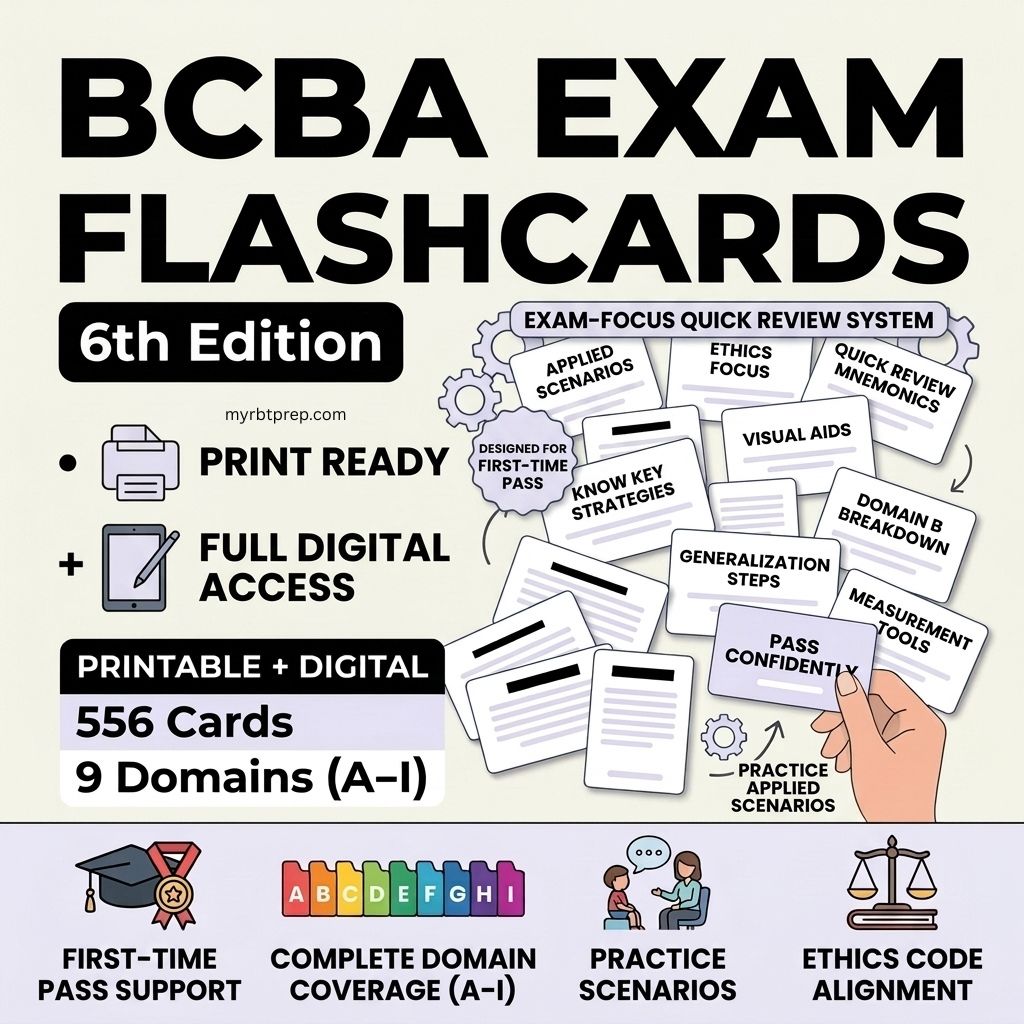
RBT® Exam Flashcards & Study App (3rd Edition)
Master essential ABA terminology and clinical discrimination across all 6 BACB task list areas with 500+ printable and digital flashcards, real exam cues, and full mobile app access.
RBT Task List 3.0 Content Outline & Exam Changes
The Task List 3.0 is organized into six core domains: Data Collection and Graphing, Behavior Assessment, Behavior Acquisition, Behavior Reduction, Documentation and Reporting, and Ethics in ABA. Each domain now carries updated exam weighting to reflect its importance in practice.
| Domain | Tasks (2.0) | Tasks (3.0) | Exam Weight |
| Data Collection & Graphing | 6 | 8 | 17% |
| Behavior Assessment | 3 | 3 | 11% |
| Behavior Acquisition | 12 | 11 | 25% |
| Behavior Reduction | 6 | 7 | 19% |
| Documentation & Reporting | 5 | 4 | 13% |
| Ethics | 5 | 10 | 15% |
These updates ensure that the competency assessment for RBTs aligns with everyday practice, emphasizing both technical skills and ethical judgment. They also guide preparation for BACB exam updates, helping candidates focus on high-priority areas.
Why the BACB Is Updating the RBT Certification
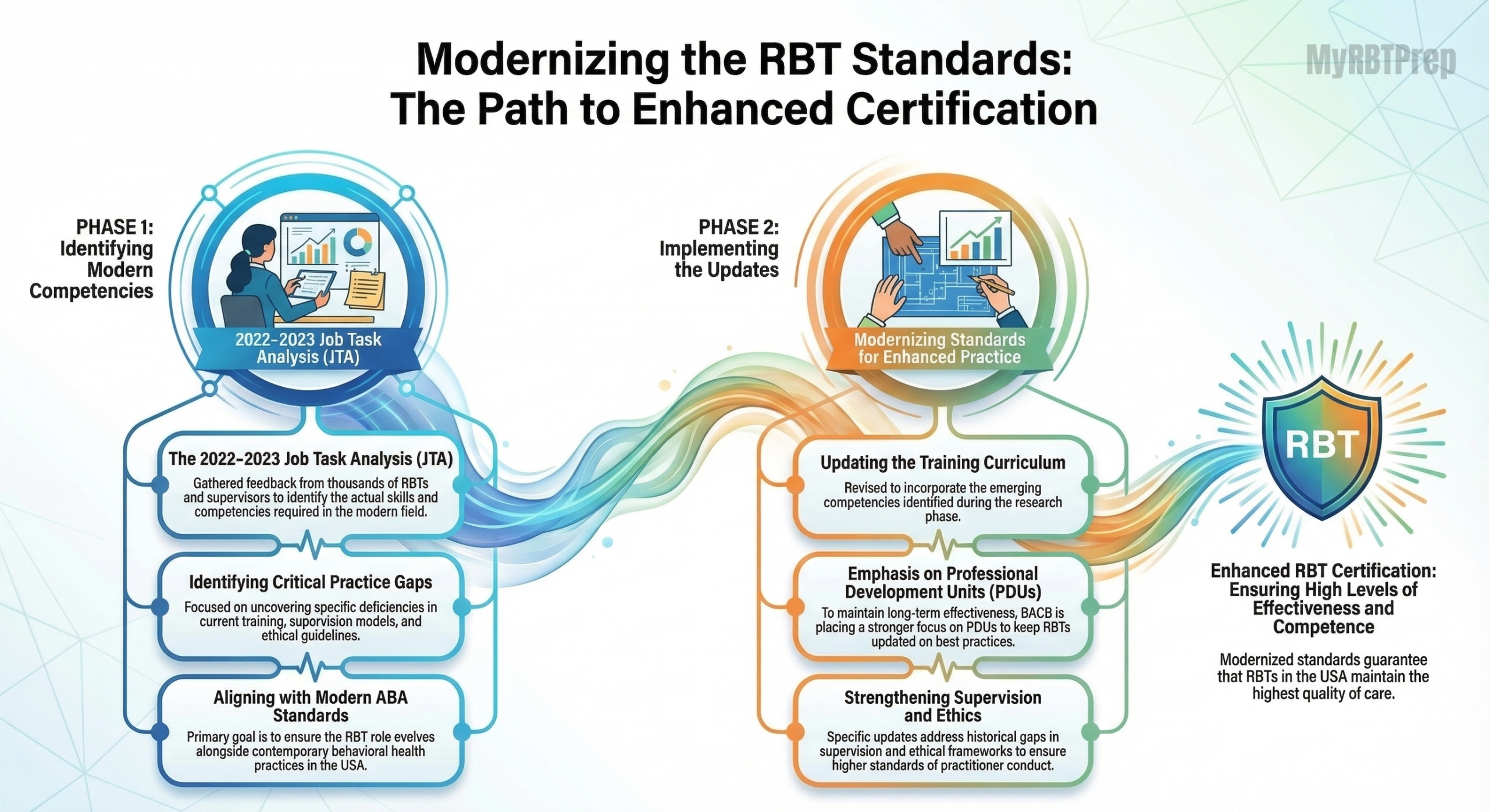
The Behavior Analyst Certification Board (BACB) regularly reviews standards to ensure they reflect current best practices. The Job Task Analysis (JTA) conducted in 2022–2023 collected feedback from thousands of RBTs and supervisors to identify emerging competencies. The goal is to ensure the RBT role matches modern ABA practice standards.
Updates also address gaps in training, supervision, and ethical guidelines. By updating the RBT training curriculum and emphasizing Professional Development Units (PDUs), the BACB ensures that RBTs remain effective, competent, and aligned with contemporary behavioral health practices across the USA.
Initial RBT Certification Requirements (2026 Updates)
The initial RBT certification requirements now include a revised 40-hour RBT training covering 54 topics across eight content areas. Candidates must meet RBT eligibility requirements, including a high school diploma, age requirement, and background checks. Trainers must hold active RBT or higher credentials.
This training emphasizes practical skills, ethical decision-making, and core ethical principles for RBTs. For instance, candidates learn how to implement positive and negative punishment procedures safely and analyze client data using proper Data Collection and Graphing methods. These requirements prepare RBTs for both the exam and real-world practice.
| Requirement | Details |
| Training | Revised 40-hour RBT training covering 54 topics across 8 content areas. |
| Eligibility | High school diploma, minimum age requirement, and background checks. |
| Trainer Qualifications | Trainers must hold active RBT certification or higher credentials. |
| Training Focus | Emphasizes practical skills, ethical decision-making, and core ethical principles for RBTs. |
| Example Skills Learned | Implement positive and negative punishment procedures safely and analyze client data using proper Data Collection and Graphing methods. |
| Outcome | Prepares candidates for both the certification exam and real-world practice. |
RBT Maintenance & Recertification Updates
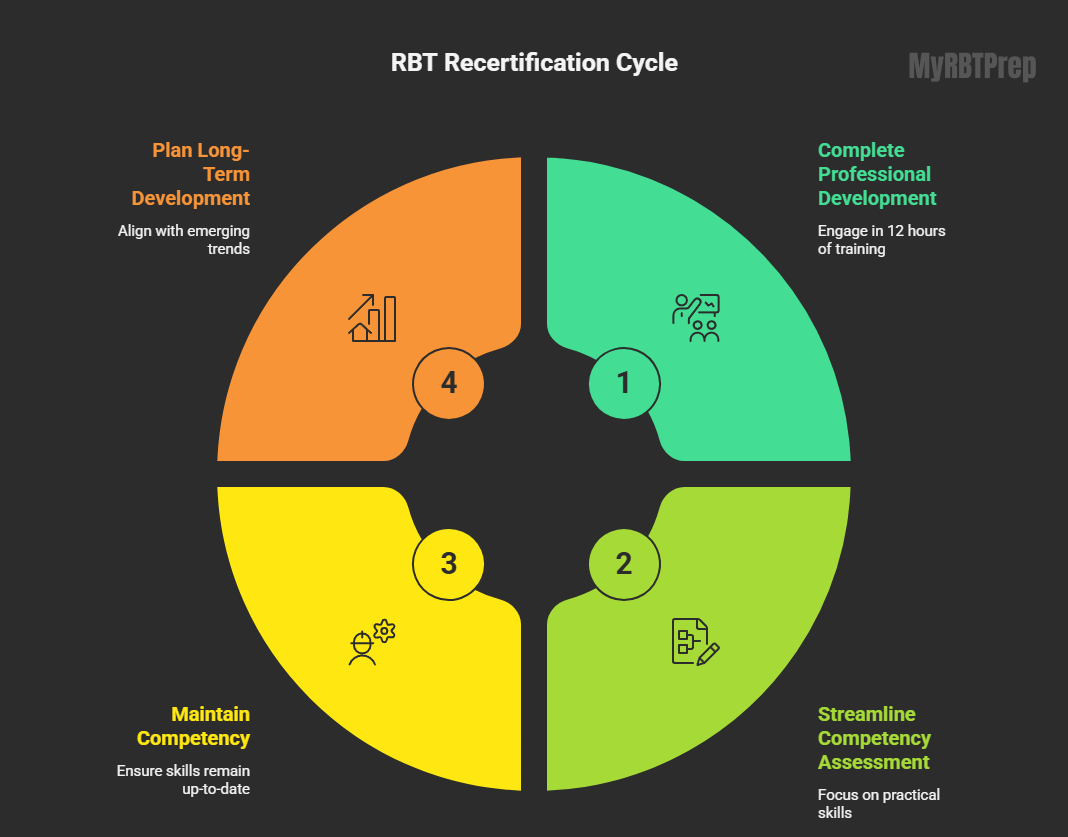
RBTs now follow a biennial recertification cycle, replacing annual renewal. Recertification requires completion of 12 hours of professional development, which can include in-service training, university courses in Applied Behavior Analysis standards, or continuing education from ACE providers. RBT recertification ensures professionals maintain competency over time.
The competency assessment for RBTs is streamlined under the new system. This shift allows RBTs to focus on continuous learning and practical skill growth rather than frequent formal exams. Professionals can plan long-term development in alignment with emerging trends and Responsibilities of a Registered Behavior Technician.
RBT Supervision & Professional Development in 2026
Supervision requirements remain rigorous, ensuring RBTs work under qualified guidance. Supervisors must meet specific criteria, and supervision frequency is clearly outlined. The updates highlight the importance of RBT professional development, including mentoring, coaching, and performance feedback.
Professional growth is supported by Professional Development Units (PDUs). RBTs are encouraged to engage in reflective practice, test their ethical dilemma skills with the RBT Ethics Quiz, and keep accurate logs using an all-in-one RBT Supervision & Caseload Tracker. This approach promotes both technical expertise and ethical compliance.
| Aspect | Details |
| Supervision Requirements | RBTs must work under qualified supervisors who meet specific criteria, with clearly outlined supervision frequency. |
| Professional Development | Emphasizes mentoring, coaching, and performance feedback to enhance skills and ethical practice. |
| Professional Development Units (PDUs) | Supports ongoing growth; RBTs complete PDUs through training, courses, and reflective practice. |
| Skills Focus | Advanced development in Behavior Acquisition and Behavior Reduction, along with applying Ethics in ABA responsibly. |
| Outcome | Promotes both technical expertise and ethical awareness, ensuring RBTs maintain high standards in practice. |
New Fee Structure & Voluntary Inactive Status (VIS) Updates
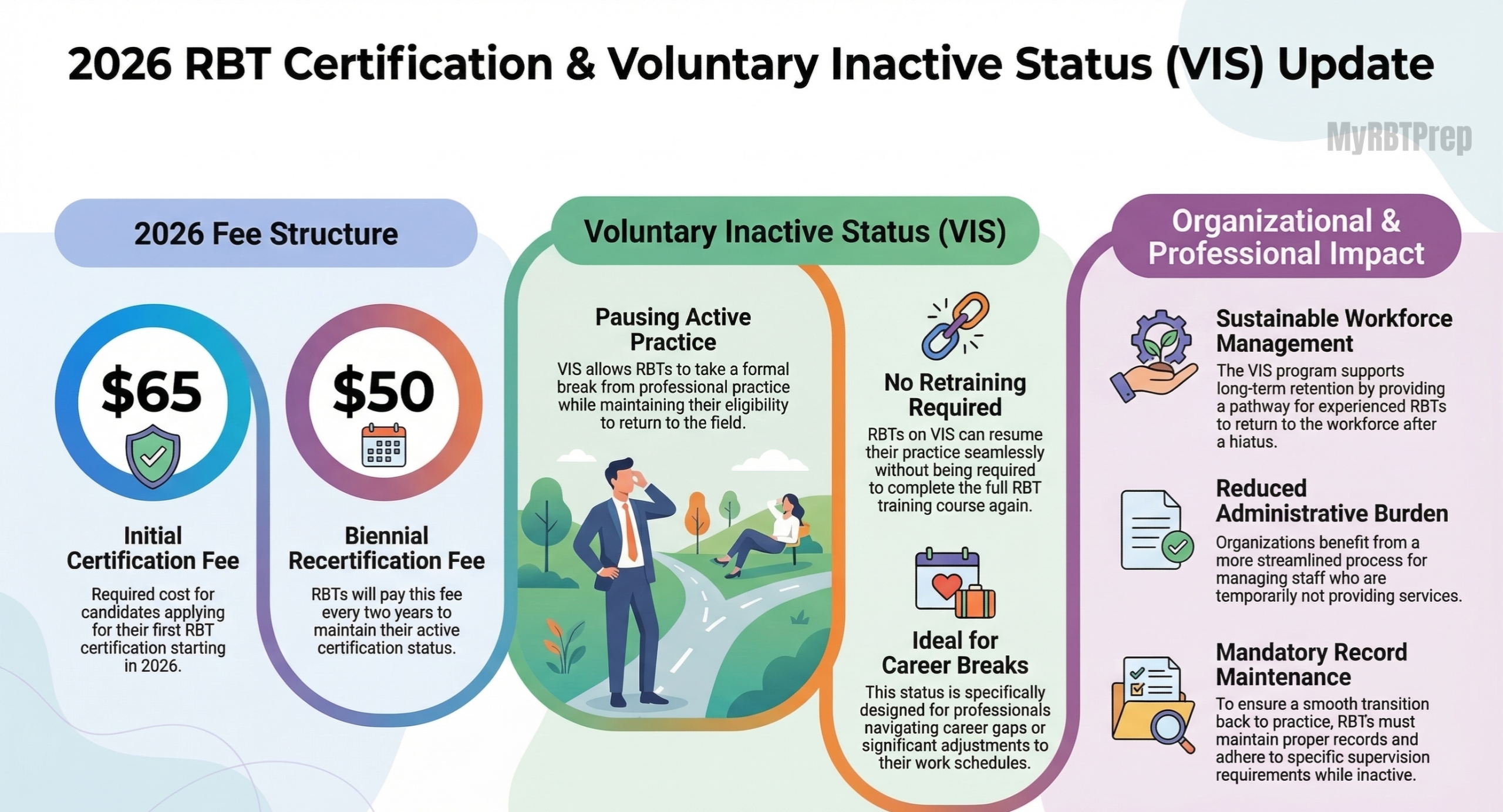
The RBT certification fee structure for 2026 includes $65 for initial certification and $50 for biennial recertification. The introduction of Voluntary Inactive Status (VIS) allows RBTs to pause active practice while maintaining eligibility to return without completing the full training again.
VIS is ideal for professionals taking career breaks or adjusting work schedules. It reduces administrative burden for organizations and supports sustainable workforce management. Maintaining proper records and following RBT supervision requirements ensures that inactive RBTs can resume practice seamlessly.
What These Updates Mean for Current and Aspiring RBTs
The recently updated RBT Task List 3.0 will establish a strong relationship to ethics and a strong basis for ongoing professional development. The new tasks will encourage RBTs to analyze graphs of their client outcomes to identify trends in order to facilitate increased successful outcomes for their clients.
Aspiring RBTs will benefit from the clarity of training and initial certification requirements established by the new task list as well as the emphasis on ethical practice, cultural humility in ABA, and the practical skills needed for “real-world” application of ABA principles. By having a clear roadmap of the skills needed to gain long term development opportunities in the ABA service industry, both groups can continue to build on their successes in the future.
| Group | Details |
| Current RBTs | Must adjust to Task List 3.0, follow ethical standards, and engage in consistent RBT professional development. New tasks include analyzing trends in graphed ABA data to improve client outcomes. |
| Aspiring RBTs | Benefit from clearer initial RBT certification requirements, improved training, and emphasis on ethical practices and cultural humility in ABA. Prepares them for real-world application. |
| Overall Impact | Both groups gain a roadmap for long-term career growth, enhanced technical skills, and ethical competence in Applied Behavior Analysis standards. |
Final Takeaways
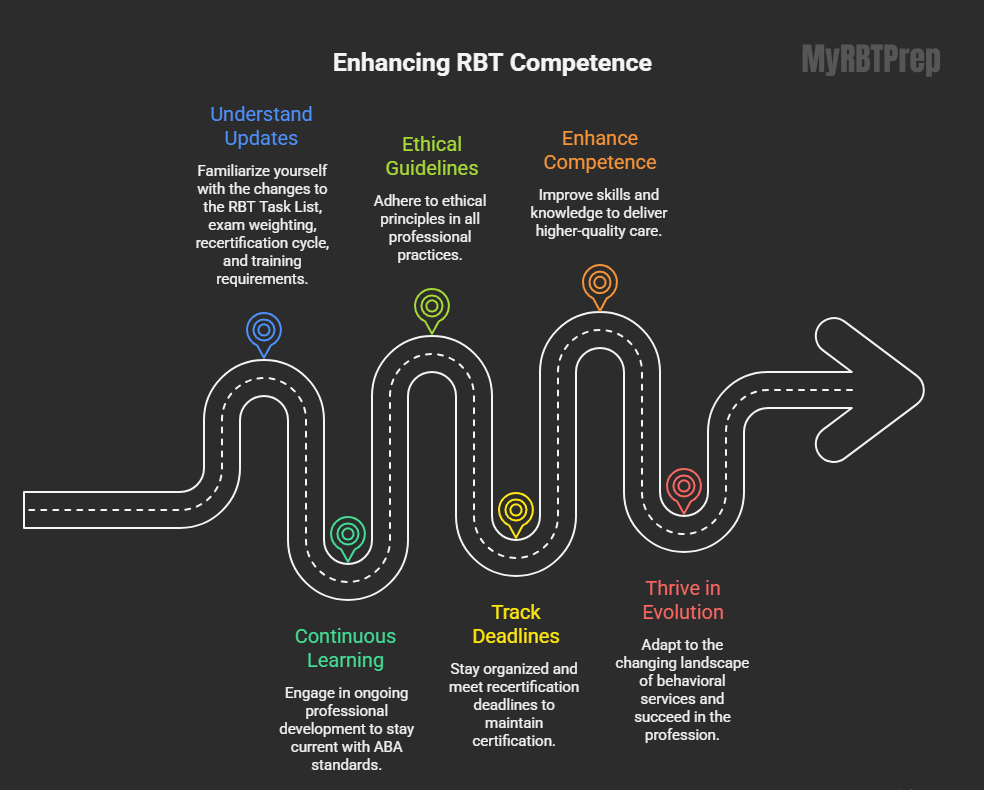
The RBT Certification Updates 2026 represent a meaningful evolution of the profession. Changes to the RBT Task List, exam weighting, recertification cycle, and training requirements ensure alignment with Applied Behavior Analysis standards. Staying informed is crucial for both current and aspiring RBTs.
Professionals should engage in continuous learning, follow ethical guidelines, and track RBT recertification deadlines. By embracing these updates, RBTs can enhance competence, deliver higher-quality care, and thrive in the evolving landscape of behavioral services in the United States.
FAQs
- What are the new RBT requirements for 2026?
RBTs must complete updated 40-hour training, follow Task List 3.0, meet eligibility requirements, and maintain proper supervision. - What is the purpose of the BACB’s supervision requirements for RBTs?
Supervision ensures skill competency, ethical compliance, and proper RBT professional development under qualified guidance. - What happens if an RBT does not meet the required 5% supervision in a month?
Failure to meet supervision may lead to ineligibility for recertification and a need to complete makeup supervision hours. - What are RBT requirements?
RBTs must meet age and education criteria, complete 40-hour RBT training, pass the competency assessment, and follow supervision rules. - What are the rules of RBT?
RBTs must adhere to Task List 3.0, ethical standards, proper documentation, direct supervision, and continuous professional development.

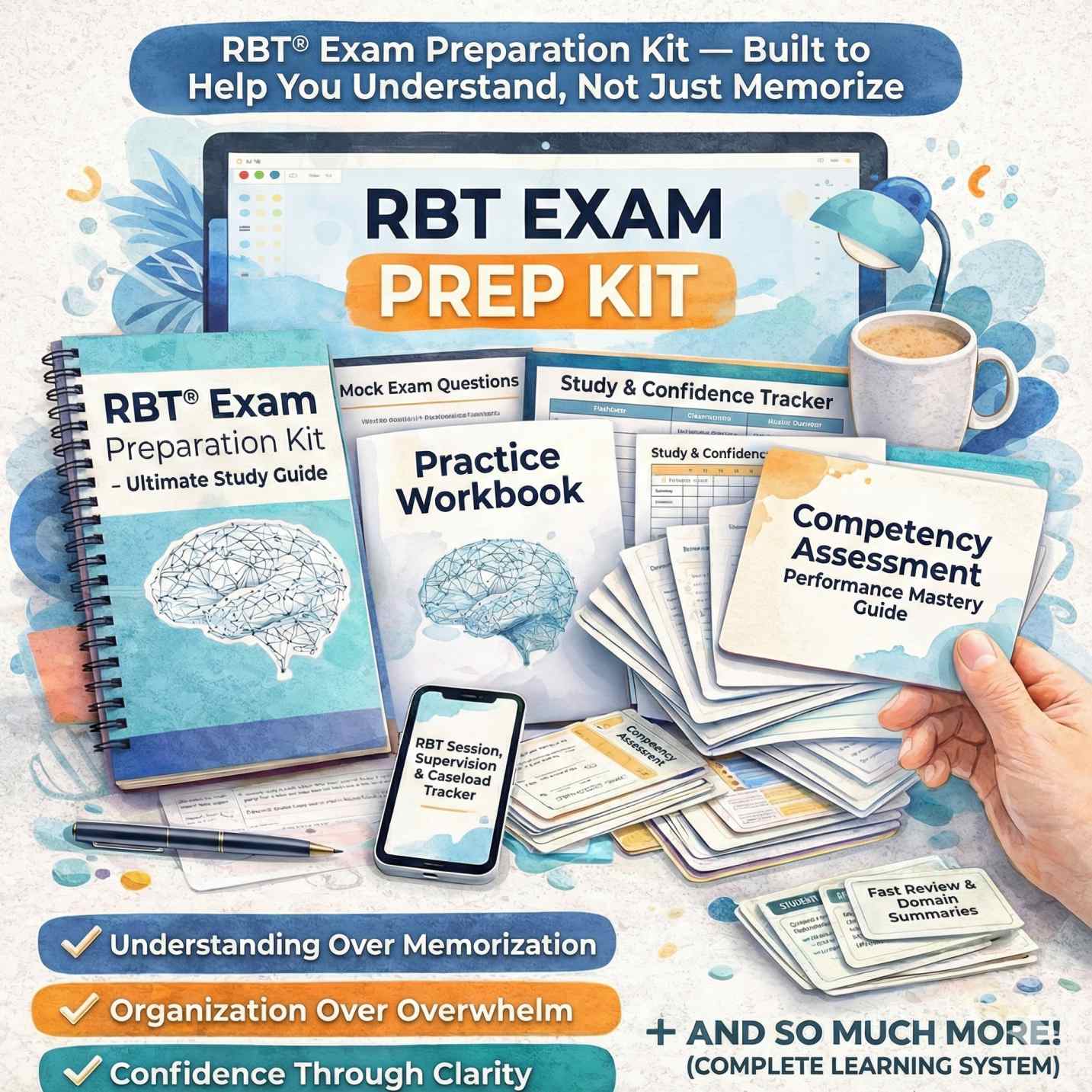
Everything You Need to Pass Your RBT® Exam
Study with our complete, all-in-one preparation package covering every task on the BACB Task List 3.0:
- 1,000+ Practice Questions & Timed Simulator
- 3rd Edition Task List Study Guide & Workbook
- Active Recall Flashcards System + Mobile App
- 20-Task Competency Assessment Mastery Guide