The field of Applied Behavior Analysis (ABA) is rapidly expanding, creating a significant demand for qualified professionals, particularly Registered Behavior Technicians (RBTs). RBTs play a crucial role in delivering direct ABA services to individuals, often those with autism spectrum disorder or other developmental differences, under the supervision of a Board Certified Behavior Analyst (BCBA).
For aspiring RBTs, the journey begins with a mandatory 40-hour training program, followed by a competency assessment and a certification exam. A pivotal decision at the outset of this journey is choosing the right training modality: online or in-person. Both approaches offer distinct advantages and disadvantages, impacting a candidate’s learning experience, skill acquisition, financial outlay, and overall readiness for the demanding RBT role.
Understanding these nuances is essential for making an informed decision that aligns with individual learning styles, logistical constraints, and career aspirations.
This article delves into a comprehensive comparison of online and in-person RBT training programs, exploring their curriculum delivery, practical application requirements, networking opportunities, cost-effectiveness, and scheduling flexibility. It also addresses the critical distinction between training modality and the current, exclusively in-person, RBT examination format, offering a balanced perspective to help prospective RBTs determine which path is “better” for their unique circumstances.
The Foundational Requirements: Understanding the RBT Training Mandate
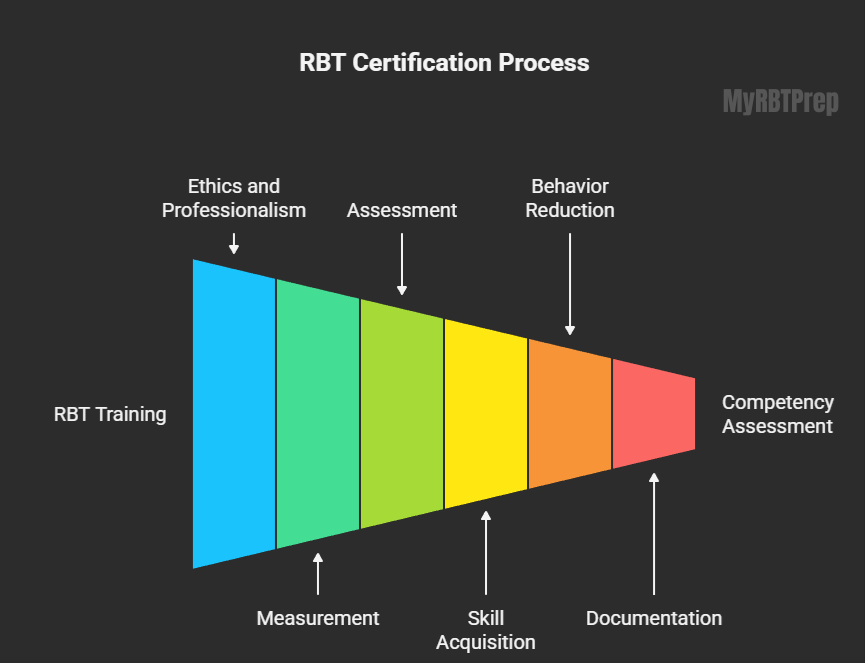
Regardless of whether training is pursued online or in a physical classroom, all RBT programs must adhere to stringent standards set by the Behavior Analyst Certification Board (BACB). The cornerstone of RBT preparation is a 40-hour training course that is aligned with the RBT Task List and covers specific curricular domains. This ensures a universal baseline of knowledge and skills for all RBT candidates.
The core curriculum is extensive and designed to equip technicians with the fundamental principles and practical techniques of ABA. Key areas of study include:
- Ethics and Professionalism: Covering professional conduct, informed consent, confidentiality, maintaining boundaries, and cultural sensitivity. RBTs are expected to uphold strict ethical guidelines to ensure the quality and integrity of services.
- Measurement: Focused on various data collection systems, recording techniques, and the importance of accurate data for effective decision-making.
- Assessment: Introducing functional behavior assessments, skill assessments, and preference assessments, highlighting how RBTs assist in these processes.
- Skill Acquisition: Delving into reinforcement strategies, prompting hierarchies, discrete-trial teaching (DTT), natural environment teaching (NET), task analysis, and generalization techniques.
- Behavior Reduction: Explaining procedures such as differential reinforcement, extinction, and crisis intervention strategies.
- Documentation and Reporting: Emphasizing the importance of maintaining confidentiality, accurate record-keeping, session notes, and timely reporting to supervisors.
- Introduction to ABA and Next Steps: Providing an overview of ABA principles and the RBT certification maintenance requirements, including ongoing supervision and recertification.
A significant update for 2026 is the explicit requirement for training programs to include components of Behavioral Skills Training (BST). BST is a critical instructional method in ABA that involves instruction, modeling, rehearsal, and feedback to teach new skills. This ensures that RBTs not only understand theoretical concepts but can also effectively demonstrate practical application in real-world or simulated scenarios.
Following the 40-hour training, candidates must successfully complete a Competency Assessment, which is administered by a qualified BCBA or Board Certified Assistant Behavior Analyst (BCaBA). This assessment evaluates the candidate’s ability to apply learned concepts in a practical setting, often involving direct observation with a client or through role-play scenarios. It typically includes demonstrating skills in areas like data collection, DTT, prompting, and managing challenging behaviors. This assessment serves as a critical common hurdle for all RBT candidates, regardless of their training modality, ensuring that practical skills meet professional standards before proceeding to the final examination.
Prepare the right way, before your competency assessment.
Analyzing Training Modality: Online RBT Programs
Online RBT training programs have become increasingly popular due to their inherent flexibility and accessibility, catering to a diverse range of learners. These programs are fully accepted by the BACB, provided they meet the 40-hour requirement and cover the RBT Task List comprehensively.


Advantages of Online RBT Programs
- Flexibility and Self-Paced Learning: One of the most significant benefits of online training is the ability to learn at one’s own pace and on a schedule that fits personal commitments. Many online courses allow candidates to complete the 40 hours over more than 5 days but less than 180 days, as per BACB guidelines. This flexibility is particularly advantageous for working professionals, parents, or individuals with other time constraints who cannot commit to a fixed in-person schedule. Learners can typically access course materials 24/7, allowing them to study when they are most alert and productive.
- Accessibility: Online training removes geographical barriers, making RBT certification accessible to individuals in remote areas or those without local in-person training options. All that is generally required is a computer and a stable internet connection. This broadens the talent pool for ABA services and empowers individuals to pursue a career in a field they might otherwise not have access to.
- Cost-Effectiveness: Online RBT programs are often more affordable than their in-person counterparts. This is primarily due to lower overhead costs for training providers, as they don’t incur expenses related to physical classrooms, materials, or instructor travel. The tuition for online courses can range widely. Additionally, online learners save on associated costs such as commuting, parking, and potential lodging expenses that would be necessary for in-person attendance.
- Repetitive Learning: Many online platforms allow learners to revisit course modules, videos, and quizzes multiple times. This can be highly beneficial for reinforcing complex concepts and ensuring thorough understanding, a feature often limited in live classroom settings.
Disadvantages of Online RBT Programs
- Reduced Direct Interaction and Engagement: A primary drawback is the potential for reduced real-time interaction with instructors and peers. While some online programs offer live virtual sessions or discussion forums, they may not fully replicate the dynamic engagement of a physical classroom. Some learners report feeling disengaged or struggling to maintain focus in purely didactic online formats.
- Challenges in Practical Skill Training: While online programs are now mandated to include BST components, replicating hands-on, direct behavioral skill training (such as role-playing complex client interactions or managing crisis behaviors) can be more challenging in a purely virtual environment. While some use sophisticated simulations or video demonstrations, the immediate, corrective feedback available in person may be less direct.
- Self-Discipline and Technical Requirements: Online learning demands a high degree of self-discipline and motivation. Learners must be proactive in managing their study schedule and seeking clarification. Furthermore, reliable access to a computer and a stable internet connection is crucial, and technical issues can disrupt the learning process. Most online courses are not optimized for mobile phones, requiring laptop or desktop use.
- Limited Networking Opportunities: The informal networking that often occurs in in-person settings with instructors and fellow students may be less robust in online programs. These connections can be valuable for mentorship, job opportunities, and professional support.
Analyzing Training Modality: Traditional In-Person RBT Programs
In-person RBT training, traditionally delivered in a classroom or clinical setting, offers a different set of advantages and disadvantages. This modality provides a structured and immersive learning environment that some candidates find more conducive to their learning style.
Strengths of In-Person RBT Programs
- Direct Interaction and Immediate Feedback: In-person training provides immediate, face-to-face interaction with qualified BCBA instructors and peers. This allows for real-time questions, discussions, and clarification of complex ABA concepts. Instructors can observe learners’ understanding and provide instant, personalized feedback, which is particularly valuable for mastering technical skills.
- Enhanced Practical Skill Development: The physical presence in a classroom or clinical setting facilitates more robust hands-on practice. Instructors can directly model ABA techniques, and learners can engage in structured role-playing scenarios with peers, receiving immediate corrective feedback. This direct supervision during practice sessions can better prepare candidates for the nuances of demonstrating skills during the official Competency Assessment, including effective data collection under pressure and managing simulated challenging behaviors.
- Structured Learning Environment: For individuals who thrive in a structured setting, in-person training offers a clear schedule and designated learning spaces, which can help maintain focus and reduce distractions. This structured approach can be beneficial for learners who may struggle with the self-discipline required for online modalities.
- Networking Opportunities: In-person settings naturally foster networking opportunities with fellow students and instructors. These connections can lead to study partnerships, mentorships, and potential job referrals within the local ABA community, establishing a professional support system from the outset.
Disadvantages of In-Person RBT Programs
- Inflexibility and Fixed Schedules: In-person programs typically follow a rigid schedule with fixed dates and times, which can be challenging for individuals with demanding work schedules, family responsibilities, or other time commitments. Missing sessions can mean missing critical content without easy options for make-up.
- Higher Costs: In-person training generally incurs higher costs compared to online options. This includes tuition fees, which are often greater due to the increased overhead of physical facilities and on-site instructors. Additionally, candidates must account for travel expenses, potential parking fees, and sometimes even lodging if the training location is far from home. Time off work for training can also represent a significant indirect cost.
- Geographic Limitations: Access to in-person RBT training is limited by location. Candidates must reside near a facility offering the program, which can be a significant barrier for those in rural areas or regions with fewer ABA service providers and training centers.
- Pacing Challenges: While structure can be a benefit, the fixed pace of an in-person class may not suit all learners. Those who grasp concepts quickly might feel held back, while those who need more time might find the pace too rapid without ample opportunity for review.
The Critical Distinction: Training Modality vs. Exam Delivery Format
It is important for aspiring RBTs (Registered Behavior Technicians) to understand that there is a difference between where the 40-hour training for providing services as an RBT can be done compared to where the official RBT exam can be taken. The 40-hour training can utilize various methods of delivery such as online training, in-person training and hybrid training; whereas the RBT examination has seen an official change that applies to all individuals wanting to sit for the RBT examination.
The RBT Certification Process
The RBT certification process includes four steps:
- Age and Education: You must be at least 18 years of age and have a high school diploma or GED.
- 40-Hour Training: You must complete the 40-hour RBT training that has been approved by the BACB and can be completed using a method of delivery that meets your needs (online/in-person).
- RBT Competency Assessment: You must successfully complete the RBT competency assessment; this will allow you to demonstrate your ability to provide the services required of you as an RBT. The assessment must be completed by a qualified BCBA or BCaBA sometime after you complete the 40-hour training.
- Background Check: You must pass the criminal background check.
- RBT Examination: You must pass the Official RBT examination.
Significant Changes to the Delivery of The Official RBT Examination
Prior to late 2023, the delivery of the RBT examination had previously offered flexibility in regards to being delivered remotely with the use of remote proctoring. However, beginning in late 2023, the BACB made the decision to implement and enforce an in-person only examination process for the RBT examination.
From September 2023 forward, all RBT examinations must be taken in person at Pearson VUE testing centres only. This decision was most significantly motivated by security concerns since remote proctoring creates risks; therefore, maintaining the high standard and integrity of the RBT Certification is essential for the BACB. The BACB’s commitment to maintaining consistency in testing environments and security measures are both imperative to maintain credibility for the RBT certification.
The implications of this decision on RBT candidates are as follows, regardless of how they completed their training with an approved 40-hour training course:
- Travel and logistics: Candidates must now consider travel arrangements to get to a Pearson VUE testing facility which may mean additional travel distances if the candidate lives in more rural areas or areas that may have fewer testing facilities.
- Scheduling: Although the 40-hour course of training may have allowed for flexibility in time, the 40-question RBT examination requires that the candidate schedule a specific time at a Pearson VUE testing centre and plan accordingly.
- Testing centre environment: Candidates should read and understand the rules and regulations within their local Pearson VUE testing centres relating to security and identification requirements and prohibited items.
Conclusion
The decision between online and in-person RBT training is a personal one, with each modality presenting its own set of advantages and challenges. Online programs offer unparalleled flexibility, accessibility, and cost-effectiveness, making them an attractive option for self-motivated individuals with demanding schedules or geographical limitations. However, they demand a high degree of self-discipline and may require supplementary effort to fully replicate the hands-on practical skill development and immediate feedback inherent in traditional classroom settings. In contrast, in-person training provides a structured learning environment, direct instructor and peer interaction, and robust opportunities for supervised practical application, which can be invaluable for many learners. Yet, this often comes with greater time commitments, higher costs, and geographic restrictions.
Crucially, aspiring RBTs must understand that while the 40-hour training can be flexible in its delivery, the RBT Examination is exclusively administered in-person at Pearson VUE testing centers. This mandates all candidates to factor in travel and logistical planning for their final certification step, irrespective of their chosen training path.
The true measure of an RBT program’s efficacy lies in its adherence to BACB standards, its curriculum’s alignment with the RBT Task List, and its ability to prepare candidates not only to pass the certification exam but also to excel in their professional role. Factors such as the quality of instructors, the inclusion of robust Behavioral Skills Training (BST), and the opportunities for practical application are paramount. Therefore, prospective RBTs are encouraged to critically evaluate their learning style, financial situation, logistical capabilities, and the specific offerings of various programs before making their choice. By selecting a high-quality program that aligns with their needs and committing to diligent study and practice, individuals can confidently navigate the path to becoming a competent and effective Registered Behavior Technician, ready to make a significant difference in the lives of those they serve.
Faqs
What is the best way to study for the RBT exam?
The best way to study is by reviewing the RBT task list, taking practice tests, and using flashcards to understand key ABA concepts and terminology.
What percent of people pass the RBT exam first try?
Around 70–80% of candidates pass the RBT exam on their first attempt, depending on their preparation and training quality.
Why do RBTs quit?
Many RBTs leave due to job stress, inconsistent hours, emotional burnout, and limited career growth opportunities.
Is it worth getting my RBT certification?
Yes, RBT certification is worth it if you’re interested in working in ABA therapy, as it offers entry-level opportunities and career growth in behavioral health.
What is the highest salary for a RBT?
The highest-paid RBTs can earn between $50,000 and $60,000 per year, depending on experience, location, and employer.