Understanding what an RBT does is essential for anyone curious about the world of Applied Behavior Analysis (ABA). A Registered Behavior Technician (RBT) plays a crucial role in supporting children with autism through carefully designed therapy programs. Their daily tasks go far beyond simply conducting sessions—they include session preparation, implementing individualized treatment plans, observing client behaviors, collecting data, and documenting progress.
Every action an RBT takes directly influences a client’s skill development and behavior improvement. By combining clinical skills, patience, and structured routines, RBTs ensure each day is productive, engaging, and focused on delivering ethical, high-quality care for every client.
Who Is a Registered Behavior Technician (RBT)?
A Registered Behavior Technician (RBT) is a trained behavior therapist certified to implement ABA under the supervision of a BCBA. They work primarily with children with autism to improve communication, social, and daily living skills. RBTs apply ABA concepts to create structured learning environments that promote skill acquisition and reduce maladaptive behaviors. Their role emphasizes ethical, quality, and effective care while maintaining a compassionate approach.
Initially, an RBT undergoes intensive training, including clinical training, field training, and administrative training. During the first few weeks, they observe, shadow, and learn to implement programs with supervision. Over time, they develop skills, conduct sessions, and document progress while following the treatment plan closely. The active job ensures hands-on experience, helping them grow into skilled therapists.
| Aspect | Details |
| Role | A Registered Behavior Technician (RBT) is a trained behavior therapist certified to implement ABA under BCBA supervision. |
| Primary Clients | Works mainly with children with autism to improve communication, social, and daily living skills. |
| Key Responsibilities | Apply ABA concepts, create structured learning environments, promote skill acquisition, reduce maladaptive behaviors, and provide ethical, quality, and effective care with a compassionate approach. |
| Training | Intensive training including clinical training, field training, and administrative training. |
| First Few Weeks | Observe, shadow, and learn to implement programs under supervision. |
| Ongoing Tasks | Develop skills, conduct sessions, document progress, and follow treatment plans. |
| Job Nature | Active job with hands-on experience to grow into a skilled therapist. |
What Does an RBT Do on a Daily Basis?
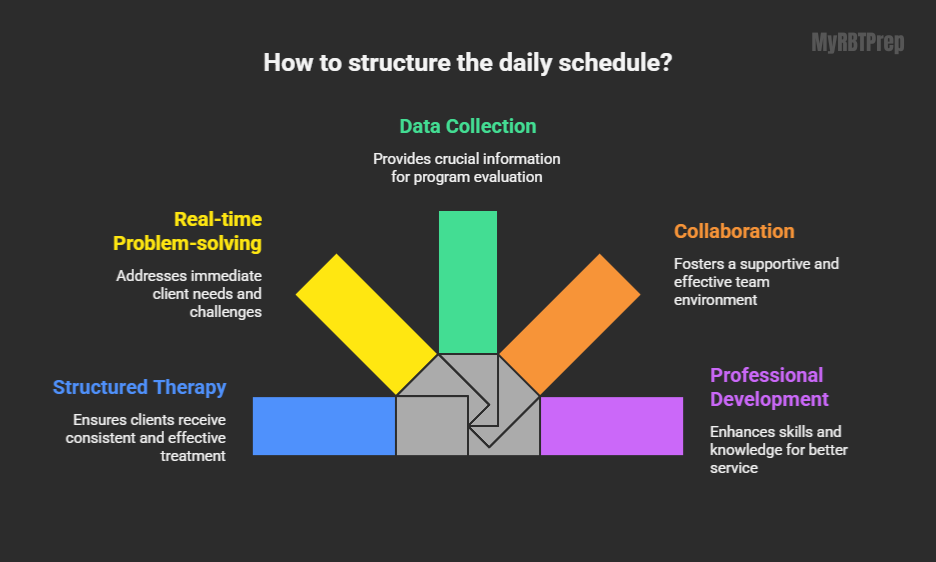
Every day, an RBT follows a daily schedule that blends structured therapy with real-time problem-solving. They prepare materials, conduct sessions, manage challenging behaviors, and document progress for each client. Data collection and progress notes are critical to inform BCBAs about the effectiveness of behavior reduction programs. Each task ensures clients receive ethical and quality services that target their individual needs.
Beyond sessions, RBTs collaborate with center staff, supervisors, and parents/guardians. They analyze the learning environment, follow the treatment plan, and provide feedback during team meetings. Their day involves both hands-on training and knowledge-based reflection, ensuring ongoing training and professional development. A typical day requires balancing active job responsibilities with precise data collection to maintain high quality care standards.
A Typical Day in the Life of an RBT
A typical day for an RBT starts with session preparation. Materials are organized, reinforcers are ready, and treatment plans are reviewed. Clients are greeted warmly, and sessions begin promptly. During therapy, RBTs implement programs, observe behaviors, and manage challenging behaviors. They note progress in data sheets and adjust techniques based on the client’s response.
Later in the day, RBTs meet with supervisors and BCBAs to discuss program implementation and client progress. The day may include multiple sessions, requiring active job engagement and flexibility. By the end of the day, progress notes are completed, materials are prepared for the next session, and ongoing training ensures continual improvement in clinical skills and ethical service delivery.
| Time / Stage | Activities of an RBT |
| Session Preparation | Organizing materials, preparing reinforcers, reviewing treatment plans |
| Session Start | Greeting clients warmly, starting sessions on time |
| During Therapy | Implementing behavior programs, observing behaviors, managing challenging behaviors |
| Data Collection | Recording progress in data sheets, adjusting techniques based on client responses |
| Supervision & Meetings | Meeting with supervisors and BCBAs to discuss client progress and program implementation |
| Multiple Sessions | Managing several sessions in a day, requiring flexibility and active engagement |
| End of Day Tasks | Completing progress notes, preparing materials for the next session |
| Ongoing Training | Participating in training to improve clinical skills and ensure ethical service delivery |
Preparing for an ABA Therapy Session

Preparing for an ABA therapy session is critical for success. RBTs carefully prepare materials, including visual aids, reinforcers, and worksheets. Reviewing the treatment plan ensures the step-by-step implementation aligns with client goals. They anticipate challenging behaviors and plan interventions in advance, ensuring quality and effective therapy.
Session preparation also involves reviewing progress notes from prior sessions. This helps RBTs adjust programs, track skill acquisition, and set realistic expectations. Hands-on training during preparation helps refine clinical skills and ensures ethical services for all children with autism. A well-prepared RBT ensures clients experience a structured, rewarding, and engaging session every time.
Working Directly With Clients: What Sessions Look Like
During therapy, RBTs work directly with clients, conducting sessions that focus on skill acquisition and behavior reduction programs. Each session follows a daily schedule, including structured trials, natural environment teaching, and individualized programs. RBTs apply ABA concepts to teach communication, social skills, and daily living activities in an engaging way.
Sessions are highly interactive. Therapists observe, implement programs, and document progress throughout. Reinforcers motivate clients, while the collaborative team ensures each step aligns with the treatment plan. Session preparation and program implementation combine to provide compassionate, effective, and quality care for children with autism.
| Aspect of Session | What Happens |
| Direct Client Work | RBTs conduct therapy sessions focused on skill acquisition and behavior reduction |
| Session Structure | Sessions follow a daily schedule with structured trials and individualized programs |
| Teaching Methods | Use of structured teaching, natural environment teaching (NET), and ABA strategies |
| Skills Taught | Communication, social skills, and daily living skills |
| Client Engagement | Sessions are interactive and engaging for clients |
| Use of Reinforcers | Reinforcers are used to motivate and encourage positive behaviors |
| Observation & Documentation | RBTs observe client behavior and document progress throughout sessions |
| Team Collaboration | RBTs work with the ABA team to ensure alignment with treatment plans |
| Quality of Care | Focus on compassionate, effective, and ethical service delivery |
Managing Challenging Behaviors During Sessions

Managing challenging behaviors is a core responsibility of RBTs. Clients may display aggression, self-injury, or avoidance behaviors. RBTs manage challenging behaviors by following behavior reduction programs precisely, using safe and ethical strategies. Hands-on training equips them to remain calm and professional during intense moments.
Effective management requires constant observation, data collection, and documentation of progress. RBTs communicate with BCBAs and supervisors to refine interventions. Over time, they develop skills to predict triggers, implement preventive measures, and ensure quality care. Handling such situations successfully is both rewarding and critical for skill acquisition.
Collaboration With BCBAs and Clinical Team
RBTs rarely work alone. They rely on a collaborative team including BCBAs, center staff, and parents/guardians. Regular meetings help RBTs provide feedback, analyze learning environment, and refine programs. Treatment plan adherence is critical for effective therapy.
Collaboration ensures that session preparation and program implementation remain consistent. RBTs observe, shadow, and learn from supervisors, reinforcing ongoing training and hands-on training. Ethical and quality care is maintained by this constant communication, making therapy more effective and rewarding.
| Collaboration Area | How RBTs Work With the Team |
| Team-Based Approach | RBTs work closely with BCBAs, center staff, and parents/guardians |
| Regular Meetings | Meetings are held to share feedback and discuss client progress |
| Program Refinement | Learning environments are analyzed and programs are adjusted as needed |
| Treatment Plan Adherence | RBTs follow treatment plans carefully to ensure effective therapy |
| Consistency in Therapy | Collaboration keeps session preparation and program implementation consistent |
| Supervision & Learning | RBTs observe, shadow, and learn from BCBAs and supervisors |
| Ongoing Training | Continuous hands-on and supervised training strengthens clinical skills |
| Ethical Practice | Constant communication supports ethical and high-quality care |
| Therapy Outcomes | Team collaboration makes therapy more effective and rewarding |
Training and Skill Development for RBTs

Becoming an RBT involves intensive training that combines clinical training, field training, and administrative training. The first few weeks focus on shadowing, learning step-by-step implementation, and applying ABA concepts under supervision. Ongoing training ensures continuous skill refinement and professional growth.
Hands-on training during sessions builds confidence in conducting sessions, managing challenging behaviors, and documenting progress. RBTs also engage in knowledge-based training, improving understanding of treatment plans, skill acquisition, and behavior reduction programs. This combination ensures quality, ethical, and effective care for every client.
Skills and Qualities Needed to Be a Successful RBT
Successful RBTs demonstrate patience, adaptability, and empathy while maintaining professionalism. They possess clinical skills, attention to detail, and physical stamina to deliver active job therapy sessions effectively. Ethical, quality, and compassionate care is non-negotiable, and the ability to analyze learning environments ensures skill acquisition is maximized.
Other essential qualities include strong communication to provide feedback to supervisors, parents/guardians, and center staff. They must be proactive in session preparation, program implementation, and data collection, while consistently following the treatment plan. This combination of knowledge-based and hands-on training creates a rewarding career.
Is a Career as an RBT Right for You?
For those interested in supporting children diagnosed with autism through applied behaviour analysis (ABA), working as a registered behaviour technician (RBT) is a rewarding career choice. An RBT has access to an engaging, active work atmosphere where they will be able to see results by helping children to achieve developmental milestones and reduce unwanted behaviours through the use of effective programs.
To be successful in this role, RBTs must possess a flexible attitude, maintain their composure under stress, interact successfully with other professionals and provide quality care as part of a multidisciplinary team. Candidates who are considering becoming RBTs should prepare for an intensive introductory training period, ongoing education (including conducting daily program sessions) and charting children’s development. RBTs will also be expected to manage and assist children in overcoming challenging behaviours. RBTs may also find their career paths within ethical, structured and quality care environments satisfying and rewarding.
| Role | Responsibilities | Training |
| RBT | Conduct sessions, implement programs, manage challenging behaviors, document progress | 40-hour training, first few weeks supervised |
| BCBA | Design treatment plans, supervise RBTs, analyze data, ensure ethical services | Master’s degree + certification, ongoing supervision |
Faqs
What does an RBT do on a daily basis?
An RBT conducts therapy sessions, implements treatment plans, manages challenging behaviors, and collects data under BCBA supervision.
What are the duties and responsibilities of an RBT?
RBT duties include session preparation, skill acquisition, behavior reduction, data collection, and collaborating with supervisors and parents.
What is an RBT task list?
An RBT task list outlines daily responsibilities like implementing programs, documenting progress, and following treatment plans ethically.
What do behavior analysts do on a daily basis?
BCBAs create treatment plans, supervise RBTs, analyze data, and ensure ethical, quality care for clients.
What are the 4 branches of behavior analysis?
The four branches are ABA, conceptual analysis, experimental analysis (EAB), and professional practice, all guiding therapy and research.