When it comes to Autism Spectrum Disorder (ASD) support, understanding the differences between an RBT and an ABA therapist is crucial. Both roles are essential in ABA therapy for autism, but they serve distinct purposes. Registered Behavior Technicians (RBTs) provide direct therapy support for children with autism, working under BCBA supervision to implement individualized treatment plans.
ABA therapists, often BCBAs, design therapy programs, guide staff, and analyze progress. By knowing the distinctions, parents and caregivers can make informed decisions about therapy, maximize ABA therapy outcomes, and ensure children receive consistent, effective support for behavioral skills development, social skills training, and communication improvement.
Pass Your RBT® Exam on the First Attempt
Practice with 1,000+ realistic scenario questions, multiple full-length timed mock exams, and detailed rationales formatted exactly like the real Pearson VUE test.
What Is an RBT in ABA Therapy?
An RBT is a professional who delivers hands-on ABA therapy sessions under the guidance of a Board Certified Behavior Analyst (BCBA). They implement personalized autism intervention strategies to help children with ASD learn essential skills. RBTs focus on improving communication through Verbal Behavior Therapy and Picture Exchange Communication System (PECS), reducing challenging behaviors, and promoting independence.
RBTs also collect data on progress, observe behavior patterns, and adjust interventions as needed. Their work ensures consistency in behavioral therapy, bridges clinical strategies and daily life, and allows skills to generalize across home, school, and community environments. Without RBTs, therapy programs would lack practical application and direct therapy support for children with autism.
| Aspect | Details |
| Definition | An RBT is a professional who delivers hands-on ABA therapy sessions under the guidance of a BCBA. |
| Purpose | Implements personalized autism intervention strategies to help children with ASD learn essential skills. |
| Communication Support | Uses Verbal Behavior Therapy and Picture Exchange Communication System (PECS) to improve communication. |
| Behavior Management | Reduces challenging behaviors and promotes independence. |
| Progress Monitoring | Collects data, observes behavior patterns, and adjusts interventions as needed. |
| Impact | Ensures consistency in behavioral therapy, bridges clinical strategies and daily life, and helps skills generalize across home, school, and community. |
| Importance | Provides direct therapy support for children with autism, making therapy practical and effective. |
What Is an ABA Therapist?
An ABA therapist is usually a BCBA or a professional trained to design ABA therapy programs. They assess children’s needs, create behavior intervention plans, and supervise the implementation of therapy. ABA therapists focus on long-term goals such as improving communication and social interaction, reducing challenging behaviors, and supporting independence.
They guide RBTs, monitor ABA therapy outcomes, and adjust strategies based on data collection in ABA. ABA therapists also collaborate with parents and caregivers to reinforce skills outside therapy sessions, ensuring generalization of learned skills across settings. Essentially, ABA therapists plan and analyze, while RBTs execute and support.

RBT® Exam Flashcards & Study App (3rd Edition)
Master essential ABA terminology and clinical discrimination across all 6 BACB task list areas with 500+ printable and digital flashcards, real exam cues, and full mobile app access.
Key Differences Between RBTs and ABA Therapists
| Aspect | RBT | ABA Therapist / BCBA |
| Role | Provides direct therapy support for children with autism | Designs therapy programs and supervises RBTs |
| Training | 40-hour RBT training and competency assessment | Graduate-level education, BCBA certification, and extensive supervision experience |
| Focus | Implements behavior intervention plans, tracks progress, and applies hands-on ABA therapy sessions | Develops individualized treatment plans, analyzes outcomes, and guides staff |
| Responsibilities | Reduces challenging behaviors, improves social skills, supports independence | Supervises therapy, evaluates data, ensures consistency in behavioral therapy |
| Interaction | Works closely with children during therapy sessions | Works with RBTs, parents, and other caregivers to implement therapy plans |
| Salary (USA) | $35,000–$50,000 | $65,000–$95,000 or higher, depending on experience and location |
| Career Path | Can progress to BCBA | Leadership roles in autism support services, clinic management, or BCBA training |
Training and Certification Requirements
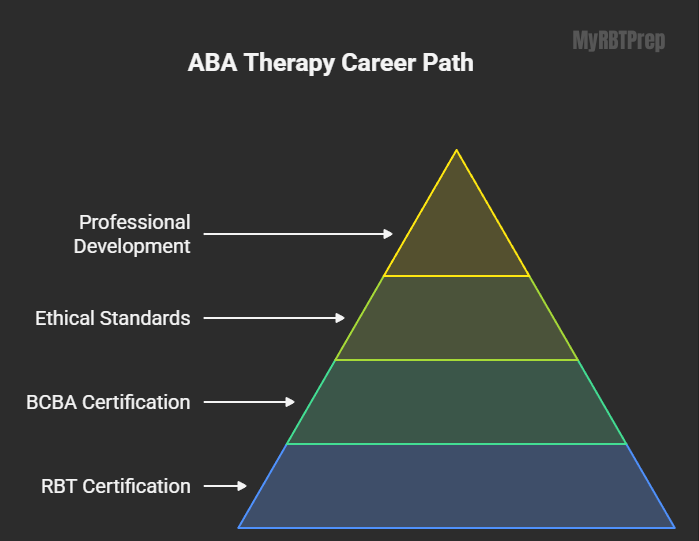
RBTs complete a 40-hour RBT certification course, pass a competency exam, and work under BCBA supervision. Their training emphasizes behavioral skills development, social skills training, and positive reinforcement strategies.
ABA therapists / BCBAs require a graduate degree in behavior analysis, psychology, or education. Certification involves supervised fieldwork, coursework, and passing the BCBA exam. Their training equips them to create evidence-based therapy programs, evaluate ABA therapy outcomes, and manage therapy teams. Both roles rely on ethical standards in ABA therapy and ongoing professional development.
Responsibilities in Therapy
RBTs execute individualized treatment plans, provide hands-on ABA therapy sessions, and track progress through data collection in ABA. They work directly with children, applying behavior modification techniques and promoting generalization of learned skills across settings.
ABA therapists focus on supervising RBTs, analyzing data, adjusting interventions, and ensuring all therapy adheres to evidence-based behavioral interventions. They collaborate with families to reinforce skills at home and monitor long-term developmental outcomes.
| Aspect | RBT Responsibilities | ABA Therapist Responsibilities |
| Treatment Execution | Execute individualized treatment plans and provide hands-on ABA therapy sessions. | Supervise RBTs and ensure therapy follows evidence-based behavioral interventions. |
| Progress Tracking | Track progress through data collection in ABA and observe behavior patterns. | Analyze data, adjust interventions, and evaluate therapy outcomes. |
| Skill Application | Apply behavior modification techniques and promote generalization of learned skills across settings. | Collaborate with families to reinforce skills at home and support long-term developmental outcomes. |
| Interaction | Work directly with children during therapy sessions. | Guide RBTs, coordinate with families, and oversee therapy implementation. |
Impact on Children with ASD
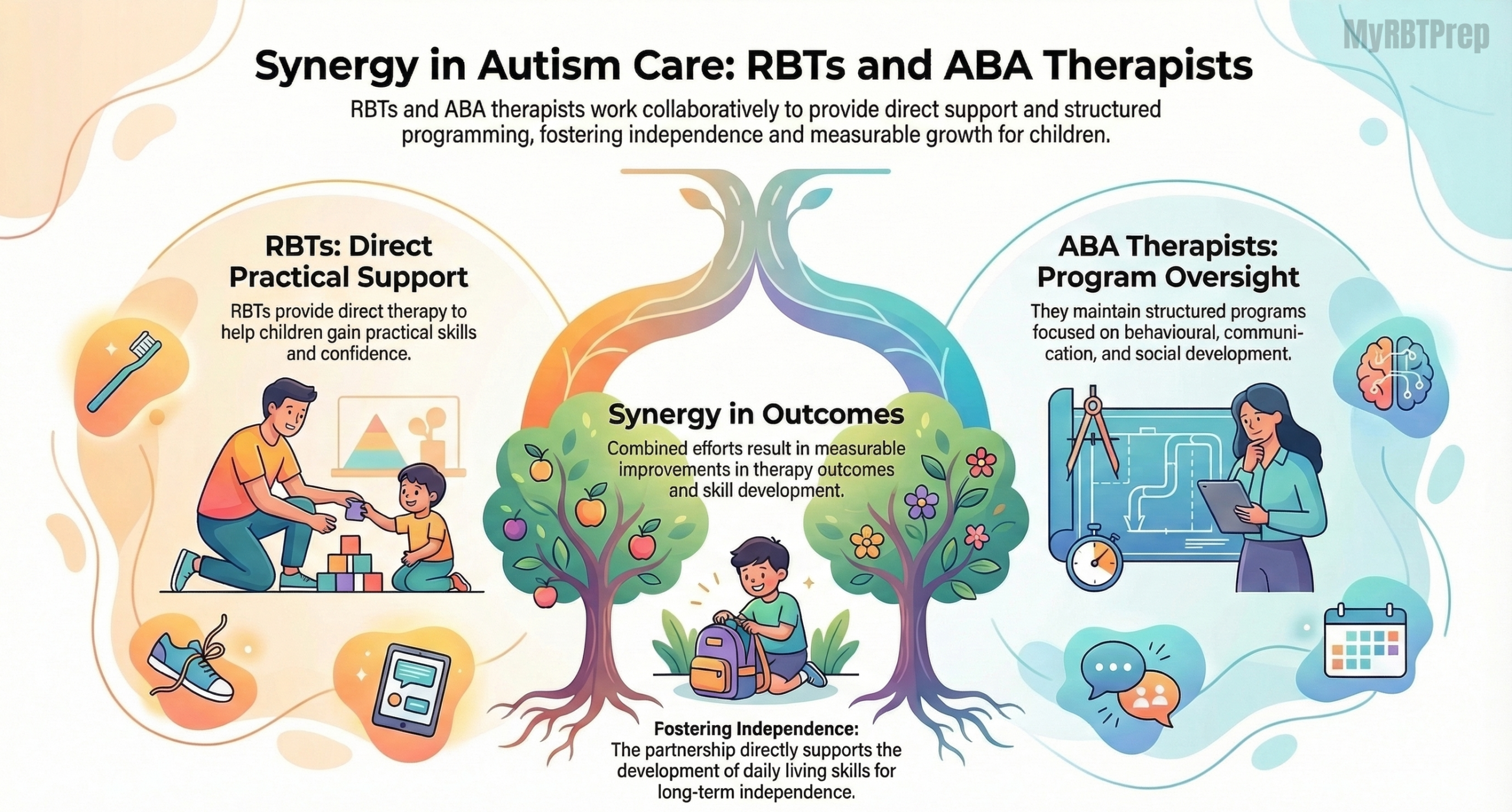
Both RBTs and ABA therapists are essential for successful autism treatment therapy. RBTs ensure children gain practical skills and confidence through direct therapy support, while ABA therapists maintain structured programs that foster behavioral skills development, communication, and social competence. Together, they create measurable improvements in ABA therapy outcomes and support independence and daily living skills.
Career Path and Growth
The RBT role is often a stepping stone to becoming a BCBA. Starting as an RBT offers hands-on experience in ABA therapy programs, exposure to autism support services, and training in behavior modification techniques. Career growth includes higher salaries, supervisory roles, and leadership in clinical or school settings.
ABA therapists have broader career opportunities, including clinic management, consulting, and advanced research in evidence-based therapy. Both roles provide meaningful work that directly impacts the lives of children with ASD.
| Aspect | RBT Career Path | ABA Therapist / BCBA Career Path |
| Starting Role | Entry-level position providing hands-on ABA therapy sessions. | Advanced role designing and supervising therapy programs. |
| Experience Gained | Exposure to ABA therapy programs, autism support services, and behavior modification techniques. | Opportunities in clinic management, consulting, and research in evidence-based therapy. |
| Career Growth | Can advance to BCBA, higher salaries, supervisory roles, and leadership positions. | Leadership roles, advanced clinical positions, and research or consulting opportunities. |
| Impact | Provides meaningful work directly improving children’s skills and independence. | Shapes therapy programs and long-term developmental outcomes for children with ASD. |
Understanding the Core Roles of RBTs and ABA Therapists
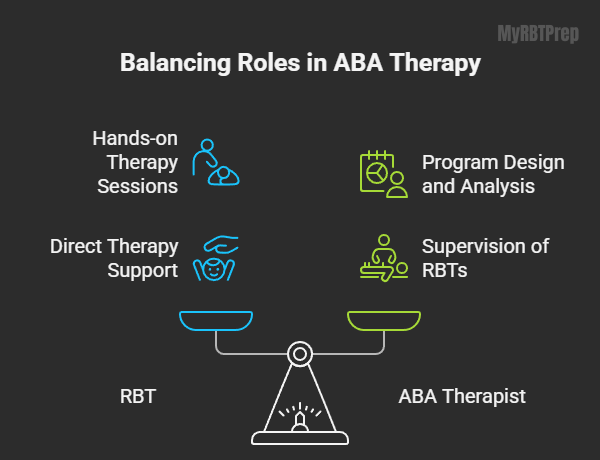
The primary distinction between an RBT and an ABA therapist lies in their daily responsibilities. RBTs deliver hands-on ABA therapy sessions, implementing behavior intervention plans, observing behaviors, and providing direct therapy support for children with autism.
ABA therapists, often BCBAs, focus on designing therapy programs, analyzing ABA therapy outcomes, and supervising RBTs to ensure consistency in behavioral therapy. By understanding these core roles, parents and caregivers can see how both professionals work together to improve communication, social skills, and independence for children with ASD.
Training and Certification Differences
Training requirements highlight the professional gap between RBTs and ABA therapists. RBTs complete a 40-hour RBT certification program, pass a competency exam, and work under BCBA supervision, gaining practical experience in behavioral skills development and social skills training.
ABA therapists require advanced education, graduate-level coursework, and BCBA certification, which allows them to create evidence-based therapy programs and manage therapy teams. These differences ensure that ABA therapy programs maintain high-quality standards while children receive personalized autism intervention strategies.
| Aspect | RBT Training & Certification | ABA Therapist / BCBA Training & Certification |
| Education Requirements | Complete a 40-hour RBT certification program. | Advanced education with graduate-level coursework. |
| Certification | Pass the RBT competency exam and work under BCBA supervision. | Obtain BCBA certification after supervised fieldwork and exam. |
| Practical Experience | Gain hands-on experience in behavioral skills development and social skills training. | Manage therapy teams and create evidence-based therapy programs. |
| Purpose | Ensure children receive consistent, direct therapy support. | Ensure therapy programs maintain high-quality standards and provide personalized autism intervention strategies. |
Impact on Therapy Outcomes and Child Development
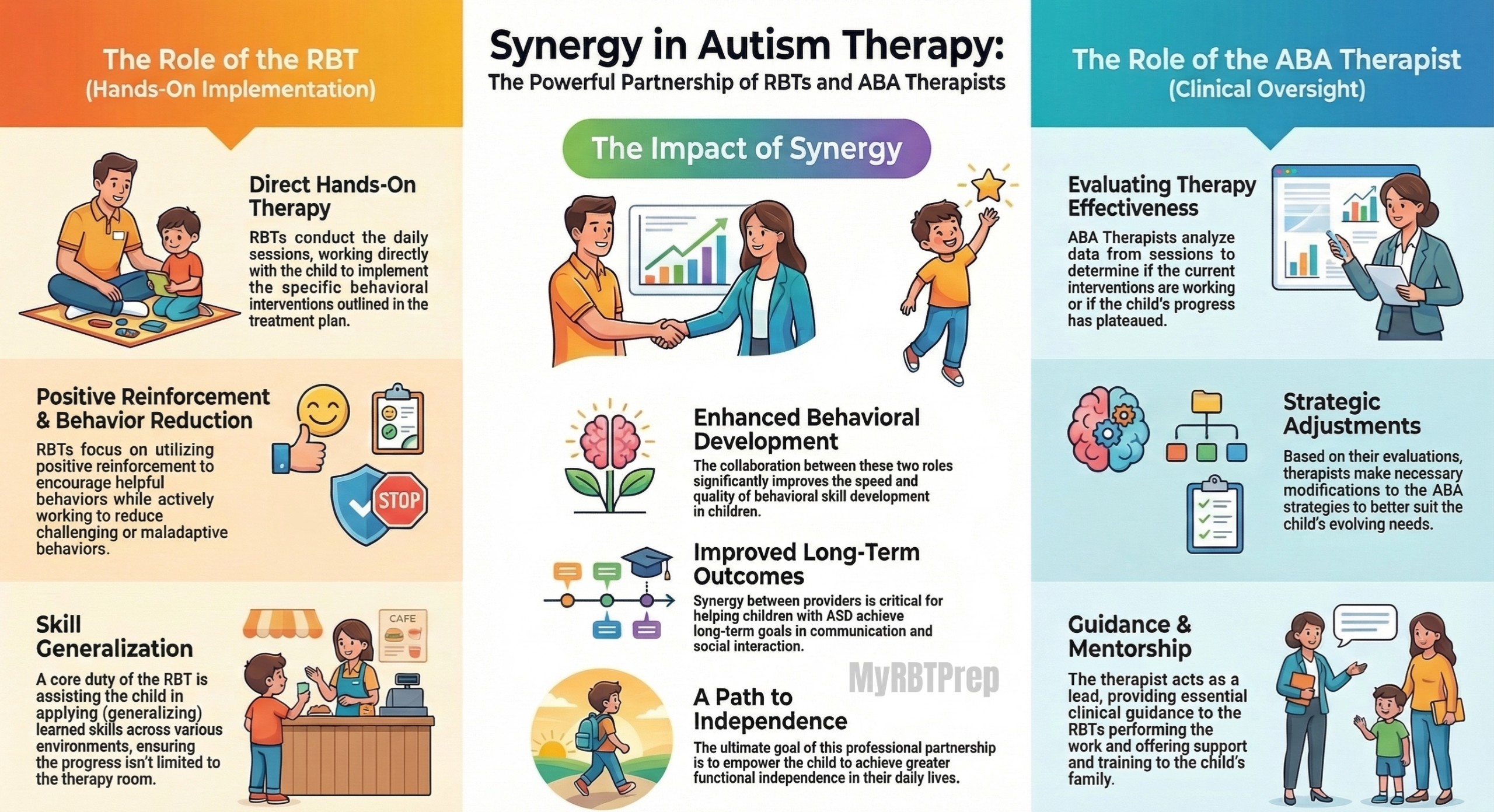
The role of RBTs and ABA therapists will greatly impact the progress of a child in ABA therapy for Autism. RBTs conduct hands-on ABA therapy sessions, providing positive reinforcement, reducing challenging behaviors, and assisting in the generalization of learned skills across all different environments.
ABA therapists evaluate the effectiveness of therapy, making necessary adjustments to strategies, and offer guidance to both RBTs and the family. Through the collaborative work of RBTs and ABA therapists, both the outcomes of ABA therapy are improved, and the development of behavioral skills is enhanced. Both RBTs and ABA therapists are critical to the long-term growth of children with ASD in terms of their ability to communicate, interact socially, and achieve independence.
FAQs
- What does an RBT do for autism?
An RBT provides direct therapy support, teaches skills, reduces challenging behaviors, and promotes independence under BCBA guidance. - How is an ABA therapist different from an RBT?
An ABA therapist designs behavior intervention plans and supervises RBTs, while RBTs implement therapy directly with children. - How do RBTs track progress?
They use data collection in ABA, observe behaviors, and adjust interventions to ensure skills generalize across settings. - What training is needed to become an RBT?
Complete a 40-hour RBT certification course, pass the competency exam, and work under BCBA supervision. - Can an RBT become an ABA therapist?
Yes, with additional graduate education and BCBA certification, an RBT can advance to ABA therapist roles.

Everything You Need to Pass Your RBT® Exam
Study with our complete, all-in-one preparation package covering every task on the BACB Task List 3.0:
- 1,000+ Practice Questions & Timed Simulator
- 3rd Edition Task List Study Guide & Workbook
- Active Recall Flashcards System + Mobile App
- 20-Task Competency Assessment Mastery Guide