
This page is designed to support you in studying for the RBT exam and includes Section E of the RBT task list – Documentation and Reporting. Is there anything else that’s so pertinent to applied behavior analysis, and so many questions will be asked about it on the final RBT exam, and measure your exam readiness.
There are 30 mcqs questions for practice in this.
- Importance of Documentation and Reporting in ABA, ABA is a science that is based on data, and documentation and reporting are critical in order to monitor progress, measures of behavior, effectiveness of treatments as well as maintain robust treatment plans. RBT must take notes of everything and convey it to the supervisor, for best therapy results.
Communicate with a Supervisor Quite Simply All the Time
As an RBT, you are required to maintain regular communication with your supervisor. A BCBA or BCaBA is required to supervise at least 5% of your total direct service hours.
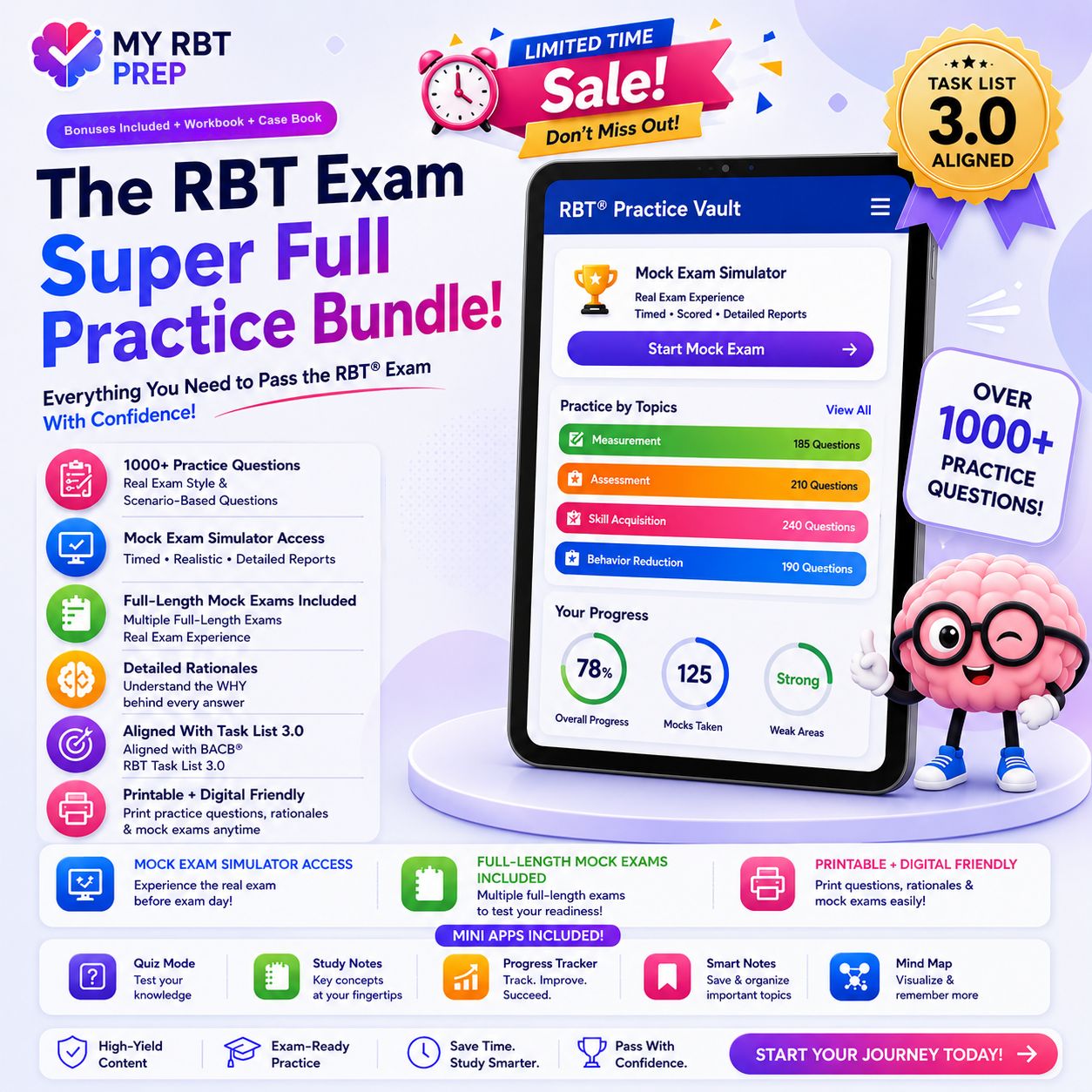
Pass Your RBT® Exam on the First Attempt
Practice with 1,000+ realistic scenario questions, multiple full-length timed mock exams, and detailed rationales formatted exactly like the real Pearson VUE test.
For instance, if you are working 20 hours per week, your BCBA must provide 4 + hours of supervision per month.
You should talk about your struggles with your therapist outside of therapy. Supervisors listens and adjusts intervention plans to facilitate success. Advice and guidance are there if you are open to it This was advice and guidance took and acted.
And of course, all RBT communications need to be respectful and professional. If your boss doesn’t show you clearly, you can politely ask to see it.
RBT Practice Quiz - Unit E: Documentation & Reporting
Quiz Complete!
Short free quizzes only scratch the surface. Passing the actual 85-question Pearson test requires building your pacing and stamina with full practice.
- Only 6 sample questions
- No timed exam simulator
- No detailed rationales
- Cannot test full pacing
- Multiple Full Mocks (85Q)
- 1,000+ realistic scenario questions
- Step-by-step rationales
- Full app access + printable PDFs
You've completed 5 questions. You have 1 final sample question before the free preview ends.
- 🎯Multiple Full-Length Timed Mocks — exactly like the real Pearson VUE exam
- 📋1,000+ Practice Questions — covering all 2026 BACB Task List 3.0 tasks
- 🧠Detailed Rationales — learn why right answers work and avoid traps
- 📱Exam Simulator App Access — practice anytime on your phone or laptop
You've completed your 6 free sample questions. The real test is 85 questions long with tricky scenarios. Get full practice now so nothing surprises you on test day.
- Multiple Full-Length Timed Mocks — practice with real 85-question exams timed like Pearson VUE
- 1,000+ Scenario Questions — master real clinical situations across all 6 BACB domains
- Crystal-Clear Explanations — understand exactly why each answer is right and how to avoid trick choices
- Full Simulator App + Printable PDFs — practice on your phone in bed or print worksheets
- Complete Exam Prep Materials — build your pacing, endurance, and exam readiness on your schedule
Most candidates who fail admit they only practiced short free quizzes. Give yourself the best chance to pass on your very first try.
Promptly Seek Clinical Guidance and Feedback:
Always reach out to your supervisor for clinical direction and feedback in a timely manner. If a client you’ve interacted with only once approaches you for consultation, immediately consult with your supervisor before proceeding.
Your boss is more experienced and you would ask him/her in time. If you have questions about actually putting a behavior intervention plan in place, wait and ask your supervisor what to do before you do it. And sometimes, the wrong approach can hurt more than it helps when it comes to putting a plan into practice.
So there are many examples that you need your brought your supervisor your supervisors guidance. Here are some cases in which you should ask your boss for advice:
- Your client exhibits a new (unsafe) behavior: If your client engages in a new unsafe inappropriate behavior, which has the potential for harm or danger such as aggression, self-injury to others, this event should be recorded on the session note, and you should immediately report it to your supervisor after the therapy session. But, if your client is displaying an a new behavior that you are not sure about or appears harmful, document and bring to the attention of your BCBA at your next meeting.
- Your client’s problem behaviour has worsened: If your client’s problem behaviour has worsened significantly after a few therapy sessions, let your supervisor know. The immediacy of communication varies according to the degree of importance of the behavior. • You don’t know how to apply a goal or behavior plan strategy: If you’re unsure of the steps you need to follow to carry out a behavior intervention plan for your client you need to talk with your supervisor prior to your next session.
- You need materials (such as stimuli or datasheets): Communicate with your supervisor to be sure that you have the appropriate materials (e.g.,aproperd,dl recto e,,ab s + stimulus list) before you head into your sessions. If you think you might not have enough supplies, let your supervisor know in advance to avoid running out.
- There are barriers to progress: When you’re facing obstacles to progress in therapy (something external, like a client’s sibling affecting sessions), it’s imperative to reach out to your supervisor. You supervisor can help you come up with ways to manage this – whether that is in setting personal boundaries, adjusting the therapy environment, or contacting other people.

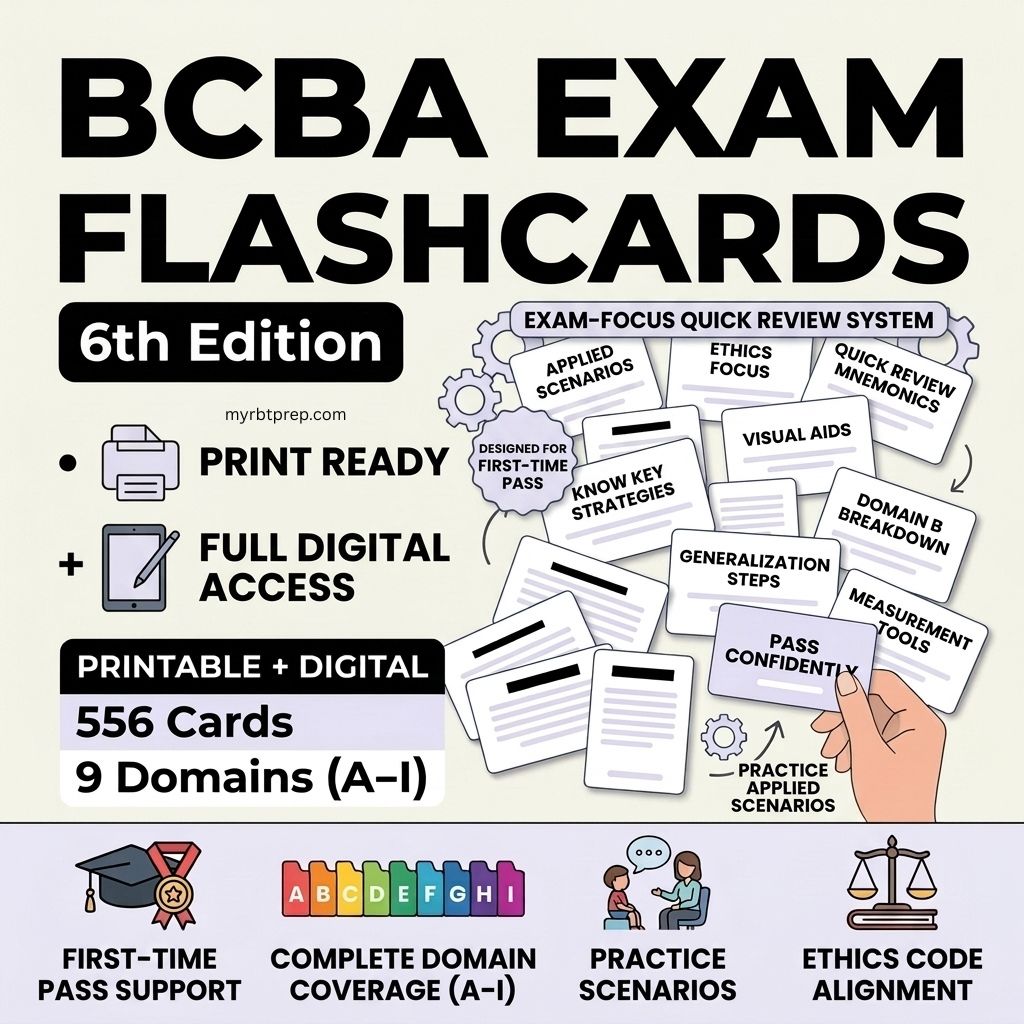
RBT® Exam Flashcards & Study App (3rd Edition)
Master essential ABA terminology and clinical discrimination across all 6 BACB task list areas with 500+ printable and digital flashcards, real exam cues, and full mobile app access.
Timely Reporting of Influential Variables:
It is important to promptly inform your supervisor about any external factors that could influence the client’s behavior or progress in therapy. A BCBA is the person who will direct you in a situation like this.
Let me list a few external factors that you definitely have to convey to your supervisor:
- Your client is having some troubles with sleep.
- Your client is not feeling well.
- Your client’s household situation has changed or will soon (for instance, parents got separated, a family member left or came in, the family decided to move to another place)
- Your client has decided to take new medication or to change the one he/she has been taking so far.
- Your client is not following therapy anymore or he/she is starting a new one.
- Your client’s caregiver informed you that she/he has questions or made concerns.
- If you notice or have a suspicion that there is abuse and/or neglect, then be very careful and report it immediately not only to your supervisor but also to the responsible authorities (such as CPS or DCS).
The exact time frame within which you have to report to your supervisor will be determined by how urgent the situation is. If a client develops a fever that affects their participation in therapy, you must inform your BCBA right away. However, if the client is scheduled to begin occupational therapy the following month, it is acceptable to wait and discuss this during your next scheduled meeting with your supervisor.
Registered Behavior Technicians (RBTs) are responsible for completing daily session notes for each client. These notes serve as an objective summary of the session and must comply with all relevant legal, regulatory, and workplace guidelines. A properly written session note typically includes:
- The RBT’s name and credentials
- The date and duration of the session
- Targeted skills and behaviors
- The client’s responses to interventions
- Any obstacles that impacted the session
- Recorded data (e.g., behavior frequencies, program outcomes)
- Important input from parents or caregivers
According to the laws of your state and the regulations of your organization, the session note format may be different. You ought to adhere to the note writing requirements of your organization. There are organizations that have different guidelines for the time when you should fill in your session notes.
You are advised to fill in your session notes immediately after the therapy session since the natural course of the brain will lead to the forgetting of the information that was just gained, given that the brain tends to forget. Most organizations have a rule that says session notes must be completed within 24 to 48 hours.
Be aware that session notes are a document that tracks the health history of your patient. They should be written objectively and professionally, as they will be used for reference by your supervisor, other RBTs of the team, parents, and caregivers who will be checking it regularly.
Include Only Observable and Measurable Information in Session Notes
When writing session notes, focus solely on objective, observable, and measurable behaviors. Avoid using subjective language such as “the client was happy” or “the client didn’t want to work,” unless the client specifically communicated these feelings. All descriptions should be based on what you directly observed during the session.
Follow All Legal, Regulatory, and Workplace Guidelines for Data Handling
Protecting client information is a top priority. You must adhere to all applicable laws, regulations, and workplace policies regarding the collection, storage, transportation, and documentation of client data to ensure confidentiality and security. As RBTs, you must adhere to all the rules about the collection, storage, and transportation of client information. This also entails adhering to local and national regulations, such as the Health Insurance Portability and Accountability Act (HIPAA), in the U.S.
Pursuant to these laws, the clients’ information is kept confidential and secure. Through compliance with these laws we are able to guarantee the client’s rights to privacy, the trust that we receive from them, and we are able to avoid any cases of unauthorized access among the users who threaten the security of their information.
Lots of businesses today use software and resources that are HIPAA-compliant to gather data and create session notes. The usage of these online resources generally makes it less possible for accidental sharing or loss of private information to occur, which might happen with paper documents.

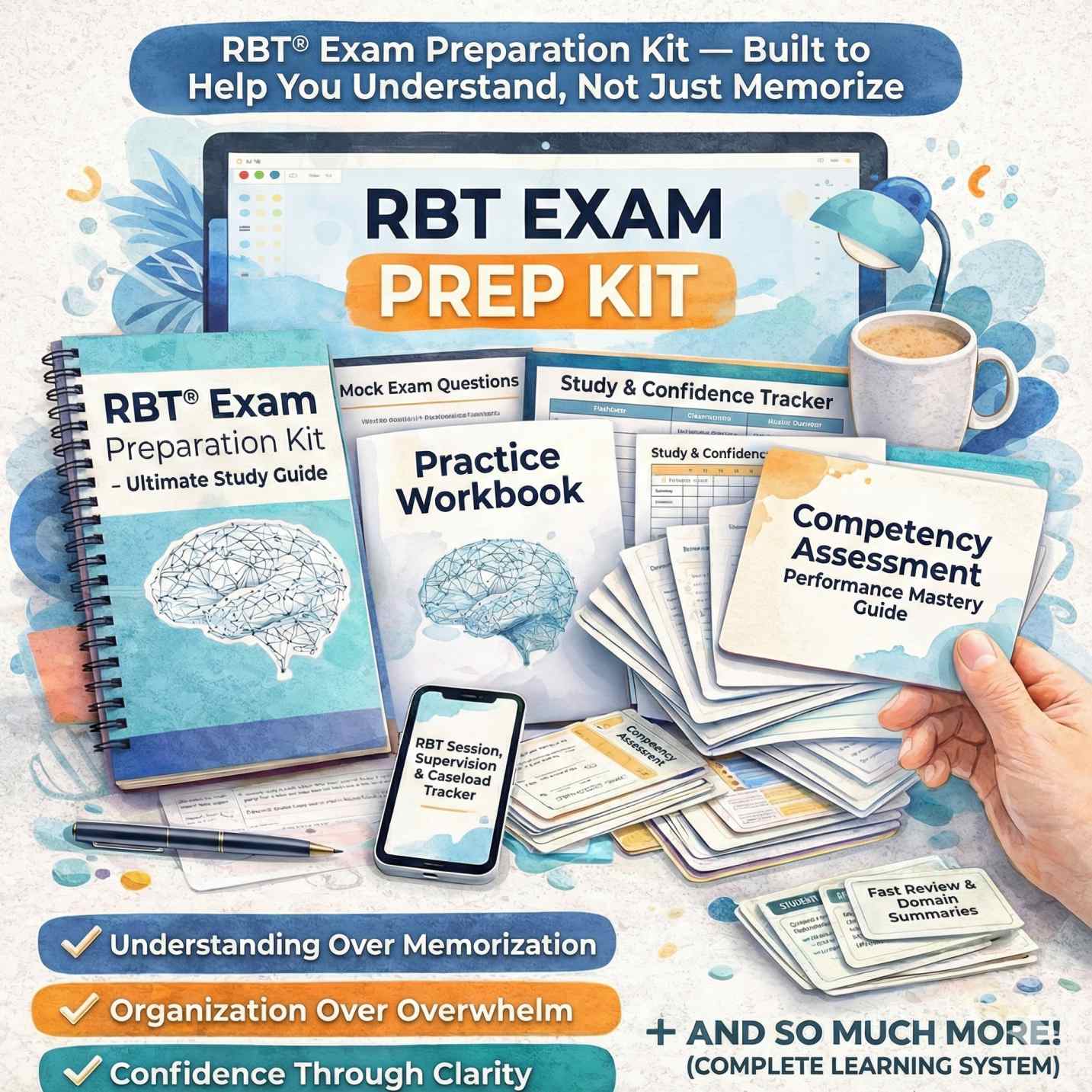
Everything You Need to Pass Your RBT® Exam
Study with our complete, all-in-one preparation package covering every task on the BACB Task List 3.0:
- 1,000+ Practice Questions & Timed Simulator
- 3rd Edition Task List Study Guide & Workbook
- Active Recall Flashcards System + Mobile App
- 20-Task Competency Assessment Mastery Guide