
In the field of Applied Behavior Analysis (ABA), ethical conduct and professional boundaries are non-negotiable. This guide focuses on Unit F of the RBT Task List: Professional Conduct and Scope of Practice. Whether you’re studying for the RBT exam or already working as a Registered Behavior Technician, practicing for your RBT Exam & understanding your professional responsibilities is crucial not just for passing the test, but for being a reliable and ethical provider.
This article breaks down the key expectations RBTs must follow, including how to work within your scope, communicate responsibly, respond to supervision, and maintain client dignity.
RBT Practice Quiz - Unit F: Professional Conduct
Quiz Complete!
Short free quizzes only scratch the surface. Passing the actual 85-question Pearson test requires building your pacing and stamina with full practice.
- Only 6 sample questions
- No timed exam simulator
- No detailed rationales
- Cannot test full pacing
- Multiple Full Mocks (85Q)
- 1,000+ realistic scenario questions
- Step-by-step rationales
- Full app access + printable PDFs
You've completed 5 questions. You have 1 final sample question before the free preview ends.
- 🎯Multiple Full-Length Timed Mocks — exactly like the real Pearson VUE exam
- 📋1,000+ Practice Questions — covering all 2026 BACB Task List 3.0 tasks
- 🧠Detailed Rationales — learn why right answers work and avoid traps
- 📱Exam Simulator App Access — practice anytime on your phone or laptop
You've completed your 6 free sample questions. The real test is 85 questions long with tricky scenarios. Get full practice now so nothing surprises you on test day.
- Multiple Full-Length Timed Mocks — practice with real 85-question exams timed like Pearson VUE
- 1,000+ Scenario Questions — master real clinical situations across all 6 BACB domains
- Crystal-Clear Explanations — understand exactly why each answer is right and how to avoid trick choices
- Full Simulator App + Printable PDFs — practice on your phone in bed or print worksheets
- Complete Exam Prep Materials — build your pacing, endurance, and exam readiness on your schedule
Most candidates who fail admit they only practiced short free quizzes. Give yourself the best chance to pass on your very first try.
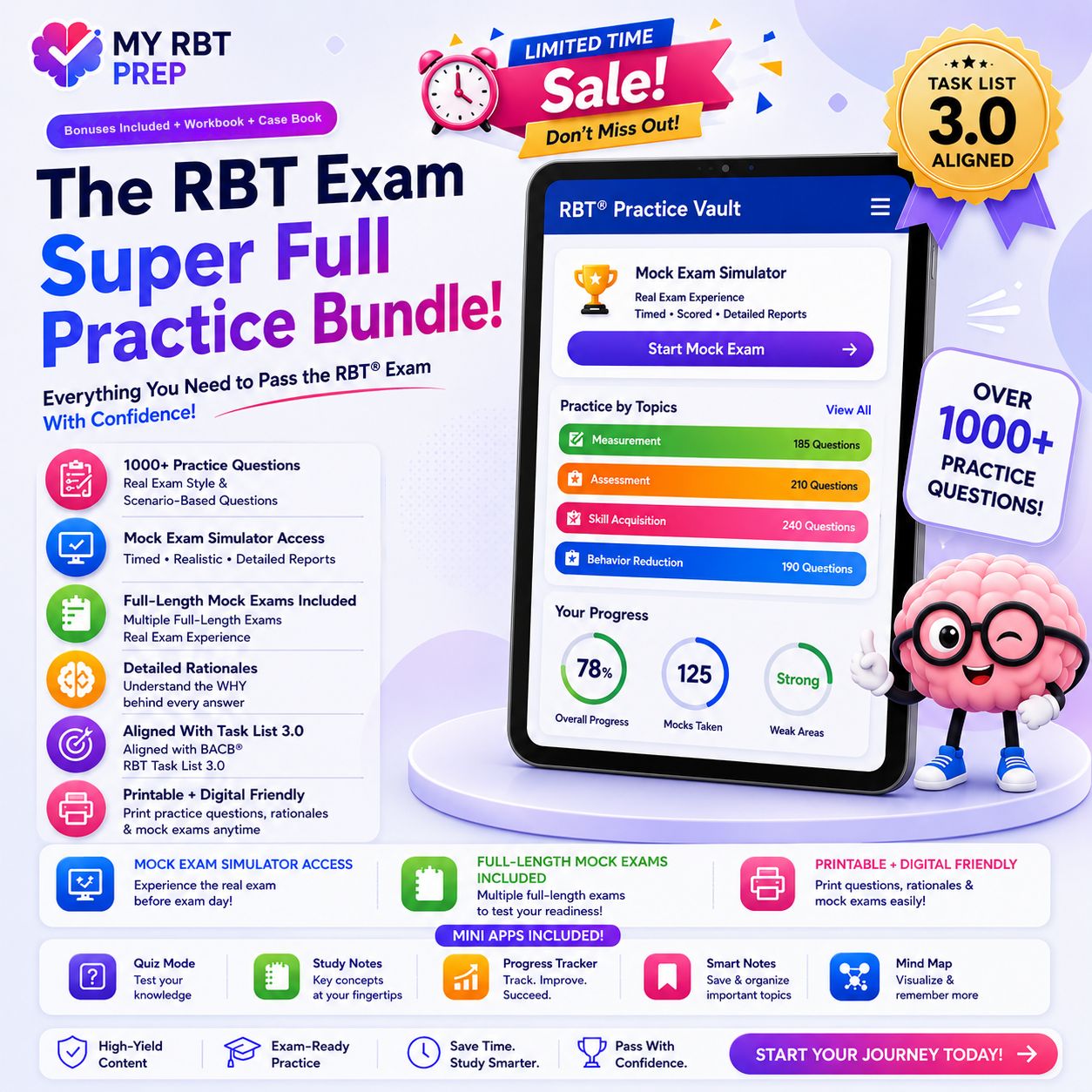
Pass Your RBT® Exam on the First Attempt
Practice with 1,000+ realistic scenario questions, multiple full-length timed mock exams, and detailed rationales formatted exactly like the real Pearson VUE test.
Why Professional Conduct and Scope of Practice Matter?
As an RBT, your main goal is to provide high-quality care while ensuring the safety and dignity of your clients. This means working strictly within your scope of practice that is, only performing tasks you’re trained and certified to do.
Overstepping these boundaries even with good intentions can lead to serious ethical issues and potentially harm your clients. That’s why the Behavior Analyst Certification Board (BACB) outlines specific standards for all RBTs. These guidelines are designed to protect clients and ensure services are delivered consistently and professionally.
Understanding the Role of Supervision
RBTs don’t work alone. Your role is to implement the treatment plan designed by your BCBA or BCaBA supervisor. To ensure everything runs smoothly, the BACB has defined clear supervision requirements that you must follow each month.
Here are the basics:
-
At least 5% of your total monthly hours must be supervised by a qualified BCBA or BCaBA.
-
You must have a minimum of two face-to-face supervision contacts per month.
-
If multiple RBTs work with the same client, at least one session must be conducted individually.
 Active Recall Study System
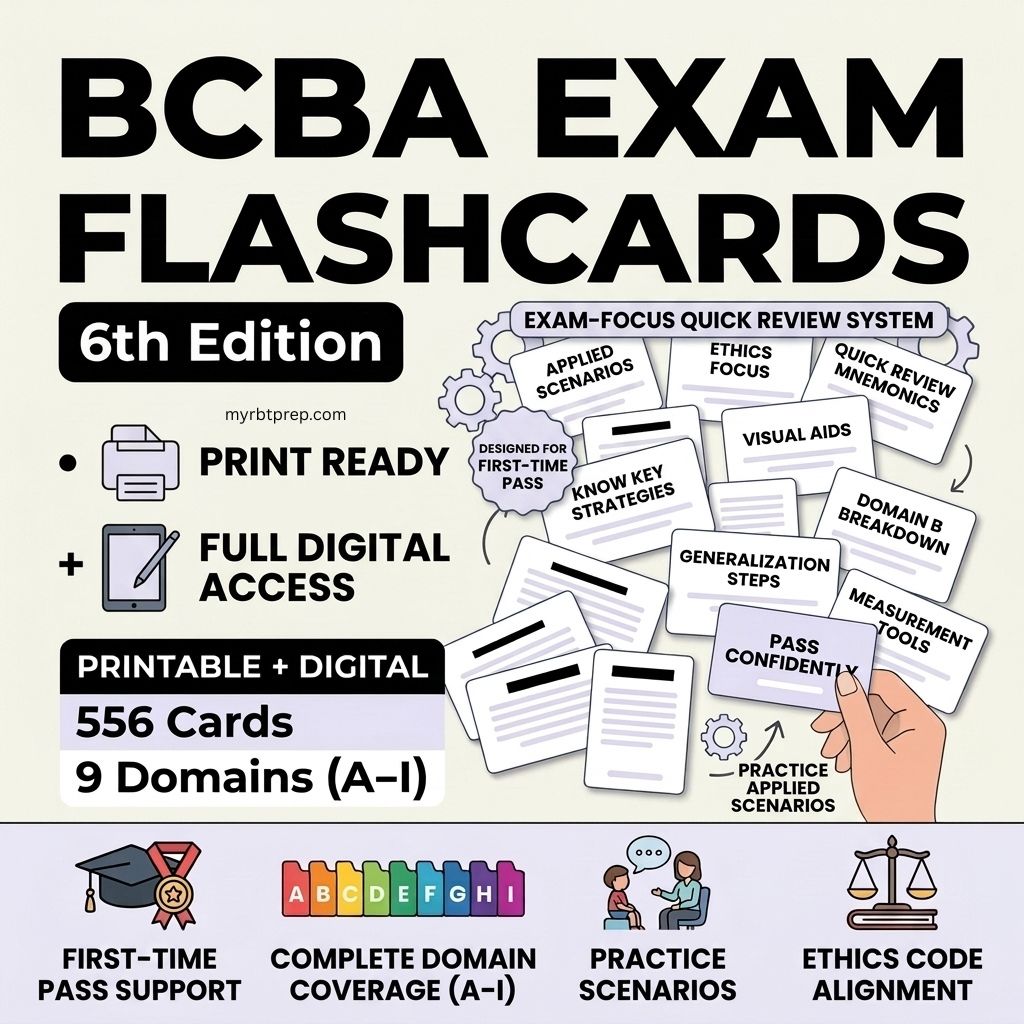
RBT® Exam Flashcards & Study App (3rd Edition)
Master essential ABA terminology and clinical discrimination across all 6 BACB task list areas with 500+ printable and digital flashcards, real exam cues, and full mobile app access.
Get Flashcards & App Access → ⚡ Master Key Terms & Definitions Fast -
If you go on vacation or take a break from working, supervision isn’t required—but you must notify your supervisor in advance and can request voluntary inactive status if you’re away for an extended period.
Both the RBT and the supervisor must sign a monthly supervision log, and this documentation must be kept for at least seven years. Failure to meet these requirements can result in disciplinary action or loss of certification.
How to Handle Feedback Professionally?
Feedback is not just helpful it’s essential for your growth as an RBT. Whether it’s praise, correction, or suggestions for improvement, learning to accept and apply feedback is a skill that sets great technicians apart.
If you receive feedback:
-
Take it with a positive attitude and use it to improve.
-
Ask for clarification if you’re unsure about something but ask with curiosity, not defensiveness.
-
Many organizations offer regular feedback through check-ins, evaluations, or live supervision. Even if you’re doing everything right, constructive feedback should be part of every session.
Remember: Feedback helps you provide better care and improve your clinical skills.
Communicating with Stakeholders
As an RBT, you’ll often interact with parents, caregivers, teachers, and other professionals. These individuals are known as stakeholders but you’re not automatically authorized to share client information with all of them.
Only communicate with stakeholders if you have formal authorization from your supervisor. Even if someone seems trustworthy or well-meaning, refer all clinical questions or decisions to the BCBA. RBTs are not allowed to make changes to treatment plans or offer professional advice. Doing so could violate ethics guidelines and harm the client’s progress.
Maintaining Clear Professional Boundaries
Maintaining professional boundaries is one of the most important ethical responsibilities for any RBT. Dual relationships—when you’re both a therapist and a friend, relative, or employee of a client must be avoided at all costs.
Here are examples of boundaries you must not cross:
-
Spending time with clients outside of therapy (birthday parties, family events, etc.)
-
Becoming friends with clients or their family members on social media
-
Babysitting or working a second job for a client’s family
-
Developing personal or romantic relationships with clients or caregivers
These relationships can lead to conflicts of interest and impair your ability to make objective, clinical decisions. Even small things like accepting a gift worth over $10 can interfere with therapy outcomes and violate the BACB Ethics Code.
If you ever feel like a boundary is being crossed, talk to your supervisor right away.
Client Dignity Comes First
Every client you serve deserves to be treated with kindness, empathy, and respect. As an RBT, you must always work to preserve the dignity of those you support—regardless of their age, ability, communication level, or behavior.
You can protect and promote client dignity by:
-
Respecting the client’s privacy and confidentiality
-
Using language that is supportive and humanizing
-
Listening to and honoring client assent (the client’s willingness to participate)
-
Encouraging communication, independence, and self-advocacy
-
Respecting cultural, religious, and personal values
Remember: Your clients are people first. Always speak with compassion, listen actively, and create an environment where they feel safe, respected, and empowered.
Practice Makes Professional
To help you review everything you’ve learned in this guide, we’ve included 31 real-world practice questions focused on professional conduct and scope of practice.
These multiple-choice questions are designed to challenge your understanding, prepare you for the RBT exam, and reinforce your ability to make ethical decisions in the field.

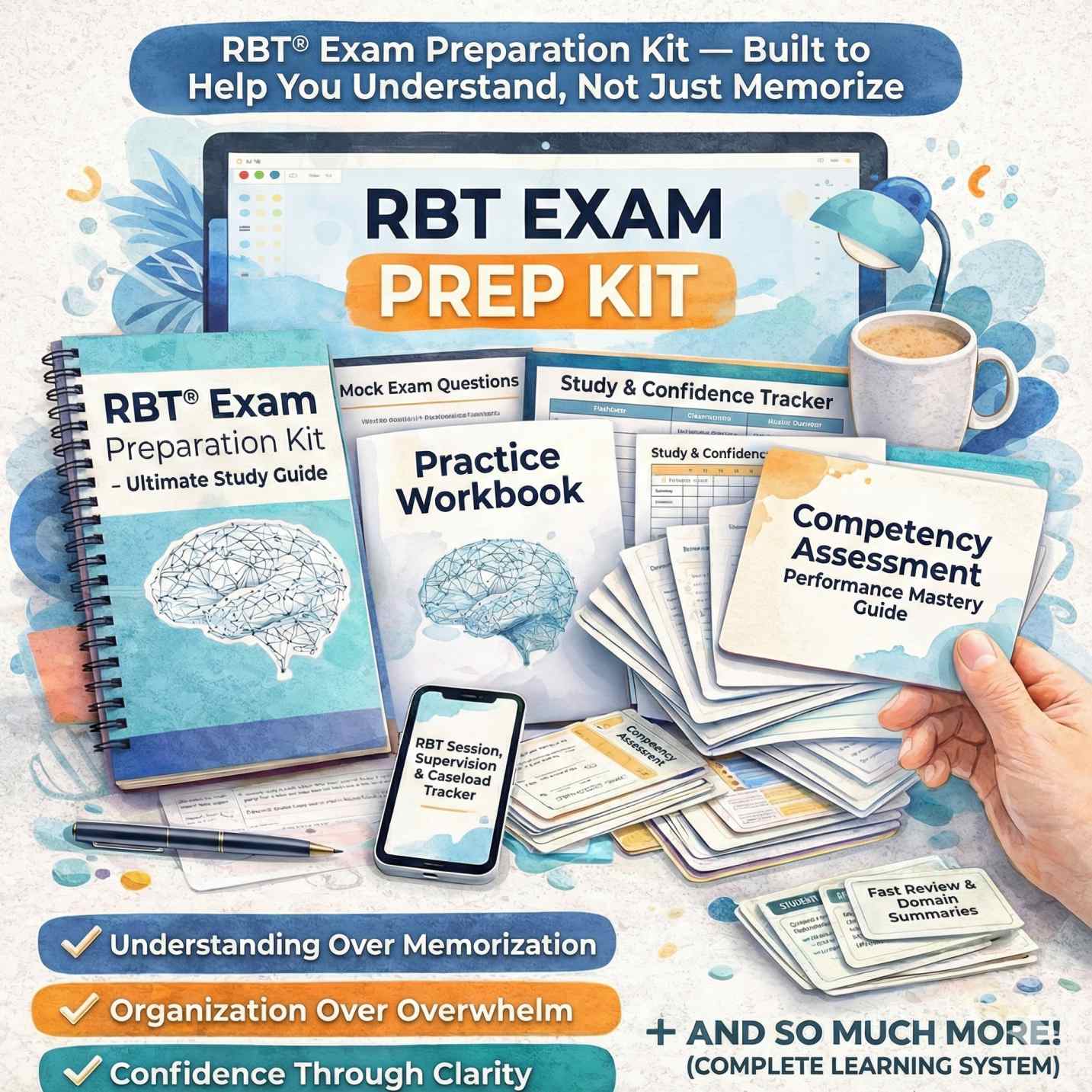
Everything You Need to Pass Your RBT® Exam
Study with our complete, all-in-one preparation package covering every task on the BACB Task List 3.0:
- 1,000+ Practice Questions & Timed Simulator
- 3rd Edition Task List Study Guide & Workbook
- Active Recall Flashcards System + Mobile App
- 20-Task Competency Assessment Mastery Guide