What Is an RBT (Registered Behavior Technician)?
Starting a career as a Registered Behavior Technician (RBT) is an excellent choice for anyone passionate about helping others through Applied Behavior Analysis (ABA). The process to get RBT certification might seem detailed, but it’s your first step toward a rewarding future in behavioral health.
In 2025, more people across the United States are pursuing this qualification because of its strong job demand and meaningful impact. By earning your RBT certification, you gain professional credibility, essential skills, and access to countless career opportunities. Understanding the RBT certification process and following each step carefully ensures you’ll be well-prepared to succeed and make a difference in people’s lives.
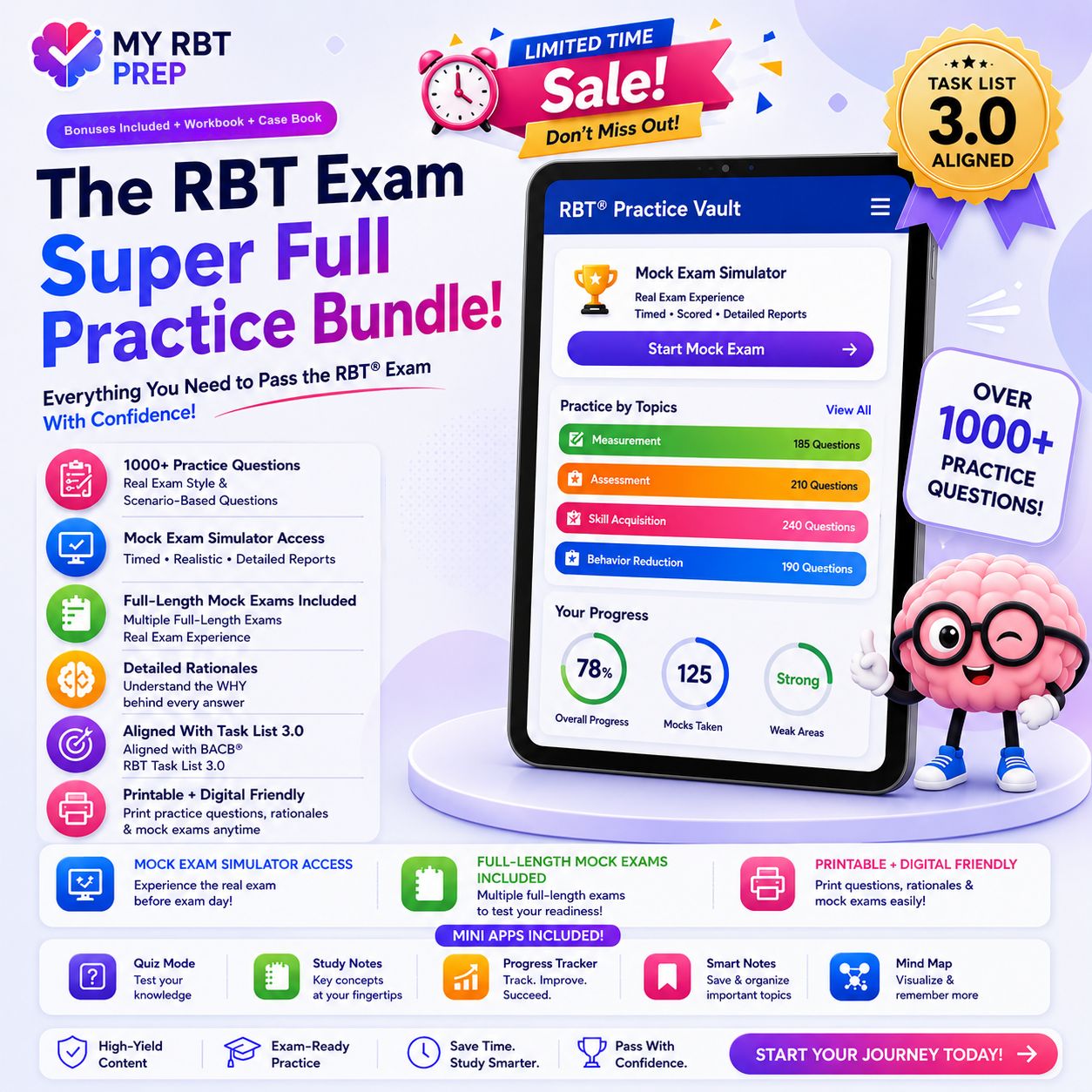
Pass Your RBT® Exam on the First Attempt
Practice with 1,000+ realistic scenario questions, multiple full-length timed mock exams, and detailed rationales formatted exactly like the real Pearson VUE test.
What Does an RBT Do? (Roles and Responsibilities)

An RBT’s daily role includes helping clients manage behavioral challenges and achieve specific goals set by their supervising BCBA. These duties involve data collection and reporting, skill acquisition and assessment, and applying behavior measurement and reduction strategies.
RBTs are often considered certified behavior health technicians because they provide direct behavioral support. They must also maintain proper documentation, meet supervision requirements for RBTs, and handle sensitive situations with professionalism and compassion. Their work bridges the gap between behavioral theory and real-life results.
What Is RBT Certification and Why Is It Important?

The RBT certification process ensures that every technician has the right skills and ethics to support people effectively. The Behavior Analyst Certification Board (BACB) grants this certification after applicants complete specific training, assessment, and exams.

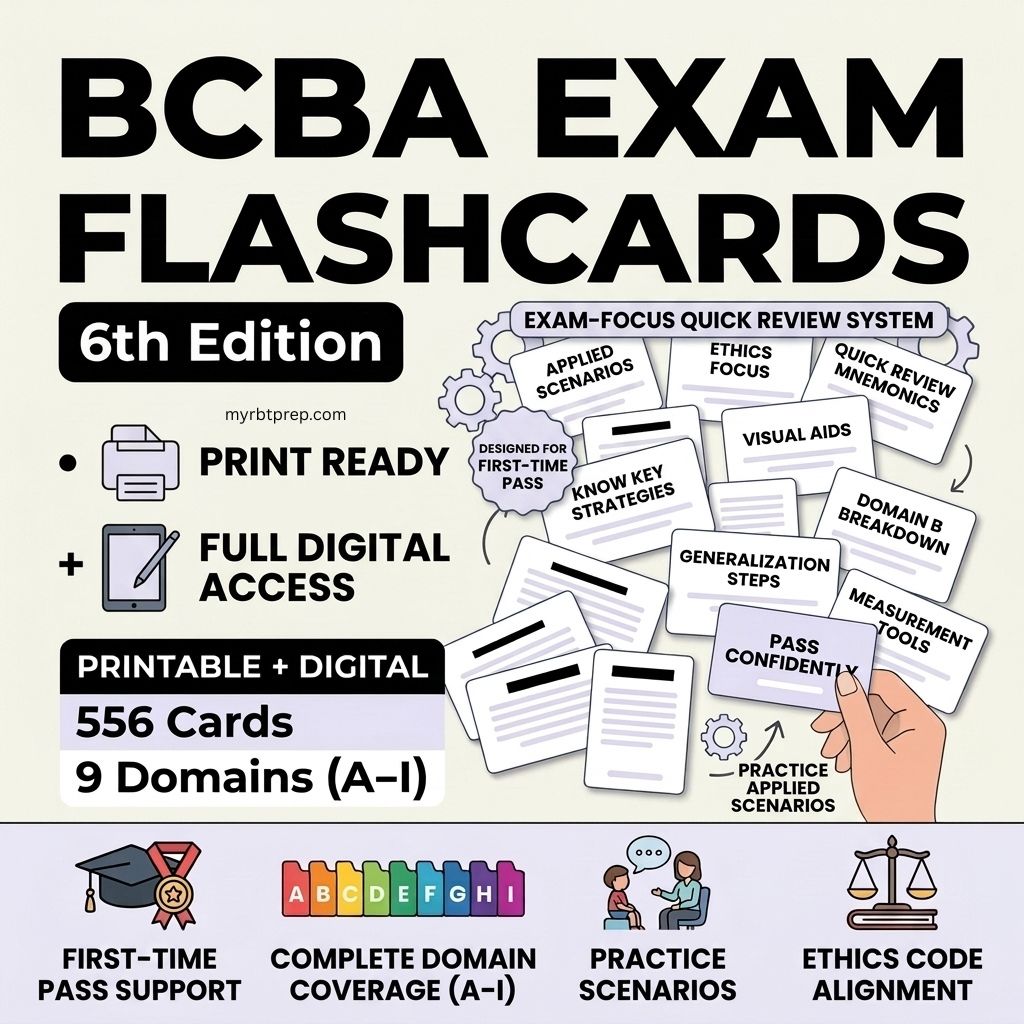
RBT® Exam Flashcards & Study App (3rd Edition)
Master essential ABA terminology and clinical discrimination across all 6 BACB task list areas with 500+ printable and digital flashcards, real exam cues, and full mobile app access.
Obtaining this credential provides numerous RBT certification benefits. It improves your job opportunities, increases your credibility, and strengthens your understanding of ABA therapy certification practices. Most importantly, it helps build a solid foundation for a career in behavioral health—a field that continues to expand across the U.S.
RBT Certification Requirements (Eligibility Criteria)

To meet RBT certification requirements, applicants must fulfill several conditions before beginning their journey. You must be at least 18 years old and hold a high school diploma or equivalent. Additionally, you’ll need to pass a criminal background check for RBT, ensuring you meet ethical and safety standards.
The RBT eligibility criteria also include completing a RBT 40-hour training course and passing the RBT competency assessment. These steps demonstrate that you’re ready for direct supervision and professional practice within ABA therapy certification environments.
Step-by-Step Process to Get RBT Certification

Step 1 – Create a BACB Account
The first step is to register an account on the BACB portal. This online system manages all documentation, applications, and exams for certification.
You’ll need to provide personal information, education details, and upload proof of eligibility. Once approved, you can move to the training phase.
Step 2 – Complete the 40-Hour RBT Training Course
The next stage involves completing a RBT 40-hour training course under the guidance of a BCBA or BCaBA.
You can choose an RBT online course with BCBA supervision or attend an in-person session from certified RBT training providers. The curriculum covers topics such as ethics in ABA practice, professional conduct and scope of practice, and RBT task list 3rd edition updates.
Step 3 – Complete the RBT Competency Assessment
After training, you’ll need to pass the RBT competency assessment conducted by a certified BCBA.
This evaluation measures your practical skills and ability to apply behavior intervention plans (BIP). You’ll demonstrate how to handle client sessions, record behaviors, and ensure ethical care.

Step 4 – Submit Your Application and Schedule the Exam
Once the assessment is complete, submit your application through the BACB portal. Then, you can schedule the RBT exam at Pearson VUE, the official testing center. You’ll receive confirmation of your exam date and location shortly after submission.
Step 5 – Pass the RBT Exam
The BACB RBT exam contains multiple-choice behavior technician exam questions that cover six RBT exam content areas from the RBT Task List. These include measurement, assessment, skill acquisition, behavior reduction, documentation, and ethics. Successful candidates must achieve a minimum passing score to earn their certification.
|
How Long Does It Take to Get RBT Certified?
Many people wonder how long does it take to get RBT certified. On average, the process takes 3 to 6 months. The timeline depends on how quickly you complete the RBT 40-hour training course, competency assessment, and exam scheduling.
Those who study consistently and use RBT practice test resources often progress faster. Completing the process early can help you secure your first position in ABA therapy certification sooner.
Cost of RBT Certification
The total cost of RBT certification varies depending on training provider and location. Typically, it ranges between $200 and $500. The BACB RBT exam fee is around $125, while RBT certification renewal 2025 may cost an additional $50 to $100 annually.
Some employers or RBT training providers offer scholarships or pay for your certification as part of job training. Always verify cost details before enrolling in any RBT certification online course.
Maintaining and Renewing Your RBT Certification
Once certified, you must complete an annual RBT certification renewal. This includes updated supervision requirements for RBTs, RBT ethics and professional conduct reviews, and continued skill assessments.
Failing to renew on time can lead to suspension of your certification. Keeping track of the renewal cycle ensures you maintain good standing with the Behavior Analyst Certification Board (BACB) and remain qualified for your role.
Common Challenges (and How to Overcome Them)
Some challenges during the RBT certification process include finding qualified supervisors, managing time for training, or dealing with exam anxiety. Setting a clear study schedule, practicing with RBT practice test materials, and asking mentors for help can make a big difference.
Another challenge involves balancing work with RBT supervision requirements. Communicate openly with your supervisor, and use flexible RBT certification online tools to stay on track. Consistency is key to success.
Career Opportunities After RBT Certification
After completing your steps to become an RBT, a wide range of career paths open up. You can work in schools, clinics, or private homes supporting clients through ABA treatment for autism. Many professionals later advance to become BCaBAs or BCBAs.
In the U.S., the RBT salary and job outlook remain promising. According to current data, the average RBT salary ranges from $45,000 to $60,000 annually, depending on experience, certification level, and location.
Choosing the Right RBT Training Program
Selecting the correct RBT 40-hour training course is crucial to successfully get RBT certification. Training programs vary in format, with some offered online, while others combine live instruction with in-person supervision.
Accredited RBT training providers ensure your learning aligns with the RBT Task List 3rd edition and covers essential topics such as ethics in ABA practice, behavior measurement and reduction, skill acquisition and assessment, and professional conduct and scope of practice.
Online courses with BCBA supervision allow you to complete modules at your own pace while still meeting supervision requirements for RBTs.
During training, learners practice implementing behavior intervention plans (BIP) and conducting ABA treatment for autism under guidance, which builds confidence for the RBT competency assessment. Programs often include simulated sessions, quizzes, and exercises in data collection and reporting to prepare candidates for real-world scenarios.
Choosing the right training course not only ensures you meet RBT eligibility criteria but also prepares you for RBT exam preparation effectively. For example, some programs provide RBT practice tests and review sessions that mimic the BACB RBT exam, which is essential for passing on the first attempt.
A carefully selected training program reduces stress, improves comprehension, and helps you complete the RBT certification process efficiently.
Ultimately, the right program sets the foundation for a successful career. Completing a recognized course ensures you gain both knowledge and practical skills.
This investment in quality training directly impacts your ability to perform as a certified behavior health technician and supports long-term professional growth.
Preparing for the RBT Competency Assessment
The RBT competency assessment is a critical step in your journey to get RBT certification. Conducted under a qualified Board Certified Behavior Analyst (BCBA) or Board Certified Assistant Behavior Analyst (BCaBA), this assessment measures your ability to implement behavior intervention plans (BIP) accurately and ethically.
Candidates are evaluated on real-life tasks, including conducting ABA treatment for autism, collecting and analyzing data, and demonstrating adherence to ethics in ABA practice. Meeting the supervision requirements for RBTs is essential, as assessors must observe and guide you during hands-on practice sessions.
Preparation for the competency assessment involves mastering each area of the RBT Task List 3rd edition, from skill acquisition and assessment to behavior measurement and reduction. Practice is critical, and many candidates use RBT practice tests and simulated sessions with their supervisors to refine techniques and gain confidence.
Documenting your progress through data collection and reporting ensures that you can showcase accurate and consistent performance. The assessment is designed not just to test knowledge but also to evaluate practical application, professional conduct, and communication skills.
Career Growth and Opportunities After RBT Certification
Once you become RBT certified, there will be many more options for employment in behavioral health As a certified RBT, you can work in schools, clinics, hospitals, and independent therapy practices.
The RBT is a critical professional role in the delivery of behavior intervention plans (BIP) and ABA treatment for autism and other disabilities, which involves providing direct support to clients receiving structured behavioral interventions.
The field is structured and you have a clear professional career ladder for promotion to Board Certified Assistant Behavior Analyst (BCaBA) and Board Certified Behavior Analyst (BCBA).
The salary and job outlook for RBTs in the United States looks favorable. Entry level technician salaries are respectable, and technicians with experience and trained in high demand areas can earn significantly more.
Typical benefits provided also include training with pay, supervision pay, and even grants for professional development activities. Keeping current in the field means maintaining certification through RBT certification renewal 2025, while following RBT ethics and professional conduct can lead to long career longevity.
Getting to know the RBT community and Registered Behavior Analysts (RBTs and BCBAs) can establish professional avenues for more advanced or specialized roles, such as working with a specific applications of behavior analysis– like working with children with autism or adults with developmental disabilities.
Final Thoughts – Is Becoming an RBT Worth It?
Becoming a certified RBT is one of the most fulfilling decisions for anyone passionate about behavioral therapy. It allows you to make a real difference in people’s lives while enjoying stable growth in the career in behavioral health field.
With clear RBT certification benefits, flexible work options, and steady demand nationwide, now is the perfect time to start your journey. Complete your training, pass your exams, and begin changing lives—one client at a time.
Faqs
How to do RBT certification?
To get RBT certification, you must complete a 40-hour training course, pass the competency assessment, apply through the BACB portal, and successfully clear the RBT exam.
How fast can you get an RBT certification?
You can usually earn your RBT certification within 3 to 6 months, depending on how quickly you complete training and testing.
What is the highest RBT salary?
The highest RBT salary in the U.S. can reach around $70,000 annually, depending on experience, location, and employer.
Is becoming an RBT worth it?
Yes, becoming an RBT is worth it if you enjoy helping others and want a stable, rewarding career in behavioral health.
Is it hard to get hired as an RBT?
No, it’s not hard to get hired as an RBT because demand for qualified technicians is growing rapidly across the United States.

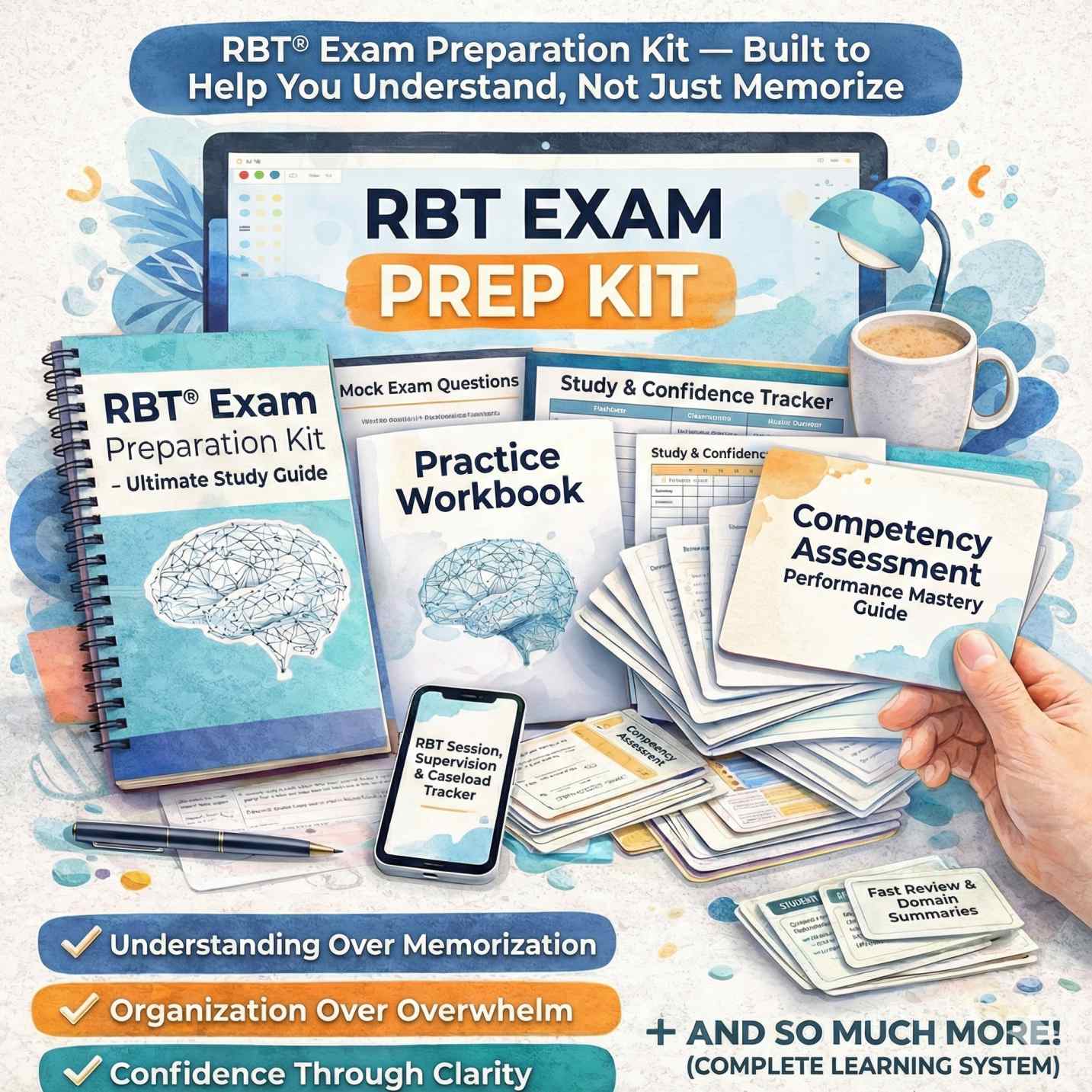
Everything You Need to Pass Your RBT® Exam
Study with our complete, all-in-one preparation package covering every task on the BACB Task List 3.0:
- 1,000+ Practice Questions & Timed Simulator
- 3rd Edition Task List Study Guide & Workbook
- Active Recall Flashcards System + Mobile App
- 20-Task Competency Assessment Mastery Guide