Many Registered Behavior Technicians (RBTs) wonder how they can leverage their skills beyond traditional Applied Behavior Analysis (ABA) therapy. While ABA remains a primary field for RBTs, there are numerous alternative career paths that utilize their expertise in behavioral interventions, client support, and data-driven treatment. Exploring these opportunities allows RBTs to expand their professional horizons, increase earning potential, and find roles that better suit their personal goals, lifestyle, and interests.
RBTs gain skills in hands-on behavioral therapy, evidence-based behavior interventions, client progress tracking, and social and communication skill development, all of which are transferable to other behavioral health or support roles. Additionally, advanced RBT certification and specialized training in areas like verbal behavior or feeding therapy can open doors to leadership, consulting, and supervisory positions outside traditional ABA clinics.
Behavioral Health and Mental Health Support Roles
RBTs can transition into broader behavioral health or mental health support roles, such as working in residential treatment facilities, psychiatric hospitals, or community mental health programs. These positions allow technicians to apply their knowledge of direct support professional (DSP) roles and evidence-based behavior interventions to support clients with varying behavioral or developmental needs.
Many positions involve monitoring client behavior, collecting data, assisting with behavior management plans, and collaborating with multidisciplinary teams. This path provides exposure to different populations, such as adults with developmental disabilities or individuals with behavioral challenges outside of autism therapy. RBTs may find that these roles offer competitive pay, flexible schedules, and opportunities for career progression into supervisory or program coordinator roles.
| Aspect | Details |
| Career Path | Behavioral health or mental health support roles, including residential treatment, psychiatric hospitals, or community programs. |
| Key Responsibilities | Monitor client behavior, collect data, assist with behavior management plans, and collaborate with multidisciplinary teams. |
| Skills Applied | Direct support professional (DSP) roles, evidence-based behavior interventions, client progress tracking. |
| Client Populations | Adults with developmental disabilities or individuals with behavioral challenges outside of autism therapy. |
| Benefits & Opportunities | Competitive pay, flexible schedules, and potential for career progression into supervisory or program coordinator roles. |
Educational and Training Roles
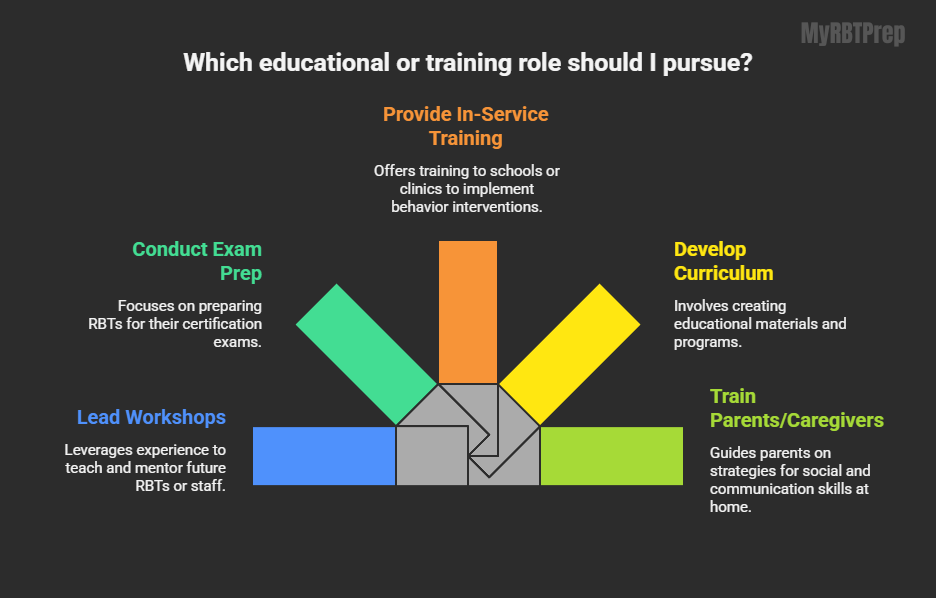
Another path for RBTs is moving into educational and training roles, leveraging their experience to teach or mentor future RBTs or other behavioral health staff. RBTs with significant experience may lead workshops, conduct RBT exam preparation and training, or provide in-service training for schools or clinics.
Educational roles often involve curriculum development, mentoring, and supporting staff in implementing evidence-based behavior interventions effectively. RBTs can also work as behavioral trainers for parents or caregivers, offering guidance on strategies for social and communication skill development at home. These roles enhance leadership skills and can provide additional income through workshops, consulting, or online training programs.
Healthcare and Rehabilitation Settings
RBTs can expand their careers into healthcare and rehabilitation settings, such as hospitals, outpatient clinics, or home health agencies. In these roles, they apply ABA principles alongside occupational therapists, speech therapists, and psychologists to support patient recovery and functional skill development.
This path often emphasizes hands-on behavioral therapy, patient progress monitoring, and collaboration with medical professionals. It allows RBTs to broaden their experience with varied populations, such as patients recovering from brain injuries, neurological disorders, or chronic illnesses. Additionally, many healthcare employers offer structured benefits packages, overtime pay, and professional development opportunities for motivated RBTs.
| Aspect | Details |
| Career Path | Healthcare and rehabilitation settings, including hospitals, outpatient clinics, or home health agencies. |
| Key Responsibilities | Apply ABA principles with occupational therapists, speech therapists, and psychologists to support patient recovery and functional skill development. |
| Skills Applied | Hands-on behavioral therapy, patient progress monitoring, collaboration with medical professionals. |
| Client Populations | Patients recovering from brain injuries, neurological disorders, or chronic illnesses. |
| Benefits & Opportunities | Structured benefits packages, overtime pay, and professional development opportunities. |
Corporate and Organizational Behavior Roles
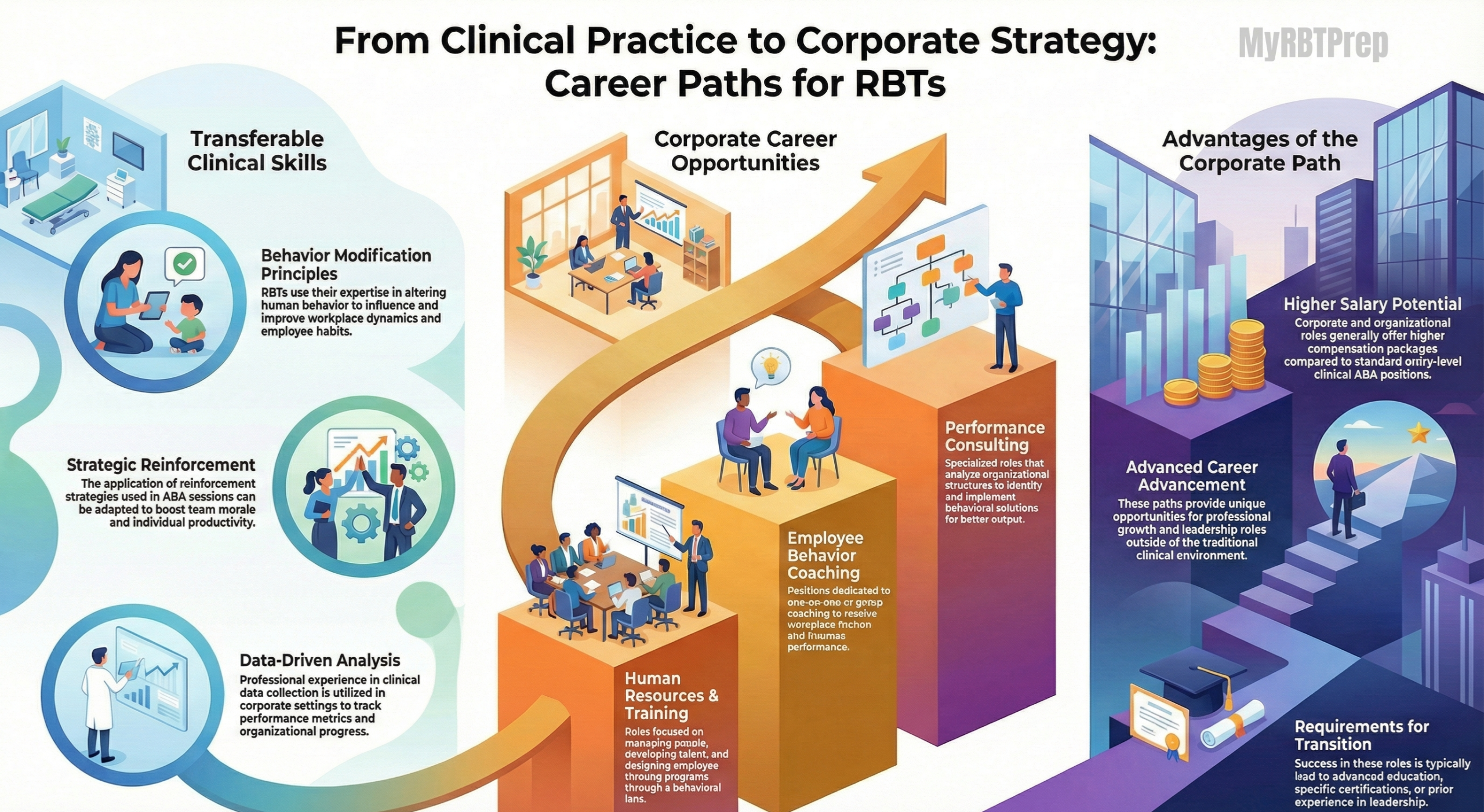
Some RBTs leverage their understanding of human behavior into corporate or organizational settings. Roles in human resources, training, employee behavior coaching, or performance consulting allow RBTs to apply principles of behavior modification, reinforcement strategies, and data collection in ABA sessions to improve workplace productivity and team performance.
These positions are especially suitable for RBTs with advanced education requirements, certifications, or experience in leadership roles. They often come with higher salaries compared to entry-level ABA positions and provide opportunities for career advancement outside clinical settings.
Specialized Consulting and Private Practice
Experienced RBTs can also pursue consulting or private practice, offering specialized services to schools, clinics, or families. This can include behavior intervention planning, staff training, or parent coaching on direct support professional (DSP) roles.
Consulting roles allow for flexible schedules, higher hourly rates, and the ability to focus on niche areas such as verbal behavior, feeding therapy, or social skill development. Establishing a reputation in specialized services can lead to contracts with multiple organizations, creating substantial income growth and professional independence.
| Aspect | Details |
| Career Path | Consulting or private practice, providing specialized services to schools, clinics, or families. |
| Key Responsibilities | Behavior intervention planning, staff training, and parent coaching on direct support professional (DSP) roles. |
| Specialized Areas | Verbal behavior, feeding therapy, social skill development, and other niche behavioral services. |
| Benefits & Opportunities | Flexible schedules, higher hourly rates, ability to work with multiple organizations, and professional independence. |
| Earning Potential | Establishing a reputation in specialized services can lead to substantial income growth over time. |
Continuing Education and Advanced Certifications
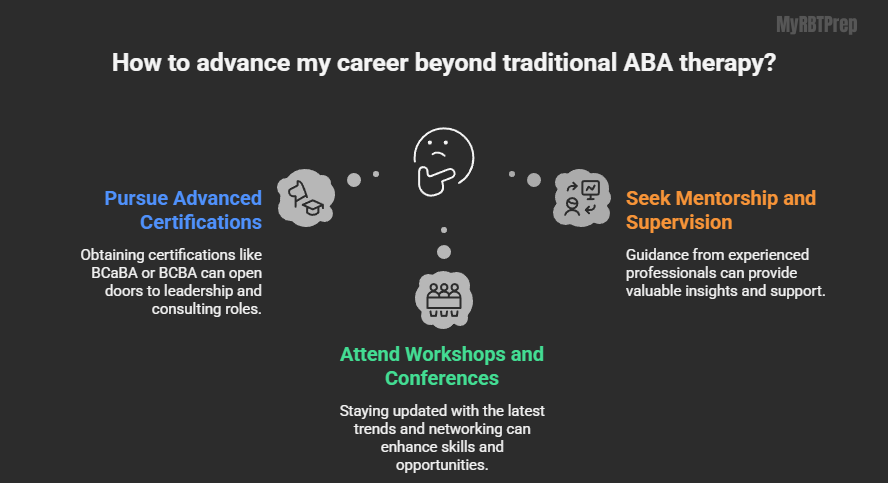
Regardless of the path chosen, continuing education remains essential. Pursuing advanced certifications in ABA, such as BCaBA or BCBA, or specialized training in behavioral interventions strengthens career opportunities. Mentorship, supervision, and attending workshops or conferences provide skills and credentials that are highly valued in alternative RBT careers.
RBTs who invest in education and skill development can move into leadership, training, or consulting positions, ultimately increasing their earning potential and career progression for RBTs beyond traditional ABA therapy.
Work-Life Balance and Flexibility in Alternative Careers
Many alternative paths offer improved work-life balance compared to traditional clinic-based ABA roles. Telehealth, private consulting, and corporate behavior roles often allow flexible hours, remote work, and reduced travel.
While salary may vary, RBTs benefit from applying their expertise in hands-on behavioral therapy, client progress tracking, and evidence-based behavior interventions in settings that better match their personal lifestyle and career goals. Choosing the right alternative path ensures both professional satisfaction and long-term growth.
| Career Path | Description | Key Skills Applied |
| Behavioral Health / Mental Health | Work in residential or community programs with diverse populations. | DSP role, behavior interventions, data collection |
| Educational / Training Roles | Mentor or train future RBTs, staff, or parents in behavioral strategies. | Training, supervision, curriculum development |
| Healthcare / Rehabilitation | Support patients in hospitals or clinics using ABA principles. | Hands-on therapy, progress monitoring, collaboration |
| Corporate / Organizational Behavior | Apply behavior analysis in HR, training, or performance coaching. | Behavior modification, reinforcement, workplace data collection |
| Specialized Consulting / Private Practice | Provide niche ABA services to schools, clinics, or families. | Intervention planning, coaching, specialized training |
Expanding Your Career Horizons: Skills That Make RBTs Valuable Beyond ABA Therapy
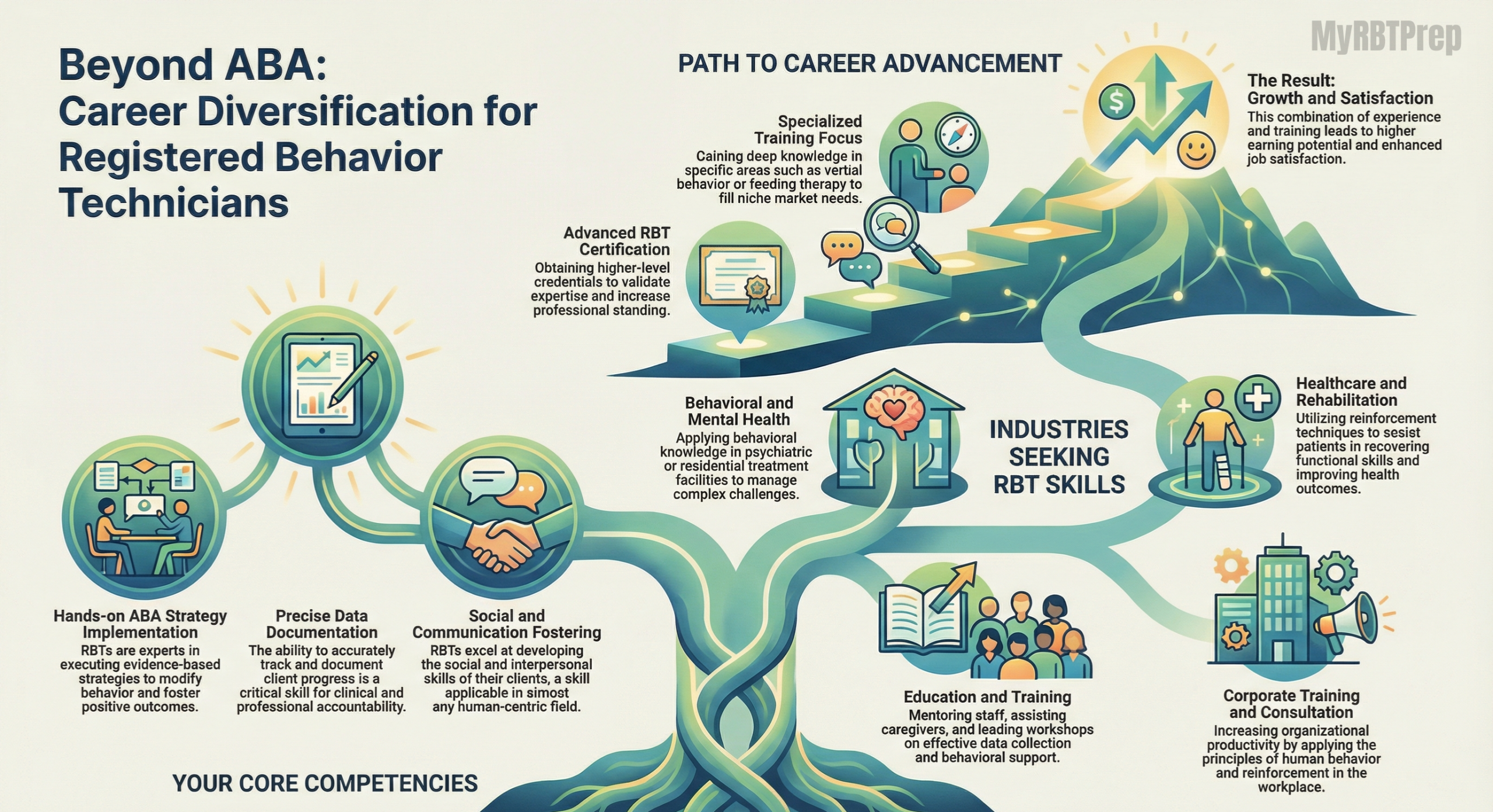
RBTs possess a valuable combination of skills that provide them with the ability to transition into many different professions. Core competencies include hands-on ABA therapy, implementation of evidence-based ABA strategies, documenting client progress, and fostering social and communication skills. RBTs are not limited to working in the field of Autism Services; they are able to use their skill set in a variety of sectors, including, but not limited to, behavioral health, mental health, education, health care, rehabilitation, corporate training/consultation, and more.
For example, RBTs employed in psychiatric or residential treatment facilities can apply the knowledge and training they received to help their clients with a wide array of behavior challenges. RBTs working in education or training capacities may mentor staff, assist caregivers, and provide workshops that teach how to collect data effectively during an ABA session. Corporate and consulting companies have the potential to increase productivity and organizational outcomes through the application of RBT knowledge regarding human behavior and reinforcement techniques.
Completing advanced RBT certification, taking advanced training in specific areas (i.e., verbal behavior and feeding therapy), and obtaining mentorship experiences will provide RBTs with additional training and knowledge. With this combination of experience, RBTs will be able to take advantage of higher earning potential and greater job satisfaction while advancing their careers well beyond the traditional ABA therapy path.
FAQs
Can RBTs work outside ABA therapy?
Yes, RBTs can pursue careers in behavioral health, education, healthcare, corporate roles, or consulting. Their skills in behavior interventions are transferable.
Do alternative paths pay more than traditional ABA roles?
Some paths, like consulting, corporate behavior roles, or specialized training, often offer higher hourly rates or salaries than entry-level ABA positions.
What skills are most valuable for alternative careers?
Experience in hands-on behavioral therapy, evidence-based behavior interventions, client progress tracking, and specialized ABA training is highly valuable.
How can RBTs advance in these alternative careers?
Pursuing advanced certifications in ABA, specialized training, mentorship, and continuing education strengthens career prospects and earning potential.
Can RBTs switch between ABA and non-ABA roles easily?
Yes, many skills learned as an RBT, such as hands-on behavioral therapy, evidence-based behavior interventions, and client progress tracking, are transferable to non-ABA roles.