The question “Can an RBT become a BCBA?” is one that many professionals in the Applied Behavior Analysis (ABA) field often ask. The truth is yes—this career move is absolutely possible and highly rewarding. The RBT to BCBA transition allows you to advance from assisting in therapy sessions to designing and supervising them.
With the right BCBA education requirements, hands-on training, and dedication, you can elevate your professional journey in behavior analysis. This guide explains each step of the RBT to BCBA pathway, helping you understand what it takes to earn your Board Certified Behavior Analyst certification in the United States.
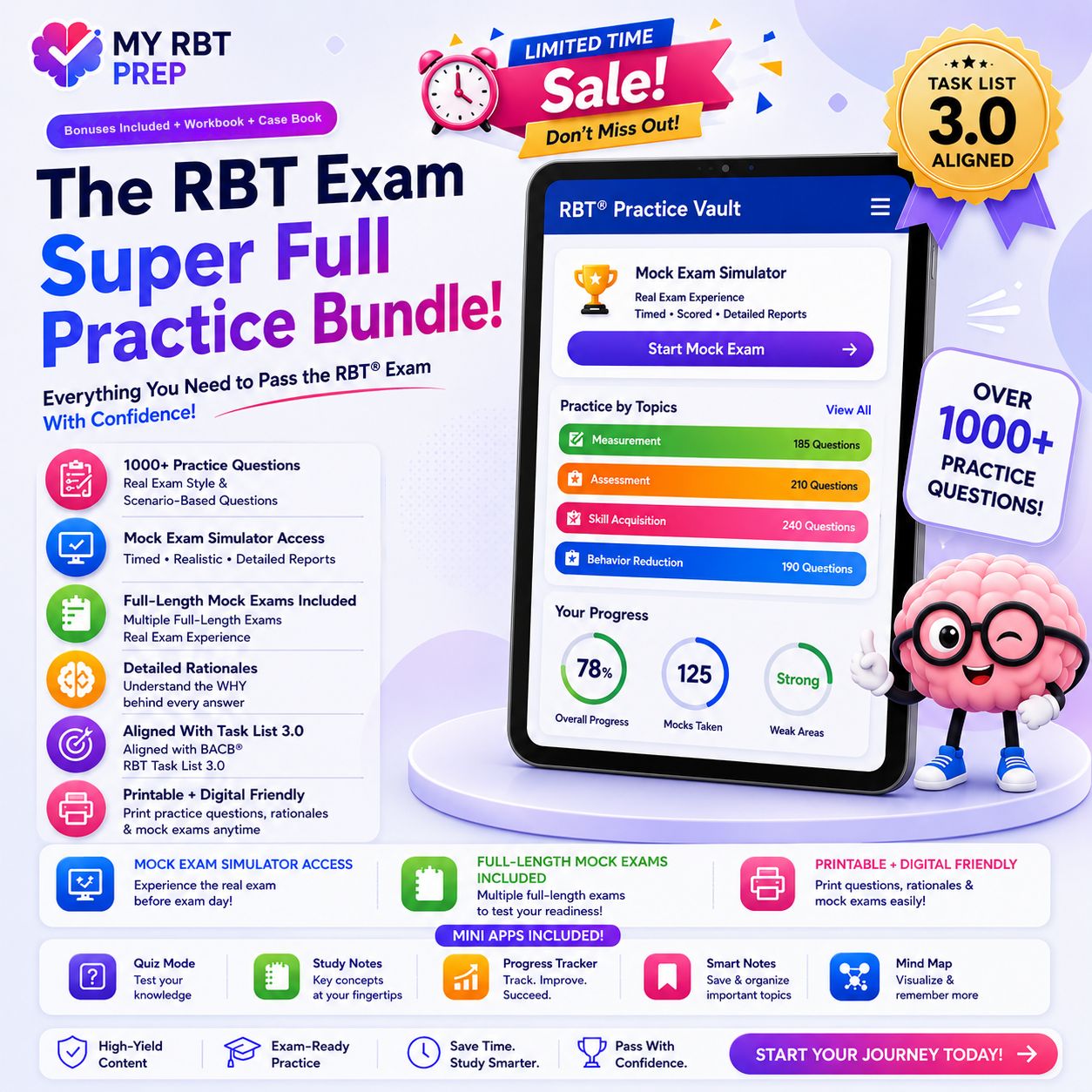
Pass Your RBT® Exam on the First Attempt
Practice with 1,000+ realistic scenario questions, multiple full-length timed mock exams, and detailed rationales formatted exactly like the real Pearson VUE test.
What Is the Difference Between an RBT and a BCBA?
An RBT is an entry-level practitioner who works directly with clients, often children diagnosed with autism spectrum disorder and ABA therapy. Their job is to follow treatment programs created by a BCBA, focusing on daily implementation of behavior intervention plans (BIPs). In contrast, a BCBA designs those programs, performs behavior assessments, and supervises ABA supervision for technicians.
|
While an RBT’s scope is limited, a BCBA has full authority in designing interventions and evaluating client progress. This difference makes the RBT to BCBA requirements crucial for anyone wanting to grow in the behavior analysis career growth field.
Start Preparing To Become A BCBA From RBT With Complete Prep System:

Can an RBT Become a BCBA?
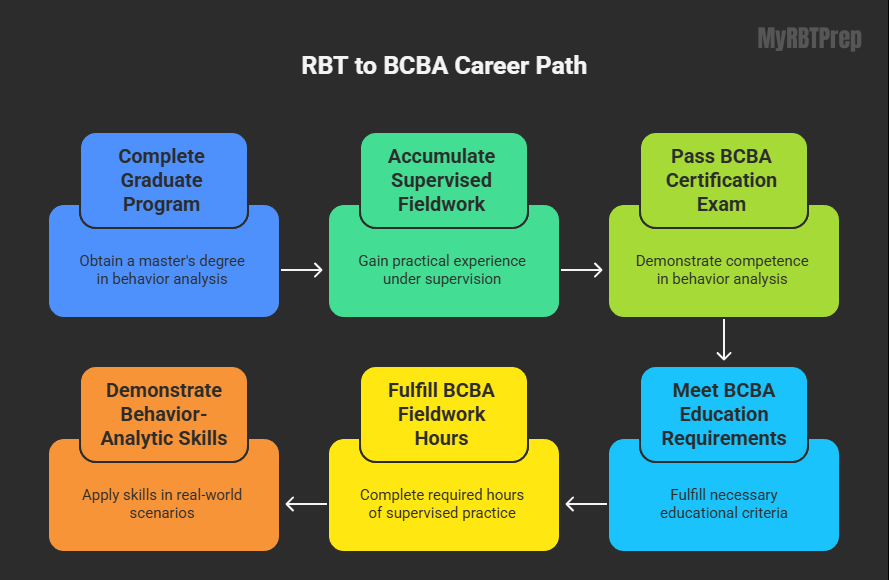
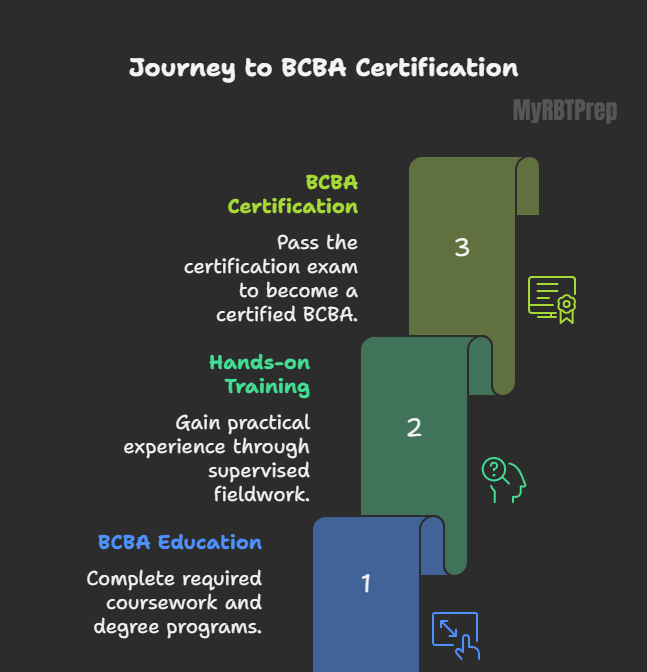
Yes, absolutely. An RBT can become a BCBA by completing a graduate program, accumulating supervised fieldwork, and passing the BCBA certification exam. The RBT to BCBA certification steps include meeting all BCBA education requirements, fulfilling BCBA fieldwork hours, and demonstrating behavior-analytic skills through real-world experience.

RBT® Exam Flashcards & Study App (3rd Edition)
Master essential ABA terminology and clinical discrimination across all 6 BACB task list areas with 500+ printable and digital flashcards, real exam cues, and full mobile app access.
Think of the RBT to BCBA pathway as a ladder — each rung represents education, experience, and mastery. Many technicians begin as RBTs to gain practical exposure before entering a BCBA training program. This foundation helps them understand client needs, ethical standards, and professional conduct in ABA—core elements of success as a future BCBA.
Benefits of Becoming a BCBA After RBT

The RBT to BCBA transition offers more than just a salary boost. It’s a professional evolution. As a BCBA, you gain independence in creating behavior intervention plans, mentoring other technicians, and shaping therapeutic outcomes. You become the architect behind the progress.
In the United States, the BCBA career outlook is bright. According to BACB data, certified analysts are in high demand across clinics, schools, and healthcare settings. You’ll also experience increased respect within the ABA therapy community, more flexibility in scheduling, and the opportunity to pursue research or private practice.
Educational Requirements to Become a BCBA
To start your RBT to BCBA pathway, you need a master’s in behavior analysis, education, or psychology from an accredited institution or program. This degree must meet BACB compliance standards. Programs that follow the Verified Course Sequence (VCS) model are ideal because they’re pre-approved by the Behavior Analyst Certification Board (BACB).
Many top BCBA master’s degree programs in the USA—such as those at the University of South Florida or Simmons University—offer both online and campus learning. Coursework covers ethics, assessment, and applied behavior analysis principles to build a solid academic foundation.
Required Coursework for BCBA Certification
The BCBA coursework requirements are essential for developing foundational knowledge in the science of behavior. You’ll complete graduate-level coursework focused on experimental design, data analysis, and behavior modification strategies. These classes teach how to assess clients, design behavior intervention plans, and apply evidence-based methods in real situations.
The BACB mandates specific course content areas like concepts and principles of behavior, measurement and data analysis, and professional conduct in ABA. This rigorous curriculum ensures that every BCBA possesses the competence and ethical grounding required to guide others in the field.
BCBA Fieldwork and Experience Requirements
Fieldwork bridges theory and practice. The BCBA fieldwork hours requirement involves hands-on experience under supervision. You must complete either 2,000 hours of supervised fieldwork or 1,500 hours of concentrated supervised fieldwork. Each option offers valuable insights into applied therapy, client engagement, and data-driven intervention.
During this supervised fieldwork experience, you’ll apply behavior-analytic skills under a qualified BCBA supervisor. Real-world scenarios might include designing interventions for children with autism, conducting behavior assessments, and analyzing progress over time. Keeping detailed logs of your hours is critical for BACB verification.
How to Apply for the BCBA Exam
Once educational and fieldwork milestones are complete, you’ll move to the final step: the BCBA certification exam. Visit the official BACB website at www.bacb.com to apply. You’ll need to submit proof of your degree, coursework transcripts, and verified experience hours. After approval, you can schedule your exam through Pearson VUE testing centers across the U.S.
The exam consists of 185 multiple-choice questions covering applied behavior analysis principles, ethics, and case applications. It’s a comprehensive evaluation of your mastery in the field. Those who pass receive official recognition as a Board Certified Behavior Analyst, unlocking new opportunities for professional advancement.
Preparing for the BCBA Exam
Effective BCBA exam preparation is key to success. Many candidates use study guides, online BCBA training programs, and practice exams to test their understanding. Reviewing previous behavior intervention plans, studying ethical guidelines, and joining study groups helps retain complex material.
For best results, dedicate consistent time daily rather than cramming. Incorporate flashcards for terminology, review video lectures, and analyze past ABA therapy case studies. Passing the exam requires not only knowledge but also confidence, so stay focused and organized.
RBT to BCBA Transition Timeline
The RBT to BCBA transition typically takes between two to five years, depending on the pace of your education and fieldwork. Let’s break it down:
|
Balancing RBT duties with graduate school can make the process longer, but it also builds strong practical expertise. Remember, patience and persistence define successful RBT to BCBA certification steps.
Career Opportunities After Becoming a BCBA
Once you earn your Board Certified Behavior Analyst certification, a wealth of opportunities opens up. BCBAs are needed in schools, clinics, hospitals, and research facilities. You can specialize in autism behavior therapy, organizational management, or clinical supervision. Many pursue private practice, offering consulting services to families or schools across the USA.
The median salary for BCBAs often surpasses $75,000 per year, with higher earnings in states like California, New York, and Texas. Additionally, the field continues to expand as awareness of applied behavior analysis principles grows nationwide.
The Importance of Ethics in the RBT to BCBA Transition
When moving from Registered Behavior Technician (RBT) to Board Certified Behavior Analyst (BCBA), maintaining strong ethics is essential. Every professional in the Applied Behavior Analysis (ABA) field must follow BACB compliance standards to protect clients’ rights and ensure treatment integrity. The Behavior Analyst Certification Board (BACB) sets strict ethical codes that guide how practitioners conduct therapy, collect data, and communicate with families. A BCBA not only follows these standards but also teaches them to the RBTs they supervise.
Ethics in behavior analysis go beyond avoiding mistakes—they shape how professionals make decisions. For example, when designing a behavior intervention plan (BIP), a BCBA must consider a client’s dignity, privacy, and cultural background. They are also responsible for ensuring that supervised fieldwork promotes real learning, not just task completion.
A common ethical challenge arises when therapists face pressure to produce fast results; however, ethical practice values long-term change over quick fixes. Understanding and applying professional conduct in ABA ensures that both RBTs and BCBAs provide compassionate, science-based support. This ethical foundation becomes the backbone of effective treatment and lasting client progress.
Technology and Innovation in Modern ABA Practice
New technology has revolutionized the way BCBAs and RBTs provide therapy in this day and age. The new RBT to BCBA pathway is designed to teach you technology tools that can help you provide efficient telehealth-based therapy. You may learn how to use telehealth meetings, data collection apps and more. Practitioners can monitor behavior by using digital platforms and monitor analytics. They can also record, analyze, and share reports in real-time.
Thanks to virtual platforms, more people are getting access to BCBA programs and supervision. Candidates can conduct supervised virtual fieldwork activities using online platforms which are staffed by qualified mentors and offer distance learning opportunities which take place outside of the in-person training environment. Tools such as electronic behavior assessments and video modeling software can facilitate ABA supervision and improve feedback fidelity. The prep for BCBA exam has gone online too, replete with practice tests and flashcard systems.
Conclusion
The journey from RBT to BCBA is not just a professional leap—it’s a life-changing transformation. You begin as a technician learning to implement behavior intervention plans and emerge as a leader designing them. Through education, supervised fieldwork, and certification, you develop the expertise to make measurable impacts in people’s lives.
Becoming a BCBA isn’t merely about titles or income; it’s about mastery, purpose, and compassion. The Behavior Analyst Certification Board (BACB) has built a clear and accessible route for aspiring professionals. If you’re ready to advance your future, start exploring BCBA master’s degree programs and set your course toward becoming a certified expert in behavior analysis.
Quick Checklist for RBTs Wanting to Become BCBAs
To wrap it all together, here’s what you’ll need before sitting for the exam:
|
Final Thought:
Every great analyst started somewhere. For you, that starting point might be as an RBT, working hands-on with clients, learning the rhythm of behavioral change. The next step—becoming a BCBA—isn’t just attainable; it’s the natural progression for those who want to lead, inspire, and transform lives through science-backed compassion.
Faqs
Can I go from RBT to BCBA?
Yes, you can go from RBT to BCBA by completing a master’s degree, supervised fieldwork, and passing the BCBA certification exam through the BACB.
How long do you have to be an RBT before becoming a BCBA?
It usually takes about 2 to 5 years, depending on how quickly you complete your education and fieldwork requirements.
What is the next step up from RBT?
The next step after RBT is becoming a BCaBA (Board Certified Assistant Behavior Analyst) or working toward a BCBA certification.
What is the quickest way to become a BCBA?
The fastest route is enrolling in a BACB-approved Verified Course Sequence (VCS) master’s program while completing supervised fieldwork simultaneously.
Can you get a BCBA without a degree?
No, you must have at least a master’s degree in behavior analysis, psychology, or education from an accredited institution to qualify.

Everything You Need to Pass Your RBT® Exam
Study with our complete, all-in-one preparation package covering every task on the BACB Task List 3.0:
- 1,000+ Practice Questions & Timed Simulator
- 3rd Edition Task List Study Guide & Workbook
- Active Recall Flashcards System + Mobile App
- 20-Task Competency Assessment Mastery Guide