Writing accurate RBT session notes is a crucial skill for any Registered Behavior Technician. These notes provide a clear record of interventions, client progress, and observed behaviors during therapy sessions. Proper documentation ensures compliance with Applied Behavior Analysis standards, supports ethical decision-making, and helps supervisors evaluate performance. Session notes also serve as evidence for treatment planning, insurance purposes, and long-term client outcomes. Understanding how to create clear, concise, and detailed notes is essential for both new and experienced RBTs, as it directly reflects the Responsibilities of a Registered Behavior Technician in clinical practice.
Documenting sessions correctly requires attention to detail, adherence to ethical guidelines, and knowledge of behavioral terminology. Notes should include Behavior Assessment results, interventions applied, client responses, and any environmental factors influencing behavior. Following the RBT Task List 3.0 ensures that all necessary domains, including Behavior Acquisition, Behavior Reduction, Data Collection and Graphing, and Ethics in ABA, are addressed in every entry. Properly written notes also facilitate RBT supervision requirements, allowing supervisors to provide informed feedback, track progress, and plan future sessions effectively.
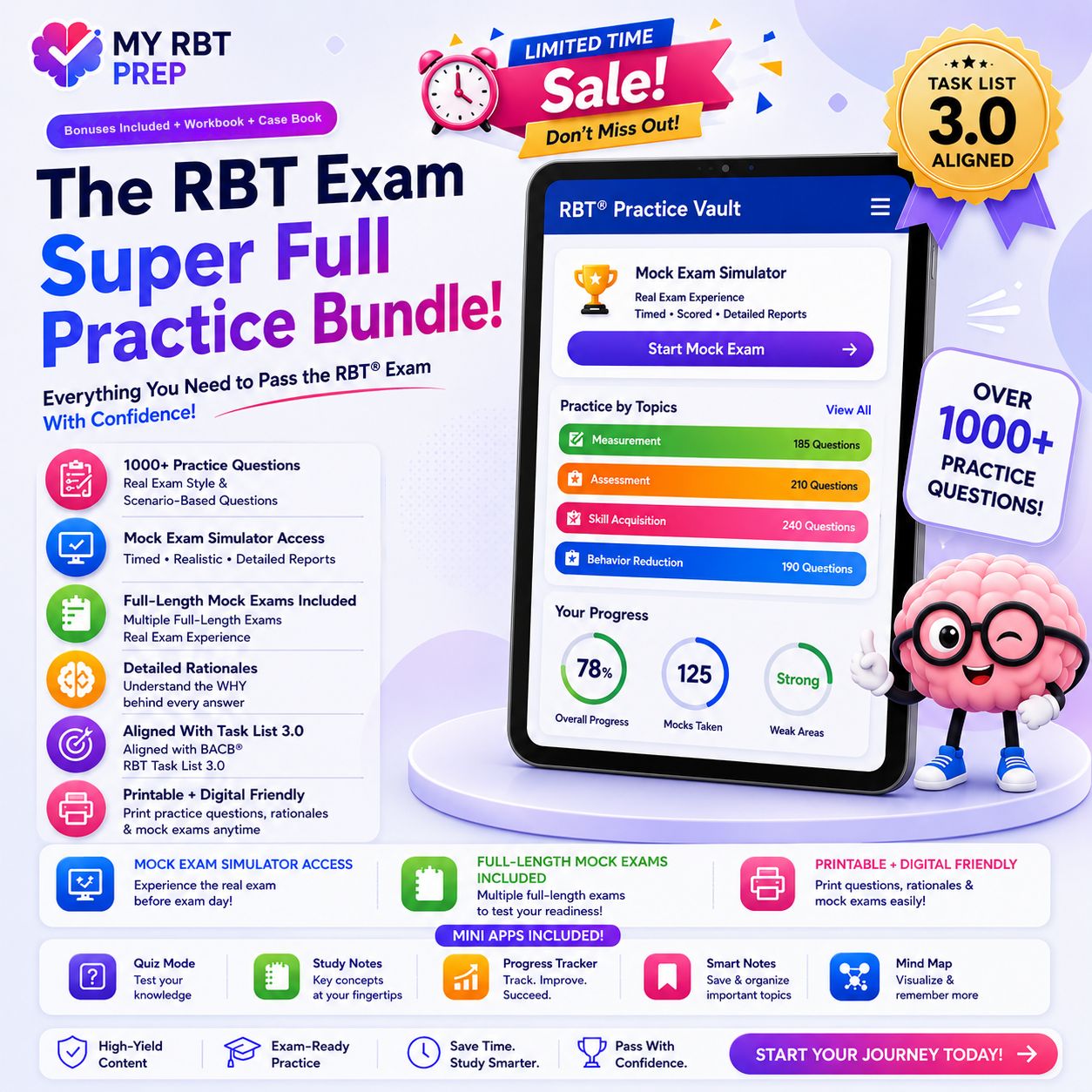
Pass Your RBT® Exam on the First Attempt
Practice with 1,000+ realistic scenario questions, multiple full-length timed mock exams, and detailed rationales formatted exactly like the real Pearson VUE test.

What Are RBT Session Notes?
RBT session notes are formal records of therapy sessions that capture client behavior, interventions, and outcomes. They are used to track progress toward goals, communicate with supervisors, and maintain compliance with Behavior Analyst Certification Board (BACB) standards. Each note documents what occurred during the session, how the client responded, and any modifications made to interventions.
These notes are essential tools for RBT professional development. For instance, supervisors review session notes to evaluate skill implementation and ethical compliance. A well-documented note ensures that interventions align with Applied Behavior Analysis standards and ethical requirements, including core ethical principles for RBTs. Proper session documentation supports continuity of care, aids in competency assessment for RBTs, and ensures interventions are effective and safe for clients.
| Aspect | Details |
| Definition | RBT session notes are formal records of therapy sessions that capture client behavior, interventions, and outcomes. |
| Purpose | Track client progress, communicate with supervisors, and maintain compliance with Behavior Analyst Certification Board (BACB) standards. |
| Content | Documents what occurred, client responses, and any modifications made to interventions during the session. |
| Professional Development | Supervisors review notes to evaluate skill implementation, ethical compliance, and provide feedback for RBT professional development. |
| Standards & Ethics | Ensures interventions align with Applied Behavior Analysis standards and core ethical principles for RBTs. |
| Outcome | Supports continuity of care, aids in competency assessment for RBTs, and ensures interventions are effective and safe for clients. |
Why Accurate RBT Session Notes Matter

Accurate session notes protect both clients and therapists. They provide a clear picture of progress and challenges, helping supervisors make informed decisions about treatment. Documentation also supports RBT recertification by demonstrating adherence to standards and ongoing professional competence.
Inaccurate or incomplete notes can lead to ethical violations, poor treatment outcomes, or miscommunication among the care team. For example, failing to record trends in graphed data or not documenting Behavior Reduction strategies can obscure whether an intervention is effective. By maintaining precise and comprehensive notes, RBTs fulfill their Responsibilities of a Registered Behavior Technician and contribute to high-quality ABA services.

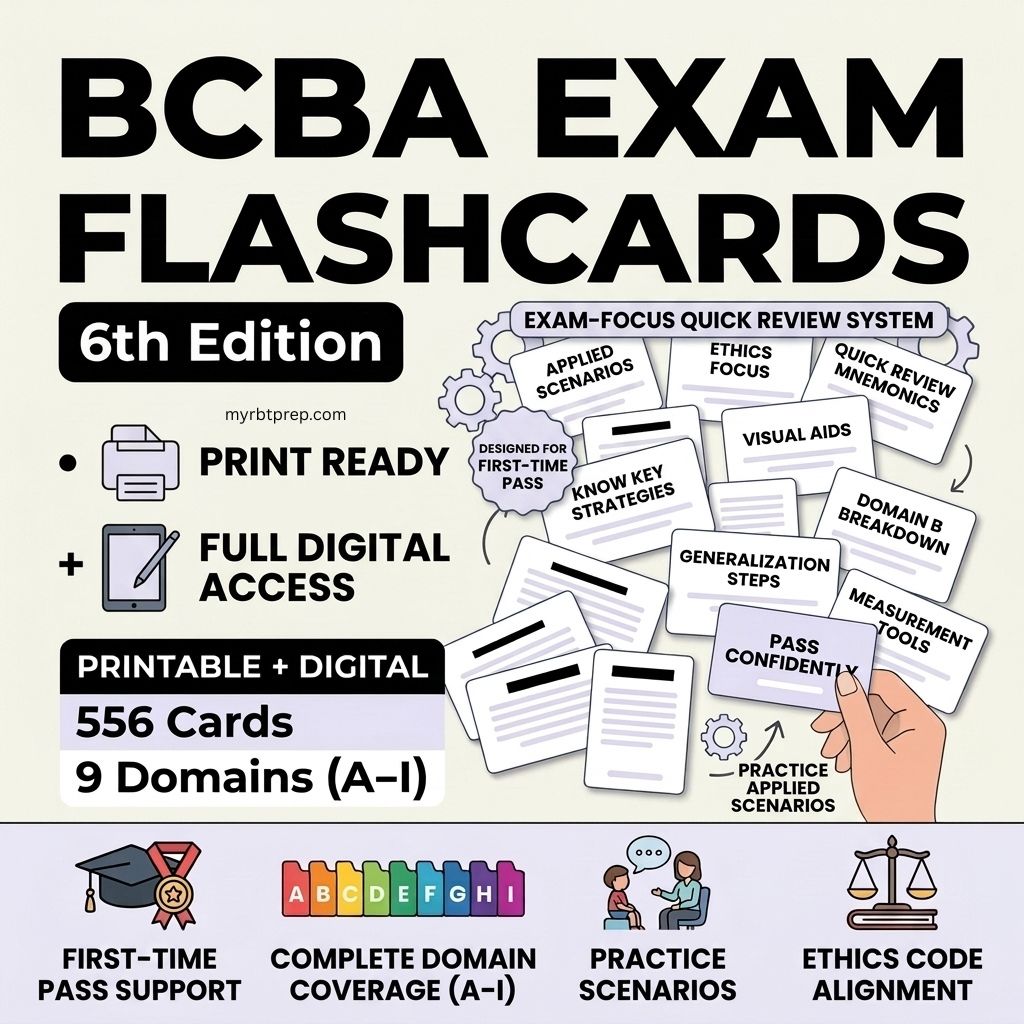
RBT® Exam Flashcards & Study App (3rd Edition)
Master essential ABA terminology and clinical discrimination across all 6 BACB task list areas with 500+ printable and digital flashcards, real exam cues, and full mobile app access.
Components of an RBT Session Note
A complete session note should cover several key areas. These include: client information, session date and time, target behaviors, interventions used, data collected, progress notes, and supervisor observations.
| Component | Details |
| Client Info | Name, age, and relevant demographic details. |
| Session Details | Date, time, and duration of the session. |
| Target Behaviors | Specific behaviors being addressed, including frequency, duration, or intensity. |
| Interventions Applied | Techniques from the RBT training curriculum, such as positive and negative punishment procedures or skill acquisition tasks. |
| Data Collection | Observations recorded using Data Collection and Graphing methods, including trends and patterns. |
| Progress Notes | Summary of client response, achievements, and challenges during the session. |
| Supervisor Feedback | Comments on ethical practices, implementation fidelity, and suggestions for improvement. |
This structured approach ensures that each note provides a comprehensive record while remaining concise and easy to review during RBT supervision requirements.
Step-by-Step Guide to Writing RBT Session Notes

Writing clear notes starts with preparation. First, review the RBT Task List 3.0 and any individualized treatment plans. Begin by documenting the session’s date, time, and setting. Record target behaviors objectively, avoiding assumptions or subjective language. Use Behavior Assessment terminology to describe observed behavior and the context in which it occurs.
Next, detail interventions applied and their outcomes. For instance, note how Behavior Acquisition procedures were implemented or how Behavior Reduction strategies affected maladaptive behavior. Include quantitative data, such as frequency counts, duration, or percentages. Conclude by summarizing progress and any recommended modifications. This approach ensures notes are professional, ethical, and useful for treatment planning, supervision, and RBT professional development.
Best Practices for Writing Session Notes
Consistency and accuracy are key. Notes should be written immediately after the session to avoid forgetting details. Use objective, measurable terms and avoid judgmental language. For example, instead of writing “client was naughty,” document “client engaged in two instances of noncompliance during task presentation.”
RBTs should also incorporate trends in graphed ABA data to highlight patterns and evaluate intervention effectiveness. Following these practices not only meets BACB exam updates standards but also supports supervisors in monitoring skill implementation. Ethical adherence, proper data documentation, and reflective writing are essential for maintaining high-quality ABA services.
| Aspect | Details |
| Consistency & Timing | Notes should be written immediately after each session to avoid forgetting important details. |
| Language Use | Use objective, measurable terms and avoid judgmental language. Example: replace “client was naughty” with “client engaged in two instances of noncompliance during task presentation.” |
| Data & Trends | Incorporate trends in graphed ABA data to highlight patterns and evaluate intervention effectiveness. |
| Compliance | Following these practices ensures adherence to BACB exam updates standards and ethical guidelines. |
| Ethical Documentation | Maintain reflective writing, proper data recording, and ethical adherence to support high-quality ABA services. |
| Supervisor Support | Clear and accurate notes help supervisors monitor skill implementation and guide RBT professional development. |
Common Mistakes to Avoid in Session Notes
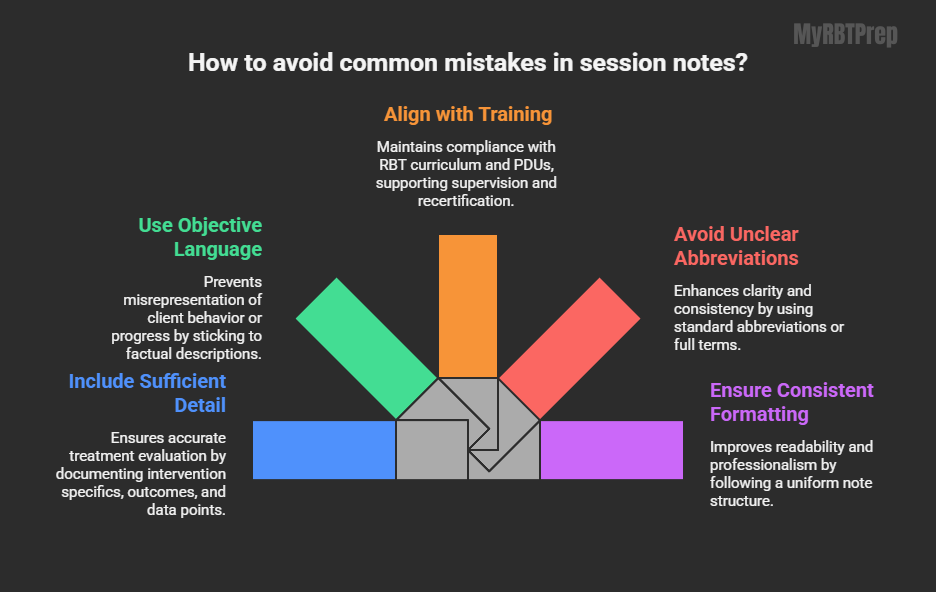
A major mistake is failing to include sufficient detail. Notes that omit intervention specifics, outcomes, or data points can compromise treatment evaluation. Another error is subjective language, which may misrepresent the client’s behavior or progress.
Not aligning notes with the RBT training curriculum or neglecting Professional Development Units (PDUs) guidance may also affect supervision and recertification compliance. Avoid abbreviations that are unclear and ensure all entries follow consistent formatting. Accurate notes protect client safety and uphold core ethical principles for RBTs.
Examples of RBT Session Notes
Example 1:
Date: 01/15/2026
Session Duration: 1 hour
Target Behavior: Tantrums during transitions
Intervention: Implemented functional communication training and positive reinforcement
Data Collected: 3 tantrums in 60 minutes; client responded to verbal prompts 80% of the time
Progress: Reduced frequency of tantrums compared to previous session
Supervisor Feedback: Maintain consistency with reinforcement schedule
Example 2:
Date: 01/16/2026
Session Duration: 45 minutes
Target Behavior: Hand-raising in group setting
Intervention: Behavior Acquisition tasks using discrete trial training
Data Collected: 6 correct responses out of 8 trials; 75% accuracy
Progress: Improved social engagement during structured tasks
Supervisor Feedback: Continue to reinforce appropriate hand-raising behaviors
These examples demonstrate objective, measurable, and concise documentation while covering all RBT Task List 3.0 domains.
Tips for Efficient RBT Note Writing
Start each session with a pre-formatted template aligned with initial RBT certification requirements. Include space for Behavior Assessment, interventions, and data tracking. Review past notes to ensure continuity and identify trends. Use clear, concise language and incorporate cultural humility in ABA to respect client diversity.
Engaging in RBT professional development by attending workshops or in-service training can also improve note quality. Supervisors can provide feedback on note clarity, accuracy, and completeness, supporting continuous improvement and compliance with RBT supervision requirements.
| Aspect | Details |
| Templates | Start each session with a pre-formatted template aligned with initial RBT certification requirements, including space for Behavior Assessment, interventions, and data tracking. |
| Review Past Notes | Reviewing previous session notes ensures continuity of care and helps identify trends in client behavior. |
| Language & Cultural Considerations | Use clear, concise language and incorporate cultural humility in ABA to respect client diversity. |
| Professional Development | Attending workshops or in-service training enhances note-writing skills and overall session documentation quality. |
| Supervisor Feedback | Supervisors provide guidance on note clarity, accuracy, and completeness, supporting continuous improvement and meeting RBT supervision requirements. |
| Outcome | Using templates and feedback ensures consistent, high-quality session notes that align with Applied Behavior Analysis standards and ethical practice. |
Understanding the Purpose of RBT Session Notes
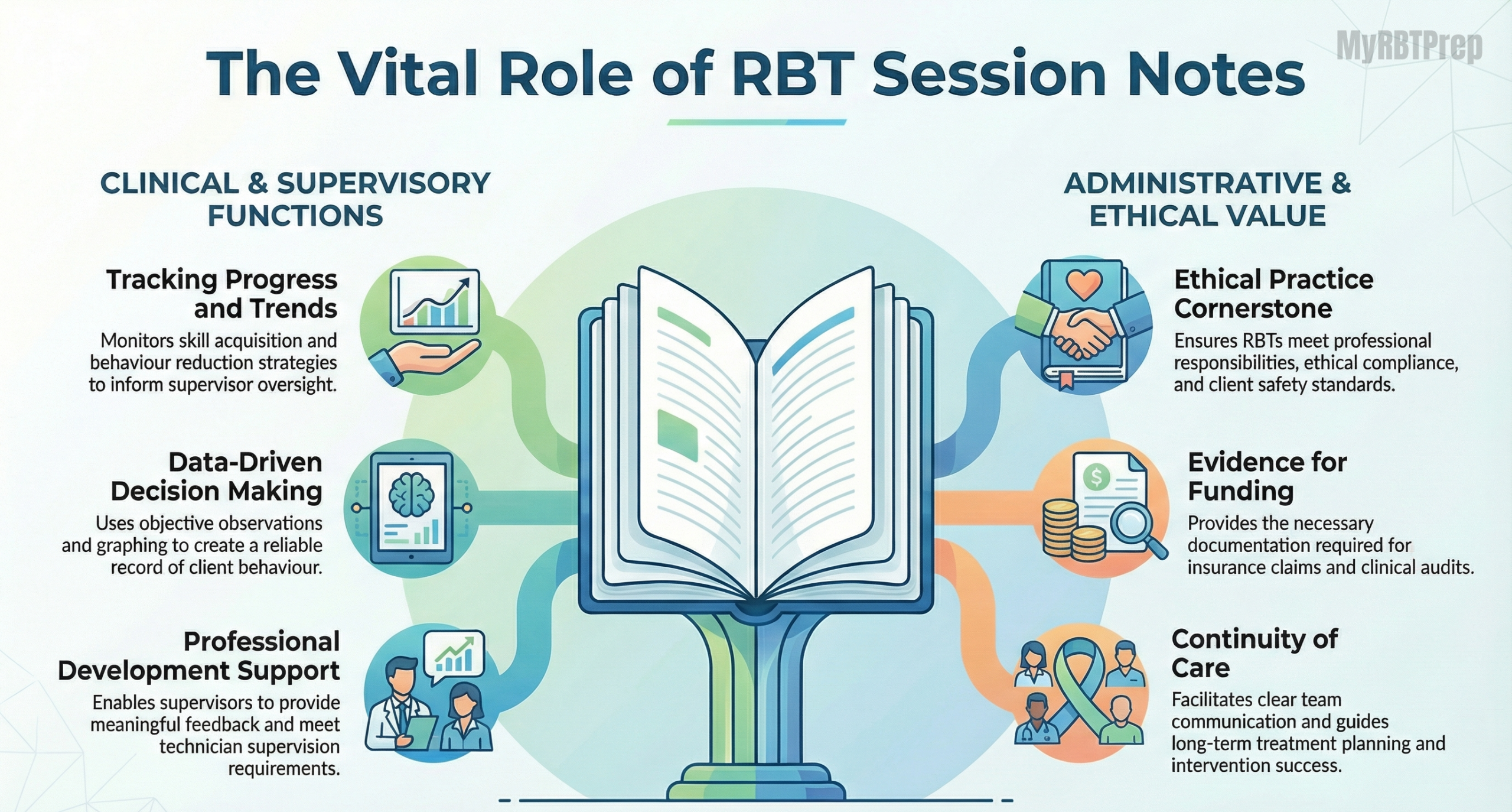
RBT session notes serve as the cornerstone of Applied Behavior Analysis standards. They document client progress, record interventions, and provide a clear picture of behavior trends for supervisors. Writing accurate notes ensures that the Responsibilities of a Registered Behavior Technician are met consistently, including ethical compliance and data-driven decision-making. These notes allow supervisors to monitor skill acquisition, Behavior Reduction strategies, and the effectiveness of interventions like positive and negative punishment procedures.
They also provide evidence for insurance claims, team communication, and long-term treatment planning. By capturing objective observations, including Data Collection and Graphing, session notes create a reliable record of client behavior. Additionally, consistent documentation supports RBT supervision requirements, helping supervisors provide meaningful feedback and guiding RBT professional development. Understanding the purpose behind session notes ensures RBTs appreciate their role in ethical practice, client safety, and the overall success of ABA programs.
Key Components of an Effective RBT Session Note
An effective RBT session note combines structure, detail, and clarity to reflect the session accurately. Core components include client information, session date and time, targeted behaviors, and interventions used. Notes must capture Behavior Assessment outcomes, data on Behavior Acquisition and Behavior Reduction, and observations on client responsiveness. Integrating Data Collection and Graphing is essential for identifying trends, analyzing progress, and adjusting treatment plans. Ethical practices, including adherence to core ethical principles for RBTs, should also be documented, ensuring transparency and accountability.
Additional details like environmental factors, prompts used, and reinforcement strategies provide context for future sessions. Supervisors can then review these notes to assess fidelity and guide RBT professional development. By including all critical elements, session notes become a powerful tool for tracking progress, supporting ethical practice, and maintaining compliance with RBT supervision requirements.
| Component | Details |
| Client Information | Include client’s name, age, relevant demographics, and any special considerations. |
| Session Details | Record date, time, duration, and setting of the session. |
| Targeted Behaviors | Specify the behaviors being addressed, including frequency, duration, and intensity. |
| Interventions Used | Document all applied techniques, including Behavior Acquisition and Behavior Reduction strategies. |
| Behavior Assessment Outcomes | Include observations and analysis of client responses during the session. |
| Data Collection | Use Data Collection and Graphing to track trends, progress, and effectiveness of interventions. |
| Ethical Practices | Ensure adherence to core ethical principles for RBTs and maintain transparency in documentation. |
| Additional Context | Include environmental factors, prompts, reinforcement strategies, or other notes that provide context for future sessions. |
| Supervisor Review | Enables supervisors to assess fidelity, provide feedback, and guide RBT professional development. |
Best Practices for Writing Clear and Accurate RBT Notes
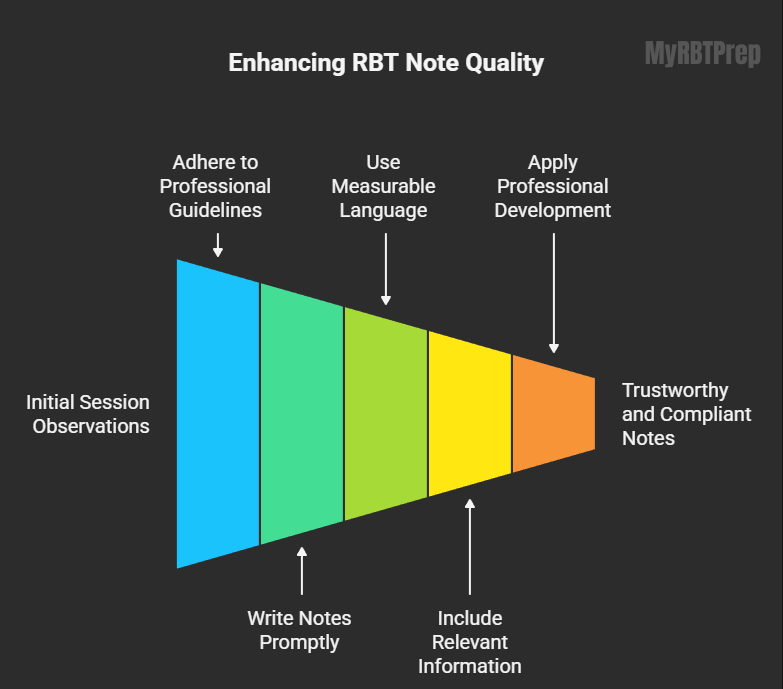
The ability to write detailed and objective RBT notes with consistency is essential for accurate and clear note writing, so you must ensure that you follow all professional guidelines, including those in the Code of Ethics and the ABA Professional Standards of Ethical Conduct. The notes should be written as soon after each session as possible in order to record your observations accurately. Avoid using vague language, and use measurable terms when referring to how the client behaved (e.g., frequency, duration, intensity). Including additional information regarding Acquisition of New Behaviors, Reducing Challenging Behaviors, and Data Collection and Graphing will help your supervisor to thoroughly evaluate the effectiveness of any interventions used. Notes that are written using specific insight from RBT Professional Development Standards and reflective practice will improve the accuracy and clarity over time.
Notes must also follow ethical guidelines regarding confidentiality and cultural humility, and using a structured template of RBT Task List 3.0 will save you time and help you to ensure that you have addressed all of the relevant domains in your notes. By following these procedures, RBTs can create notes that are trustworthy, offer useful information for the creation of treatment plans, and are compliant with BACB standards.
Conclusion
Mastering RBT session notes is essential for delivering effective ABA services and maintaining professional standards. Clear, accurate, and ethical documentation supports treatment planning, supervision, and RBT recertification. Following structured formats, integrating Behavior Acquisition, Behavior Reduction, and Data Collection and Graphing ensures notes are both useful and compliant with Applied Behavior Analysis standards.
By consistently applying best practices, RBTs not only demonstrate professionalism but also enhance client outcomes, fulfill Responsibilities of a Registered Behavior Technician, and ensure long-term career growth in the field.
FAQs
- How to write session notes in RBT?
Document client behavior, interventions, and progress clearly using measurable terms and Data Collection and Graphing methods. - How to write a good session note?
Include client info, target behaviors, interventions, outcomes, and supervisor observations. Stay objective and follow Ethics in ABA. - How to write a session note in Centralreach?
Use pre-formatted templates, record interventions, data, and session outcomes accurately, ensuring alignment with RBT Task List 3.0. - How to write good ABA session notes, examples and tips for therapy brands?
Write concise, objective, and detailed notes; include Behavior Acquisition and Behavior Reduction data, trends, and progress summaries. - What are the 5 R’s of note taking?
Record, Reduce, Reflect, Review, and Revise – a framework to capture accurate, useful, and actionable session notes.

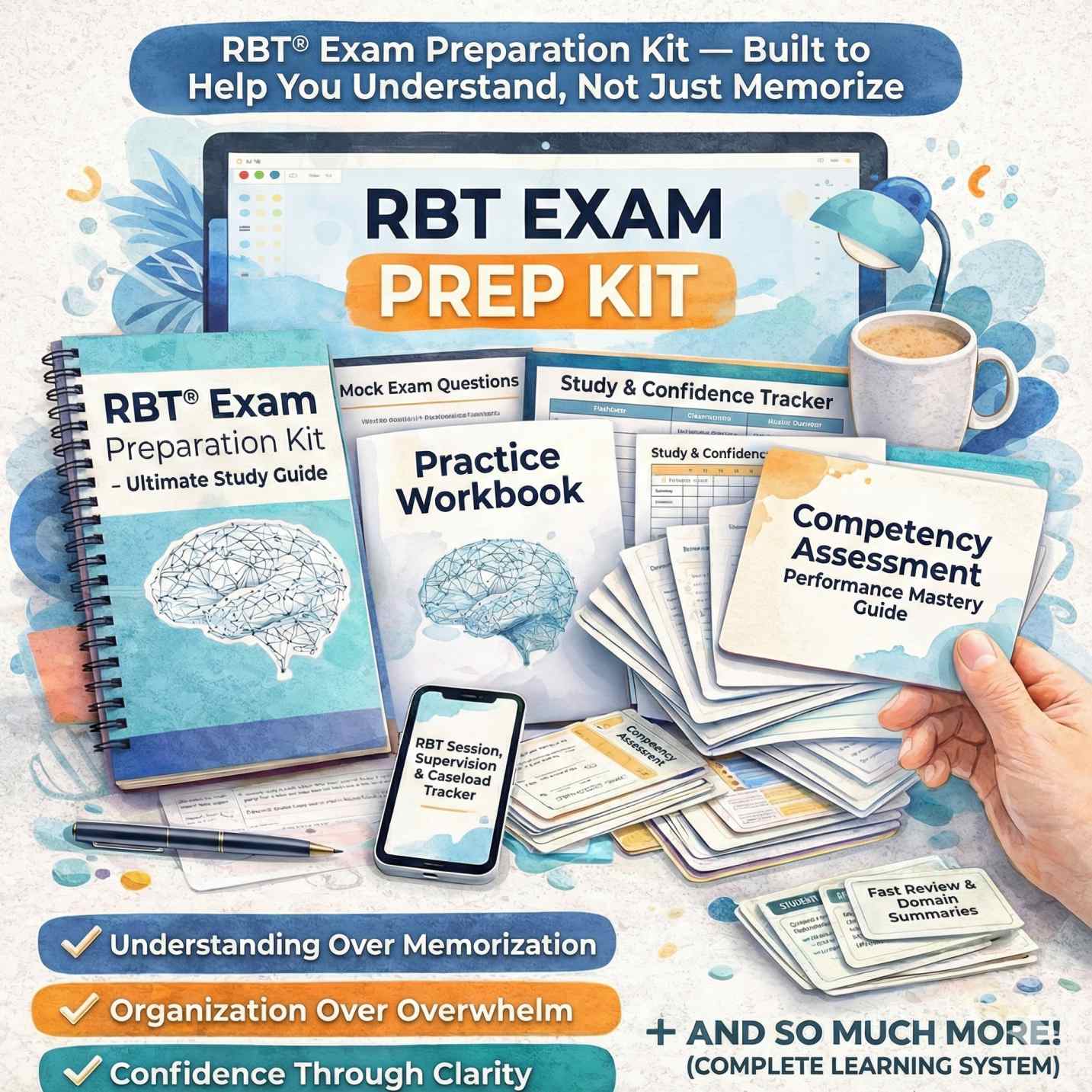
Everything You Need to Pass Your RBT® Exam
Study with our complete, all-in-one preparation package covering every task on the BACB Task List 3.0:
- 1,000+ Practice Questions & Timed Simulator
- 3rd Edition Task List Study Guide & Workbook
- Active Recall Flashcards System + Mobile App
- 20-Task Competency Assessment Mastery Guide