
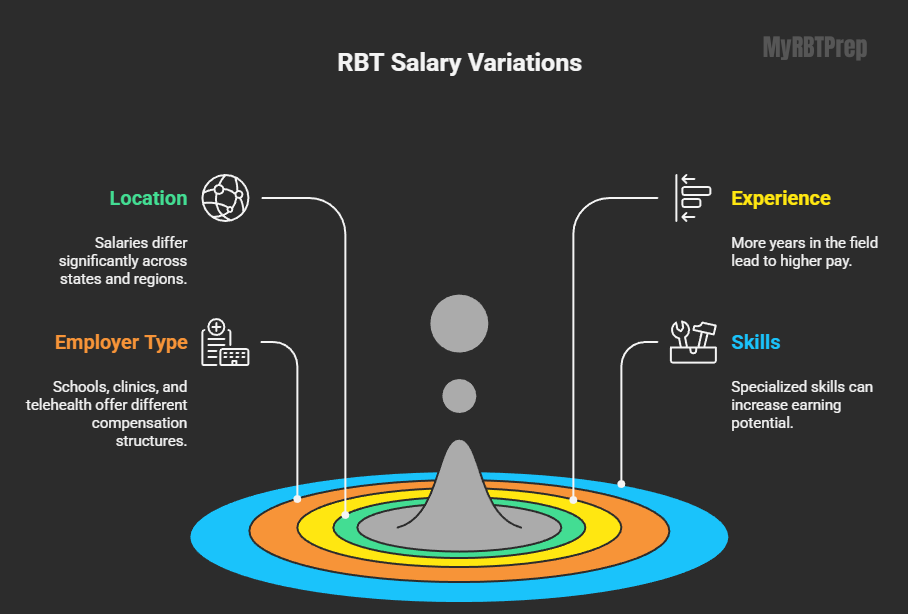
If you’re exploring a career in Applied Behavior Analysis (ABA), understanding RBT salary by state is essential. A Registered Behavior Technician (RBT) can work in schools, clinics, homes, or even via telehealth, but pay differs widely depending on location. Knowing where RBTs earn the most helps you make smart career and financial decisions. From entry-level RBT pay to senior RBT wage, this guide breaks down national averages, regional variations, and top-paying states to help you maximize your income and plan for career progression for RBTs.
The demand for RBTs is growing rapidly in the USA, driven by increased access to ABA services. Salaries vary with experience, RBT certification, employer type, and local living costs. Whether you want to work in school district RBT roles, clinic-based RBT positions, home-based RBT therapy, or telehealth RBT jobs, this article will give you clear insights into where you can earn the most.
Pass Your RBT® Exam on the First Attempt
Practice with 1,000+ realistic scenario questions, multiple full-length timed mock exams, and detailed rationales formatted exactly like the real Pearson VUE test.
Understanding the Role of an RBT
A Registered Behavior Technician works directly with clients under the supervision of a Board Certified Behavior Analyst (BCBA) or a Board Certified Assistant Behavior Analyst (BCaBA). Their responsibilities include delivering hands-on behavioral therapy, implementing evidence-based behavior interventions, and monitoring progress with data collection in ABA sessions. RBTs help clients develop social and communication skill development, as well as daily living skills. This direct interaction ensures therapy is effective and personalized.
To become an RBT, candidates must complete RBT certification, which includes practical supervision hours, passing the RBT credentialing exam, and completing RBT exam preparation and training. RBTs often start in school district RBT roles or clinic-based RBT positions, but opportunities exist in home-based RBT therapy or telehealth RBT jobs. This training improves both service quality and experience impact on salary over time.
| Category | Details |
| Role Overview | A Registered Behavior Technician (RBT) works directly with clients under the supervision of a Board Certified Behavior Analyst (BCBA) or a Board Certified Assistant Behavior Analyst (BCaBA). |
| Key Responsibilities | Deliver hands-on behavioral therapy, implement evidence-based behavior interventions, monitor progress through data collection in ABA sessions, and support social and communication skill development along with daily living skills. |
| Certification Requirements | Complete RBT certification, including practical supervision hours, passing the RBT credentialing exam, and finishing RBT exam preparation and training. |
| Typical Employment Settings | School district RBT roles, clinic-based RBT positions, home-based RBT therapy, and telehealth RBT jobs. |
| Impact on Career and Salary | Proper training improves service quality and has a positive effect on experience impact on salary over time. |
National RBT Salary Overview
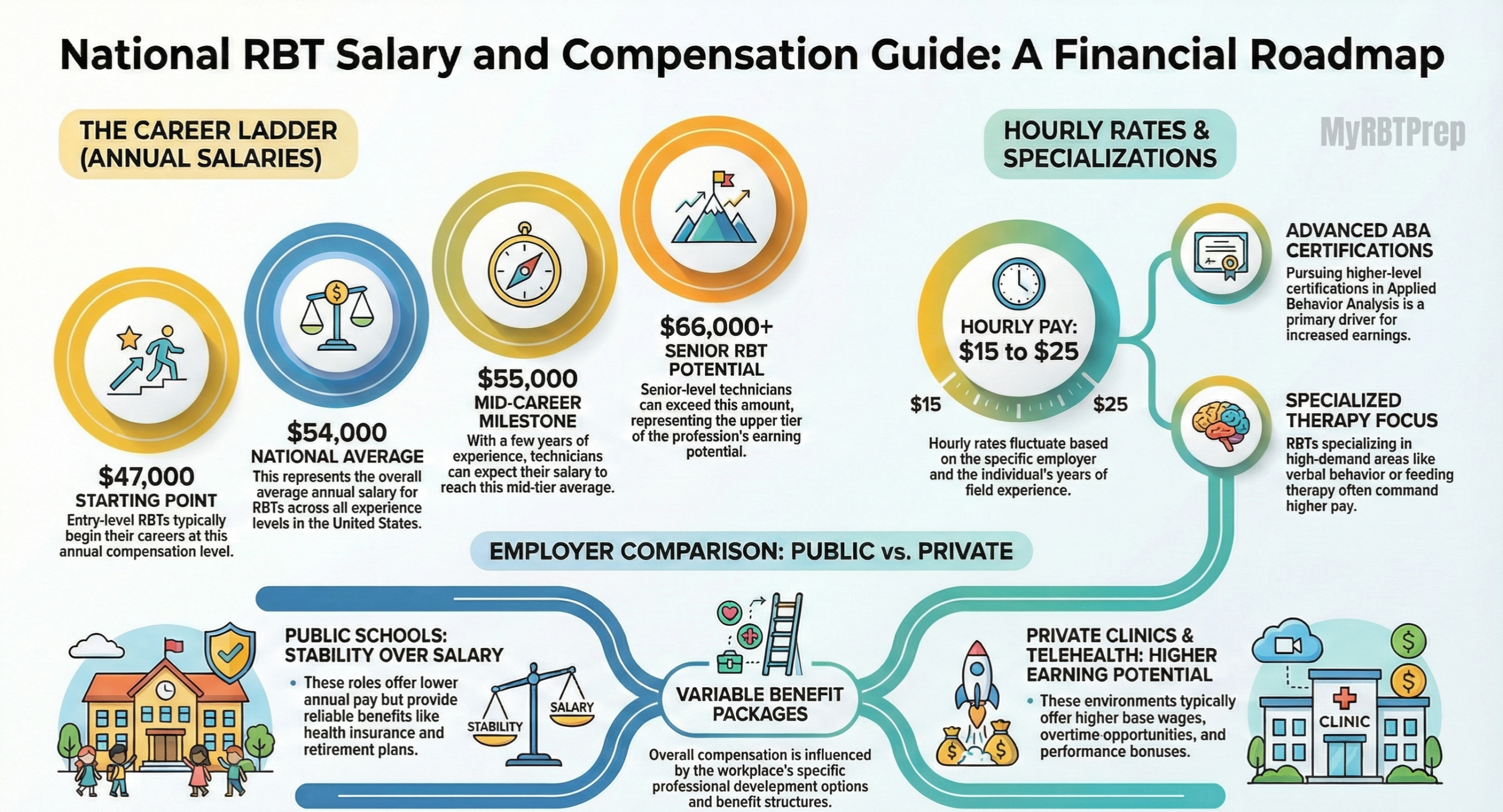
Across the United States, RBT salary averages around $54,000 annually. Entry-level RBT pay typically starts at $47,000, mid-career RBT salary reaches $55,000, and senior RBT wage can exceed $66,000. Hourly rates range from $15 to $25, depending on experience and employer. RBTs who pursue advanced certifications in ABA or specialize in areas like verbal behavior or feeding therapy often earn more.

RBT® Exam Flashcards & Study App (3rd Edition)
Master essential ABA terminology and clinical discrimination across all 6 BACB task list areas with 500+ printable and digital flashcards, real exam cues, and full mobile app access.
Employer type and salary also play a role. Public schools often provide stable benefits like health insurance and retirement, but pay is lower than in private clinics. Clinic-based RBT positions and telehealth RBT jobs offer higher wages, bonuses, and overtime pay. Benefits and professional development options often vary by workplace, influencing overall compensation.
| Experience Level | Hourly Rate | Annual Salary |
| Entry-Level | $15–$17 | $47,000 |
| Mid-Career | $17–$23 | $55,000 |
| Senior (10+ yrs) | $20–$25 | $66,000+ |
Regional Salary Variations
RBT salary by state shows significant differences due to demand, cost of living, and funding for ABA services. Top-paying states for RBTs include Hawaii, California, Massachusetts, and New York. Urban areas tend to offer higher wages, while rural regions may offer lower salaries but faster opportunities for advancement.
The table below highlights state-by-state salary variations:
| State | Average Annual Salary | Hourly Rate |
| Hawaii | $54,222 | $26.07 |
| California | $46,546 | $22.38 |
| Massachusetts | $44,464 | $21.38 |
| New York | $42,350 | $20.36 |
| Illinois | $43,924 | $21.12 |
| National Avg | $50,278 | — |
Cost of living strongly affects pay. For example, RBTs in Hawaii earn more per hour, but living expenses are higher. Conversely, midwestern states may pay less, but affordable housing and lower expenses can balance overall quality of life.
Factors Influencing RBT Compensation
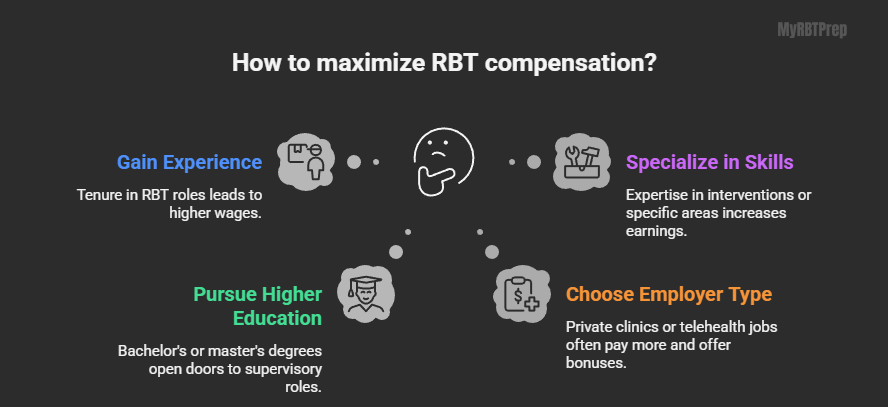
Several factors determine behavior technician pay. Experience is a major driver, with tenure in RBT roles leading to higher wages. Education also matters; while a high school diploma meets RBT requirements, a bachelor’s or master’s degree in psychology, education, or Applied Behavior Analysis (ABA) opens doors to supervisory roles.
Employer type impacts RBT salary significantly. School district RBT roles provide structured pay and benefits, whereas private clinics or telehealth RBT jobs often pay more and offer bonuses and incentives for RBTs. Skills in evidence-based behavior interventions and specialization in areas like feeding therapy or verbal behavior can further increase earnings.
Comparing Employment Settings
The setting where you work can affect income. School district RBT roles usually follow set pay scales with healthcare and retirement but lower base pay. Clinic-based RBT positions pay more per hour but may require flexible schedules or travel. Home-based RBT therapy often includes travel stipends, and telehealth RBT jobs offer remote work with competitive wages.
Benefits and work-life balance vary. Clinics may provide bonuses and incentives for RBTs working with specialty populations or bilingual clients. Schools provide stability and structured hours. Telehealth allows remote service delivery while maintaining hands-on behavioral therapy and consistent client progress tracking.
| Employment Setting | Typical Pay & Benefits | Notes |
| School District | Lower base, healthcare & retirement | Stable hours, structured environment |
| Clinic-Based | Higher hourly, bonuses | Flexible schedule, may require travel |
| Home-Based | Hourly + travel stipend | Direct client care, flexible hours |
| Telehealth | Competitive hourly, remote | Remote delivery, consistent tracking |
Career Advancement and Higher Credentials
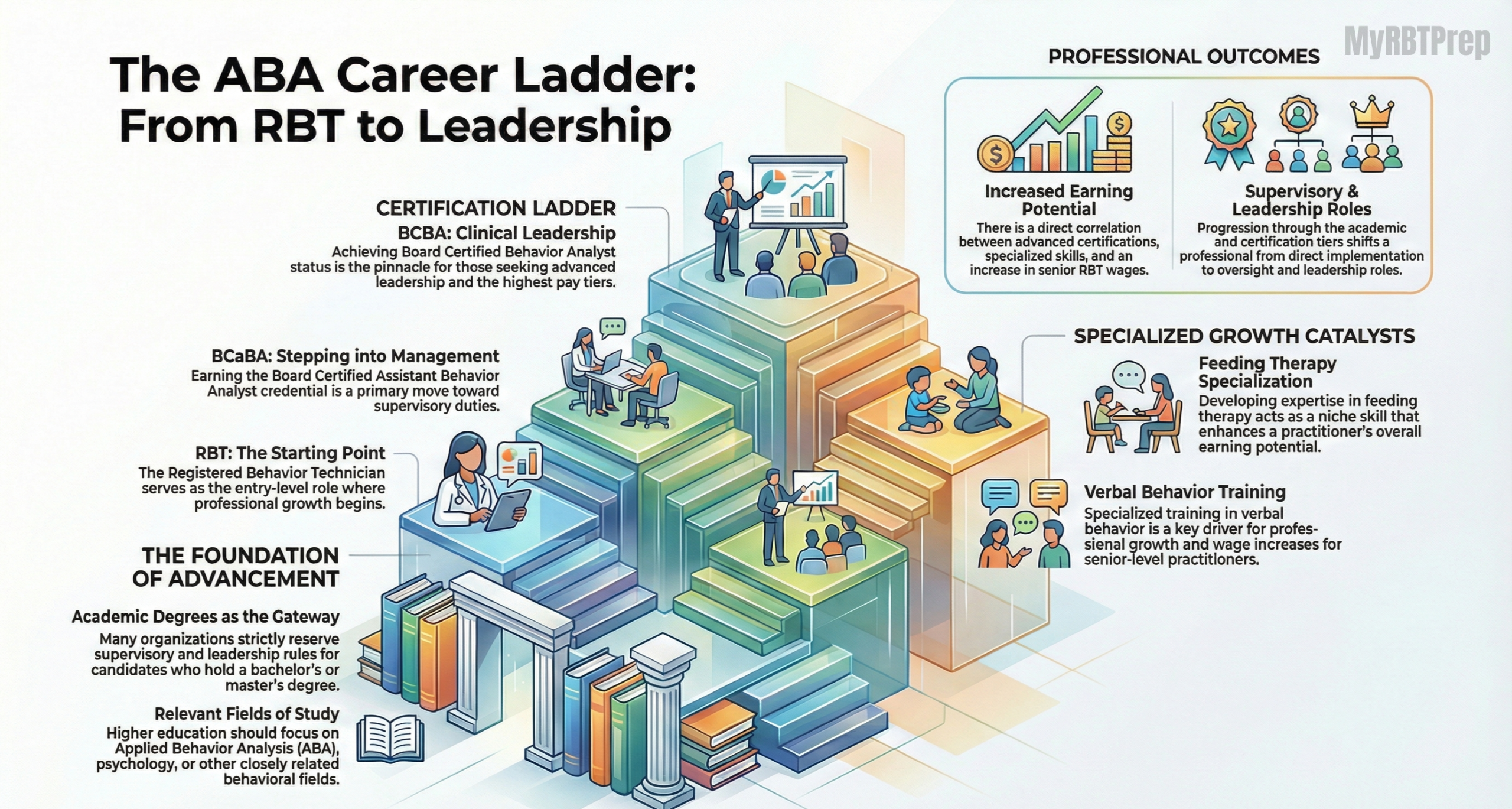
RBTs can advance by earning advanced certifications in ABA. The Board Certified Assistant Behavior Analyst (BCaBA) credential or Board Certified Behavior Analyst (BCBA) can lead to supervisory roles with higher pay. Specialized training like feeding therapy or verbal behavior also enhances earning potential.
Higher education opens leadership opportunities. Many organizations reserve supervisory roles for candidates with bachelor’s or master’s degrees in Applied Behavior Analysis (ABA), psychology, or related fields. Career progression through certifications and advanced skills directly increases senior RBT wage and professional growth.
Salary Negotiation Tips for RBTs
Negotiating pay requires strategy. Timing discussions after completing RBT certification and supervised hours can strengthen leverage. Highlighting experience, certifications, and skills in evidence-based behavior interventions helps justify higher wages. Considering bonuses and incentives for RBTs, overtime pay, and benefits packages (health insurance, retirement) improves negotiation outcomes.
Comparing school district RBT roles, clinic-based RBT positions, and telehealth RBT jobs gives insight into market rates. Clear communication about client progress tracking and outcomes demonstrates value. Effective negotiation often leads to higher RBT hourly wage and overall job satisfaction.
| Negotiation Aspect | Details |
| Timing | Discuss compensation after completing RBT certification and supervised hours to strengthen leverage. |
| Experience & Skills | Highlight experience, certifications, and skills in evidence-based behavior interventions to justify higher wages. |
| Bonuses & Benefits | Consider bonuses, incentives for RBTs, overtime pay, and benefits packages (health insurance, retirement) when negotiating. |
| Market Comparison | Compare school district RBT roles, clinic-based RBT positions, and telehealth RBT jobs to understand market rates. |
| Communication | Clearly present client progress tracking and outcomes to demonstrate value during negotiation. |
| Expected Outcome | Effective negotiation often increases RBT hourly wage and overall job satisfaction. |
Future Outlook for RBT Careers
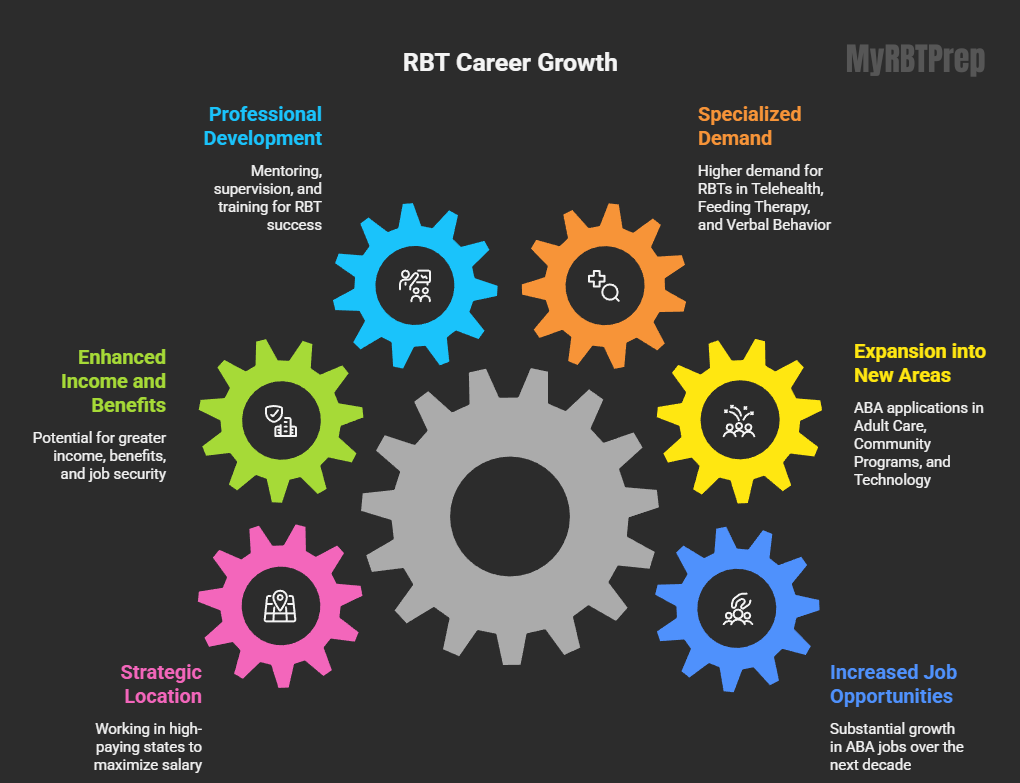
According to projections, job opportunities in the field of ABA will grow substantially over the next ten years with an estimated 12–22% increase in the number of jobs available for Registered Behavior Technicians (RBTs). Additionally, the expansion of the Application of Behavior Analysis (ABA) into other areas, like Adult Care, Community Programs, and Technology Based Interventions will lead to even more job opportunities available to RBTs.
Also, RBTs who are specialized in certain areas of Telehealth, Feeding Therapy, and Verbal Behavior will experience even greater demand than RBTs in general.
Furthermore, developing the professional growth of RBTs through mentoring, supervisory support and specialized training is essential to their success and continued growth as an RBT.
With continued growth in the ABA field, RBTs have the potential to make a greater income, receive greater benefits, and enjoy job security in the long term.
If aspiring RBTs want to maximize their salary potential, it will be beneficial for them to find and work in areas of the country where RBT salaries are the highest when starting their careers.
Resources and References
Reliable resources include the Bureau of Labor Statistics (https://www.bls.gov), ZipRecruiter (https://www.ziprecruiter.com/Salaries/Rbt-Salary), and Indeed (https://www.indeed.com/recruitment/job-description/rbt-registered-behavior-technician). Professional training platforms like ATCC® provide RBT exam preparation and training, supervised hours, and mentorship to support career growth and maximize behavior technician pay.
FAQs
Is it better to get paid hourly or annually?
Hourly pay offers flexibility and potential overtime, while annual salary provides predictable income and benefits packages (health insurance, retirement). Choice depends on lifestyle and financial priorities.
Where do RBTs make the most money?
States like Hawaii, California, Massachusetts, and New York offer the highest pay, reflecting cost of living impact on RBT pay and strong demand.
Which is better, hourly rate or salary?
Hourly rates can yield higher earnings in busy periods, but salaried positions offer stability and benefits. Evaluate employer type and potential bonuses.
How to make more money as an RBT?
Gain experience, earn advanced certifications in ABA, pursue BCaBA or BCBA credentials, and work in high-paying states or clinics.
What is the 80/20 rule in ABA?
The 80/20 rule suggests 80% of client progress comes from 20% of interventions. Focus on high-impact evidence-based behavior interventions for efficient, measurable results.

Everything You Need to Pass Your RBT® Exam
Study with our complete, all-in-one preparation package covering every task on the BACB Task List 3.0:
- 1,000+ Practice Questions & Timed Simulator
- 3rd Edition Task List Study Guide & Workbook
- Active Recall Flashcards System + Mobile App
- 20-Task Competency Assessment Mastery Guide


