The field of Applied Behavior Analysis (ABA) is one of the fastest-growing allied health professions in the United States and across the globe. As we move through 2026, demand for qualified ABA professionals continues to rise sharply, driven by expanding insurance coverage for autism spectrum disorder services, increased public awareness, and a growing evidence base supporting the effectiveness of behavior-analytic interventions across populations and settings. This sustained growth creates an exceptional professional landscape for practitioners at every level of the credentialing hierarchy, from entry-level Registered Behavior Technicians (RBTs) to independent Board Certified Behavior Analysts (BCBAs).
For many practitioners, the journey begins on the direct-care floor—implementing programs under the guidance of a supervisor and experiencing first-hand the profound impact that well-designed behavioral interventions can have on a client’s quality of life. This direct experience is not merely a stepping stone; it is a foundational asset. The clinical intuition, procedural fluency, and empathetic attunement developed during years of hands-on service delivery make the transition to supervisory and analytic roles far more meaningful and effective than classroom knowledge alone could ever provide.
This guide offers a comprehensive, updated roadmap of the RBT to BCBA transition in 2026, incorporating the latest changes issued by the Behavior Analyst Certification Board (BACB). Whether you are an RBT contemplating your next move, a BCaBA preparing for graduate study, or a professional mentor helping a colleague navigate the process, this resource provides the detailed, step-by-step information you need to move forward with confidence. All credential requirements, fieldwork structures, examination details, and strategic advice have been updated to reflect BACB standards effective as of the first quarter of 2026.
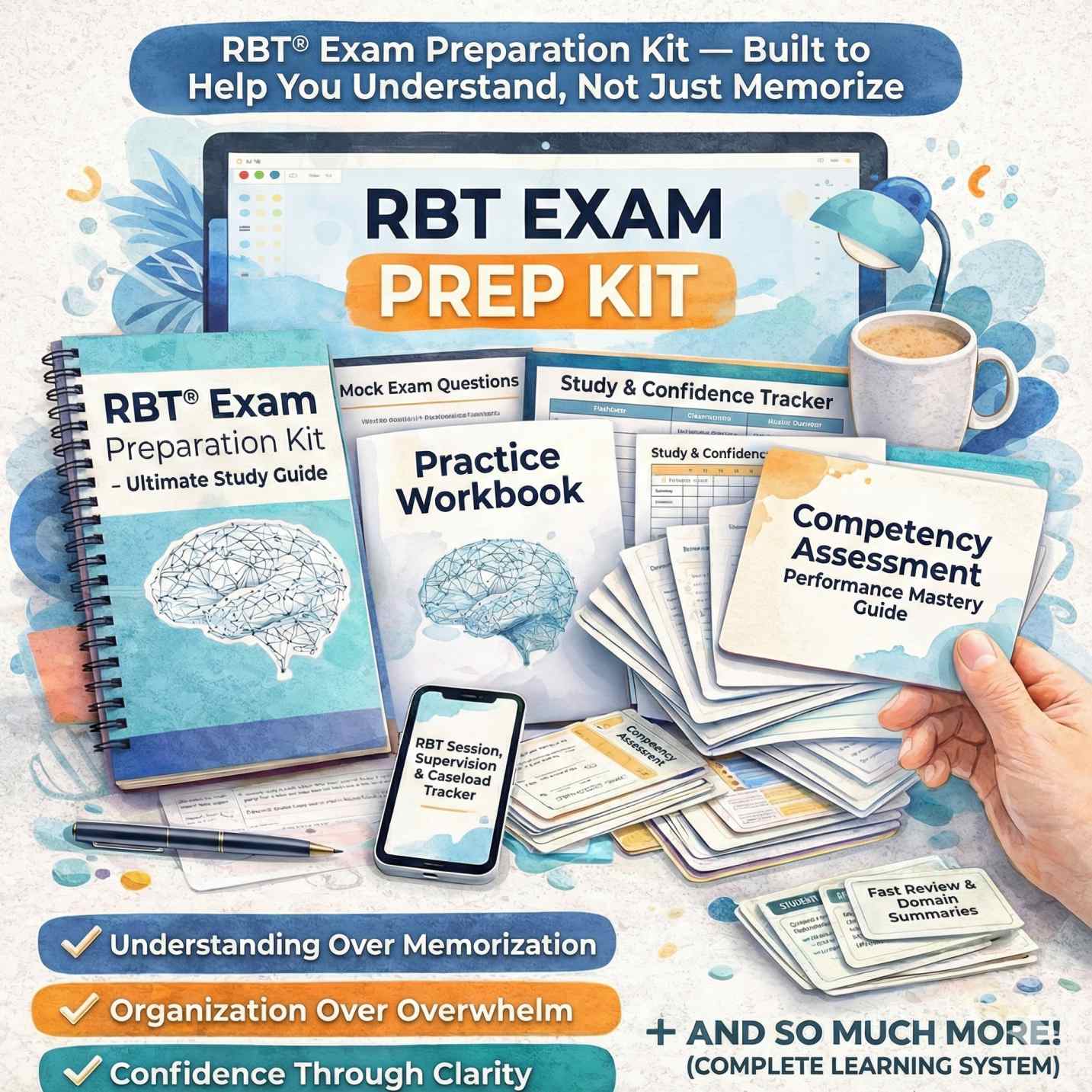
Pass Your RBT® Exam on the First Attempt
Practice with 1,000+ realistic scenario questions, multiple full-length timed mock exams, and detailed rationales formatted exactly like the real Pearson VUE test.
Understanding the ABA Credential Hierarchy
Before examining each credential in detail, it is helpful to understand how the three primary BACB certifications relate to one another. The BACB maintains a tiered credentialing structure that reflects increasing levels of educational attainment, clinical responsibility, and professional independence.
Registered Behavior Technician (RBT)
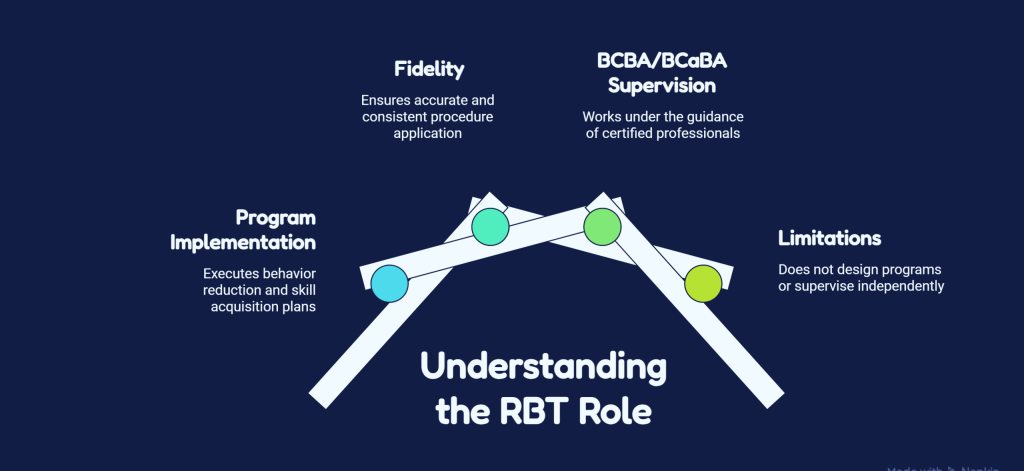
The RBT is a paraprofessional credential designed for direct service providers. RBTs implement behavior reduction programs and skill acquisition plans created by a supervising BCBA or BCaBA. They do not design their own programs, conduct assessments independently, or supervise other staff without direct oversight. The RBT role is defined by fidelity—accurately and consistently implementing the procedures prescribed in behavior intervention plans.
Despite being the entry-level credential, the RBT role is demanding and carries significant ethical responsibility. RBTs interact most directly with clients and families, often spending far more contact hours with clients than anyone else on the clinical team. This means that the quality of an RBT’s work has an outsized impact on client outcomes. The credential requires ongoing monthly supervision, annual certification renewal, and adherence to the BACB’s Ethics Code.
Board Certified Assistant Behavior Analyst (BCaBA)
The BCaBA is a mid-level credential for individuals who hold a Bachelor’s degree and have completed graduate-level coursework and supervised fieldwork in behavior analysis. BCaBAs can design and implement behavior-analytic programs under the supervision of a BCBA, and they may supervise RBTs and direct care staff. However, they may not operate independently—all of their professional activities must be overseen by a supervising BCBA.
The BCaBA designation is particularly valuable in settings where it is difficult to staff full-time BCBAs, such as rural areas, school districts, or small agencies. BCaBAs serve as a bridge between direct service and clinical leadership, contributing meaningfully to program design, data analysis, and staff training, while still operating within a supervisory structure that safeguards client welfare.
Board Certified Behavior Analyst (BCBA)
The BCBA is the highest generalist certification offered by the BACB and represents the standard for independent practice in the field. BCBAs are authorized to design, implement, and evaluate behavior-analytic services without requiring oversight from another behavior analyst. They are responsible for conducting functional behavior assessments, writing comprehensive behavior intervention plans, supervising BCaBAs and RBTs, training parents and caregivers, and communicating findings to multidisciplinary teams.

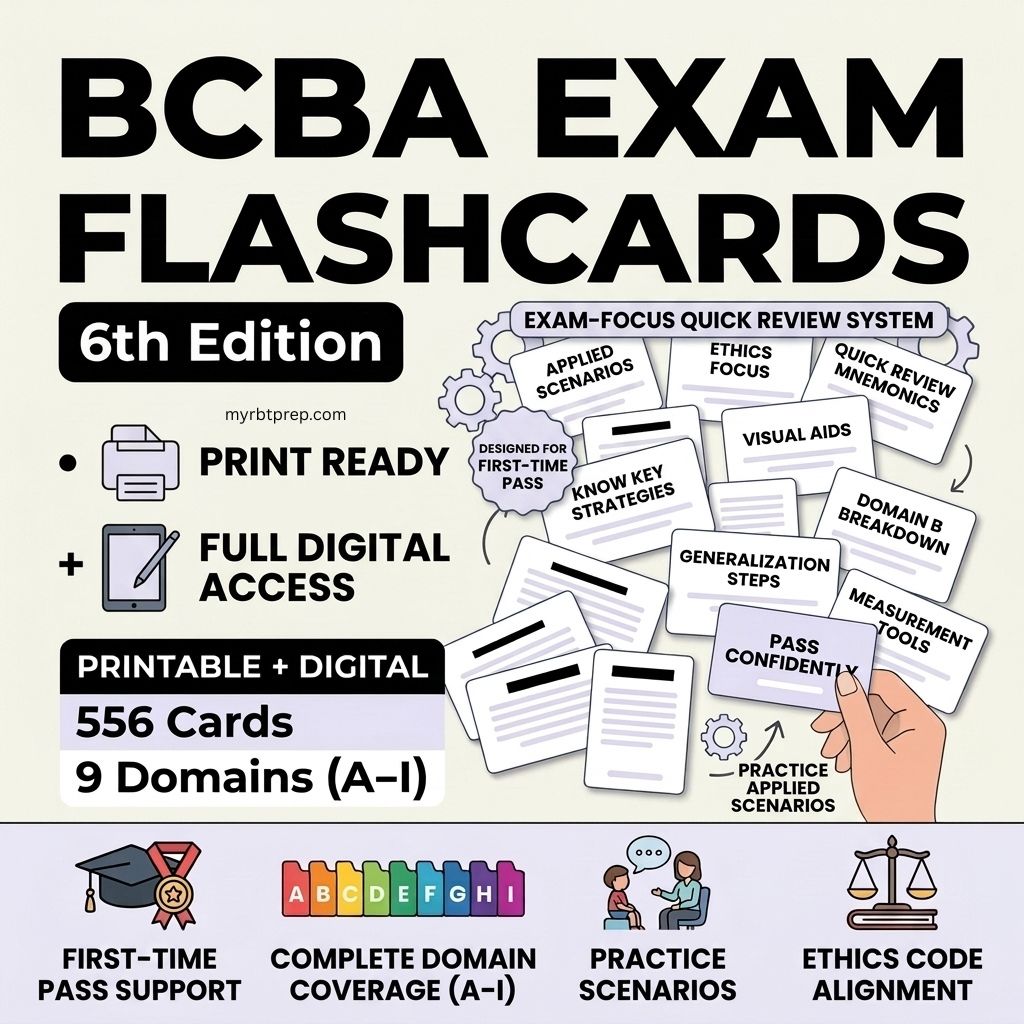
RBT® Exam Flashcards & Study App (3rd Edition)
Master essential ABA terminology and clinical discrimination across all 6 BACB task list areas with 500+ printable and digital flashcards, real exam cues, and full mobile app access.
A subset of BCBAs hold the Board Certified Behavior Analyst-Doctoral (BCBA-D) designation, which reflects doctoral-level training in behavior analysis. While the BCBA-D is not a separate exam or distinct credential from the BCBA, it acknowledges the advanced academic preparation of those holding doctoral degrees in behavior analysis or a closely related field.
The RBT Starting Point: 2026 Requirements and Updates
The Registered Behavior Technician credential has been in place since 2014 and has grown to become one of the most widely held behavioral health certifications in North America. As of January 1, 2026, the BACB implemented several important changes that affect both new applicants and current certificate holders. Understanding these updates is essential for anyone who is currently an RBT or planning to become one as a precursor to pursuing higher credentials.
Updated 40-Hour Training Curriculum
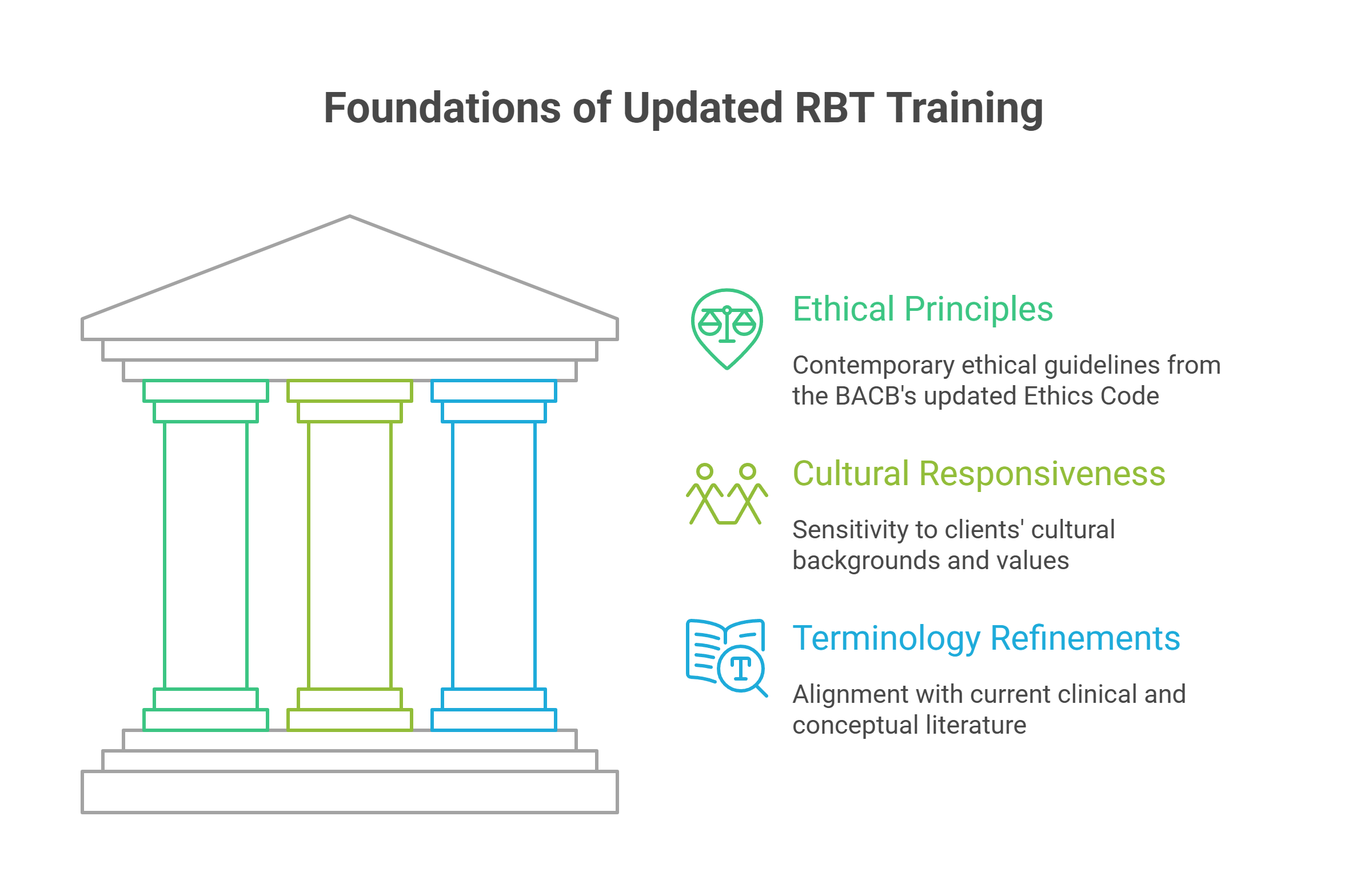
All new RBT applicants in 2026 must complete a 40-hour training program based on the revised RBT Task List, which has been updated to reflect developments in the science of behavior analysis and evolving best practices in clinical service delivery. The training must be conducted or overseen by a qualified BCBA or BCaBA and must cover specific content areas in proportion to their representation on the updated Task List.
The revised curriculum places a stronger emphasis on several areas that were underrepresented in earlier versions. These include contemporary ethical principles drawn from the BACB’s updated Ethics Code for Behavior Analysts, which took effect in January 2022 and continues to shape training expectations through 2026. Cultural responsiveness and humility now feature prominently, reflecting the profession’s growing recognition that effective service delivery requires sensitivity to clients’ cultural backgrounds, family values, and community contexts. Practitioners who are trained from the outset to approach their work through a culturally responsive lens are better equipped to build therapeutic rapport and implement interventions that are meaningful and acceptable to the individuals and families they serve.
The updated curriculum also incorporates refinements in terminology consistent with the latest edition of the Behavior Analyst’s clinical and conceptual literature, ensuring that new RBTs use language that aligns with current BCBA and BCBA-D supervisors. Training providers must demonstrate that their 40-hour curriculum maps onto the current Task List and covers all required content areas; applicants can no longer use training programs built around legacy task lists without supplementation or revision.
Removal of the Annual Renewal Competency Assessment
One of the most consequential changes for the existing RBT workforce is the elimination of the annual renewal competency assessment requirement, effective January 1, 2026. Under the prior renewal structure, RBTs were required to demonstrate competency through a formal assessment administered by their supervisor each year as a condition of certification renewal. While well-intentioned as a quality assurance mechanism, this requirement generated administrative friction—particularly for RBTs working in high-volume agencies where supervisory time is scarce—and was not uniformly implemented with sufficient rigor to justify its continued requirement as a standalone renewal task.
Importantly, this change does not reduce the actual accountability framework for RBTs. The ongoing monthly supervision requirement remains firmly in place. RBTs must still complete a minimum number of supervised hours each renewal period, document that supervision in the format required by the BACB, and operate in full compliance with the Ethics Code at all times. Supervisors are still expected to assess their supervisees’ performance continuously and to address any competency deficits proactively. What the 2026 change eliminates is the specific annual paperwork requirement for a formal competency checkoff—not the expectation of clinical competence itself. For RBTs who are diligent in their practice and maintain strong supervisory relationships, this change will have minimal practical impact. For those in high-demand settings, it removes one recurring administrative hurdle.
Supervision Requirements for RBTs
RBTs must receive ongoing supervision from a BCBA, BCaBA, or other qualified supervisor as defined by the BACB. The supervision must amount to at least 5% of the RBT’s total service hours each month, with a minimum of at least one face-to-face contact per supervision period. At least 50% of supervision contacts must be conducted in person, though the BACB has maintained some flexibility for remote supervision in specific circumstances.
Supervision is not merely a formality—it is the mechanism by which clinical quality is maintained and professional development is fostered. Effective supervisors use supervision time to observe RBT performance directly, provide performance feedback, discuss challenging client cases, reinforce ethical decision-making, and gradually build the supervisee’s clinical reasoning skills. RBTs who approach supervision actively and bring specific questions, case observations, or skill-building goals to each supervision session tend to develop more rapidly and to derive greater professional satisfaction from their role.
Strategic Value of the RBT Experience for Future BCBAs
Many aspiring BCBAs underestimate the strategic value of their RBT experience when the time comes to apply for graduate school or to accrue BCBA-level fieldwork hours. Direct service experience shapes clinical reasoning in ways that classroom instruction cannot replicate. Graduate programs in behavior analysis consistently report that students with strong RBT backgrounds demonstrate faster fluency with applied concepts, more nuanced case conceptualization, and greater preparedness for the challenges of supervisory fieldwork. If you are currently working as an RBT with the intention of eventually pursuing BCBA certification, treat every hour of direct service as an investment in your future clinical competence. Document your experiences, reflect on the interventions you implement, ask your supervisor questions, and seek exposure to as broad a range of clients, diagnoses, and intervention modalities as your placement allows.
Practical Strategies for a Successful Transition
Regardless of which pathway you choose, several practical strategies apply broadly to all practitioners navigating the RBT-to-BCBA transition. The following recommendations represent best practices drawn from the experiences of successful candidates and the insights of seasoned professionals in the field.
Master Documentation from Day One
One of the most avoidable sources of delay in the credential application process is inadequate or disorganized documentation of fieldwork hours and coursework. The BACB’s documentation requirements are detailed and specific, and applications that do not comply precisely with those requirements are subject to rejection or delay. Before you begin accumulating fieldwork hours toward any BACB credential, obtain the current version of the applicable handbook from the BACB website and read it thoroughly. Understand exactly what types of activities count toward each hour category, what constitutes an acceptable supervision contact, and what information must appear on your experience verification forms. Set up an organized system—whether a spreadsheet, a dedicated binder, or a digital tracking application—that allows you to log hours in real time and verify their accuracy at any point. Do not wait until the end of a supervision period to reconstruct your hours from memory.
Career Outcomes and Professional Opportunities at Each Credential Level
Understanding the practical career implications of each credential level can help practitioners make more informed decisions about when and how to pursue advancement. The following overview describes the typical professional landscape for RBTs, BCaBAs, and BCBAs in 2026.
RBT Career Outlook
RBTs are the backbone of the ABA service delivery system, and demand for skilled, reliable direct care technicians remains extremely high in most regions of the country. Employment opportunities for RBTs are available across a wide range of settings, including in-home therapy programs, autism-specific clinics, school districts, adult day programs, residential facilities, and hospital-based behavior support services. Most RBT positions are full-time, and many offer benefits packages that include health insurance, paid time off, and in some cases, tuition assistance for credentialing advancement.
Compensation for RBTs varies significantly by geographic region, employer type, and experience level, but has increased meaningfully in most markets in recent years as competition for qualified candidates has intensified. RBTs who are reliable, skilled, and committed to the populations they serve are often highly valued by their employers and may receive preferential access to fieldwork supervision opportunities, tuition support, and advancement pathways within their organizations.
BCaBA Career Outlook
BCaBAs occupy a middle-management niche in the ABA clinical structure that has become increasingly valuable as organizations have scaled their operations. In agencies that serve large caseloads, BCaBAs often manage cohorts of RBTs, provide performance feedback and skills training, conduct portions of intake assessments, and assist BCBAs with program development and data review. This role is particularly prominent in school district and educational settings, where the BCaBA may serve as the primary behavioral support professional for multiple students across multiple classrooms, with periodic BCBA consultation.
Compensation for BCaBAs is substantially higher than for RBTs in most markets, reflecting the expanded scope of responsibility and the educational investment required for the credential. BCaBAs who are actively pursuing their BCBA—or who have a clear plan to do so—are particularly attractive to employers who want to invest in staff who will grow into senior clinical roles over time.
BCBA Career Outlook
Employment opportunities for BCBAs are among the best in allied health professions because the demand for BCBAs exceeds the supply in nearly every area and specialty. Being a BCBA enables BCBAs to pursue a variety of career options. In addition to being a clinical director or lead analyst at an ABA service agency, BCBAs are also employed as behavior consultants in schools, as private practitioners, as university faculty members, as researchers, and as consultants on organizational behavior management. BCBAs also work as administrators of behavioral health or as expert witnesses, and they work internationally to support development projects and interventions, among other positions.
BCBAs earn competitive salaries compared to comparable professionals, with the median salary for BCBAs substantially above that of BCaBAs or RBTs; BCBAs can earn more as they develop more specialized knowledge, take on management or supervisory positions, and operate their own practices. While geographic location, practice configuration, area of specialization, and years of experience are all contributing factors in salary for BCBAs, having a BCBA credential provides a strong basis for financial security and long-term career advancement across all markets.
For BCBAs who desire to further their education beyond BCBA credentialing, there are multiple doctorate programs (PhD or EdD) in behavior analysis, psychology, and special education that allow BCBAs to pursue the BCBA-D credential, tenure-track faculty positions in colleges and universities, and serve in leader positions for professional organizations and research institutions.
Conclusion
The pathway from Registered Behavior Technician to Board Certified Behavior Analyst is one of the most professionally rewarding journeys available in behavioral health—and one that is entirely achievable with clear planning, sustained effort, and the right professional support. The 2026 updates to BACB credentialing requirements represent the field’s continued commitment to maintaining high standards of competence and ethical practice at every level of the credentialing hierarchy, while also reducing unnecessary administrative burdens where the evidence supported doing so.
FAQs:
How long is it from RBT to BCBA?
It typically takes 4–6 years, depending on how quickly you complete your bachelor’s, master’s degree, and supervised fieldwork hours.
What’s the next step up from RBT?
The next step is usually BCaBA (Board Certified Assistant Behavior Analyst), which requires a bachelor’s degree and additional training.
How to become a BCaBA fast?
Complete a bachelor’s degree with approved coursework, gain required supervision hours, and pass the BCaBA exam as efficiently as possible.
How does an RBT become a BCBA?
An RBT must earn a relevant bachelor’s and master’s degree, complete supervised fieldwork, and pass the BCBA certification exam.
How to transition from RBT to BCBA?
Start by pursuing higher education in ABA, accumulate supervised experience, and progressively meet BCaBA/BCBA certification requirements.

Everything You Need to Pass Your RBT® Exam
Study with our complete, all-in-one preparation package covering every task on the BACB Task List 3.0:
- 1,000+ Practice Questions & Timed Simulator
- 3rd Edition Task List Study Guide & Workbook
- Active Recall Flashcards System + Mobile App
- 20-Task Competency Assessment Mastery Guide