The Registered Behavior Technician (RBT) salary and career growth landscape is constantly evolving, offering unique opportunities for those passionate about Applied Behavior Analysis (ABA). Understanding how pay works, from RBT hourly wage to annual earnings, is crucial for planning your career.
Factors such as experience, education, RBT certification, and the type of employer play a significant role in determining behavior technician pay. Whether you work in school district RBT roles, clinic-based RBT positions, or home-based RBT therapy, knowing national averages and regional variations can help you make informed decisions.
This guide explores salaries, career advancement, and strategies to maximize income as an RBT.
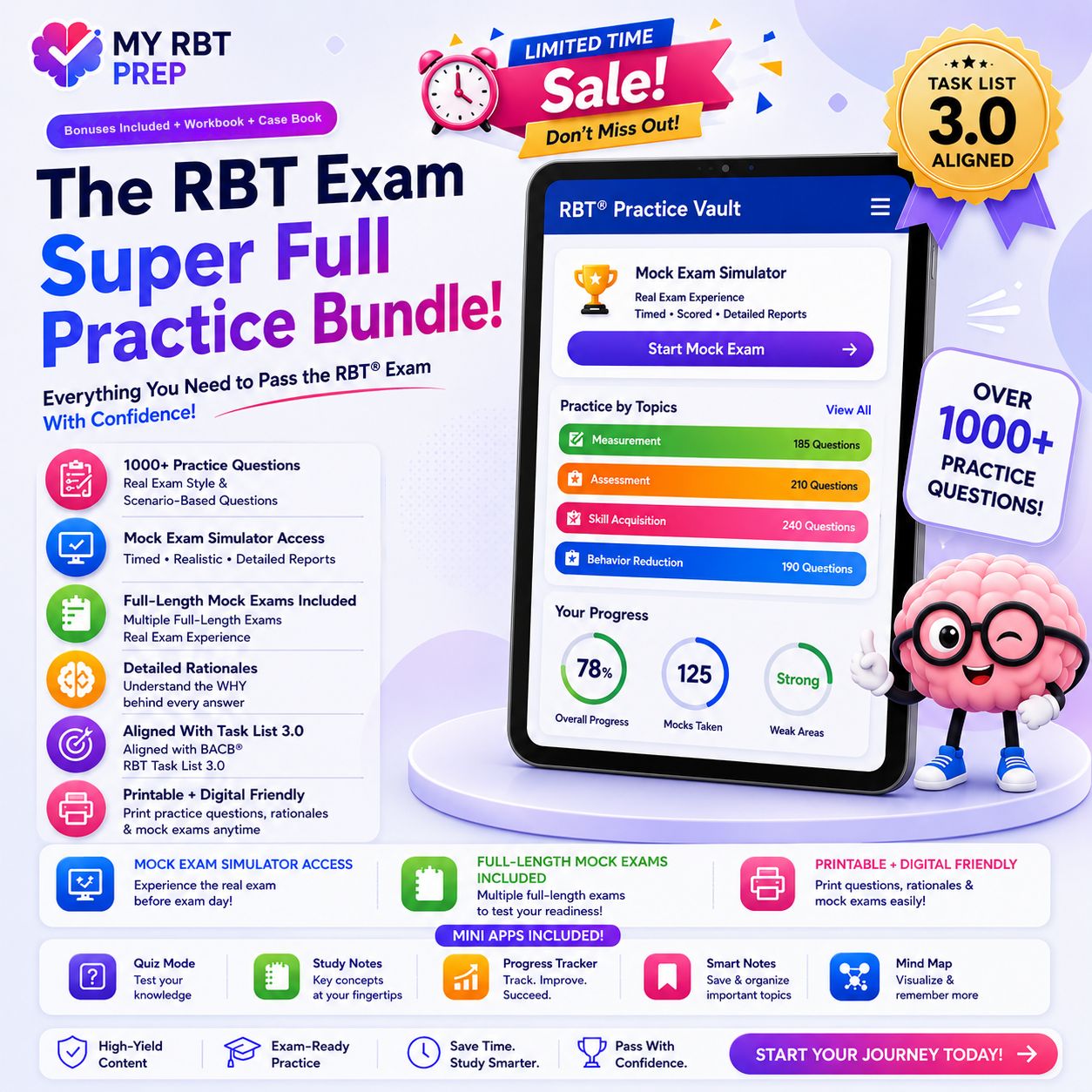
Pass Your RBT® Exam on the First Attempt
Practice with 1,000+ realistic scenario questions, multiple full-length timed mock exams, and detailed rationales formatted exactly like the real Pearson VUE test.
Understanding the Role of an RBT
A Registered Behavior Technician works directly with clients under supervision of a Board Certified Behavior Analyst (BCBA) or a Board Certified Assistant Behavior Analyst (BCaBA). They provide hands-on behavioral therapy, implement evidence-based behavior interventions, and track progress using data collection in ABA sessions. Their work includes helping clients develop social and communication skill development as well as daily living skills. RBTs are essential for effective ABA therapy.
The role also requires RBT certification, including practical supervision hours, passing the RBT credentialing exam, and completing RBT exam preparation and training. Many RBTs begin in school district RBT roles or clinic-based RBT positions, but opportunities also exist in home-based RBT therapy or telehealth RBT jobs. Proper training ensures consistency in therapy and quality care for clients, while providing strong experience impact on salary over time.
| Category | Details |
| Role Overview | A Registered Behavior Technician (RBT) works directly with clients under supervision of a Board Certified Behavior Analyst (BCBA) or a Board Certified Assistant Behavior Analyst (BCaBA). |
| Key Responsibilities | Provide hands-on behavioral therapy, implement evidence-based behavior interventions, track progress through data collection in ABA sessions, and support social and communication skill development along with daily living skills. |
| Required Certification | Completion of RBT certification, including practical supervision hours, passing the RBT credentialing exam, and finishing RBT exam preparation and training. |
| Common Employment Settings | School district RBT roles, clinic-based RBT positions, home-based RBT therapy, and telehealth RBT jobs. |
| Impact on Salary | Proper training, supervision, and experience positively affect experience impact on salary, leading to career growth and higher pay. |
National RBT Salary Overview
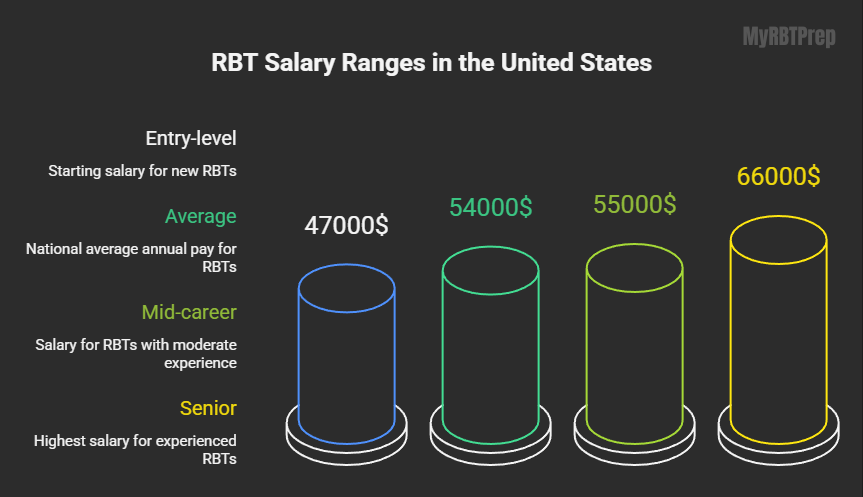
The national salary data for RBTs shows that the average annual pay in the United States is around $54,000. Entry-level RBT pay typically starts near $47,000, while mid-career RBT salary reaches about $55,000, and senior RBT wage can exceed $66,000. RBT hourly wage ranges from $15 to $25 depending on experience and location.

RBT® Exam Flashcards & Study App (3rd Edition)
Master essential ABA terminology and clinical discrimination across all 6 BACB task list areas with 500+ printable and digital flashcards, real exam cues, and full mobile app access.
Many agencies provide slightly higher pay, especially if RBTs hold advanced certifications in ABA.
According to the Bureau of Labor Statistics and reports from Indeed and ZipRecruiter, salaries reflect differences in employer type and salary. Public schools tend to offer structured pay scales, while private clinics or telehealth roles often provide higher wages and bonuses and incentives for RBTs. Benefits such as health insurance, retirement, and overtime pay can also increase overall compensation.
| Experience Level | Hourly Rate | Annual Salary |
| Entry-Level | $15–$17 | $47,000 |
| Mid-Career | $17–$23 | $55,000 |
| Senior (10+ yrs) | $20–$25 | $66,000+ |
Regional Salary Variations
Salaries differ widely across states. Top-paying states for RBTs include Hawaii, California, New York, and Massachusetts, largely due to cost of living impact on RBT pay. For example, Hawaii averages $54,222 per year, while New York is closer to $42,350. Urban areas tend to offer higher behavior technician pay, whereas rural areas may be lower but provide faster advancement opportunities.
State-level differences reflect local demand and funding for ABA services. The table below shows a snapshot of state-by-state salary variations:
| State | Average Annual Salary | Hourly Rate |
| Hawaii | $54,222 | $26.07 |
| California | $46,546 | $22.38 |
| Massachusetts | $44,464 | $21.38 |
| New York | $42,350 | $20.36 |
| National Avg | $50,278 | — |
Factors Influencing RBT Compensation
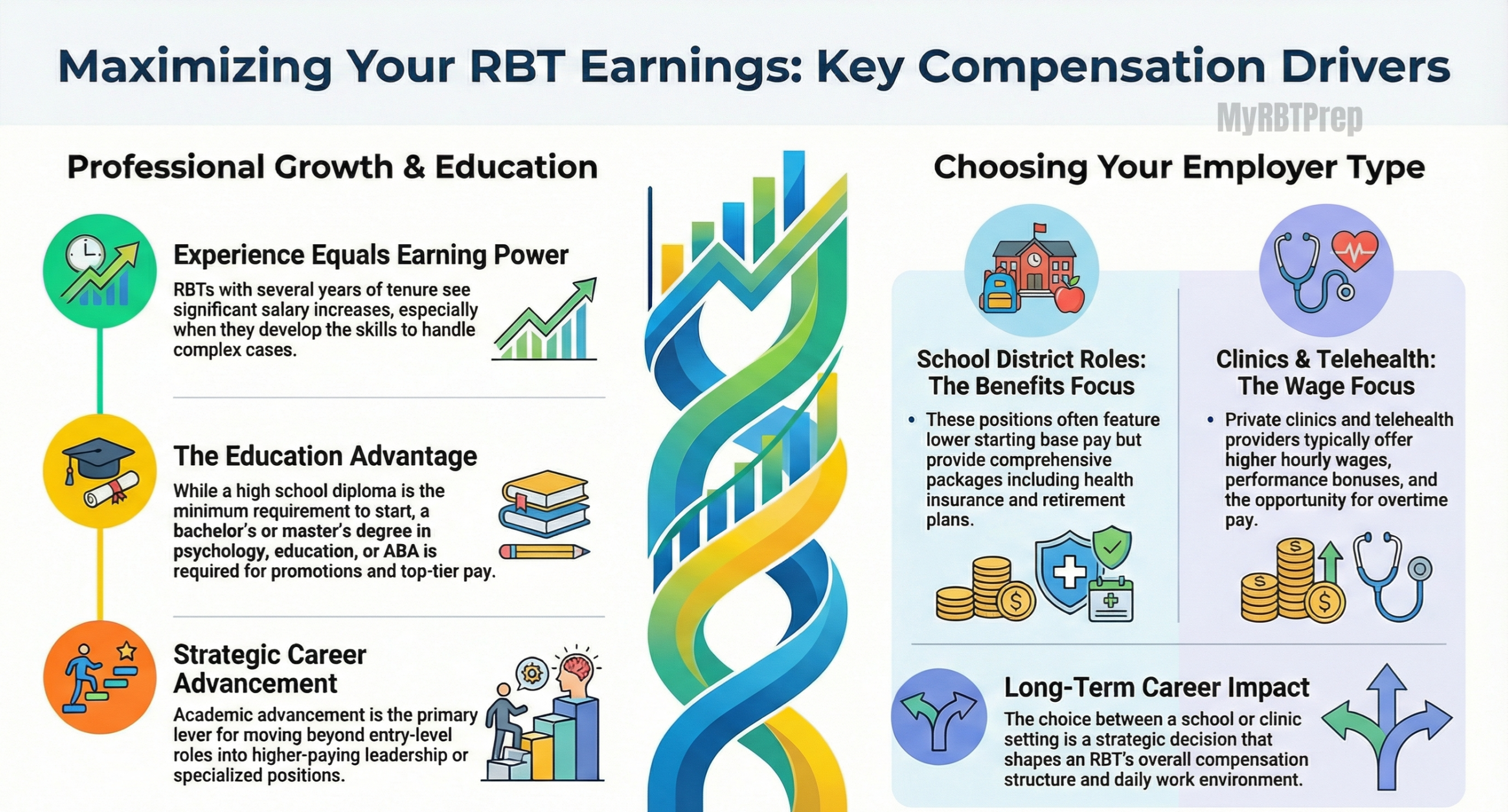
Experience impact on salary is significant. RBTs with several years of tenure earn more, especially when handling complex cases. Education requirements for RBTs also influence pay. While a high school diploma is enough to start, a bachelor’s or master’s degree in psychology, education, or Applied Behavior Analysis (ABA) increases opportunities for promotion and higher pay.
Employer type matters as well. School district RBT roles often offer lower starting pay but include benefits packages (health insurance, retirement). Clinic-based RBT positions and telehealth RBT jobs typically provide higher wages, occasional bonuses, and overtime pay. Choosing the right employer can make a lasting impact on career growth and overall compensation.
Comparing Employment Settings
The workplace can affect your pay significantly. School district RBT roles usually follow set pay scales, with added perks like healthcare and retirement, but base pay is lower than private clinics. Clinic-based RBT positions often pay more per hour but require flexible schedules and travel. Home-based RBT therapy includes travel stipends, and telehealth RBT jobs provide remote options with competitive wages.
Benefits and work-life balance vary across settings. Private clinics may offer bonuses and incentives for RBTs working with specialty populations or bilingual clients. School-based roles provide stability and structured work hours. Telehealth positions allow remote service delivery while maintaining hands-on behavioral therapy standards and consistent client progress tracking.
| Employment Setting | Details |
| School District RBT Roles | Follow set pay scales, include healthcare and retirement benefits, provide stability and structured work hours, but base pay is generally lower than clinics. |
| Clinic-Based RBT Positions | Pay more per hour, may require flexible schedules and travel, often offer bonuses and incentives for specialty populations or bilingual clients. |
| Home-Based RBT Therapy | Includes travel stipends, flexible scheduling, direct client interaction, and hands-on behavioral therapy. |
| Telehealth RBT Jobs | Provide remote service delivery, competitive wages, maintain hands-on behavioral therapy standards, and ensure consistent client progress tracking. |
Career Advancement and Higher Credentials
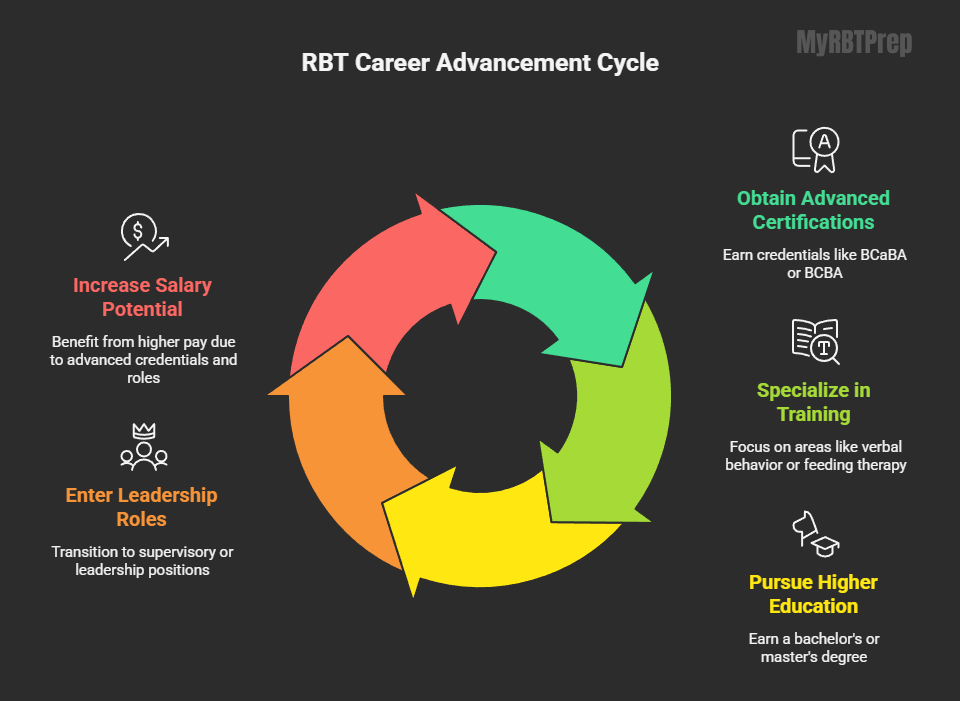
Career progression for RBTs is often tied to advanced certifications in ABA. Pursuing credentials like Board Certified Assistant Behavior Analyst (BCaBA) or eventually Board Certified Behavior Analyst (BCBA) can lead to supervisory roles and significant salary increases. Specialized training (verbal behavior, feeding therapy) also boosts opportunities for high-paying positions.
Higher education plays a key role as well. Earning a bachelor’s or master’s degree in Applied Behavior Analysis (ABA), psychology, or related fields allows RBTs to enter leadership roles. Many clinics reserve these positions for candidates with advanced credentials, providing clear pathways for career progression for RBTs while increasing senior RBT wage potential.
Salary Negotiation Tips for RBTs
Negotiating pay requires preparation. Timing is key, such as discussing compensation after certification or upon completing supervised hours. Highlighting experience, RBT certification, and skills in evidence-based behavior interventions can justify higher wages. Considering bonuses and incentives for RBTs, overtime pay, and benefits packages (health insurance, retirement) strengthens negotiation leverage.
Understanding market rates is important. Comparing clinic-based RBT positions, school district RBT roles, and telehealth RBT jobs helps you gauge your value. Negotiation also benefits from clear communication of client outcomes and successful data collection in ABA sessions. Skilled negotiators often increase both RBT hourly wage and overall satisfaction in their role.
| Negotiation Aspect | Details |
| Timing | Discuss compensation after completing RBT certification or supervised practical hours to maximize leverage. |
| Experience & Skills | Highlight experience, RBT certification, and expertise in evidence-based behavior interventions to justify higher wages. |
| Bonuses & Benefits | Consider bonuses and incentives for RBTs, overtime pay, and benefits packages (health insurance, retirement) when negotiating. |
| Market Awareness | Compare clinic-based RBT positions, school district RBT roles, and telehealth RBT jobs to understand your market value. |
| Communication | Clearly present client outcomes and successful data collection in ABA sessions to strengthen negotiation impact. |
| Expected Outcome | Skilled negotiation can increase both RBT hourly wage and overall job satisfaction. |
Future Outlook for RBT Careers
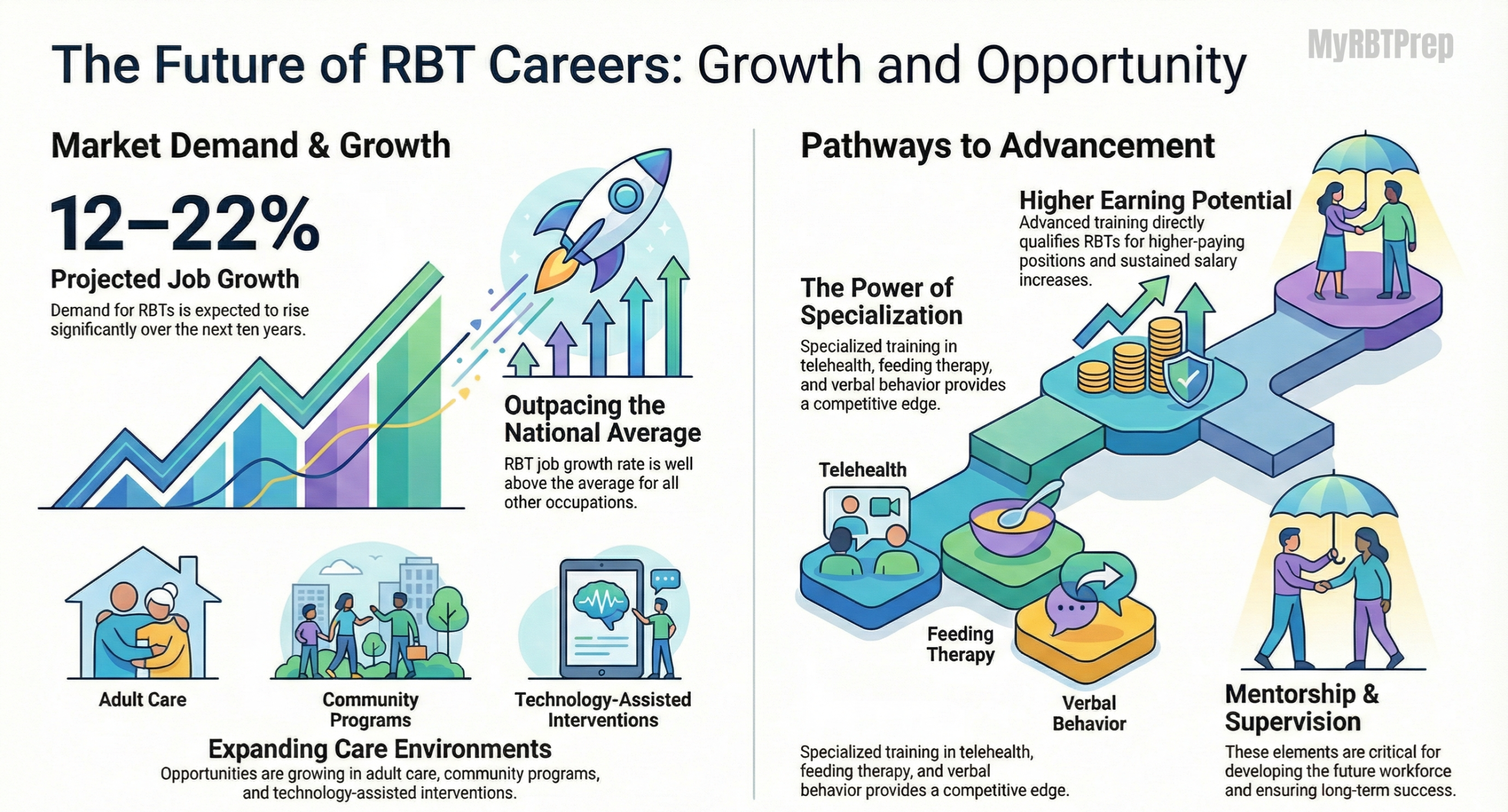
The job market for professionals in Applied Behaviour Analysis (ABA) is robust. Projections for demand for Registered Behaviour Technicians (RBTs) reflect 12-22% growth over the next ten years, a rate well above that of the national average for all occupations combined. In addition to the growing population of children with autism, the growth of opportunities for RBTs in adult care and community-based programs, and the use of technology-assisted interventions are examples of the expanding environments for RBTs.
Therefore, mentorship and supervision play an important role in the development of a future workforce of behaviour technicians through the ABA field. Specialized training in telehealth, feeding therapy, and verbal behaviour training provides RBTs with a competitive advantage. An RBT with advanced training in these areas can expect to qualify for higher paying positions and have additional opportunity for career advancement. With continued awareness of the job growth within the ABA field, RBTs will have the tools to plan for continued success over the long term as well as compose a sustained increase in their salary as RBTs.
About RBT Salary and Careers
Many RBTs wonder, “How much does an RBT make per hour or annually?” Salaries range from $15 to $25 per hour, depending on experience and employer type and salary. “What factors influence RBT salary levels?” Location, credentials, employer, and tenure all play roles. Advancement opportunities through advanced certifications in ABA and leadership roles often increase pay. The field continues to grow, offering stability and a clear pathway for career-minded professionals.
| Topic | Details |
| Hourly & Annual Salary | RBTs typically earn between $15 and $25 per hour, with annual salaries varying based on experience and employer type. |
| Factors Influencing Salary | Location, credentials, employer type, and tenure all impact RBT salary levels and potential growth. |
| Advancement Opportunities | Pursuing advanced certifications in ABA and leadership roles can increase pay and career progression. |
| Job Stability | The RBT field continues to grow, providing stable employment and clear pathways for career-minded professionals. |
Resources and References
Reliable sources include the Bureau of Labor Statistics (https://www.bls.gov), ZipRecruiter (https://www.ziprecruiter.com/Salaries/Rbt-Salary), and Indeed (https://www.indeed.com/recruitment/job-description/rbt-registered-behavior-technician). Professional training platforms like ATCC® provide RBT exam preparation and training, mentoring, and practical supervision hours, helping aspiring RBTs maximize their career potential and behavior technician pay.
FAQ’s
Is it better to get paid hourly or annually?
Hourly pay offers flexibility, especially if you work overtime or multiple clients. Annual salaries provide predictable income and often include benefits packages (health insurance, retirement). Choosing depends on your lifestyle and financial priorities.
Where do RBTs make the most money?
Top-paying states for RBTs include Hawaii, California, New York, and Massachusetts. Higher salaries usually reflect cost of living impact on RBT pay and demand for skilled Registered Behavior Technicians.
Which is better, hourly rate or salary?
Hourly rates can yield higher earnings during busy periods or with overtime, but salaried positions offer stability and benefits. Consider employer type and potential bonuses before deciding.
How to make more money as an RBT?
Earning advanced certifications in ABA, gaining experience, pursuing a Board Certified Assistant Behavior Analyst (BCaBA) or Board Certified Behavior Analyst (BCBA) credential, and working in high-paying states or specialized clinics can increase RBT salary.
What is the 80/20 rule in ABA?
The 80/20 rule in ABA suggests that 80% of client progress comes from 20% of interventions. Focusing on high-impact evidence-based behavior interventions ensures efficient therapy and measurable improvements in client outcomes.

Everything You Need to Pass Your RBT® Exam
Study with our complete, all-in-one preparation package covering every task on the BACB Task List 3.0:
- 1,000+ Practice Questions & Timed Simulator
- 3rd Edition Task List Study Guide & Workbook
- Active Recall Flashcards System + Mobile App
- 20-Task Competency Assessment Mastery Guide