Stimulus generalization is an important idea in behavior learning, especially in Applied Behavior Analysis. It explains how a person uses a learned skill in new places, with new people, or with different but similar situations.
When this process works well, learning becomes stronger and more natural. Parents, teachers, and therapists often want children to use their skills in real life, not only in therapy rooms.
This is why stimulus generalization, stimulus generalization in ABA, what is stimulus generalization, generalization in behavior therapy, and stimulus generalization examples are important to understand. A clear understanding of this concept helps improve teaching, independence, and long-term behavior change.
Where Stimulus Generalization Occurs in Real Life
You notice stimulus generalization in ABA when children use a skill at school after learning it at home. This shift shows strong behavior generalization in ABA because the child responds correctly even when the context changes.
Many families want stimulus generalization examples because these moments help them understand progress. This flow across settings strengthens generalization in RBT practice and creates meaningful daily improvements for clients.
| Setting Where Learning Began | New Setting Where Skill Appears | Example of Stimulus Generalization | Why It Matters in ABA |
| Home | School | A child learns to request help at home and later asks the teacher for help in class | Shows behavior generalization in ABA across environments |
| Therapy Room | Community | A learner practices greeting in therapy and later greets people at the store | Skills become meaningful in daily life |
| Classroom | Playground | A student follows rules during class and later follows rules during recess | Behavior stays consistent when context changes |
| Parent Instruction | RBT Session | A parent teaches turn-taking and the child later uses it during ABA sessions | Improves generalization in RBT practice |
| One Adult | Multiple Adults | A child responds to directions from both parents and teachers | Prevents dependence on one person or place |
How Stimulus Generalization Works
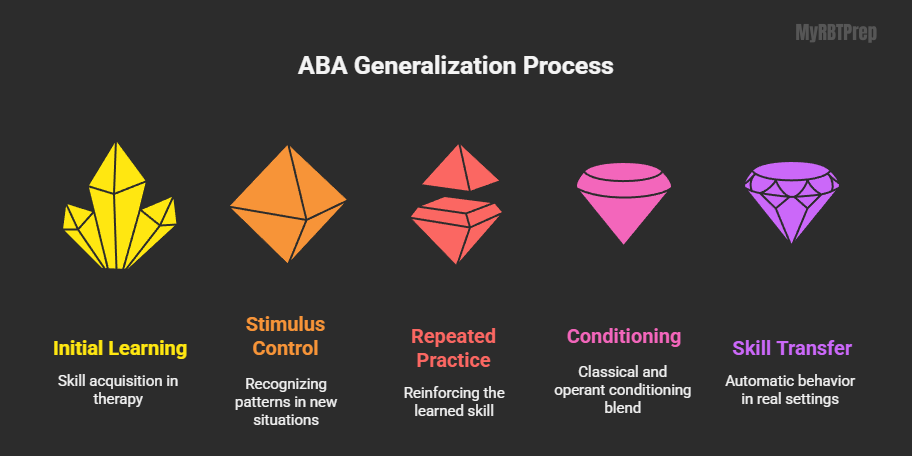
The Learning Process in ABA
Generalization develops through repeated practice and stimulus control in ABA, where learners recognize patterns in new situations. When this happens the skill becomes automatic which leads to skill transfer in therapy that feels smooth and natural.
People often search how generalization works in behavior learning because they want to understand the science behind growth. When patterns repeat across settings the behavior sticks.
Classical vs Operant Conditioning in Generalization
Generalization grows through both classical and operant conditioning where the learner connects similar cues with familiar responses. This blend strengthens generalization vs discrimination which helps clients tell apart correct cues while still expanding flexibility.
Many teams focus on ABA generalization strategies because they help shape reliable behavior across real settings. These conditioning processes build confidence and consistency.
Key Characteristics of Stimulus Generalization
Generalized behavior stays strong even when the environment shifts which shows how powerful types of generalization in ABA can be for long-term improvement. When clients adapt this way they show strong response generalization vs stimulus generalization across tasks that were never directly taught.
Many practitioners explore ABA therapy real-life examples to see how these traits support everyday functioning. Each new success builds momentum.
Generalization Within Natural Environments
Generalization works best when learners use skills in familiar and unfamiliar places which is why ABA teaching strategies always include environmental variety.
This consistency supports RBT tasks and responsibilities because caregivers want their children to use skills confidently everywhere. Searching how RBTs teach generalization often highlights how structured exposure builds resilience. Real-world practice improves mastery.
Examples of Stimulus Generalization (Daily Life + ABA Examples)
Everyday Life Examples
When a child learns the color red using a card then later points to a red shirt they demonstrate examples of generalization skills that show strong progress. These moments often appear in applied behavior examples for children where simple lessons grow into daily habits.
Many caregivers appreciate teaching children to generalize skills because it creates freedom across situations. Life becomes easier for everyone.
ABA Therapy Examples
A learner requesting water in therapy then later using the same request at a park shows strong ABA skills across settings that develop naturally. These improvements support generalization in behavior therapy where each skill becomes more meaningful with wider use.
Many families search applied behavior therapy examples to understand how progress unfolds over time. Each generalization strengthens confidence.
| Category | Original Learning Situation | New Situation | Example of Stimulus Generalization | Why It Matters |
| Everyday Life | Child learns the color red using flashcards | Child sees a red shirt | Child correctly labels the shirt as red | Shows the child can use knowledge in real-world settings |
| Everyday Life | Parent teaches polite greetings at home | Child meets a neighbor outside | Child says “hello” independently | Social skills transfer beyond practice time |
| Everyday Life | Child practices tying shoes with mom | Child ties shoes at school | Child performs the same skill in class | Builds independence across environments |
| ABA Therapy | Learner requests water during therapy | Learner requests water at the park | Same request used in a new setting | Demonstrates strong ABA generalization |
| ABA Therapy | Child learns turn-taking in sessions | Child plays a game with siblings | Turn-taking continues naturally | Improves peer relationships |
| ABA Therapy | Child practices using a visual schedule | Child follows schedule at home | Child transitions calmly | Reduces problem behavior across routines |
Stimulus Generalization vs. Stimulus Discrimination
How They Differ Conceptually
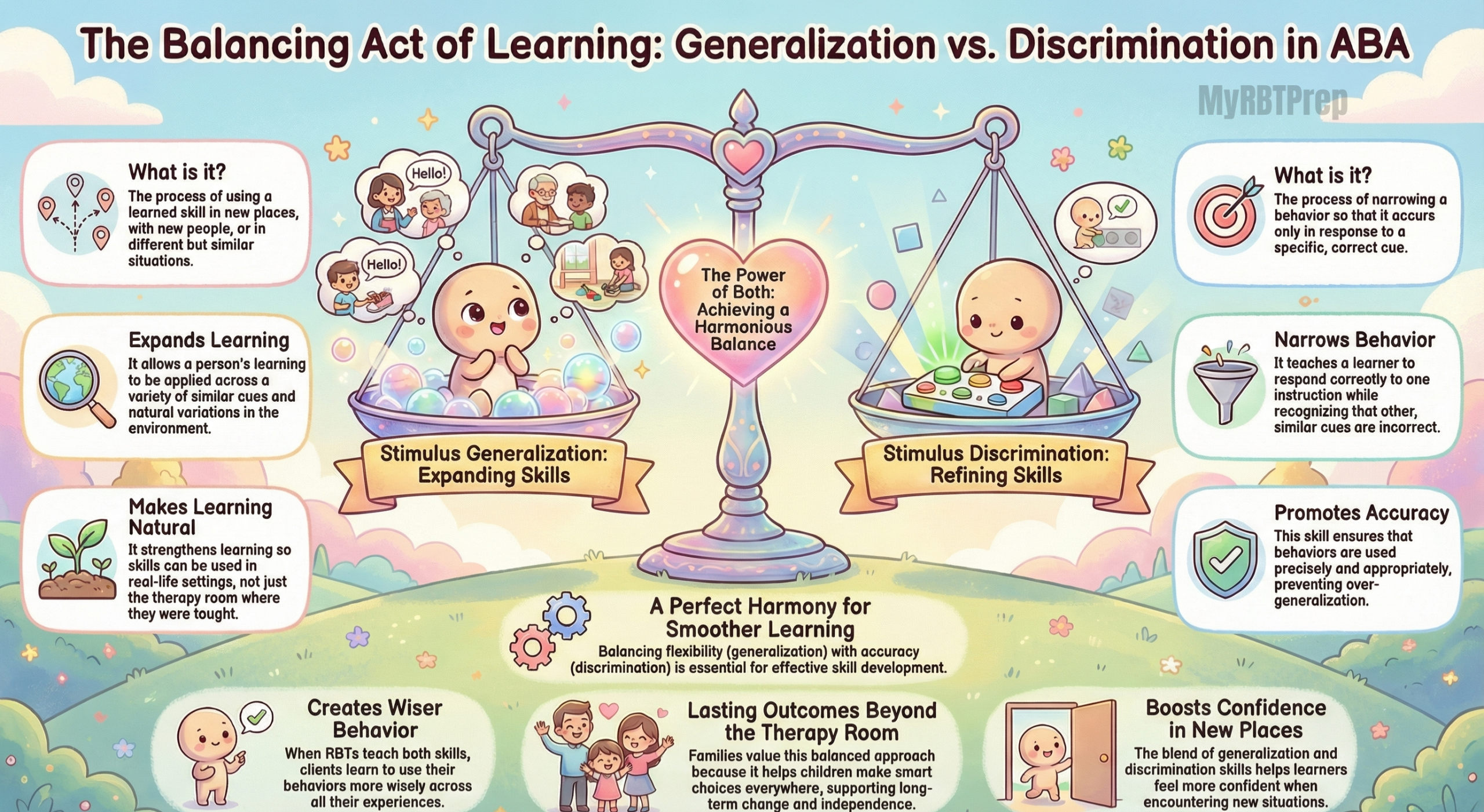
Generalization expands learning across similar cues while discrimination narrows behavior to the correct cue which makes generalization vs discrimination an important comparison in ABA practice.
You notice this contrast when clients respond correctly to one instruction but also adapt to natural variations. People often explore generalization reinforcement strategies because they want to balance flexibility with accuracy. This harmony supports smoother learning.
Why RBTs Must Teach Both
When RBTs teach both skills clients use behavior wisely which transforms how they respond across experiences. Many professionals emphasize RBT training techniques for generalization because the blend improves confidence in new places.
Families often ask why generalization matters in ABA because they want lasting outcomes beyond therapy rooms. Balanced teaching helps children make smart choices everywhere.
Why Is Stimulus Generalization Important?
Long-Term Skill Independence
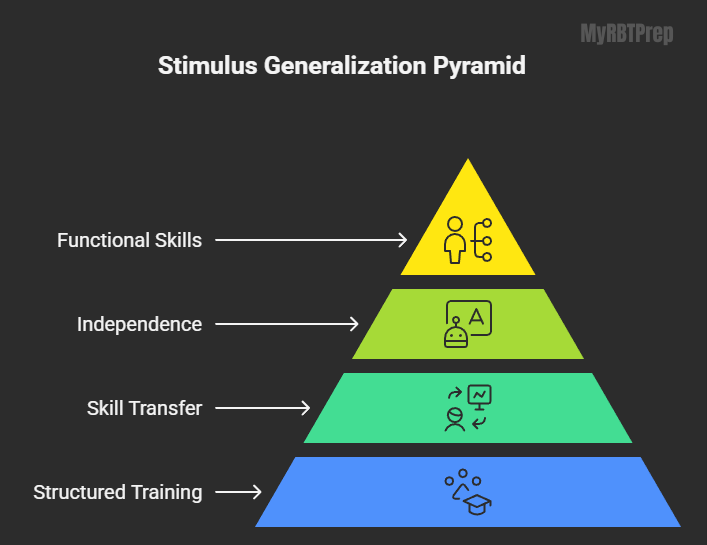
Generalization builds independence because skills work outside structured settings which strengthens generalization in autism therapy and daily routines.
Many search importance of generalization in ABA to understand why broad learning matters for long-term growth. When clients adapt this way they handle life with more comfort and confidence. Independent skills bring freedom.
Impacts on Treatment Outcomes
Generalization creates stronger treatment outcomes because learning becomes real and useful which supports behavior modification strategies across home and school.
You often see this impact in ABA therapy real-life examples that show children thriving in new environments. Many families explore how to promote generalization in clients because they want practical success. Lasting change comes from flexible use.
| Key Area | Description | Real-World Impact | Why It Matters in ABA |
| Long-Term Skill Independence | Generalization helps clients use skills outside structured therapy sessions, across different people, places, and situations. | Clients complete daily tasks more confidently at home, school, and in the community. | Builds true independence rather than memorized responses. |
| Daily Living Success | Skills such as communication, self-care, and social interaction begin to occur naturally in daily routines. | Clients rely less on prompts and support from adults. | Improves quality of life and long-term outcomes. |
| Treatment Effectiveness | ABA progress becomes meaningful because behaviors work in multiple environments, not just therapy. | Families and teachers see success across settings. | Ensures therapy results are practical and lasting. |
| Behavior Flexibility | Clients learn to adapt responses to new situations rather than sticking to one rigid pattern. | Reduces frustration and problem behavior. | Supports behavior modification strategies effectively. |
| Family & Caregiver Confidence | Families see real-life improvement, not just session-based progress. | Caregivers feel hopeful and encouraged. | Reinforces continued participation in ABA programs. |
Factors That Influence Stimulus Generalization
Influential Variables
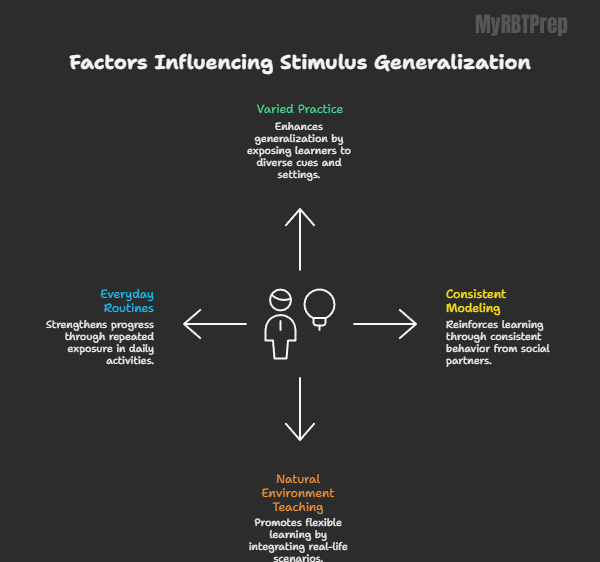
Generalization grows through varied practice where different cues appear across sessions which supports generalization probes ABA to measure progress.
These conditions help clients strengthen teaching across people, places, materials through repeated exposure. Searches for generalization mistakes to avoid show how important these details can be during therapy. Each element shapes outcomes.
Environmental and Social Factors
Generalization rises when social partners model consistent behavior which highlights the value of reinforcement and generalization during instruction.
Many ABA teams rely on effective RBT techniques to support natural skill use at home and in public. People often search how RBTs teach generalization because these social conditions make learning stronger. Environment and people guide success.
How RBTs Can Promote Stimulus Generalization
Evidence-Based ABA Strategies
RBTs improve generalization through varied practice where multiple exemplar training and natural environment teaching (NET) support flexible learning.
Many professionals explore ABA generalization strategies because consistent exposure boosts confidence in new places. When families seek how to promote generalization in clients they often rely on everyday routines for practice. Each repetition strengthens progress.
Working With Families & Teachers
Generalization grows when teams work together because generalization in RBT practice depends on shared expectations and consistent routines.
Many caregivers search generalization reinforcement strategies because support at home improves skill strength. When everyone follows the same plan how generalization works in behavior learning becomes easier to observe. Collaboration builds steady progress.
| Area | Key Concept | How RBTs Support It | Why It Matters |
| Stimulus Generalization | Learning transfers across people, places, and materials | Use varied practice, including multiple exemplar training and Natural Environment Teaching (NET)** | Builds flexible, real-world skill use |
| Evidence-Based ABA Strategies | Repetition with variety improves performance | Provide repeated practice in different settings and contexts | Helps learners feel confident using skills anywhere |
| Family & Teacher Collaboration | Shared expectations support consistency | Communicate goals and strategies with caregivers and educators | Ensures skills are reinforced outside therapy |
| Home Support | Practice during daily routines | Caregivers follow consistent reinforcement plans | Strengthens and maintains skills over time |
| Team-Based Approach | Everyone supports the same plan | RBTs coordinate with teams to model strategies | Leads to steady and observable progress |
Common Mistakes to Avoid When Teaching for Generalization
Frequent Errors
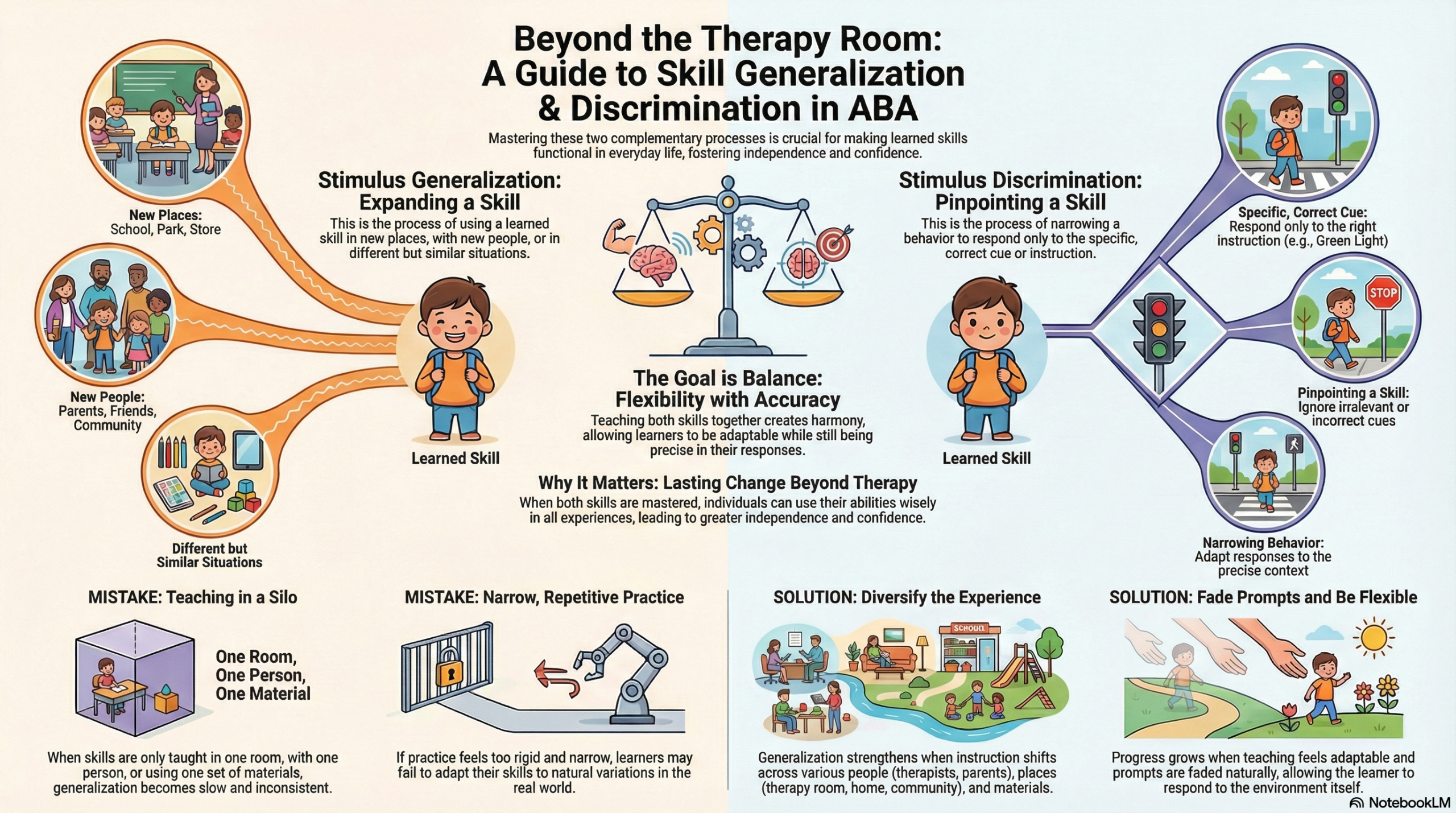
Generalization weakens when skills are taught only in one room or with one person which explains why families search generalization mistakes to avoid. When practice feels too narrow behavior generalization in ABA becomes slow and inconsistent.
Many professionals add variety because ABA skills across settings develop through diverse experiences. Broad practice prevents problems.
How to Fix These Mistakes
Generalization strengthens when prompts fade naturally and instruction shifts across people and places.
This adjustment improves generalization in behavior therapy which many teams value during treatment. Parents often explore applied behavior therapy examples to see how broader routines help. Progress grows when teaching feels flexible.
Real Case Scenarios of Stimulus Generalization in ABA
Case Example 1 — Color Identification
A learner who identifies red during table work then names red objects across school and home shows strong stimulus generalization examples that families celebrate.
This spread demonstrates skill transfer in therapy which builds confidence day by day. Many seek ABA therapy real-life examples to understand this shift. These wins reflect meaningful learning.
Case Example 2 — Greeting Behaviors
A child greeting a therapist then later greeting teachers and neighbors shows broad behavior generalization in ABA that families appreciate. When you notice this change it confirms strong patterns in generalization in autism therapy which supports social progress. Families search applied behavior therapy examples to see this in action. Social gains create lasting comfort.
Case Example 3 — Requesting Items
A learner requesting snacks in therapy then asking at home or in a store shows powerful ABA skills across settings that improve daily routines.
Many teams study how RBTs teach generalization to understand how these requests spread across life. Parents often explore why generalization matters in ABA because independence at home feels life-changing. This skill boosts communication.
| Case Example | Initial Learning Context | New Context(s) | Type of Stimulus Generalization | Real-Life Impact |
| Color Identification | Learner identifies red during table work | Learner names red objects at school and home | Across materials and environments | Boosts confidence and shows meaningful skill transfer |
| Greeting Behaviors | Child greets therapist in sessions | Child greets teachers, neighbors, and peers | Across people and settings | Strengthens social skills and increases comfort in daily life |
| Requesting Items | Learner requests snacks during therapy | Learner requests items at home, stores, and other settings | Across environments and routines | Improves independence, communication, and daily functioning |
Understanding Stimulus Generalization: Practical Examples and ABA Insights
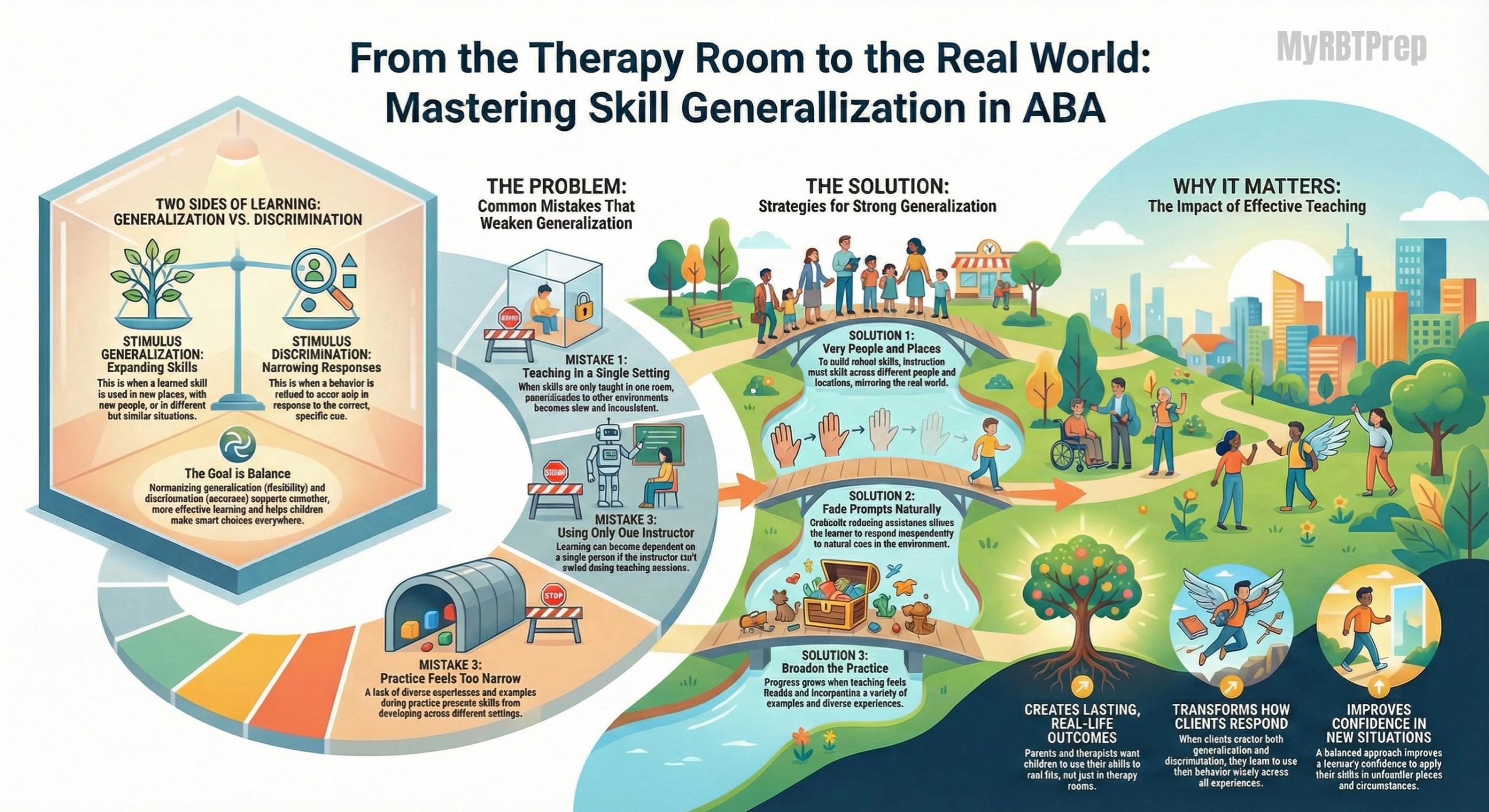
Stimulus generalization is a cornerstone concept in ABA therapy that allows learned skills to be applied in multiple settings beyond the initial teaching environment. In simple terms, it occurs when a behavior learned in one context transfers naturally to similar situations without additional instruction.
For instance, a child taught to identify colors using flashcards may later correctly identify colors in toys, clothes, or objects in the classroom. This flexibility shows how stimulus generalization in ABA strengthens independence and supports real-life learning.
It also highlights the importance of structured training methods, including multiple exemplar training and natural environment teaching (NET), which expose learners to varied cues and contexts. By focusing on ABA generalization strategies, therapists ensure that the skills acquired are meaningful and useful outside therapy.
For parents and educators, understanding what is stimulus generalization helps in reinforcing learning at home or school. Applied consistently, these strategies help children respond appropriately across environments, improve communication, and develop functional skills.
The practical impact of stimulus generalization examples can be seen in everyday life, where skills like greeting, requesting, or identifying objects are generalized successfully, demonstrating the true value of behavior-based interventions.
Stimulus Generalization in ABA: How Skills Transfer Across Environments
Stimulus generalization in behavior therapy is when a learned response can extend to new, but similar situations, as skills are able to become functional in their daily life. A specific example is showing a child how to ask for help in the therapy room, and that child then uses the same phrasing at home or at school.
This is an example of generalization in behavior therapy and illustrates the importance of being able to teach children to generalize skills. Functional and Applied Behavior Analysis procedures, like applying skills across settings in therapy and response generalization versus stimulus generalization allow the therapist to establish parameters where learned behavior remains stable across different settings, people and materials.
Additionally, practitioners and therapists will use specific probes in order to track if the skills have truly generalized, such as using generalization probes ABA. The therapist will also use ABA procedures to set the stage for generalization across settings by systematically exposing the learner to varied stimuli and backing up the exposure with consistent reinforcement.
For registered behavior technician, practicing the procedures is part of the RBT training techniques for generalization and gives you the best chance that the interventions will yield fruitful outcomes to the environment.
Finally, understanding the various examples of stimulus generalization will support caregivers and educators in maintaining meaningful and functional behavior changes in the selected environment. This very important area will support independence, communication and everyday problems solving skills in children receiving ABA therapy.
| Concept | Explanation | ABA Implementation | Practical Impact |
| Stimulus Generalization | Learned behavior transfers to new, similar situations | Teach a skill in one setting (e.g., therapy room) and practice across others (home, school) | Ensures functional skills are used in daily life |
| Response vs Stimulus Generalization | Response generalization: different behaviors achieve the same outcome; Stimulus generalization: same behavior occurs across contexts | Use multiple exemplars and varied stimuli | Maintains skill stability across environments |
| Generalization Probes | Assessment method to check if skills transfer | RBTs conduct probes in varied settings without prompts | Confirms learner applies skills independently |
| Systematic Exposure & Reinforcement | Structured practice with consistent reinforcement | Gradually introduce new people, materials, and settings | Strengthens skill retention and reliability |
| RBT Training Techniques | Learning to promote generalization is part of certification | Practice ABA procedures under supervision | Increases effectiveness of interventions in real-life settings |
| Caregiver & Educator Support | Families reinforce learned skills in daily routines | Use consistent prompts and rewards at home and school | Enhances independence, communication, and problem-solving skills |
Conclusion
Stimulus generalization transforms ABA therapy because it brings skills into real life which supports strong independence and smooth daily routines.
Many families look for stimulus generalization examples to understand how these changes unfold across settings. When therapy builds flexible responses clients grow with confidence. This learning shift shapes brighter paths for the future.
Faqs
What is an example of a stimulus generalization?
An example is when a child learns to fear one dog and then feels scared of all similar-looking dogs.
What is a real life example of a stimulus?
A real-life stimulus could be a loud sound that makes you turn your head or respond quickly.
What is the stimulus Generalisation theory?
Stimulus Generalization theory explains how people respond the same way to new but similar cues after learning from one specific cue.
What’s the difference between stimulus generalization and response generalization?
Stimulus generalization means one behavior happens with similar cues, while response generalization means different behaviors appear for the same cue.
What is stimulus generalization according to Skinner?
According to Skinner, stimulus generalization happens when a learned behavior appears in new situations that share features with the original learning environment.