Becoming a Registered Behavior Technician (RBT) involves completing a 40-hour training program, passing a competency assessment and an exam, and fulfilling supervision requirements. The entire process typically takes 2–3 months from start to finish, though it can vary widely depending on individual circumstances . Below, we break down the steps and timeline for obtaining RBT certification, as well as factors that can influence the duration of the process.
What is an RBT?
A Registered Behavior Technician (RBT) is an entry-level professional who works under the supervision of a Board Certified Behavior Analyst (BCBA) to implement behavior intervention plans for clients with autism and other developmental disabilities . RBTs gather and record data, deliver evidence-based interventions, and assist with assessment and therapy sessions. They play a crucial role in applied behavior analysis (ABA) services, often serving as direct support staff for individuals receiving ABA therapy. Obtaining RBT certification from the Behavior Analyst Certification Board (BACB) is required to work in this capacity.
Steps to Become an RBT
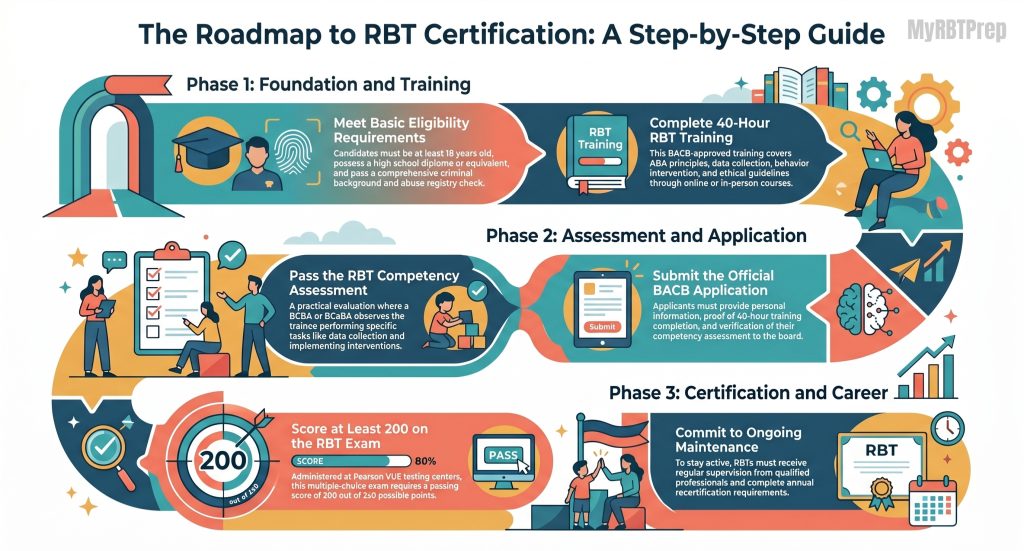
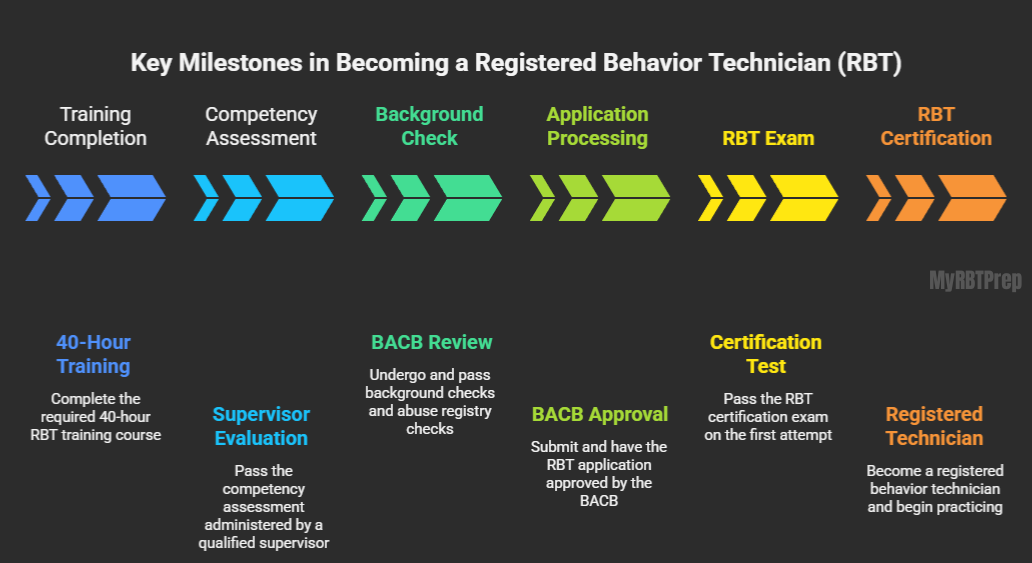
The journey to becoming an RBT involves several key steps, as outlined by the BACB . Each step must be completed in sequence:
- Meet Eligibility Requirements: Applicants must be at least 18 years old, have a high school diploma or equivalent, and pass a criminal background check and abuse registry check . These requirements ensure that RBTs are mature and have no history of abuse or criminal activity that would compromise client safety.
- Complete a 40-Hour RBT Training Course: All applicants must successfully complete a 40-hour training program that meets BACB standards. This training covers the core knowledge and skills needed for RBTs, including ABA principles, data collection, behavior intervention techniques, and ethical guidelines . The training can be taken online or in-person at approved institutions.
- Pass the RBT Competency Assessment: After completing the training, applicants must demonstrate their practical skills through a competency assessment. This assessment is typically administered by a BCBA or BCaBA and evaluates the trainee’s ability to perform tasks such as collecting data, implementing interventions, and maintaining professional conduct. The BACB provides a checklist of tasks to be assessed, and the applicant must pass all items to qualify .
- Apply for RBT Certification: Once the training and competency assessment are complete, applicants submit an application to the BACB. The application includes personal information, proof of training completion, and verification of the competency assessment results. The BACB reviews the application and, if all requirements are met, issues a certification.
- Pass the RBT Examination: New RBT applicants must also pass the RBT certification exam, which is a multiple-choice test covering the same content as the training. The exam is administered by Pearson VUE at testing centers nationwide. Applicants must score at least 200 out of 250 to pass . The exam is usually taken after receiving BACB approval to schedule it.
- Maintain RBT Certification: After obtaining certification, RBTs must continue to receive ongoing supervision from a qualified supervisor and complete annual recertification requirements to keep their certification active. This involves accumulating supervised experience and periodically retaking the RBT exam to maintain competency .
Each of these steps is crucial and must be successfully completed in order to become an RBT. The remainder of this article will detail the timeline for each step and how they fit together, as well as factors that can affect the total time required.
Timeframe to Become an RBT
On average, it takes about 2–3 months to become a Registered Behavior Technician from the start of training to receiving certification . This timeline can vary based on how quickly an individual progresses through each requirement.
For example, someone who can dedicate full-time effort to the training and exam might complete the process in as little as a month or two, while others with part-time study or work commitments might take a bit longer. In fact, some individuals have completed the entire certification process in as few as 2–3 weeks by taking an intensive training course and scheduling the exam promptly . Conversely, delays can occur if someone needs to retake the exam or if there are issues with background checks or paperwork. Overall, most candidates can expect the journey to span between a couple of weeks and a few months .
To illustrate the typical timeline, consider the following example:
- Weeks 1–2: Meet eligibility requirements and enroll in an RBT training program (either online or in-person). Begin the 40-hour training course.
- Weeks 3–6: Complete the 40-hour training and pass the competency assessment. Apply to the BACB for certification and schedule the RBT exam.
- Weeks 7–8: Prepare for and take the RBT exam. (If needed, there is usually a waiting period of a few days or weeks for exam results.)
- After passing: Once the exam is passed, the BACB processes the certification. Within a few weeks, the RBT certification is granted.
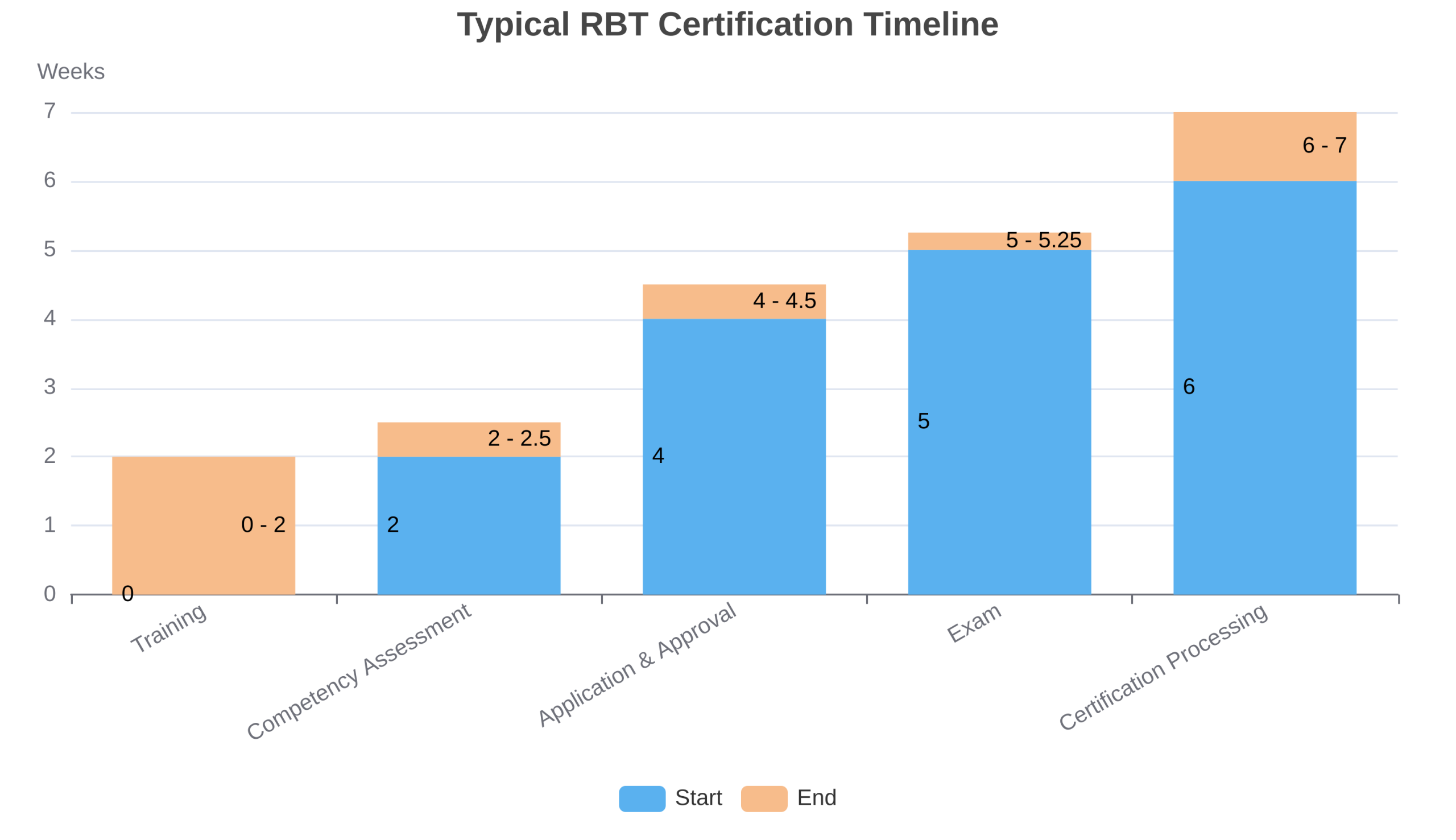
This timeline is a rough estimate. Some steps (like the training) can be done in parallel with others in certain cases, but generally each step must be completed in sequence. The chart below provides a visual representation of the key steps and their typical durations.
Data Source: , ,
Keep in mind that the actual time can vary widely based on individual circumstances and choices made during the process, as discussed in the next section.
Timeline for Each Step
Each step in the RBT certification process has its own timeline, which can be broken down as follows:
- 40-Hour RBT Training: The core training requirement is 40 hours of instruction, which can be completed in as little as a week if the training is full-time and intensive. Many RBT training programs are structured to be completed within a few weeks to a couple of months, depending on the schedule and format. For example, some online programs allow learners to complete the course at their own pace, which might extend the timeline to 4–6 weeks, while others offer condensed, multi-day in-person workshops that can finish in about a week . Regardless of the format, it is important to note that the BACB requires trainees to complete the 40 hours within 180 days (6 months) of starting the training; otherwise, the training must be restarted . In practice, most candidates finish the training within a few weeks to a couple of months of starting.
- RBT Competency Assessment: After completing the training, an applicant must schedule and pass a competency assessment. The timeline for this step can be as short as a few days to a couple of weeks after finishing the training, provided a qualified supervisor is available to administer the assessment. Some RBT training programs include the competency assessment as part of their curriculum, which can save time. If scheduling the assessment takes longer (e.g., due to waiting for a supervisor’s availability), the timeline for this step will extend accordingly. In any case, it’s advisable to plan for at least a week or two between completing the training and taking the competency assessment to allow for preparation and scheduling.
- RBT Certification Application: Once the competency assessment is passed, applicants submit their RBT certification application to the BACB. The application review and approval process typically takes about 1–2 weeks. During this time, the BACB verifies that all requirements (training completion, competency assessment, background checks, etc.) have been met. If all is in order, the BACB will issue a Notice of Approval to schedule the exam. If any additional information is needed, the review process could take longer, but this is relatively uncommon. In most cases, applicants can expect to receive approval within a couple of weeks of submitting the application.
- RBT Exam: After receiving approval from the BACB, applicants schedule and take the RBT exam. The BACB typically allows up to a year from the approval date to schedule the exam, though it’s best to take the exam within a few months to maintain momentum. The exam itself is a 90-minute multiple-choice test, so the actual testing time is very short. The wait for exam results is usually a few days to a week. If the applicant passes the exam, the BACB processes the certification. The processing time after passing the exam is usually a matter of days, and the certification is then granted. If the applicant does not pass the exam on the first attempt, they will need to retake it, which will extend the timeline by the amount of time needed to retrain and schedule the exam again.
In summary, the steps roughly break down as follows:
- Training (40 hours) – 1–2 months
- Competency Assessment – 1–2 weeks
- Application & Approval – 1–2 weeks
- Exam – 90 minutes, with results in 1 week
- Certification Processing – 1–2 weeks
When added together, these steps often total around 2–3 months from start to finish. However, it’s important to note that some individuals may complete certain steps more quickly (for example, an applicant with prior relevant experience might need less training time, or someone who takes the exam soon after approval could have a shorter overall timeline). Conversely, those who need to retake the exam or who encounter delays in paperwork will experience a longer timeline.
Factors That Affect Time
Several factors can influence how long it takes to become an RBT. Understanding these factors can help individuals plan and anticipate potential delays or accelerations in the process:
- Training Format and Schedule: The format of the 40-hour training (online vs. in-person) and the availability of training slots can significantly affect the timeline. For instance, an in-person, multi-day training course can be completed in a week, whereas an online course might require a few weeks to finish at a self-paced rate . Additionally, the flexibility of the training schedule (e.g., evening or weekend classes) can impact how quickly someone can complete the training. If an individual can attend a full-time training program or complete the online modules intensively, they can shorten the training period. Conversely, those juggling other commitments may need to spread out the training over a longer period, which could push back the timeline.
- Personal Availability and Study Pace: How much time an applicant can dedicate to studying and training each week plays a big role. Some candidates might be able to complete the 40 hours in a few weeks by studying evenings and weekends, while others might need a month or more if they can only study part-time. Similarly, someone with strong academic skills or prior knowledge of ABA might pick up the material faster and be ready for the exam sooner, whereas someone who needs more time to absorb the concepts might take longer to prepare. It’s important to be realistic about one’s study pace and to schedule enough time for review and practice to ensure competency.
- Availability of a Qualified Supervisor: The competency assessment and ongoing supervision requirements both depend on having a Board Certified Behavior Analyst (BCBA) or Board Certified Assistant Behavior Analyst (BCaBA) to oversee the trainee. If a qualified supervisor is readily available and able to conduct the competency assessment and subsequent supervision, the process can move quickly. However, if one must wait for a supervisor’s schedule or if there are few qualified supervisors in the area, this could delay the timeline. For example, if an applicant has to wait several weeks for a BCBA to become available to administer the competency assessment, that will add to the time needed to complete that step.
- Background Check and Application Processing: Although not within the control of the applicant, delays can occur with background checks or application processing. Criminal background checks and abuse registry checks can sometimes take a few weeks to process, especially if there are any issues or if the checks need to be done through different agencies. If a background check is delayed or if the BACB application has missing information, it can slow down the process. In such cases, applicants should follow up with the appropriate agencies and ensure all application materials are complete to expedite processing. Generally, though, the BACB processes applications within a couple of weeks, and background checks are typically done by the time the training and competency assessment are completed.
- Passing the RBT Exam on the First Try: Another factor is whether the applicant passes the RBT exam on the first attempt. The pass rate for the RBT exam is around 70–80% for first-time test takers , so a significant number of candidates do need to retake the exam. Each retake requires additional time for study and scheduling. If an applicant does not pass the exam, they must wait for the BACB to schedule the next available exam date (which can be a few weeks to a couple of months later) and then go through the preparation process again. Thus, not passing the exam on the first try can add a couple of months to the overall timeline. Some applicants prepare extensively and take the exam multiple times before passing, which can prolong the process. Therefore, it’s important to prepare thoroughly and possibly consider taking a test prep course or study guide to increase the chances of passing on the first attempt.
RBT Supervision and Maintenance
The RBT journey continues even after you have received your RBT certification. It requires ongoing supervision and recertification of your credentials at periodic intervals. This means that there is an ongoing commitment to maintaining the above-mentioned qualifications.
- Ongoing Supervision – Once you have been awarded the RBT Certification, you must receive regular supervision from a qualified RBT Supervisor or RBT Requirements Coordinator. The BACB (Behavior Analyst Certification Board) has established a requirement that RBTs receive a minimum of 5% of their total client service hours each month under supervision by a qualified Supervisor. For example, if an RBT provides 100 hours of direct client service during one month, that RBT must have received 5 hours of direct supervision from a qualified Supervisor during that same month (5% of 100 total hours = 5 direct supervision hours). Supervision may be conducted either in person or through teleconferencing; however, it is required that RBTs receive supervision from a qualified Supervisor on at least a monthly basis (once per month, at a minimum). During the supervision session, the RBT reviews their data, discusses the progress of clients and their program, and receives feedback on the quality and appropriateness of their performance as an RBT. Frequency and duration of supervision are dependent upon the RBT’s experience and the complexity of their caseload. Supervision is generally provided by a Board Certified Behavior Analyst or Assistant Board Certified Behavior Analyst who has completed services provided to BACB-approved supervisors. Ongoing supervision helps to ensure that RBTs continue to work within the limits of their current skill sets and comply with ethical and professional standards.
- Recertification RBTs are to recertify their credentials on a regular basis to stay active as RBTs. RBTs are required to recertify every other year. To do this, RBTs must retake the RBT examination or complete a Continuing Education Program and pass a simplified recertification exam. The requirements for recertification may change over time, so you should review the BACB’s current policy to assure yourself of the requirements for recertification. Regardless of the method for recertification, it allows the RBT to remain current on best practices and ethical methods in their field. The recertification timeline generally falls at the end of the two-year period from the initial date of certification. A reminder to recertify is sent out from the BACB when the RBT is eligible for recertification. The recertification process takes several weeks, similar to the initial certification process, and continues to require that the RBT remain under adequate supervision, and all other requirements, including a current background check. RBTs making an ongoing commitment to maintaining their certification through recertification are assured that they will continue to be competent and ethical practitioners.
Conclusion
Becoming a Registered Behavior Technician is a rewarding journey that typically takes about 2–3 months from start to finish. By following the outlined steps – meeting eligibility, completing training, passing the competency assessment and exam, and applying for certification – individuals can work their way through the process relatively quickly.
The timeline can be influenced by various factors, including training format, personal availability, and exam performance, but with proper planning and preparation, most people can obtain their RBT certification within a couple of months. Once certified, RBTs must continue to fulfill ongoing supervision and recertification requirements to maintain their credentials, ensuring they remain competent and ethical practitioners in the field of applied behavior analysis.
If you are interested in becoming an RBT, remember to start by meeting the eligibility criteria and enrolling in a reputable 40-hour training program. Take advantage of study resources and practice exams to prepare for the competency assessment and exam. With dedication and the right support, you can successfully navigate the process and embark on a fulfilling career as an RBT, helping individuals with autism and other developmental disabilities achieve their goals through evidence-based behavior interventions.
Faqs
What is the highest salary for an RBT?
The highest salary for an RBT can reach $50,000–$60,000 per year, depending on experience, location, and employer.
Is becoming an RBT worth it?
Yes, becoming an RBT is worth it if you’re interested in working in behavioral therapy, as it offers quick entry, good demand, and career growth.
How long does it take to study for an RBT exam?
Most people study 1–2 weeks, especially after completing the required 40-hour training.
Is the RBT exam difficult?
The RBT exam is considered moderately easy, especially if you’ve completed training and practice tests.
How fast can you become RBT certified?
You can become RBT certified in as little as 2–4 weeks, depending on training and exam scheduling.