Understanding RBT therapy is essential for families navigating Autism Spectrum Disorder (ASD) support. Registered Behavior Technicians (RBTs) play a vital role in delivering Applied Behavior Analysis (ABA) therapy for autism, providing direct therapy support for children with autism. Working under BCBA supervision, they implement individualized behavior intervention plans that focus on improving communication, social skills, and daily living abilities.
Through consistent hands-on ABA therapy sessions, RBTs track progress, reduce challenging behaviors, and promote independence. Their work ensures that skills learned in therapy generalize across home, school, and community settings. In this article, we will explore how RBTs transform autism treatment therapy through practical, evidence-based strategies.
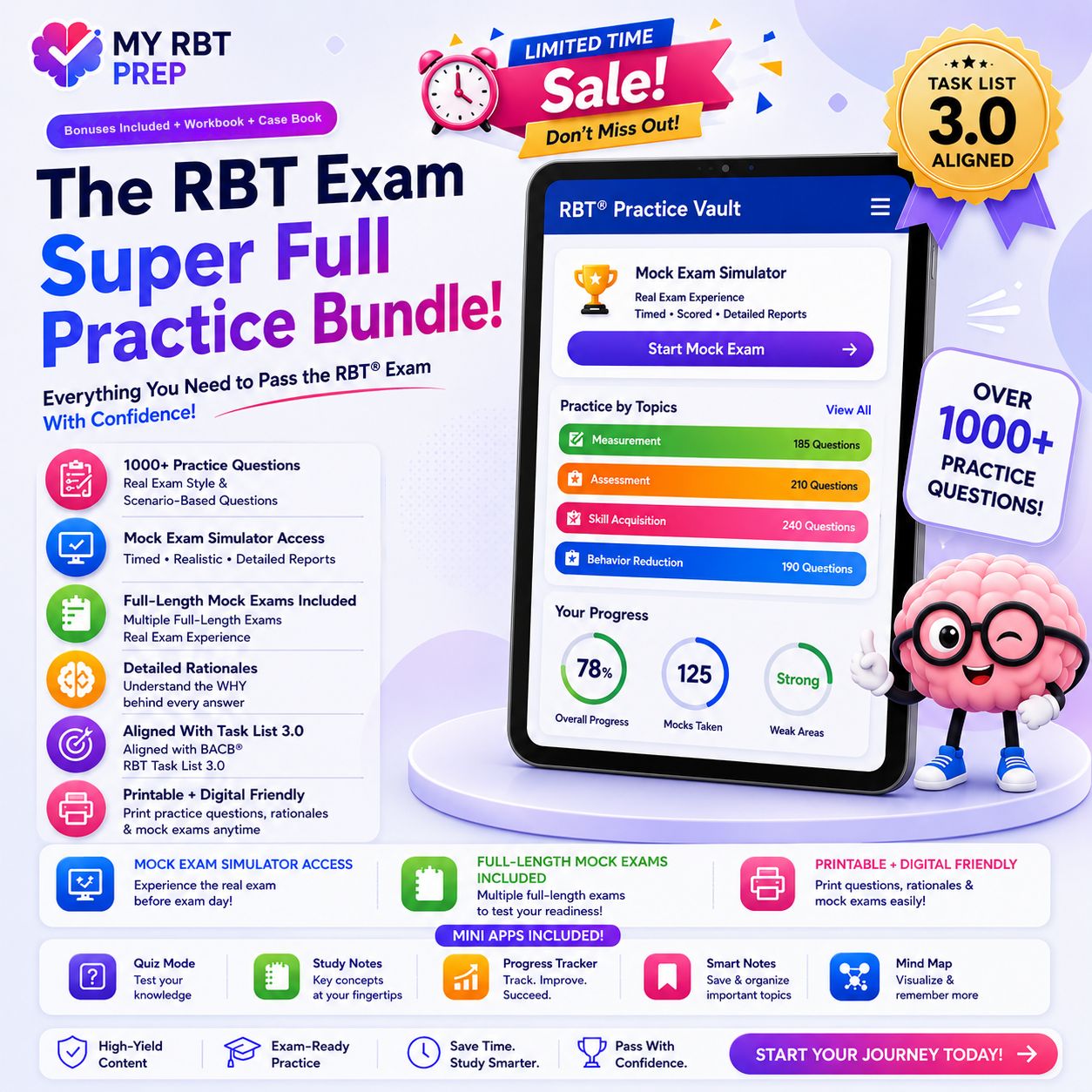
Pass Your RBT® Exam on the First Attempt
Practice with 1,000+ realistic scenario questions, multiple full-length timed mock exams, and detailed rationales formatted exactly like the real Pearson VUE test.
What Is an RBT in ABA Therapy?
A Registered Behavior Technician is a professional who delivers ABA therapy under the supervision of a BCBA. They focus on implementing individualized treatment plans that help children with ASD develop skills that improve independence and communication. RBTs are trained in behavioral skills development and social skills training. They often use tools like Verbal Behavior Therapy and the Picture Exchange Communication System (PECS) to strengthen communication. Their role is practical, active, and highly engaging, making therapy sessions effective and meaningful.
Hands-on ABA therapy sessions by RBTs include tracking progress through data collection in ABA, observing behaviors, and adjusting interventions. These sessions are structured yet flexible, allowing children to learn in real-life settings. By providing direct therapy support for children with autism, RBTs bridge the gap between clinical strategies and daily living, ensuring skills learned in therapy generalize across environments. This consistency in behavioral therapy is critical for measurable improvements in ABA therapy outcomes.
| Aspect | Details |
| Role of RBT | Delivers ABA therapy under BCBA supervision and implements individualized treatment plans for children with ASD. |
| Skills Focus | Enhances behavioral skills development, social skills training, communication, and independence. |
| Therapy Tools | Uses Verbal Behavior Therapy and Picture Exchange Communication System (PECS) to strengthen communication. |
| Session Approach | Conducts hands-on ABA therapy sessions, observes behaviors, adjusts interventions, and tracks progress through data collection in ABA. |
| Learning Environment | Sessions are structured yet flexible, promoting skill generalization across home, school, and community. |
| Key Benefit | Provides direct therapy support for children with autism, bridging clinical strategies and daily living, ensuring consistency in behavioral therapy for measurable ABA therapy outcomes. |
Role and Responsibilities of an RBT
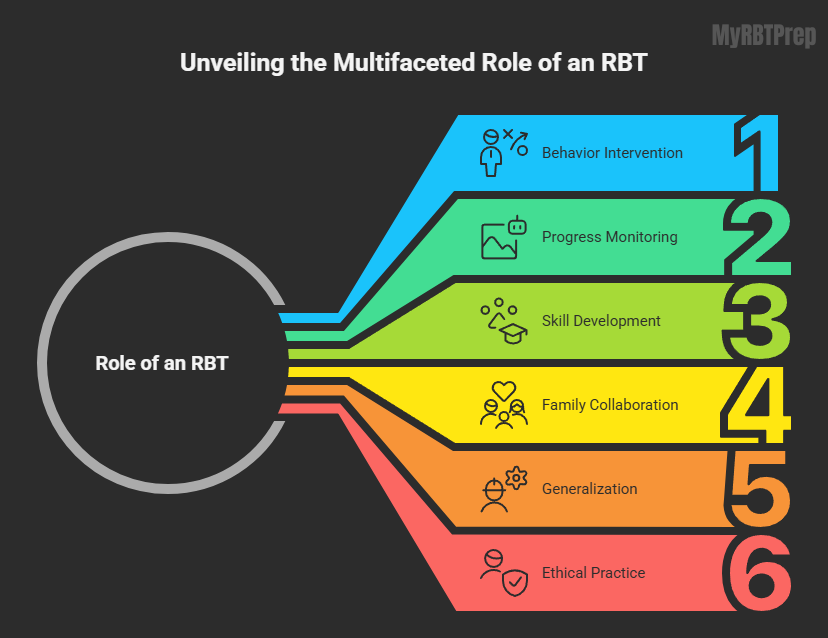
The role of an RBT extends far beyond basic support. They carry out behavior intervention plans, monitor progress, and deliver evidence-based behavioral interventions in collaboration with BCBAs. Their tasks include teaching social skills, enhancing communication, and helping children navigate daily routines. RBTs maintain detailed records, ensuring tracking progress through data collection is accurate and actionable. Every session is designed to reinforce positive behavior while reducing unwanted actions through behavior modification techniques.
RBTs are also responsible for working with families and caregivers, creating a network of support for the child. They ensure generalization of learned skills across settings, helping children apply new abilities in home, school, and community environments. Ethical practice is a priority, as RBTs follow ethical standards in ABA therapy to maintain safety and effectiveness. Their consistent presence and direct therapy support for children with autism make them essential members of any behavior analysis team.

RBT® Exam Flashcards & Study App (3rd Edition)
Master essential ABA terminology and clinical discrimination across all 6 BACB task list areas with 500+ printable and digital flashcards, real exam cues, and full mobile app access.
Why RBTs Are Essential for Children with Autism
Children with ASD face unique challenges in communication, social interaction, and daily living skills. RBTs provide structured guidance that fosters improving communication and social interaction. They implement personalized autism intervention strategies tailored to each child’s needs. By focusing on skill-building, they enhance independence and confidence. Children respond better to therapy because RBTs create trust and consistency, which are vital for effective learning.
RBTs also help reduce challenging behaviors through behavior modification techniques and positive reinforcement. Their efforts directly affect ABA therapy outcomes, ensuring that children gain lasting improvements in behavioral skills and social competence. Through collaboration with parents and caregivers, RBTs extend the impact of therapy beyond the session, creating supportive environments that reinforce learning every day.
| Aspect | Details |
| Challenges for Children with ASD | Children face difficulties in communication, social interaction, and daily living skills. |
| Role of RBTs | Provide structured guidance, implement personalized autism intervention strategies, and focus on skill-building to enhance independence and confidence. |
| Communication and Social Skills | Foster improving communication and social interaction through consistent, trust-based therapy. |
| Behavior Management | Reduce challenging behaviors using behavior modification techniques and positive reinforcement. |
| Impact on ABA Therapy | Directly improve ABA therapy outcomes, leading to lasting gains in behavioral skills and social competence. |
| Collaboration | Work with parents and caregivers to reinforce learning beyond sessions, creating supportive everyday environments. |
How RBTs Improve ABA Therapy Outcomes
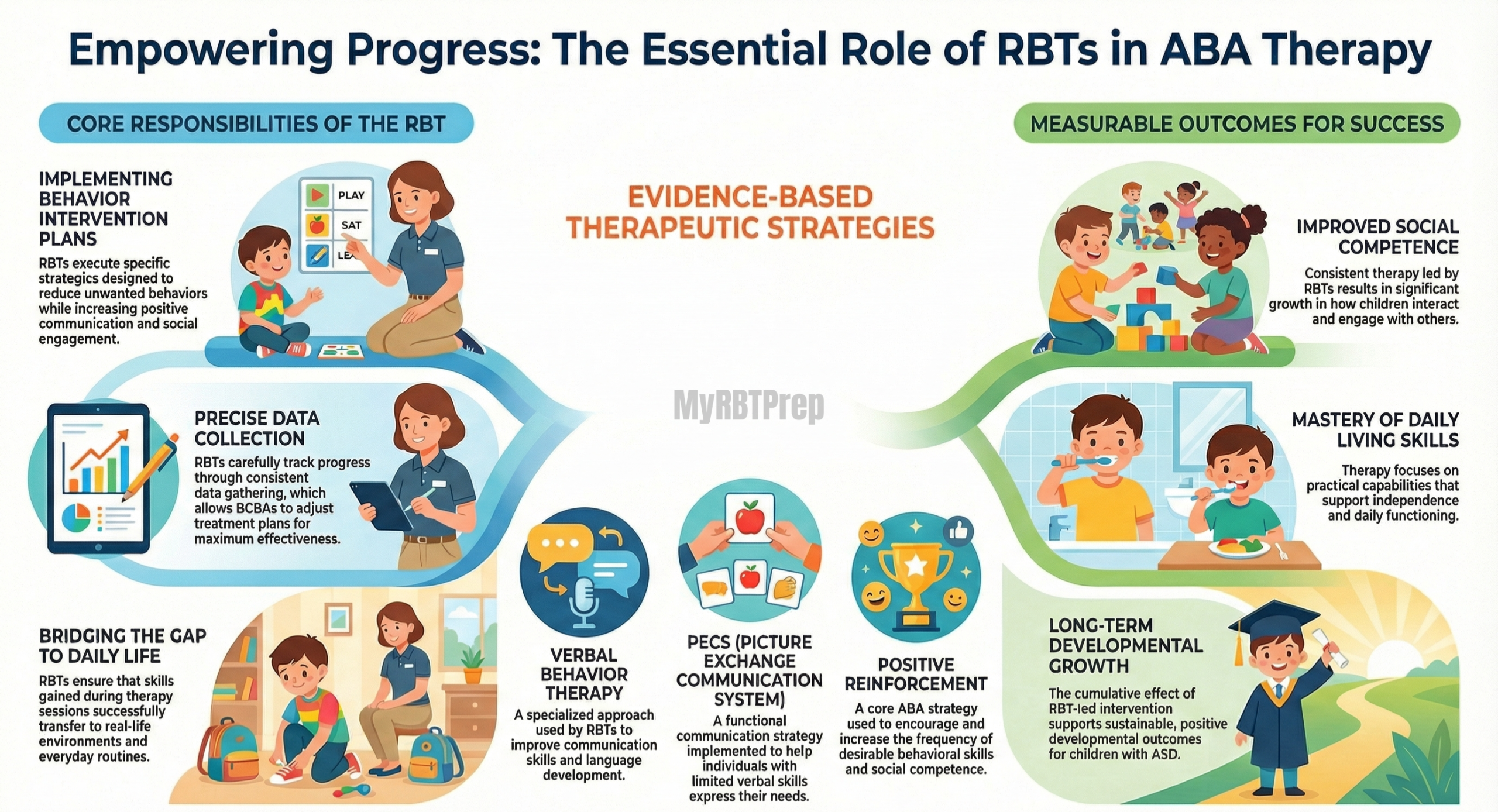
RBTs play a vital role in achieving measurable progress in ABA therapy. By applying evidence-based therapy methods, they improve behavioral skills, social competence, and daily living capabilities. Through careful tracking progress through data collection, they help the BCBA adjust treatment plans for maximum effectiveness. Skills gained in therapy sessions transfer to real-life environments, supporting long-term developmental outcomes for children with ASD.
Behavior intervention plans implemented by RBTs include strategies such as Verbal Behavior Therapy, PECS, and positive reinforcement. These approaches reduce unwanted behaviors while increasing communication and social engagement. By ensuring consistency in behavioral therapy, RBTs enhance learning outcomes, making ABA therapy programs more successful. They act as a vital link between therapy goals and actual skill mastery in everyday life.
RBT Success Stories and Real-Life Impact
Consider Ethan, a seven-year-old with ASD who struggled with transitions and communication. With the guidance of a skilled RBT, Ethan used PECS and behavior modification techniques to express needs and reduce meltdowns. Daily hands-on ABA therapy sessions gradually improved his social skills and ability to participate in classroom activities. His parents observed improvements in independence and confidence, demonstrating the tangible effects of RBT support.
| Challenge | Intervention by RBT | Outcome |
| Difficulty with transitions | Visual schedules, timers, social stories | Reduced anxiety, smoother transitions |
| Limited communication | PECS, verbal behavior therapy | Improved expression and understanding |
| Social interaction issues | Social skills training, role-playing | Better peer interaction and engagement |
These examples show that direct therapy support for children with autism can create meaningful changes. RBTs transform therapy strategies into practical, real-world improvements.
How to Become an RBT: Education, Training, and Certification
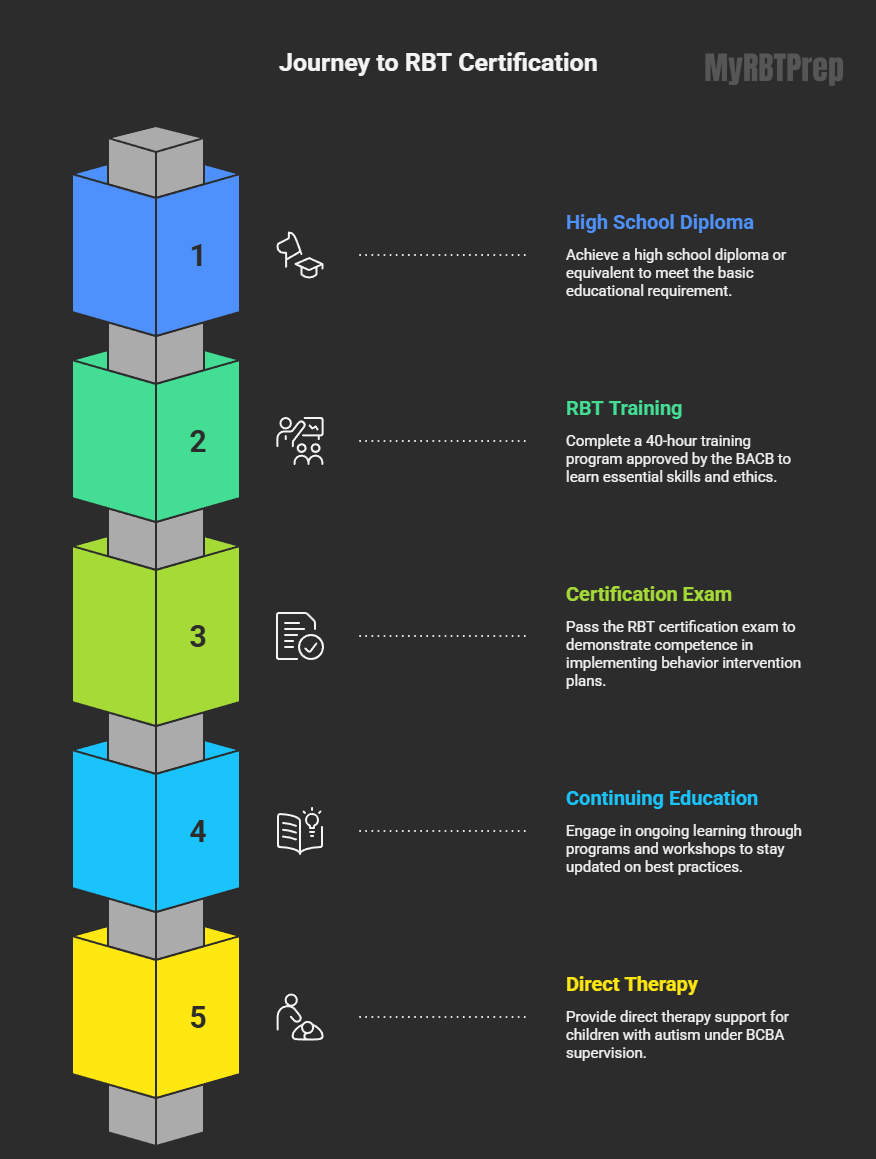
Becoming an RBT requires completing a high school diploma or equivalent, followed by a 40-hour RBT training approved by the Behavior Analyst Certification Board (BACB). Candidates learn evidence-based behavioral interventions, behavioral skills development, and the ethics of ABA therapy. Passing the RBT certification exam ensures they can safely implement behavior intervention plans under working under BCBA supervision.
After certification, RBTs must maintain their credentials through continuing education. Programs and workshops allow them to stay updated on personalized autism intervention strategies and ABA therapy outcomes. This ongoing learning strengthens their ability to provide direct therapy support for children with autism and contributes to a strong behavior analysis team.
RBT Salary, Job Outlook, and Career Growth
RBTs in the USA earn between $35,000 to $50,000 annually, depending on location and experience. The demand for RBTs is growing due to increased diagnoses of ASD and expansion of ABA therapy programs. The career path from RBT to BCBA provides opportunities for advancement, with higher salaries and leadership roles. RBTs can work in schools, clinics, or home-based therapy programs, giving flexibility and variety in practice.
The career offers both financial and personal rewards. Exposure to diverse autism support services equips RBTs with experience in behavioral skills development, social skills training, and verbal behavior therapy. They become integral to long-term developmental outcomes for children, making this profession both meaningful and sustainable.
| Aspect | Details |
| Salary Range | RBTs in the USA earn between $35,000 to $50,000 annually, depending on location and experience. |
| Job Demand | High demand due to increased ASD diagnoses and expansion of ABA therapy programs. |
| Career Path | Opportunities to advance from RBT to BCBA, with higher salaries and leadership roles. |
| Work Settings | Schools, clinics, and home-based therapy programs, offering flexibility and variety. |
| Professional Benefits | Experience in behavioral skills development, social skills training, and verbal behavior therapy. |
| Impact | Integral to long-term developmental outcomes for children, making the profession meaningful and sustainable. |
Challenges and Rewards of Working as an RBT
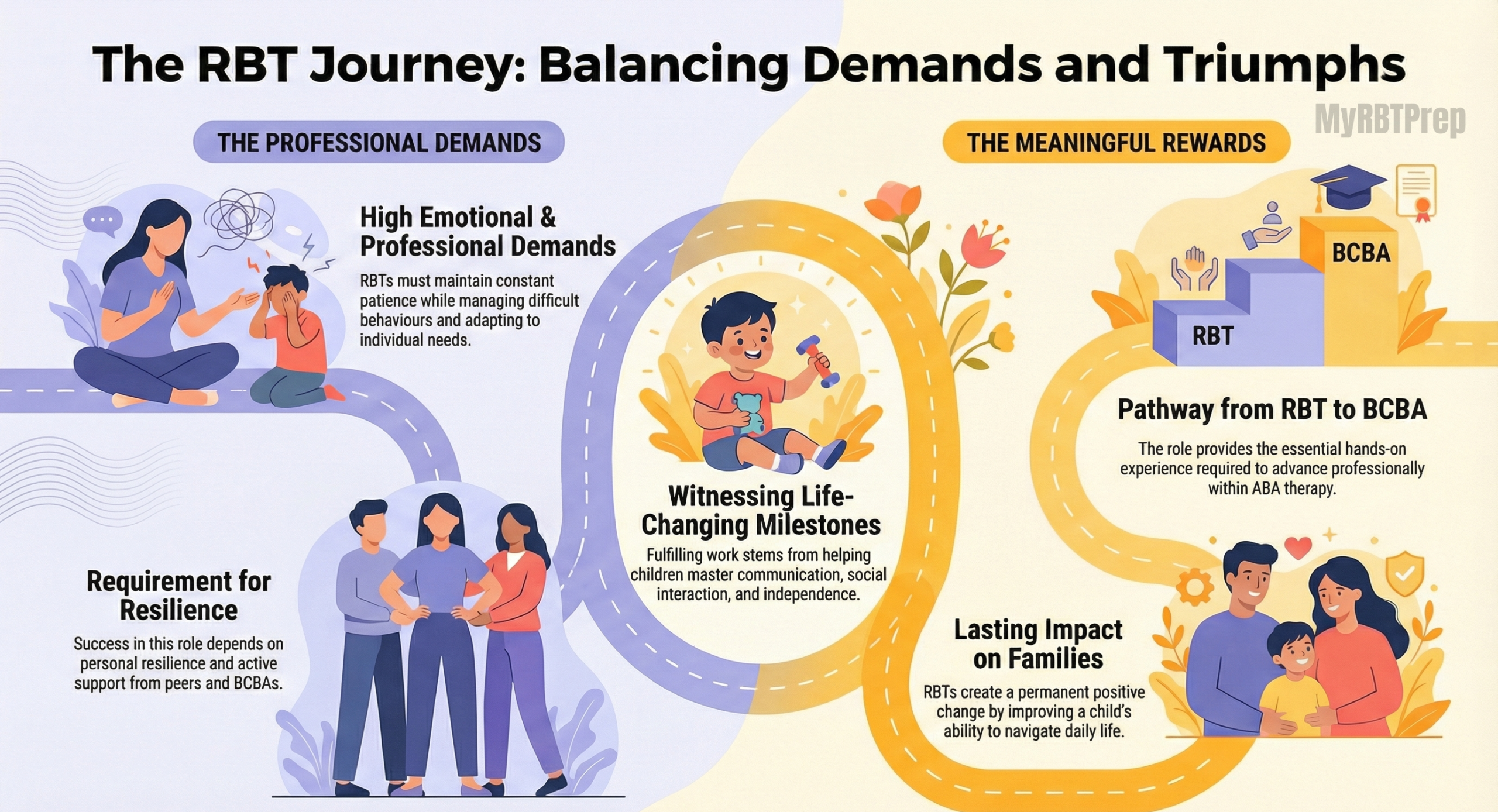
Working as an RBT can be emotionally and professionally demanding. Managing difficult behaviors, maintaining patience, and adapting therapy sessions to individual needs are daily realities. Emotional and professional demands of RBTs require resilience and support from peers and BCBAs. Despite these challenges, the role is highly rewarding. Watching children achieve milestones and improve independence brings fulfillment that few other professions can match.
The rewards include witnessing real-life progress and contributing to a child’s personal growth. RBTs enjoy career pathway from RBT to BCBA, gaining hands-on experience in ABA therapy for autism. By helping children master skills that improve communication, social interaction, and daily living, RBTs create lasting impact in families’ lives.
How Parents Can Choose the Right RBT for Their Child
Choosing a competent RBT is one of the most important factors in ensuring positive outcomes from ABA therapy services for your child. Parents should look for RBTs that have training/qualifications, are certified as RBTs, have experience working with children with ASD, and have experience implementing evidence-based behavioral interventions to achieve positive outcomes for their children. In addition, ensuring compatibility between your child, the RBT, and yourself as the parent/preferred caregiver will help to ensure that the therapy sessions are productive. When interviewing your child’s potential RBT, you may want to ask about the RBT’s experience with supervision, specific behavioral techniques they use in their therapy sessions, and how they track the child’s progress.
A strong RBT will develop a trusting relationship with the child and provide consistency in his/her delivery of behavioral therapy. Additionally, the RBT will work closely with families to reinforce learning at home so that the child can generalize the acquired skills in multiple settings. By selecting a committed professional who provides direct support for children with autism through direct ABA therapy, parents will be able to help their child reach his/her full potential by increasing his/her level of success in ABA therapy programs.
| Aspect | Details |
| Qualifications | Check for RBT certification, experience with ASD, and ability to implement evidence-based behavioral interventions. |
| Compatibility | Ensure the RBT’s personality and approach match the child and family to make therapy effective. |
| Supervision & Techniques | Ask about BCBA supervision, therapy methods, and how progress is tracked. |
| Consistency | A strong RBT applies consistency in behavioral therapy, helping children learn skills reliably. |
| Family Collaboration | Works with parents to reinforce learning at home and promote generalization of learned skills across settings. |
| Outcome | Selecting a dedicated RBT ensures direct therapy support for children with autism and maximizes success in ABA therapy programs. |
Faqs
- What does an RBT do for autism?
An RBT provides direct therapy support for children with autism, teaching skills, reducing challenging behaviors, and improving independence under BCBA supervision. - Do RBTs implement treatment plans?
Yes, RBTs implement individualized treatment plans, deliver hands-on ABA therapy sessions, and track progress through data collection in ABA. - How does behavioral therapy help autism?
Behavioral therapy, especially ABA therapy for autism, helps children learn skills, improve communication, and reduce challenging behaviors through evidence-based interventions. - How do you explain what an RBT does?
An RBT works directly with children with ASD, applying ABA therapy, teaching skills, and supporting generalization of learned skills across settings. - What are the four core principles an RBT must follow?
RBTs follow ethical standards in ABA therapy, collect data in ABA, implement individualized treatment plans, and use evidence-based behavioral interventions.

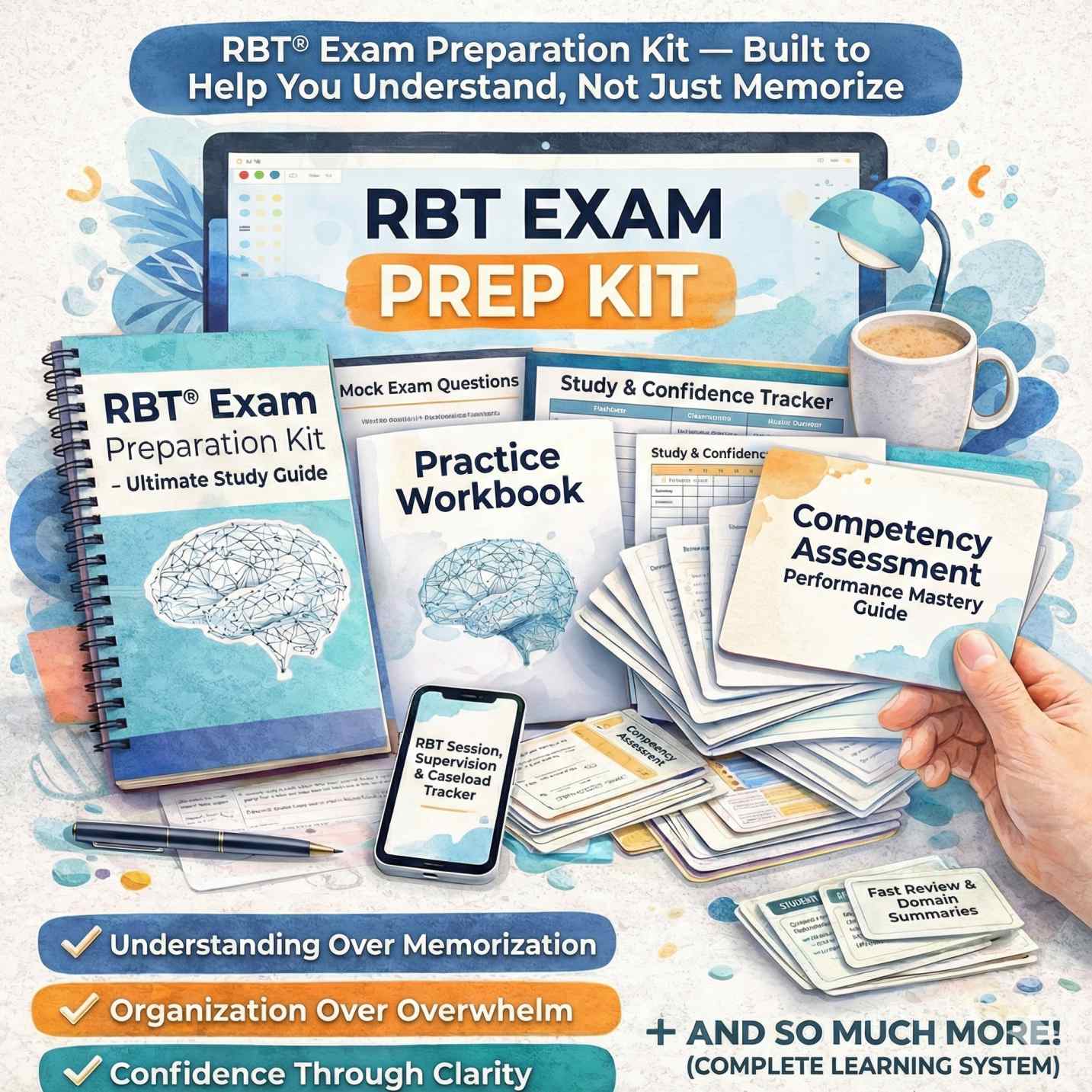
Everything You Need to Pass Your RBT® Exam
Study with our complete, all-in-one preparation package covering every task on the BACB Task List 3.0:
- 1,000+ Practice Questions & Timed Simulator
- 3rd Edition Task List Study Guide & Workbook
- Active Recall Flashcards System + Mobile App
- 20-Task Competency Assessment Mastery Guide