Registered Behavior Technicians (RBTs) play a vital role in applied behavior analysis careers, delivering high-quality ABA therapy at home and in clinical settings. The role requires implementing behavior plans, supporting children with autism remotely, and collecting data to track progress.
With growing demand for autism services, RBT positions have expanded into remote RBT jobs and home-based ABA services, providing flexibility for both families and professionals. This article explores the duties of an RBT, resume preparation strategies, and interview tips, helping aspiring technicians stand out in a competitive job market while ensuring quality care for children with autism.
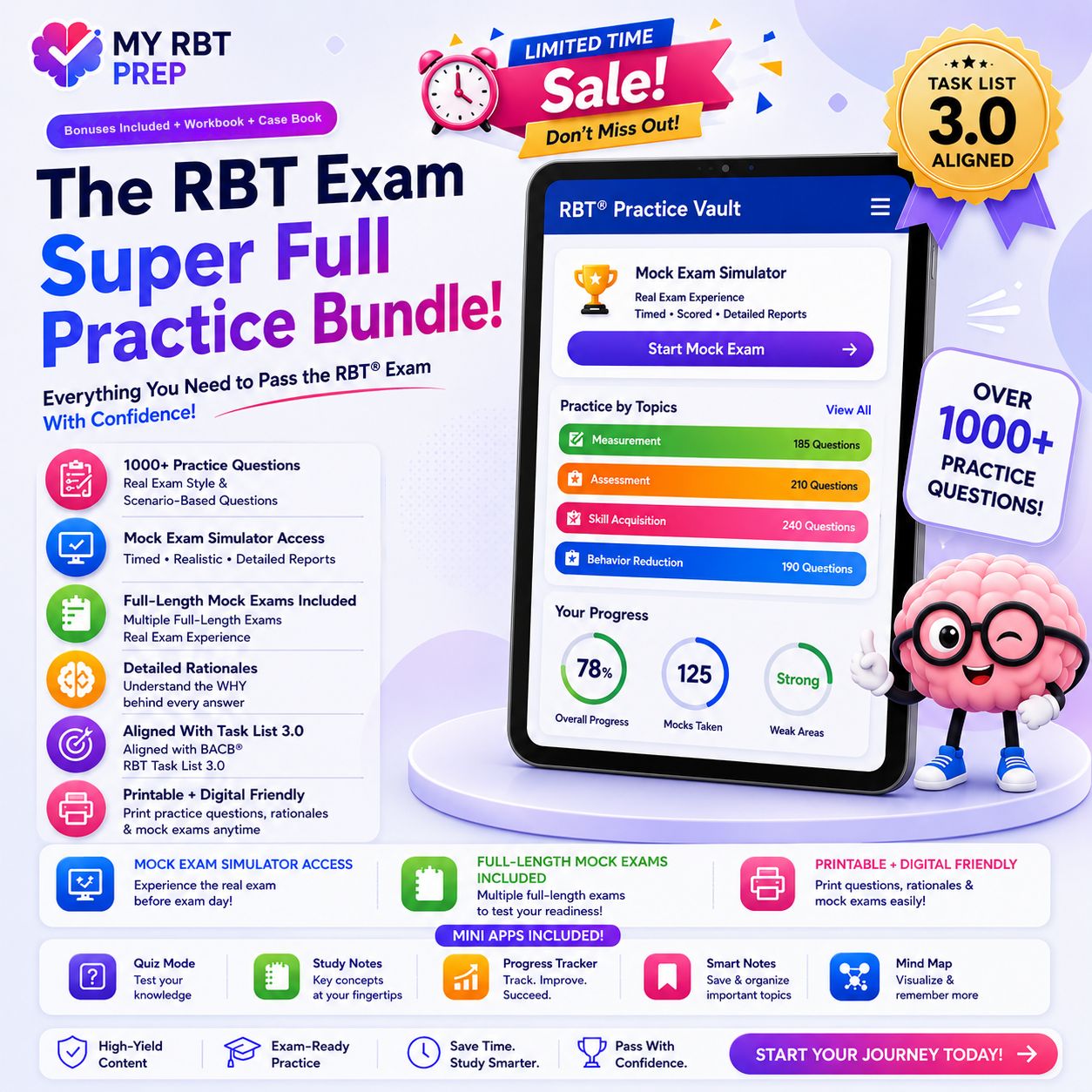
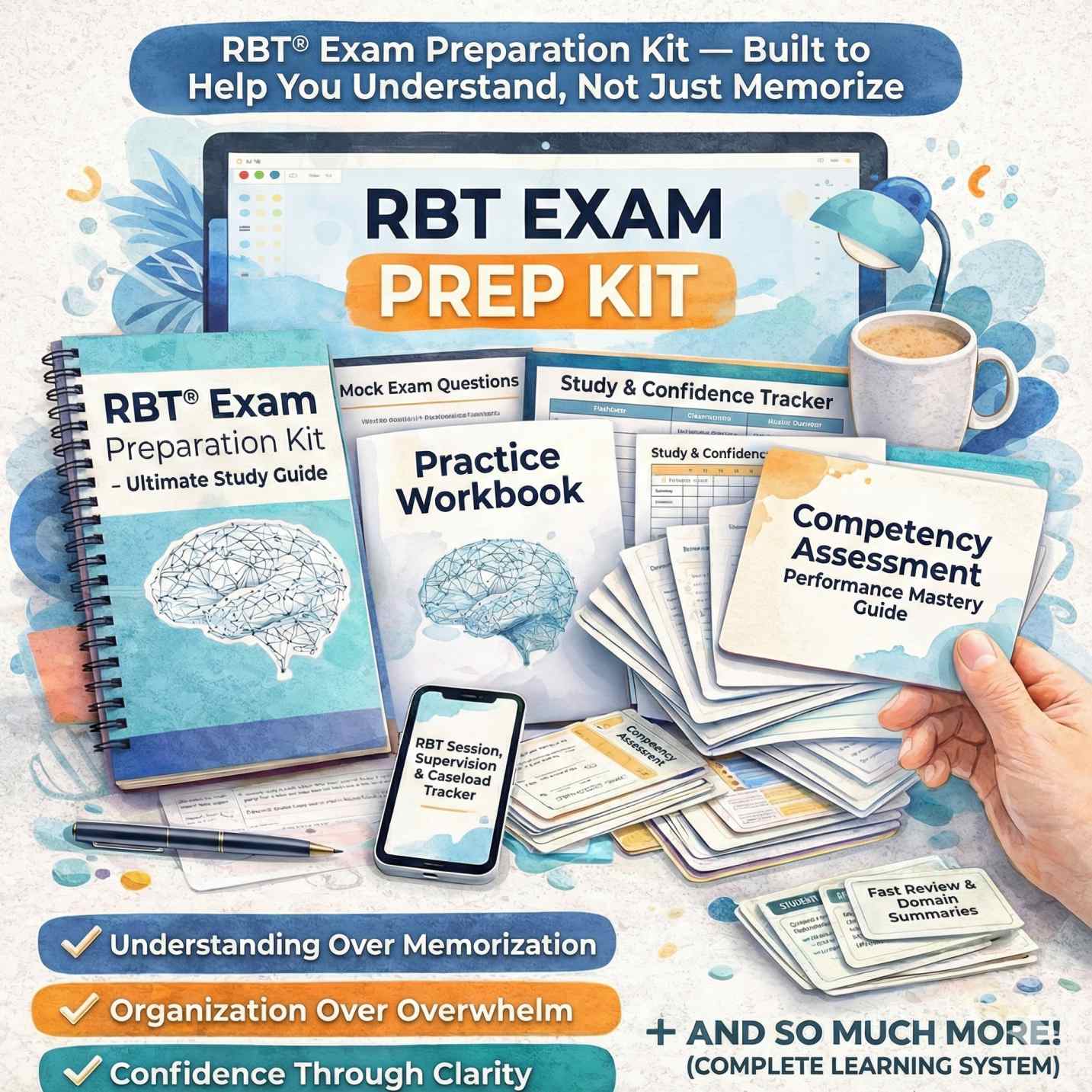
Pass Your RBT® Exam on the First Attempt
Practice with 1,000+ realistic scenario questions, multiple full-length timed mock exams, and detailed rationales formatted exactly like the real Pearson VUE test.
What Does an RBT Do? Duties Explained
An RBT works under BCBA supervision remote to implement individualized behavior plans designed for children with autism. Their responsibilities include conducting virtual ABA therapy, collecting behavioral data digitally, and coaching parents during telehealth sessions. Online behavior technician jobs often combine in-person visits and telehealth sessions, enabling children to practice skills in their natural environments.
RBTs also assist in social, communication, and daily living skills, often using reinforcement systems to motivate learning. In home-based ABA services, the technician observes behaviors in real-time, adjusting interventions while maintaining HIPAA compliance online. By providing consistent support, RBTs help families achieve therapeutic goals while improving outcomes for children.
| Category | Details |
| Job Title | Registered Behavior Technician (RBT) |
| Duties | Implement behavior plans, collect behavior data digitally, coach parents, conduct virtual ABA therapy, reinforce skills |
| Work Settings | Clinics, schools, home-based ABA services, telehealth sessions |
| Required Skills | Communication, patience, observation, support children with autism remotely, technology literacy |
| Certification | 40-hour RBT training, competency assessment, RBT certification |
| Supervision | BCBA supervision remote |
| Salary Range | $15–$25/hr (varies by location, experience, remote work) |
| Career Growth | Path to BCBA, senior RBT roles, specialized ABA programs |
| Geographic Hotspots | California, Texas, Florida, Georgia, Massachusetts |
Resume Tips for RBT Positions

To stand out for entry-level or experienced RBT jobs, focus on highlighting relevant education, certifications, and hands-on experience. Include telehealth ABA services, digital data collection skills, and examples of parent coaching. Emphasize adaptability, attention to detail, and ability to deliver ABA therapy remotely.
Include quantified results when possible, such as improvements in skill acquisition or behavior reduction. Tailor each resume to the job description, showing familiarity with home-based ABA services and secure telehealth platforms. Adding continuing education and specialized training in autism interventions strengthens credibility. Clear formatting, concise language, and a focus on practical skills make your resume more appealing to hiring BCBAs and HR professionals.

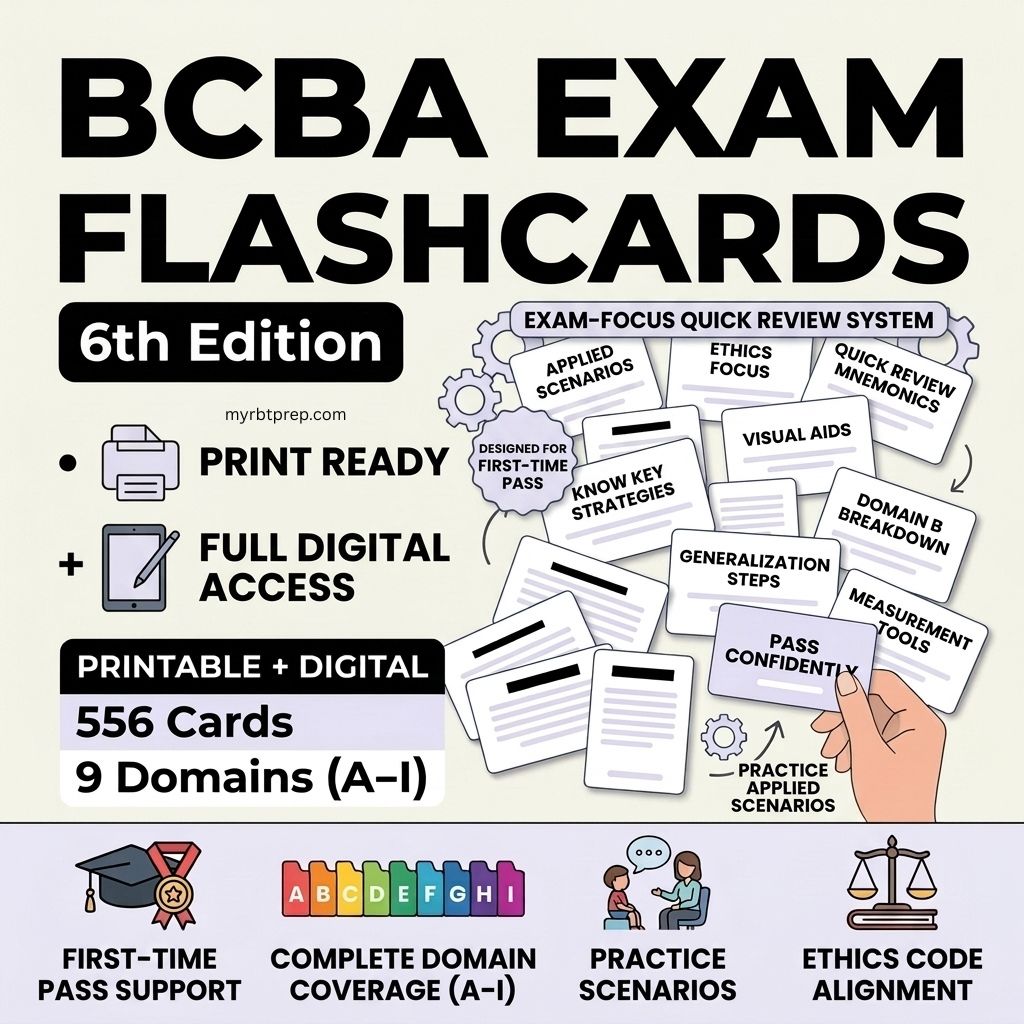
RBT® Exam Flashcards & Study App (3rd Edition)
Master essential ABA terminology and clinical discrimination across all 6 BACB task list areas with 500+ printable and digital flashcards, real exam cues, and full mobile app access.
Common Interview Questions & How to Prepare
Interviewers for RBT roles often assess both technical skills and interpersonal abilities. Questions may include:
- How would you implement a behavior plan in a home-based ABA services setting?
- Describe your experience using telehealth platforms for ABA therapy.
- How do you handle challenging behaviors or client meltdowns?
- How do you coach parents during telehealth sessions effectively?
- Can you maintain compliance with HIPAA while working remotely?
Preparation should involve reviewing behavior intervention techniques, practicing role-play scenarios, and understanding telehealth guidelines. Demonstrating knowledge of applied behavior analysis careers and flexibility for both remote and in-person work improves chances of success. Highlighting problem-solving and examples of past experience helps interviewers see how you can adapt to diverse client needs.
| Category | Details |
| Purpose | Assess both technical skills and interpersonal abilities of RBT candidates |
| Common Interview Questions | How would you implement a behavior plan in a home-based ABA services setting? Describe your experience using telehealth platforms for ABA therapy. How do you handle challenging behaviors or client meltdowns? How do you coach parents during telehealth sessions effectively? Can you maintain HIPAA compliance online while working remotely? |
| Preparation Tips | Review behavior intervention techniques, practice role-play scenarios, understand telehealth guidelines |
| Key Skills Demonstrated | Problem-solving, flexibility in remote and in-person work, knowledge of applied behavior analysis careers, adaptability to diverse client needs |
| Goal | Ensure candidates are competent in supporting children with autism remotely, delivering therapy effectively, and maintaining professional standards |
How RBT Roles Are Evolving with Telehealth

The rise of remote RBT jobs has expanded opportunities for professionals and families. Autism telehealth services allow technicians to deliver therapy without geographic limits, helping children in rural or underserved areas. Parents benefit by receiving guidance in real-time, and RBTs can provide consistent home-based ABA services while working under BCBA supervision remote.
Telehealth also allows flexible schedules, reduces commute stress, and enables RBTs to maintain work-life balance. Digital platforms enhance data collection digitally, allow immediate feedback, and support creative interventions in diverse home environments. This evolution makes RBT roles more versatile, accessible, and impactful across the USA.
Entry-Level vs Experienced RBT Jobs
Entry-level RBT roles often provide on-the-job training while building applied behavior analysis careers. These positions are perfect for individuals new to the field, offering supervised experience in ABA therapy at home or clinical settings. Experienced RBTs can take on advanced responsibilities, lead group sessions, and contribute to program development.
Both levels may work remotely or on-site, with salary and benefits increasing with expertise. Skills in supporting children with autism remotely, parent coaching, and digital data management become critical for career growth. Professionals aiming for BCBA certification benefit from early exposure to telehealth and diverse clinical environments.
| Category | Details |
| Role Focus | Entry-level RBT positions provide on-the-job training and supervised experience, while advanced RBTs may lead sessions and contribute to program development |
| Work Settings | ABA therapy at home, clinics, schools, or via telehealth |
| Career Progression | Entry-level roles build skills for applied behavior analysis careers; experienced RBTs can pursue leadership, specialized roles, or BCBA certification |
| Key Skills | Supporting children with autism remotely, parent coaching, digital data management, implementing behavior plans |
| Work Options | Remote positions, on-site assignments, or hybrid models depending on employer and client needs |
| Salary & Benefits | Entry-level RBTs earn modest wages with potential for raises; experienced RBTs receive higher pay and additional benefits like flexible schedules, stipends, or professional development |
| Professional Advantage | Early exposure to telehealth, diverse clinical environments, and various supervision styles enhances competence and career readiness |
Top States & Employers for RBT Jobs in the USA

Due to the population density and high prevalence of autism, some states have the greatest need for RBTs. These states include: California, Texas, Florida, Georgia, and Massachusetts. Many well-known companies will provide you with proof of employment, remote supervision from a BCBA, as well as access to the required technology (such as a computer and/or tablet) to conduct your telehealth sessions.
Most companies also provide training, equipment stipends, and offer a flexible work schedule. In order to find reputable job vacancies in this field, it is best to look for verified job openings on job boards (such as Indeed), LinkedIn, and through professional networks in ABA. In order to avoid becoming a victim of a scam, always research the company you want to work for, verify their credentials, and make sure they are HIPAA compliant. This way, you can ensure your safety and continue to grow your career as an RBT across the U.S.
Conclusion
Understanding the RBT job description, duties, resume strategies, and interview preparation is essential for aspiring and current technicians. With growing demand for autism services, entry-level RBT jobs, remote RBT jobs, and home-based ABA services offer opportunities to make a meaningful impact while building a long-term career in applied behavior analysis careers.
Focusing on skills like support children with autism remotely, collect behavior data digitally, and coach parents during telehealth sessions ensures both career success and quality care for families. By combining telehealth innovations with traditional therapy, RBTs can expand access, improve outcomes, and thrive professionally.
FAQ
Can I work from home as an RBT?
Yes, many organizations now offer remote RBT jobs where you can deliver ABA therapy at home under BCBA supervision remote using secure telehealth platforms.
What is the easiest RBT job to get?
Entry-level RBT roles requiring completion of the 40-hour training course, competency assessment, and RBT certification are typically the easiest to obtain.
What is the best RBT training online?
Online 40-hour RBT courses approved by the BACB, which include modules on ABA therapy at home and parent coaching, are highly recommended.
What is the highest paid RBT?
RBTs working in remote telehealth, travel, or specialized clinic settings often earn the highest pay, with hourly rates ranging from $20$30/hr depending on experience and location.
Are RBTs in high demand?
Yes, the demand for registered behavior technician remote positions continues to grow due to rising autism diagnoses and expanded telehealth services.

Everything You Need to Pass Your RBT® Exam
Study with our complete, all-in-one preparation package covering every task on the BACB Task List 3.0:
- 1,000+ Practice Questions & Timed Simulator
- 3rd Edition Task List Study Guide & Workbook
- Active Recall Flashcards System + Mobile App
- 20-Task Competency Assessment Mastery Guide