The field of Applied Behavior Analysis (ABA) continues to grow rapidly, and with it, the demand for Registered Behavior Technicians (RBTs) is reaching new heights. As more families, schools, healthcare providers, and behavioral clinics seek qualified professionals to support individuals with autism and other developmental needs, the RBT credential remains one of the most recognized entry-level certifications in behavioral health.
But what does the future hold for RBT certification? Will requirements change? Will technology impact training and assessments? Are there new career opportunities on the horizon?
In this guide, we explore the future of RBT certification in 2026 and beyond, including expected industry trends, certification updates, career growth opportunities, and how aspiring RBTs can prepare for the evolving landscape of behavioral healthcare.
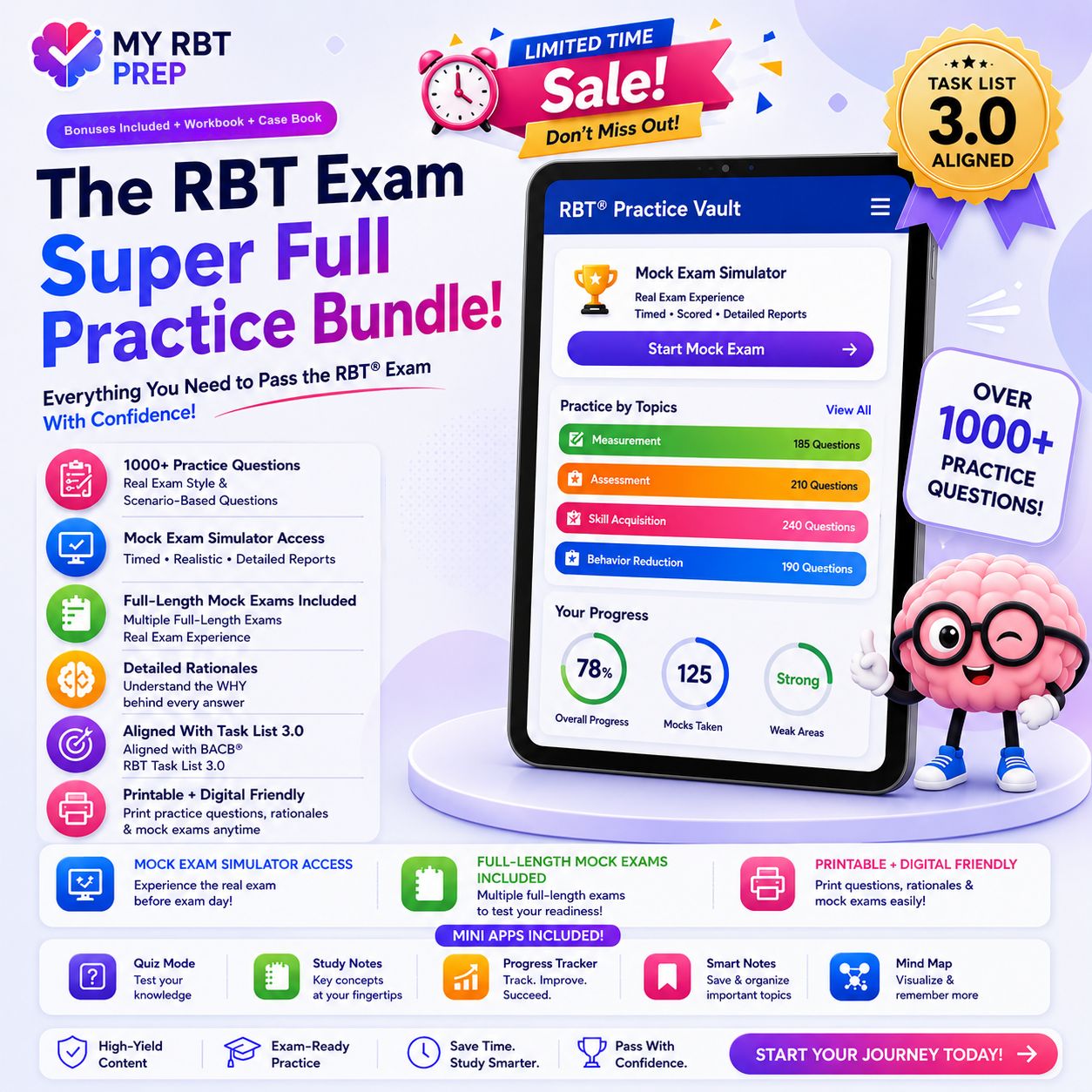
Pass Your RBT® Exam on the First Attempt
Practice with 1,000+ realistic scenario questions, multiple full-length timed mock exams, and detailed rationales formatted exactly like the real Pearson VUE test.
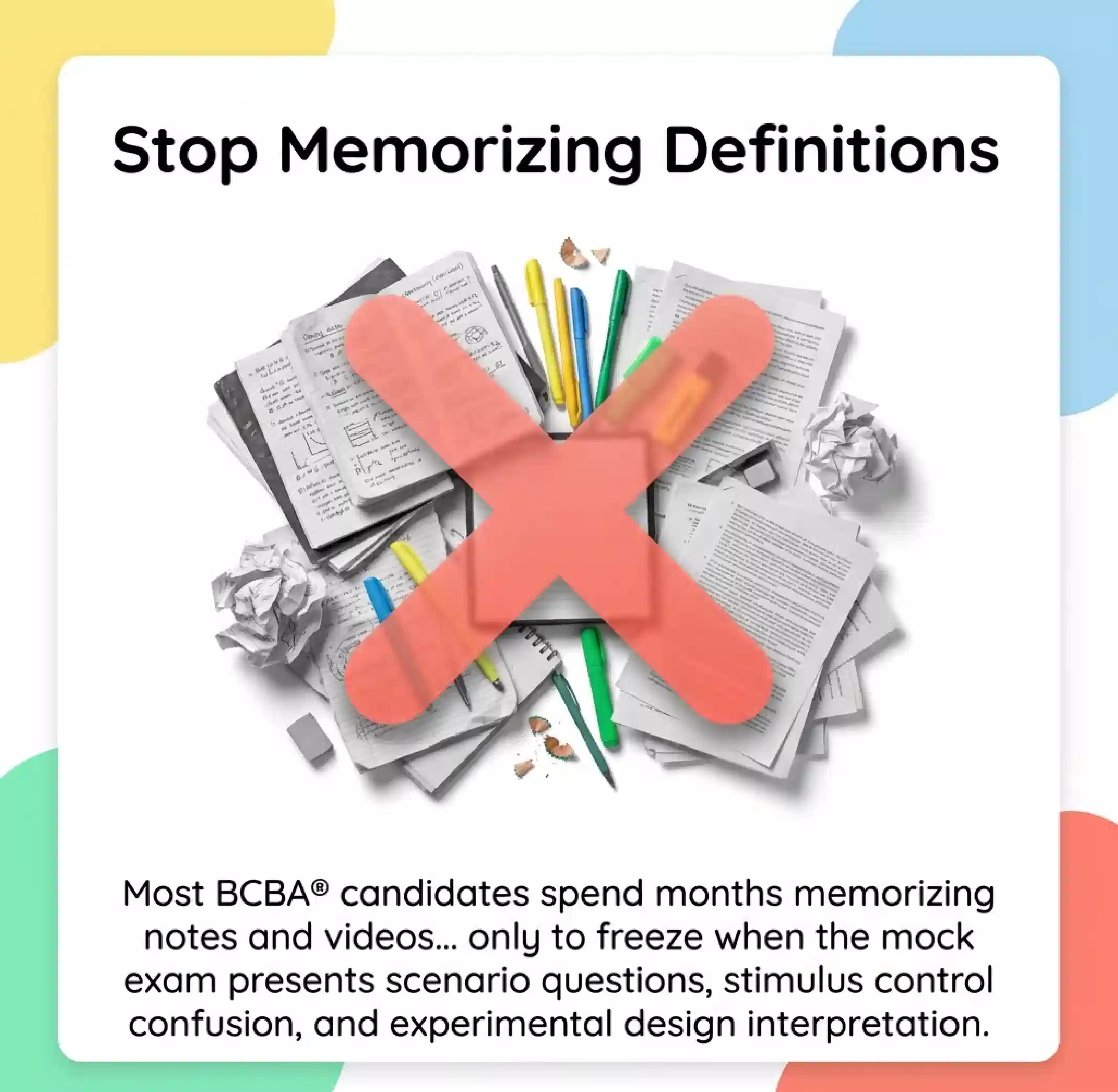
Understanding the Current Role of an RBT
A Registered Behavior Technician (RBT) is a paraprofessional credential offered by the Behavior Analyst Certification Board (BACB). RBTs work under the supervision of Board Certified Behavior Analysts (BCBAs) and Board Certified Assistant Behavior Analysts (BCaBAs).
Their responsibilities typically include:
- Implementing behavior intervention plans
- Collecting and recording data
- Supporting skill development programs
- Assisting individuals with autism spectrum disorder (ASD)
- Communicating progress with supervisors and caregivers
- Maintaining ethical and professional standards
As behavioral services expand worldwide, RBTs are becoming increasingly important within multidisciplinary healthcare and educational teams.
Growing Demand for RBT Professionals
One of the strongest indicators of the future of RBT certification is the continuously increasing demand for behavioral health professionals.
Several factors are driving this growth:

RBT® Exam Flashcards & Study App (3rd Edition)
Master essential ABA terminology and clinical discrimination across all 6 BACB task list areas with 500+ printable and digital flashcards, real exam cues, and full mobile app access.
Rising Autism Diagnoses
Autism awareness and early diagnosis rates have increased significantly over the past decade. As more children receive early intervention services, organizations require larger numbers of trained RBTs to deliver direct therapy.
Expansion of ABA Services
ABA therapy is no longer limited to autism treatment. Behavioral interventions are now used in:
- Schools
- Mental health settings
- Developmental disability programs
- Residential treatment facilities
- Community support services
This expansion creates additional employment opportunities for certified RBTs.
| Factor | Impact on RBT Demand |
|---|---|
| Rising Autism Diagnoses | Increased need for direct therapy providers |
| Expansion of ABA Services | More employment opportunities |
| Workforce Shortages | Higher job availability |
| Early Intervention Programs | Greater demand for certified technicians
|
Workforce Shortages
Many clinics and providers continue to face staffing shortages. As demand exceeds supply, certified RBTs are likely to remain highly employable throughout 2026 and beyond.
Expected Changes in RBT Training Programs
Training programs are expected to become more accessible, flexible, and technology-driven.
Increased Online Learning Options
Remote learning has transformed professional education. Future RBT candidates can expect:
- More interactive online courses
- Mobile-friendly learning platforms
- Self-paced training modules
- Virtual simulations for skill practice
These advancements help candidates complete required training more efficiently while maintaining quality standards.
Enhanced Competency-Based Learning
Rather than focusing only on theoretical knowledge, future training programs may place greater emphasis on real-world skill mastery.
This could include:
- Scenario-based learning
- Interactive case studies
- Behavioral intervention simulations
- Virtual role-play assessments
The goal will be to ensure candidates are prepared for practical workplace situations before certification.
Technology Will Shape the Future of ABA
Technology is becoming a major part of behavioral healthcare.
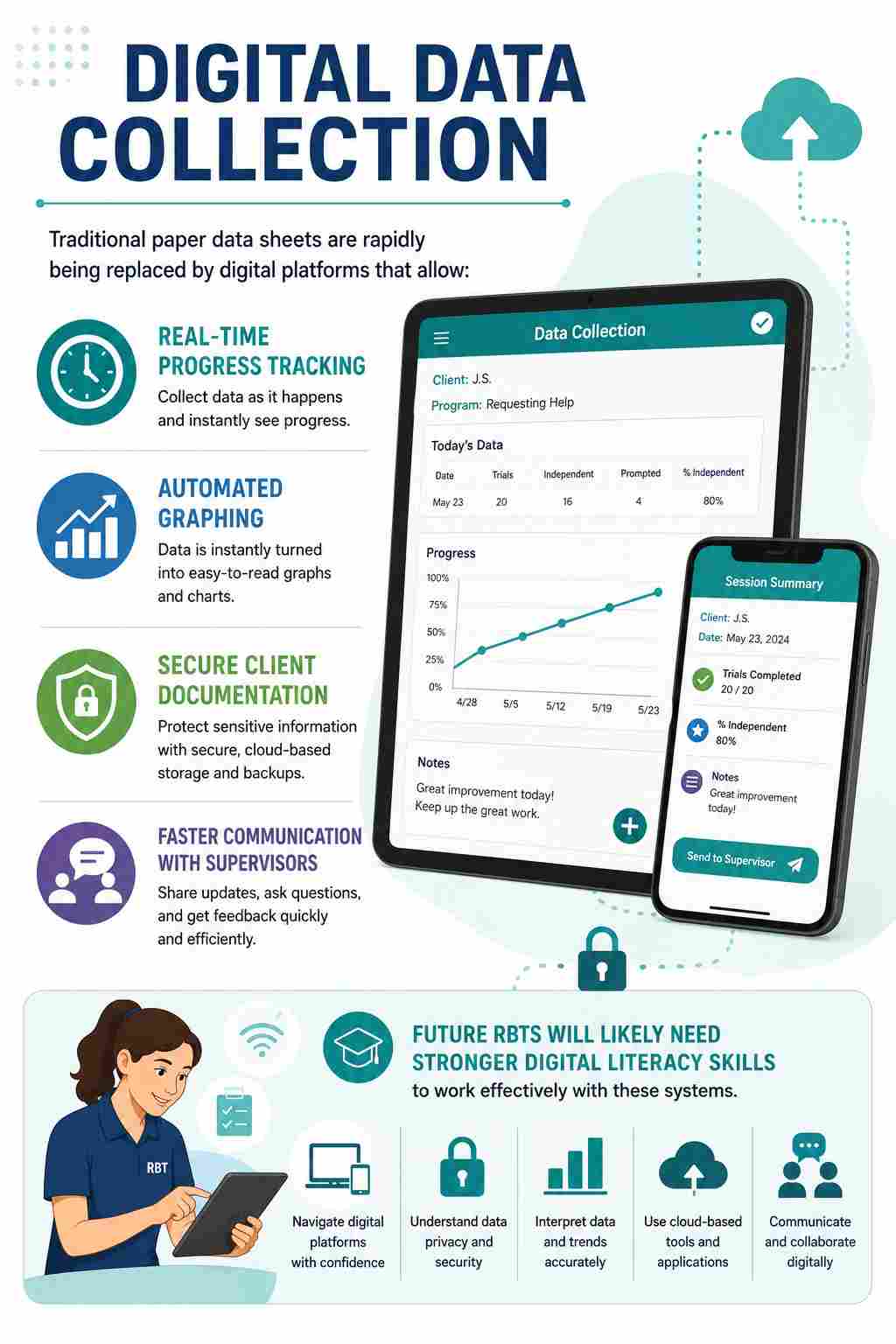
Digital Data Collection
Traditional paper data sheets are rapidly being replaced by digital platforms that allow:
- Real-time progress tracking
- Automated graphing
- Secure client documentation
- Faster communication with supervisors
Future RBTs will likely need stronger digital literacy skills to work effectively with these systems.
| Technology | Potential Benefit |
|---|---|
| Digital Data Collection | Faster documentation |
| Mobile Apps | Improved communication |
| AI Analytics | Better treatment insights |
| Virtual Training Platforms | More accessible education |
Artificial Intelligence and ABA
While AI will not replace RBTs, it may support behavioral professionals by:
- Analyzing behavioral trends
- Assisting with documentation
- Improving treatment planning
- Enhancing training experiences
Human interaction remains central to ABA therapy, but technology will continue to improve efficiency and service quality.
Potential Certification Updates
The BACB periodically reviews certification requirements to maintain professional standards.
Although future changes are never guaranteed, professionals expect possible developments such as:
Updated Ethics Requirements
Ethical practice remains a cornerstone of ABA services. Future certification processes may include:
- Expanded ethics training
- Updated supervision guidelines
- New compliance standards
Stronger Quality Assurance Measures
To maintain credential integrity, future assessments may focus more heavily on practical competence rather than memorization alone.
This could involve:
- Improved competency evaluations
- More structured supervision requirements
- Enhanced continuing education expectations
Career Advancement Opportunities
One of the biggest advantages of becoming an RBT is the opportunity for long-term professional growth.
| Role | Typical Responsibility |
|---|---|
| RBT | Direct implementation of therapy |
| Senior RBT | Mentoring and advanced support |
| BCaBA | Supervisory assistance |
| BCBA | Program design and oversight |
Pathway to BCaBA and BCBA Certification
Many RBTs eventually pursue higher-level credentials.
Common progression routes include:
- Registered Behavior Technician (RBT)
- Board Certified Assistant Behavior Analyst (BCaBA)
- Board Certified Behavior Analyst (BCBA)
Experience gained as an RBT provides valuable practical knowledge that can strengthen future career advancement.
Leadership and Specialized Roles
Experienced RBTs may move into positions involving:
- Senior technician responsibilities
- Training new staff members
- Clinical support coordination
- Specialized intervention programs
As the field grows, new leadership opportunities are expected to emerge.
Increased International Recognition
ABA services continue expanding globally.
Countries across:
- Europe
- Asia
- Latin America
- The Middle East
are showing growing interest in evidence-based behavioral interventions.
This international expansion may increase awareness and recognition of the RBT credential, creating opportunities for professionals seeking global career options.
Higher Expectations for Professional Development
Future employers may increasingly value candidates who demonstrate ongoing learning and skill development.
Professionals who invest in:
- Continuing education
- Specialized certifications
- Communication skills
- Technology training
- Clinical experience
will likely remain competitive in the evolving job market.
| Skill Area | Why It Matters |
|---|---|
| Ethics | Maintains professional standards |
| Data Collection | Supports treatment decisions |
| Technology Literacy | Essential for modern ABA practice |
| Communication | Improves client outcomes |
| Adaptability | Helps manage industry changes |
Challenges RBTs May Face
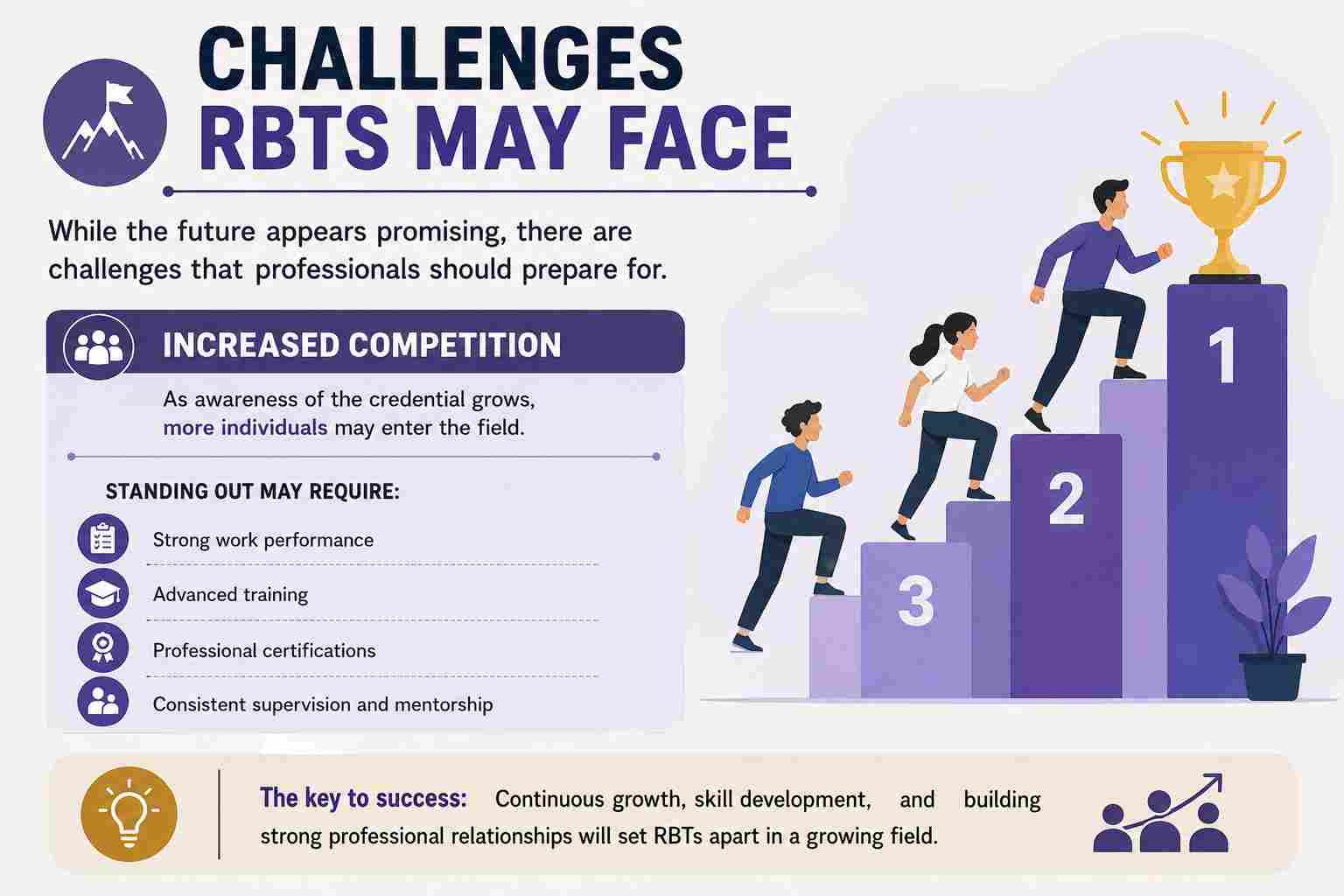
While the future appears promising, there are challenges that professionals should prepare for.
Increased Competition
As awareness of the credential grows, more individuals may enter the field.
Standing out may require:
- Strong work performance
- Advanced training
- Professional certifications
- Consistent supervision and mentorship
Evolving Industry Standards
Behavioral healthcare is constantly improving through research and innovation. Future RBTs must remain adaptable and committed to lifelong learning.
How to Prepare for the Future
Whether you are currently certified or planning to begin your journey, there are several ways to stay ahead.
Focus on Skill Development
Master:
- Data collection
- Professional communication
- Behavior reduction procedures
- Skill acquisition programs
- Ethical decision-making
Stay Informed
Follow updates from professional organizations and certification boards to remain aware of changing requirements and industry developments.
Build Long-Term Career Goals
Consider how RBT certification fits into your broader professional aspirations. Many successful BCBAs and clinical leaders began their careers as RBTs.
Final Thoughts
The future of RBT certification looks exceptionally promising. Growing demand for behavioral services, advances in technology, expanding career opportunities, and increased recognition of ABA therapy are all contributing to a strong outlook for the profession in 2026 and beyond.
While certification requirements and training methods may continue evolving, one thing remains constant: the need for compassionate, skilled professionals who can make a meaningful difference in the lives of individuals receiving behavioral services.
For aspiring professionals, becoming an RBT today could be the first step toward a rewarding and rapidly growing career in behavioral healthcare.
FAQs
1. Will RBT certification requirements change in 2026?
While no major changes have been officially announced, certification standards may continue evolving to improve training quality, ethical practices, and competency assessments.
2. Is the demand for RBTs expected to increase?
Yes. Rising autism diagnoses, expanded ABA services, and workforce shortages are expected to drive strong demand for RBT professionals in the coming years.
3. How will technology affect RBT training?
Future RBT training programs may include virtual simulations, online learning platforms, digital assessments, and AI-assisted educational tools to enhance learning experiences.
4. Can RBT certification lead to higher-level careers?
Absolutely. Many RBTs advance to BCaBA, BCBA, and clinical leadership roles after gaining experience and pursuing additional education.
5. Is RBT certification recognized internationally?
ABA therapy is expanding globally, and awareness of RBT certification continues to grow in many countries, creating new opportunities for behavioral health professionals worldwide.

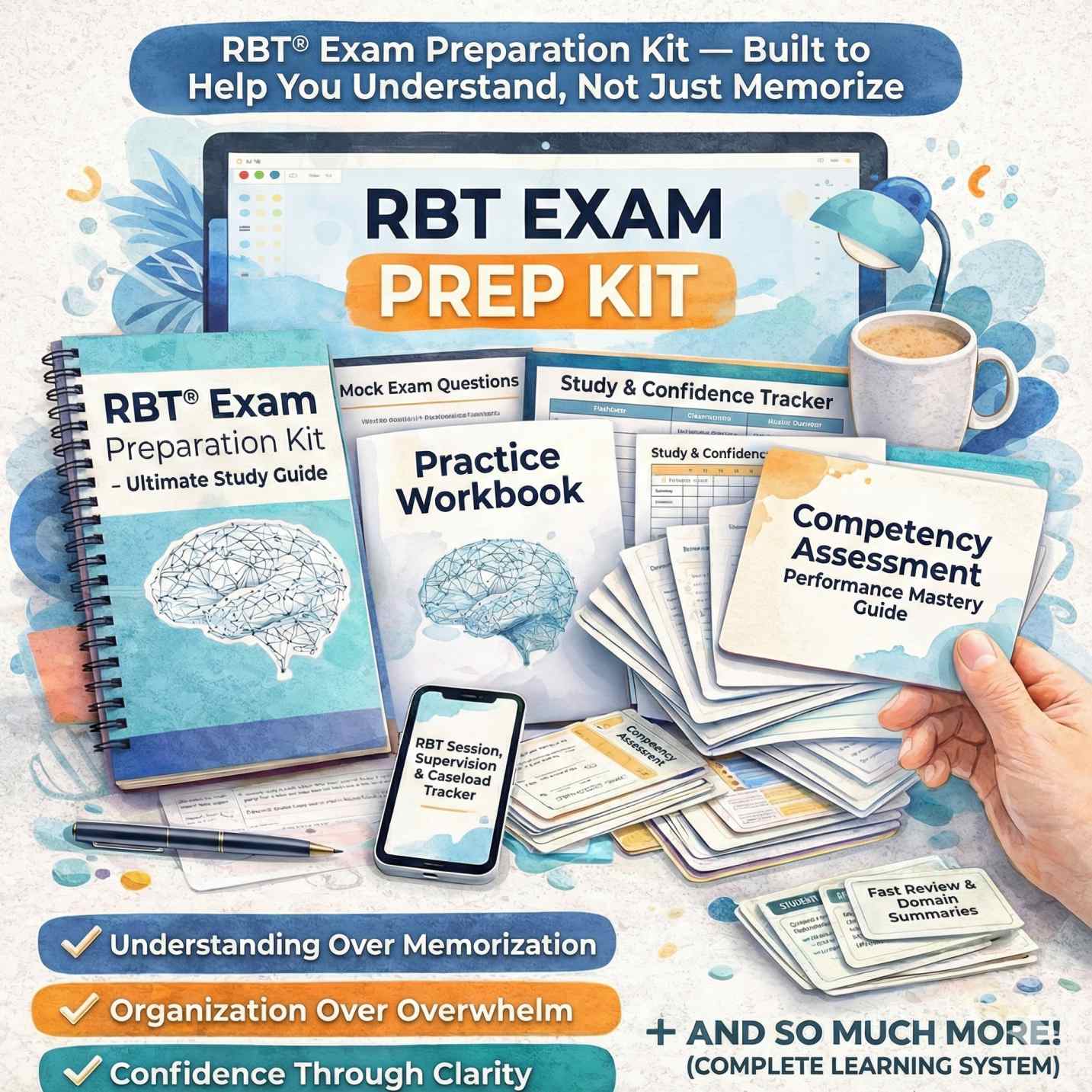
Everything You Need to Pass Your RBT® Exam
Study with our complete, all-in-one preparation package covering every task on the BACB Task List 3.0:
- 1,000+ Practice Questions & Timed Simulator
- 3rd Edition Task List Study Guide & Workbook
- Active Recall Flashcards System + Mobile App
- 20-Task Competency Assessment Mastery Guide