Becoming a Registered Behavior Technician (RBT) is an exciting first step into the field of Applied Behavior Analysis (ABA). Before you begin the process, it’s important to understand the BACB RBT requirements that guide certification and professional conduct.
The Behavior Analyst Certification Board (BACB) sets specific standards to ensure that every RBT is properly trained, ethical, and competent in delivering behavior support services. From completing the 40-hour training to passing the RBT competency assessment and examination, each stage plays a vital role in preparing you for success.
Knowing these requirements beforehand helps you avoid delays and ensures a smooth certification journey.
What Is an RBT and BCBA®?
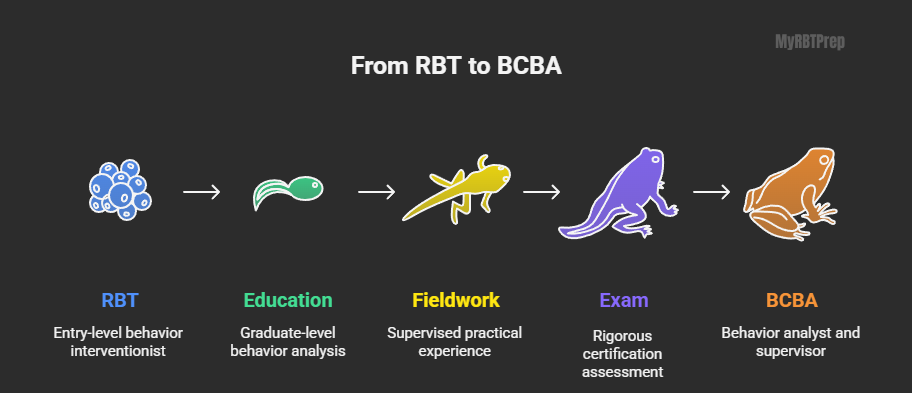
The RBT (Registered Behavior Technician) is an entry-level credential under the BACB certification board, designed for professionals who implement behavior intervention plans under supervision. It’s often the first step for individuals entering the ABA field.
On the other hand, a BCBA (Board Certified Behavior Analyst) is a graduate-level professional who designs and oversees behavior-analytic services. They supervise RBTs, conduct assessments, and create evidence-based intervention plans.
Earning the BCBA certification means you’ve met rigorous educational, fieldwork, and exam standards set by the Behavior Analyst Certification Board (BACB) — a globally recognized, NCCA accredited certification body.
Why Become an RBT First?

Starting as an RBT is like building a strong foundation before constructing a skyscraper. It helps you gain hands-on experience, learn ABA principles in real-world settings, and develop confidence before pursuing the Board Certified Behavior Analyst credential.
Many successful analysts began as RBTs because this experience provides invaluable insights into behavior analysis licensure, ethics, and client communication. Plus, RBT work hours often count toward BCBA supervision requirements, making it a smart way to progress smoothly toward certification.
Step-by-Step RBT Application Process

Applying for RBT certification involves several steps under the BACB certification board. First, complete a 40-hour training course that meets applied behavior analysis certification standards. Next, pass a background check to ensure compliance with the ethics code for behavior analysts.
Once you’ve completed training, you’ll need to take and pass the RBT Competency Assessment. This assessment measures your ability to apply ABA techniques correctly and professionally.
After that, you can schedule the RBT exam through Pearson VUE. Passing the exam officially grants your RBT credential, making you eligible to work under a certified BCBA® or BCaBA® supervisor.
5 Must-Know RBT Application Tips
Tip #1: Consult the RBT Handbook
Before anything else, carefully read the RBT Handbook provided by the BACB certification board. It outlines eligibility, exam details, and documentation standards. This small step can prevent application delays and confusion later.
Tip #2: Give Yourself Enough Time to Prepare
Don’t rush. Prepare for the exam using mock tests and review guides. Learn from real-world examples, practice behavior analysis techniques, and focus on ethics scenarios. The better your foundation, the easier your transition to BCBA certification will be later.
Tip #3: Create and Maintain Your BACB Account
All communication and applications go through your BACB account. Keep your profile updated to receive important announcements about rule changes, RBT renewal, or future eligibility updates.
Tip #4: Carefully Review Your Documentation
Before submission, double-check every form, training certificate, and supervisor signature. The BACB certification board is strict about document accuracy — one missing field could delay your application by weeks.
Tip #5: Sit Back and Relax
Once you’ve completed everything, stay patient. Application reviews can take several weeks. While waiting, continue reading about how to become a BCBA, future career paths, and study materials to stay motivated.
How to Qualify for BCBA® Certification
To become a Board Certified Behavior Analyst, you must meet education, coursework, and fieldwork requirements before sitting for the BCBA exam. The BACB certification board currently offers four qualification pathways, with most candidates choosing the coursework-based route through APBA or ABAI accredited programs.
Here’s what you’ll generally need:
|
The BCBA certification requirements ensure professionals uphold the highest standards of ethical and practical excellence.
BCBA® Certification Requirements (Step-by-Step Guide)
The step-by-step BCBA certification process involves four key stages: earning an acceptable graduate degree, completing BCBA fieldwork hours, passing the exam, and maintaining certification.
Candidates pursuing applied behavior analysis certification must take graduate-level coursework in an ABAI-verified course sequence (VCS).
After coursework, complete concentrated supervised fieldwork (1,500 hours) or supervised independent fieldwork (2,000 hours). Both options must follow BCBA supervision requirements outlined by the BACB.
Continuing Education & Renewal for BCBA®s
After certification, every Board Certified Behavior Analyst must renew their credential biennially. The BCBA renewal process involves completing 32 continuing education units (CEUs), including 4 in ethics and 3 in supervision.
The BCBA continuing education requirements keep analysts up to date with current ABA research and ensure ongoing competence. Renewal also includes paying BCBA recertification fees and maintaining compliance with the ethics code for behavior analysts.
|
Common Questions About RBT and BCBA® Certification
What is BCBA certification? It’s an advanced credential issued by the BACB certification board for professionals with a behavior analysis graduate degree who meet coursework and fieldwork standards.
How long does it take to get BCBA certified? On average, between 6 to 10 years including education and practical experience.
What degree do I need for BCBA? You’ll need at least a master’s degree in psychology, education, or applied behavior analysis from an APBA or ABAI accredited program.
How hard is the BCBA exam? It’s challenging, requiring deep understanding of behavior principles and ethics. But consistent study and BCBA exam study tips can greatly improve your pass rate.
Career Growth: From RBT to BCBA®
Transitioning from RBT to BCBA® is a natural progression for many professionals. As an RBT, you gain practical skills; as a BCBA®, you step into leadership and program design roles.
According to recent statistics, BCBA job outlook is very strong. Demand for behavior analysts has grown over 127% in the past decade. Average salaries vary by state, but the BCBA salary guide suggests earnings between $70,000 and $105,000 per year depending on location, experience, and specialization.
Here’s a comparison between credentials:
|
This progression reflects how BCBA vs BCaBA roles differ not just in responsibility, but also in long-term career growth.
BCBA Job Outlook and Future Opportunities
The BCBA job outlook in the United States remains extremely positive. With the rising need for autism services, early intervention programs, and school-based behavior support, employment for Board Certified Behavior Analysts is projected to grow steadily through 2030.
The U.S. Bureau of Labor Statistics categorizes this field under “psychologists and behavioral specialists,” with demand increasing much faster than the national average.
As more states adopt behavior analysis licensure laws, opportunities are expanding in both private practice and public institutions. BCBAs can work in schools, hospitals, mental health agencies, or as consultants. The diversity of settings ensures job stability and career satisfaction.
BCBA Salary Trends Across the U.S.
According to the latest BCBA salary guide, income depends on location, specialization, and years of experience. States like California, Massachusetts, and Texas offer some of the highest salaries for BCBAs.
Those who specialize in autism therapy, behavioral health management, or clinical supervision earn even more due to high service demand.
|
BCBA Supervision and Fieldwork Explained
Gaining BCBA fieldwork experience is one of the most crucial steps in the certification process. Candidates complete either supervised independent fieldwork or concentrated supervised fieldwork under a qualified BCBA supervisor.
This experience connects theory to real-world application and ensures competency in delivering ABA services.
Supervisors play a major role in evaluating progress, providing feedback, and ensuring that trainees follow the ethics code for behavior analysts. Understanding BCBA supervision requirements early helps candidates avoid delays or invalid hours when applying for certification.
Best BCBA Programs 2025: Choosing the Right Path
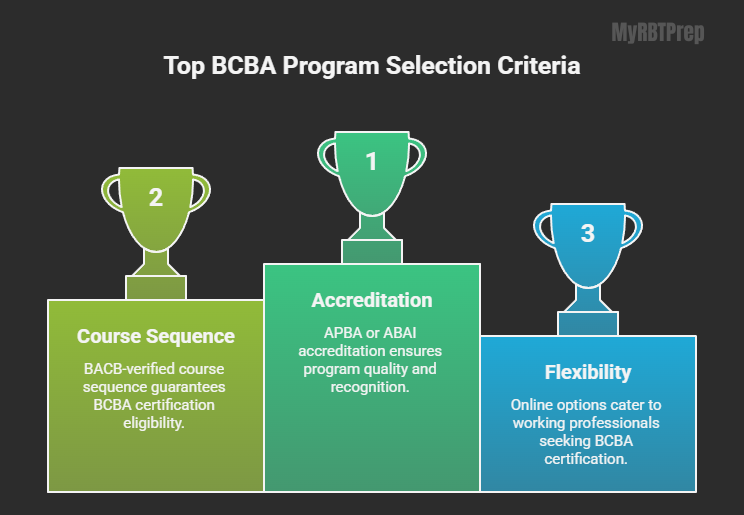
Selecting the right graduate program is critical for success. The best BCBA programs 2025 offer a verified course sequence (VCS) approved by the BACB certification board and are accredited by APBA or ABAI accredited programs.
These universities combine strong academics, clinical placements, and mentorship opportunities.
When choosing an ABA master’s program, consider online flexibility, faculty experience, tuition cost, and available fieldwork partnerships. For many working professionals, Can I become a BCBA online? is a common question — and the answer is yes, as long as the online program meets all BCBA coursework requirements and is recognized by the BACB.
How to Prepare for the BCBA Exam
Many candidates ask, How hard is the BCBA exam? The exam is challenging because it tests analytical thinking and ethical judgment, not just memorization.
The best approach includes structured preparation, mock tests, and BCBA exam study tips such as reviewing the BACB Task List and using official study materials.
Candidates should also understand how to qualify for the BCBA exam and track their BCBA exam eligibility through their BACB portal.
Consistent review and timed practice tests are key to improving the BCBA exam pass rate, which typically ranges from 60% to 70% depending on the year.
BCBA Certification Cost and Financial Planning
Pursuing applied behavior analysis certification involves some investment. The overall BCBA certification cost varies by program and supervision arrangement.
Graduate tuition for behavior analysis graduate degrees can range from $15,000 to $40,000, while supervision fees may add several thousand more depending on the number of required hours.
After meeting the BCBA certification requirements, candidates must also budget for the exam fee, typically around $245, plus BCBA recertification fees every two years.
Despite the cost, most professionals agree that Is BCBA certification worth it? — absolutely yes, given the high salary potential and long-term job security.
BCBA Continuing Education and Professional Growth
Once certified, maintaining competence is vital. BCBA continuing education ensures analysts stay informed about new research, best practices, and legal standards.
Beyond the minimum BCBA continuing education requirements, professionals often attend ABA conferences, join peer supervision groups, or pursue doctoral studies to deepen expertise.
The BCBA renewal process is also a chance to reflect on your growth, improve professional ethics, and expand leadership skills.
Many experienced analysts go on to mentor new RBTs or teach in ABA master’s programs, helping grow the next generation of behavior professionals.
Career Options with BCBA Certification
The career options with BCBA certification are incredibly diverse. Some BCBAs specialize in clinical behavior therapy, while others work in education, research, or corporate behavior management. Private practice is also an exciting path for those seeking independence.
Many hospitals, insurance companies, and mental health organizations now require a Board Certified Behavior Analyst on staff to ensure compliance with treatment and insurance standards. The flexibility of this credential means you can shift focus over time — from clinical roles to leadership or policy work.
Real-World Case Study: From RBT to BCBA Success
Take Sarah, for example. She started as an RBT at an autism center in her area while working on her undergraduate degree in psychology. She learned basic behavior analysis skills — she’s part of an autistics-to-wed community that teaches other autistic adults how to do applied behavior analysis, or ABA — for over four years in a practice-based paid internship, matriculated toward a master’s degree in behavior analysis and started her concentrated supervised fieldwork.
Once having passed the BCBA exam, she worked as a supervisor overseeing a team of RBTs and developing intervention plans.
She now makes more than $90,000 a year and advises new practitioners. Her story is evidence that, with grit and a little bit of guidance, anyone can excel from RBT to BCBA®!
How to Renew BCBA Certification and Stay Compliant
Maintaining certification is straightforward if you follow BACB guidelines. To renew BCBA certification, complete the required CEUs, submit documentation, and pay BCBA recertification fees on time.
Always follow the ethics code for behavior analysts and report any professional conduct concerns promptly.
Failure to renew may lead to certification lapses, requiring reapplication or additional coursework. Staying proactive keeps your certification valid and your professional reputation strong.
BCBA vs BCaBA: Understanding the Difference
While the BCBA and BCaBA credentials are closely related, they differ in education and scope of practice.
The BCaBA (Board Certified Assistant Behavior Analyst) requires a bachelor’s degree and allows professionals to work under BCBA supervision. BCBAs, however, operate independently and can supervise both BCaBAs and RBTs.
For individuals considering long-term growth, pursuing BCBA certification offers more flexibility, leadership roles, and earning potential. Many BCBA vs BCaBA comparisons show that the investment in a graduate degree pays off both financially and professionally.
Faqs
What to know before becoming an RBT?
Before becoming an RBT, understand that it requires patience, strong communication, and a passion for helping individuals with behavioral challenges through applied behavior analysis (ABA).
Is it hard to get hired as an RBT?
No, RBTs are in high demand across the U.S., especially in schools, clinics, and therapy centers that serve children with autism or developmental disorders.
What to know before an RBT interview?
Be ready to discuss your understanding of ABA principles, ethical conduct, and real-life examples of working with children or individuals with special needs.
What are the RBT requirements?
You must complete 40 hours of training, pass a competency assessment, pass the RBT exam, and hold a high school diploma or higher.
Can you be an RBT with no experience?
Yes, you can become an RBT without prior experience, as the training and supervision process prepares you for the role.
Is BCBA Certification Worth It? Final Thoughts
Yes — BCBA certification is absolutely worth it. The field of applied behavior analysis is expanding rapidly across healthcare, education, and research sectors. Earning your credential not only boosts your income but also gives you the power to change lives.
Whether you’re just learning how to become a BCBA, exploring BCBA coursework requirements, or preparing for the step-by-step BCBA certification process, remember that every hour spent brings you closer to a fulfilling career.
With continuous learning, dedication, and ethical practice, your future as a Board Certified Behavior Analyst is bright and full of opportunity.