Failing a certification exam can feel overwhelming, especially when you worked hard to prepare. If you Failed the RBT Exam, you are not alone, and this setback does not define your future. Every year, many candidates experience RBT exam failure due to exam pressure, tricky scenarios, or weak areas they didn’t expect.
The BACB RBT exam is designed to test real-world judgment, not simple memorization. Understanding the RBT exam retake policy and knowing your next steps can quickly put you back on track. With the right mindset, updated RBT exam preparation, and a clear plan, you can turn this experience into a successful comeback and move forward with confidence.
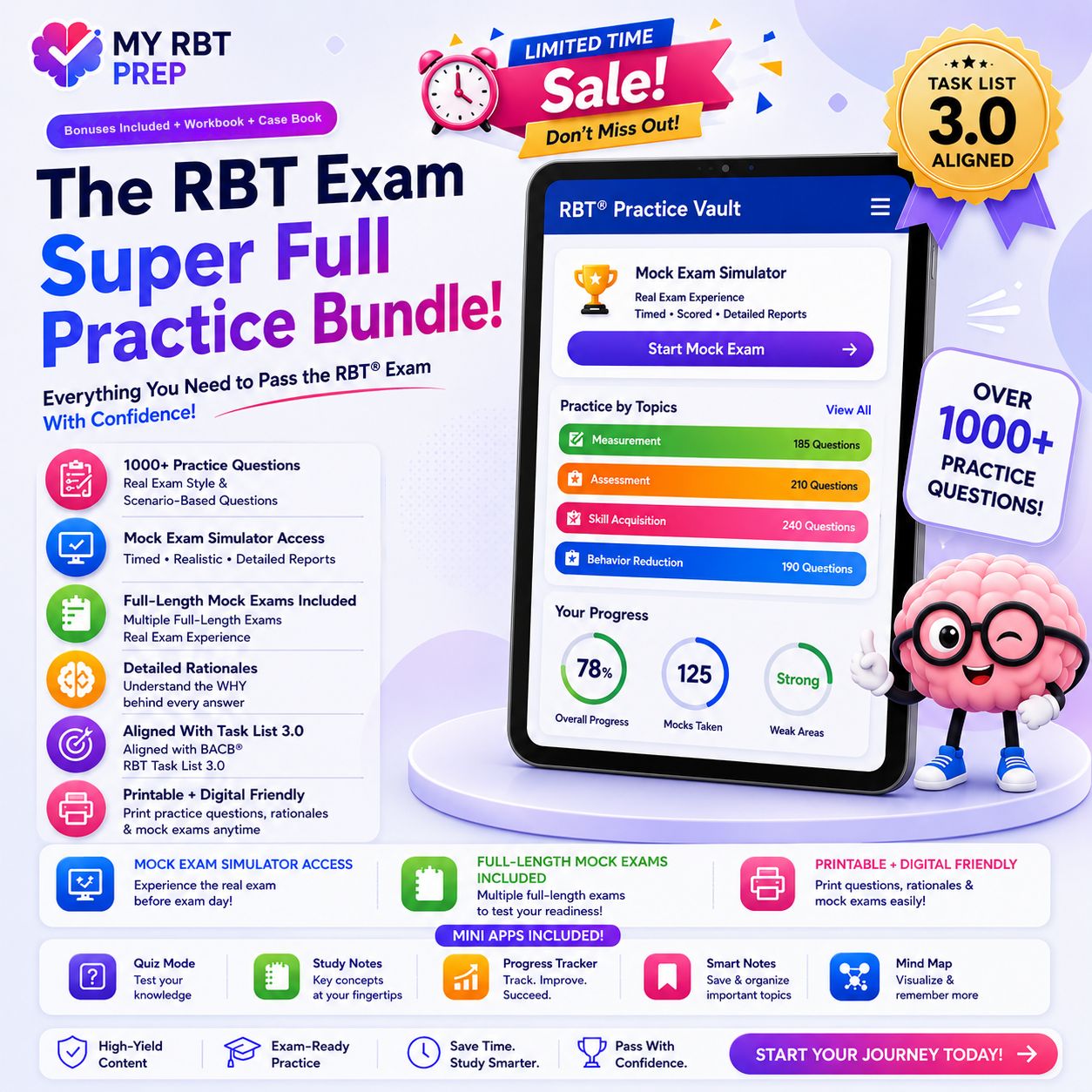
Pass Your RBT® Exam on the First Attempt
Practice with 1,000+ realistic scenario questions, multiple full-length timed mock exams, and detailed rationales formatted exactly like the real Pearson VUE test.
What Happens If You Fail the RBT Exam?
One of the first things people ask is what actually happens if you fail the RBT exam. The answer is much less dramatic than you might expect. There is no penalty for failing the RBT exam, and your application is not canceled because of one failed attempt.
After the exam, you receive an official score report that shows how you performed across different RBT exam domains. You are then required to wait for the official RBT exam waiting period before scheduling another attempt. That’s it. No disciplinary action. No permanent record. Just feedback and a chance to improve.
| Topic | Details |
| What Happens If You Fail the RBT Exam | Failing the RBT exam is not the end. There is no penalty for failing the RBT exam, and your application is not canceled. |
| Score Report | After the exam, you receive an official score report showing how you did in each RBT exam domain. |
| Next Steps | You must wait for the RBT exam waiting period before scheduling another attempt. No disciplinary action or permanent record is applied. |
| Purpose | This gives you feedback and a chance to improve so you can prepare confidently for the RBT retake. |
Understanding Your RBT Exam Score Report
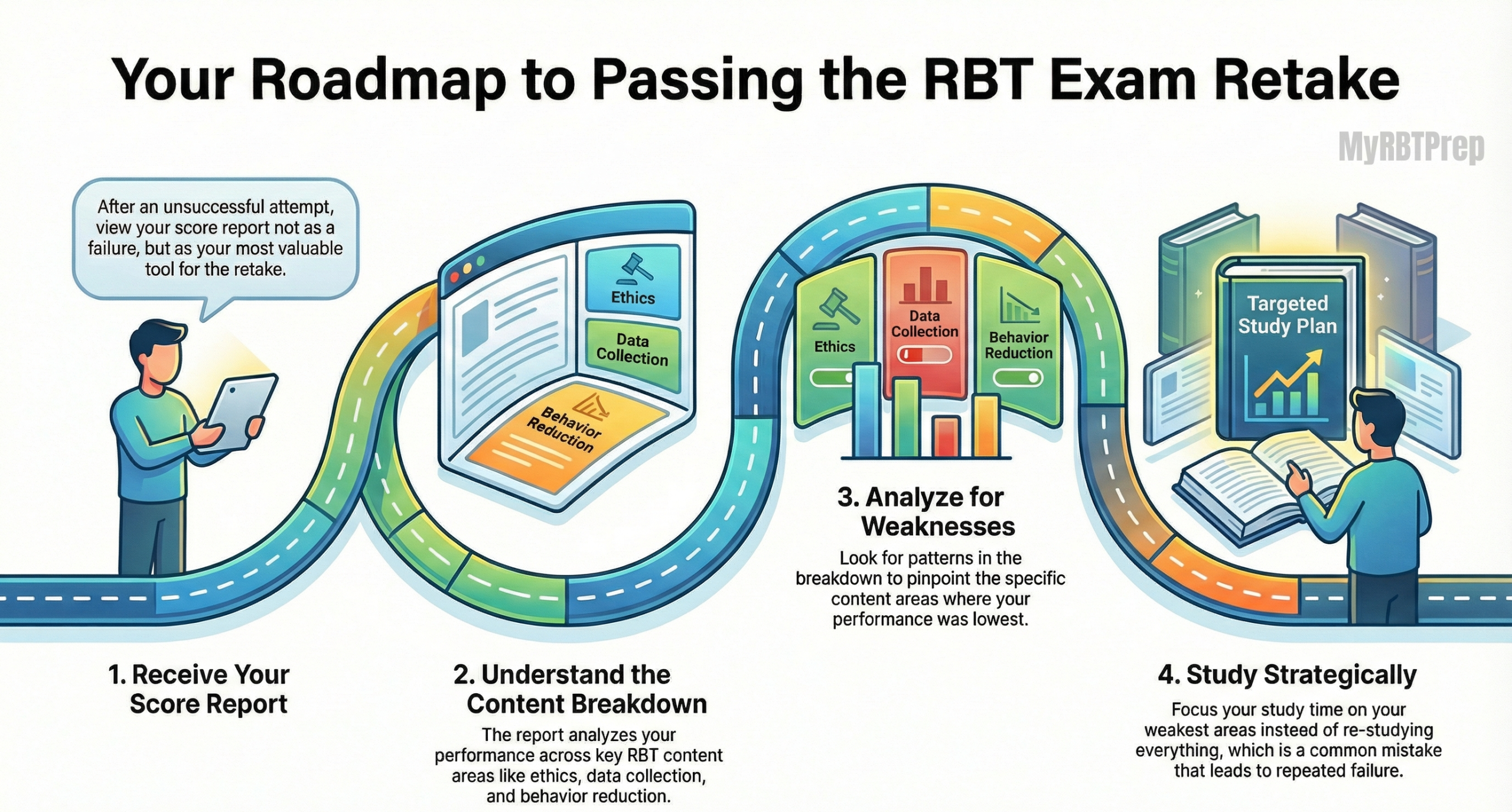
Your RBT exam score report is one of the most valuable tools you receive after failing. Instead of showing exact questions, it breaks your performance down by content areas such as ethics, data collection, and behavior reduction.

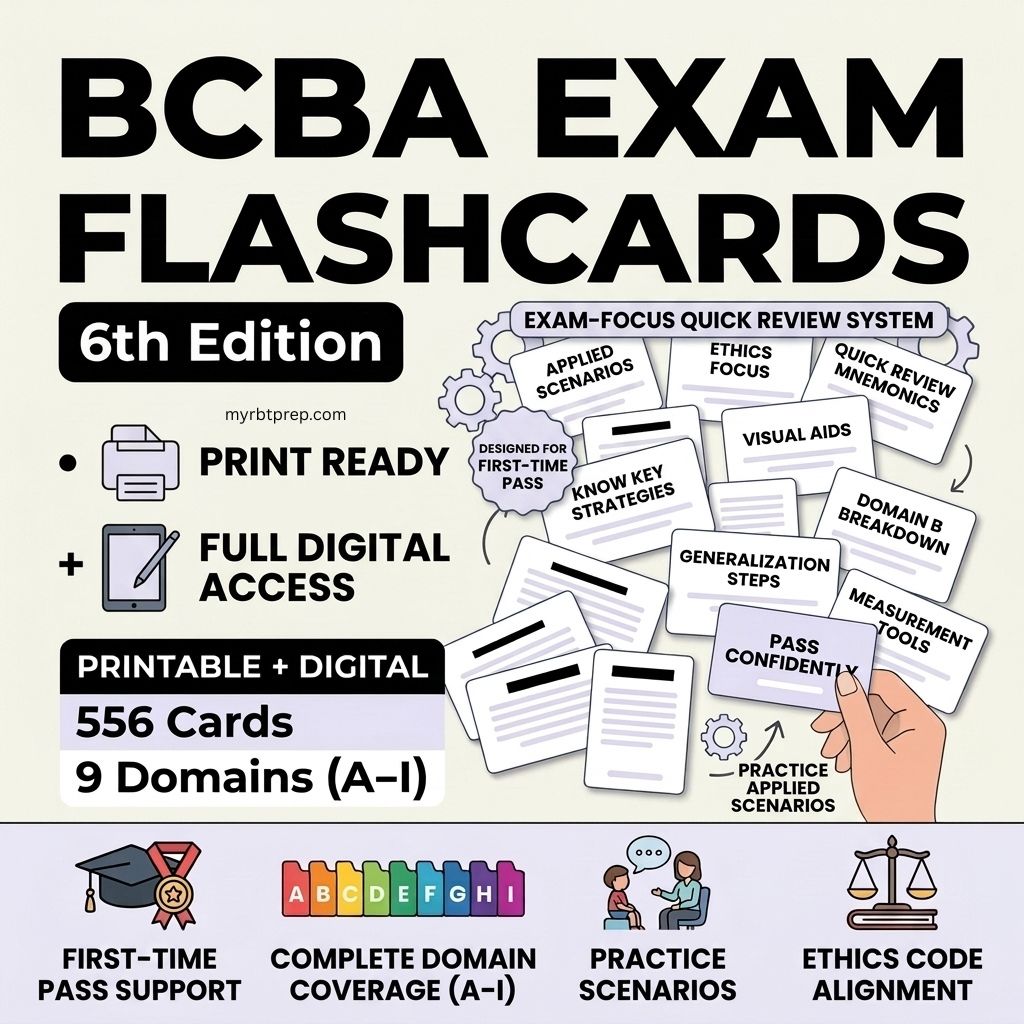
RBT® Exam Flashcards & Study App (3rd Edition)
Master essential ABA terminology and clinical discrimination across all 6 BACB task list areas with 500+ printable and digital flashcards, real exam cues, and full mobile app access.
This breakdown helps you see patterns. For example, if ethics-related RBT questions were a weak area, that becomes your top priority for the retake. Many candidates fail because they study everything again instead of focusing on what actually caused them to struggle.
Common Reasons Why Candidates Fail the RBT Exam
Most RBT exam failure happens for predictable reasons. One major issue is studying with outdated RBT study materials that do not match current exam standards. Another common problem is underestimating scenario-based exam questions, which require you to apply concepts rather than memorize definitions.
Test anxiety also plays a role. The Pearson VUE RBT exam environment can feel intimidating if you are not familiar with it. Time pressure, unfamiliar wording, and second-guessing answers often lead to mistakes that could have been avoided with better preparation.
| Topic | Details |
| Common Reasons for Failure | Most candidates fail the RBT exam for predictable reasons. Outdated RBT study materials often don’t match current exam standards. |
| Scenario-Based Questions | Many underestimate scenario-based exam questions, which test applied skills instead of memorization. |
| Test Anxiety | The Pearson VUE RBT exam environment can feel intimidating. Time pressure, unfamiliar wording, and second-guessing answers can lead to mistakes. |
| Key Takeaway | Understanding these issues helps you focus on real weaknesses and prepare confidently for the RBT retake. |
RBT Exam Retake Policy (Latest Guidelines 2026)

The RBT exam retake policy is clearly defined by BACB exam rules. The BACB allows multiple retakes, with a maximum of eight attempts within a 12-month authorization period. Each retake requires you to wait at least seven days and pay the RBT exam retake fee.
Starting with the RBT exam 2026 update, all exams are aligned with the RBT Task List 3rd Edition. If your application expires after 12 months, you must complete a new RBT competency assessment before testing again. Knowing these rules helps you plan without stress or surprises.
How to Create a Smart Study Plan for Your RBT Exam Retake
A smart study plan starts with honesty. Look at your score report and identify the weakest domains first. Build your schedule around those areas instead of reviewing everything equally.
Short, consistent study sessions work better than long cramming sessions. Reviewing concepts, practicing questions, and revisiting ethical guidelines regularly improves retention and makes your RBT exam preparation more effective.
| Topic | Details |
| Smart Study Plan | Start by reviewing your RBT exam score report honestly and identify your weakest domains first. Focus your schedule on these areas rather than trying to study everything at once. |
| Study Sessions | Short, consistent study sessions work better than long cramming sessions. This approach helps with retention and reduces burnout. |
| Practice & Review | Regularly review concepts, practice questions, and revisit ethical guidelines to strengthen understanding and improve RBT exam preparation. |
| Key Benefit | A focused, structured plan helps you prepare confidently for the RBT retake and increases your chances of success. |
Best Study Strategies to Pass the RBT Exam on Your Next Attempt
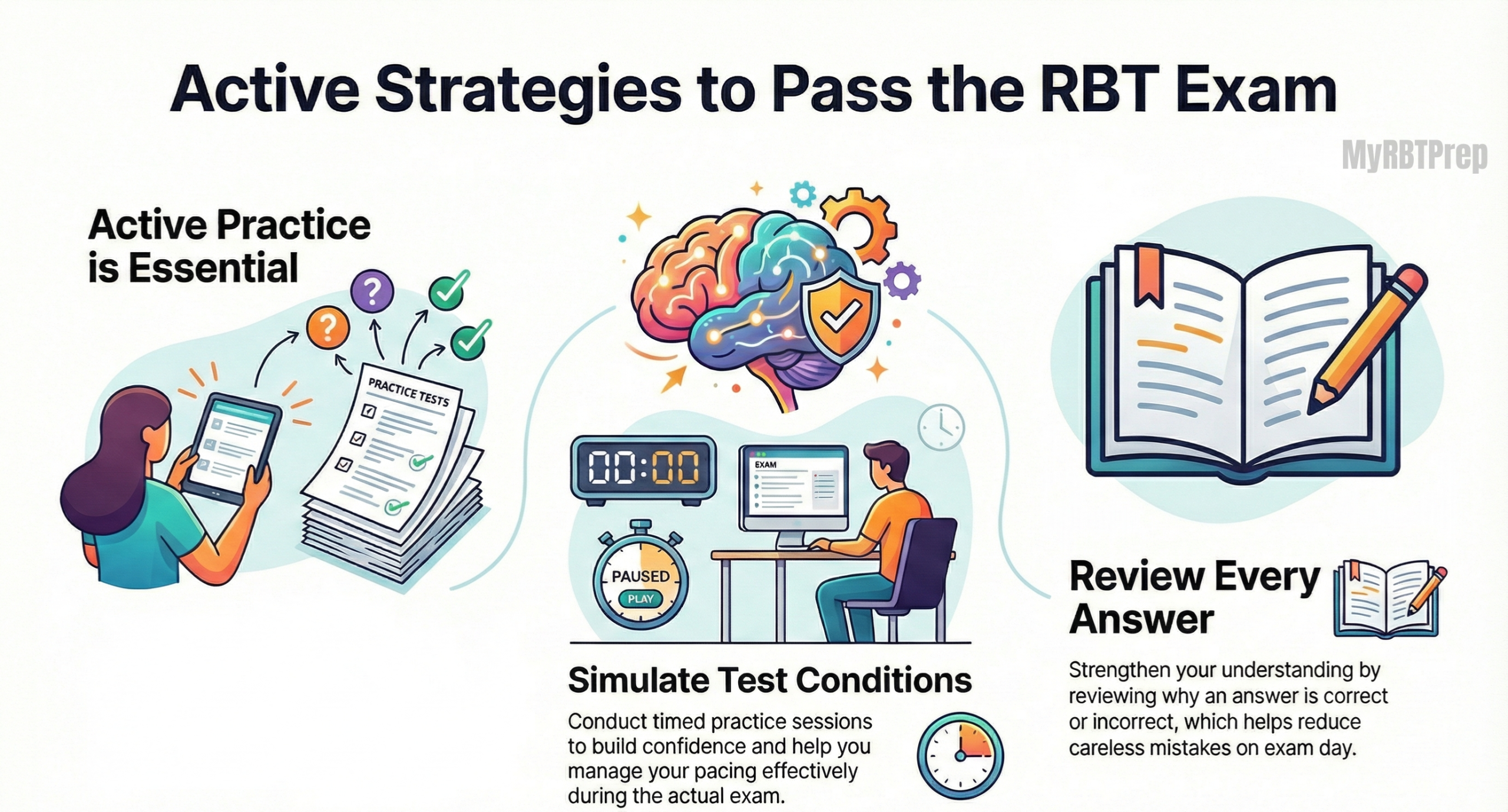
If you want to pass the RBT exam on your next attempt, change how you study. Active practice is key. Use real exam-style practice questions and simulate test conditions whenever possible.
Timed practice builds confidence and helps you manage pacing. Reviewing why an answer is correct or incorrect strengthens understanding and reduces careless mistakes on exam day.
Recommended RBT Exam Study Materials & Resources
The most reliable study resources are those based on the RBT Task List 3rd Edition. These materials reflect the structure and expectations of the current BACB RBT exam.
Choose resources that explain concepts in plain language and include applied examples. High-quality materials focus on reasoning, not memorization, which is essential for success on scenario-based questions.
| Topic | Details |
| Recommended Study Materials | Use resources based on the RBT Task List 3rd Edition. These reflect the structure and expectations of the current BACB RBT exam. |
| Resource Features | Choose materials that explain concepts in plain language and include applied examples for better understanding. |
| Focus of Study | High-quality resources emphasize reasoning and real-world application rather than just memorization, which is critical for scenario-based exam questions. |
| Key Benefit | Using the right materials helps you prepare confidently for the RBT retake and improves your chances of passing. |
Managing Stress, Anxiety, and Confidence Before Your Retake
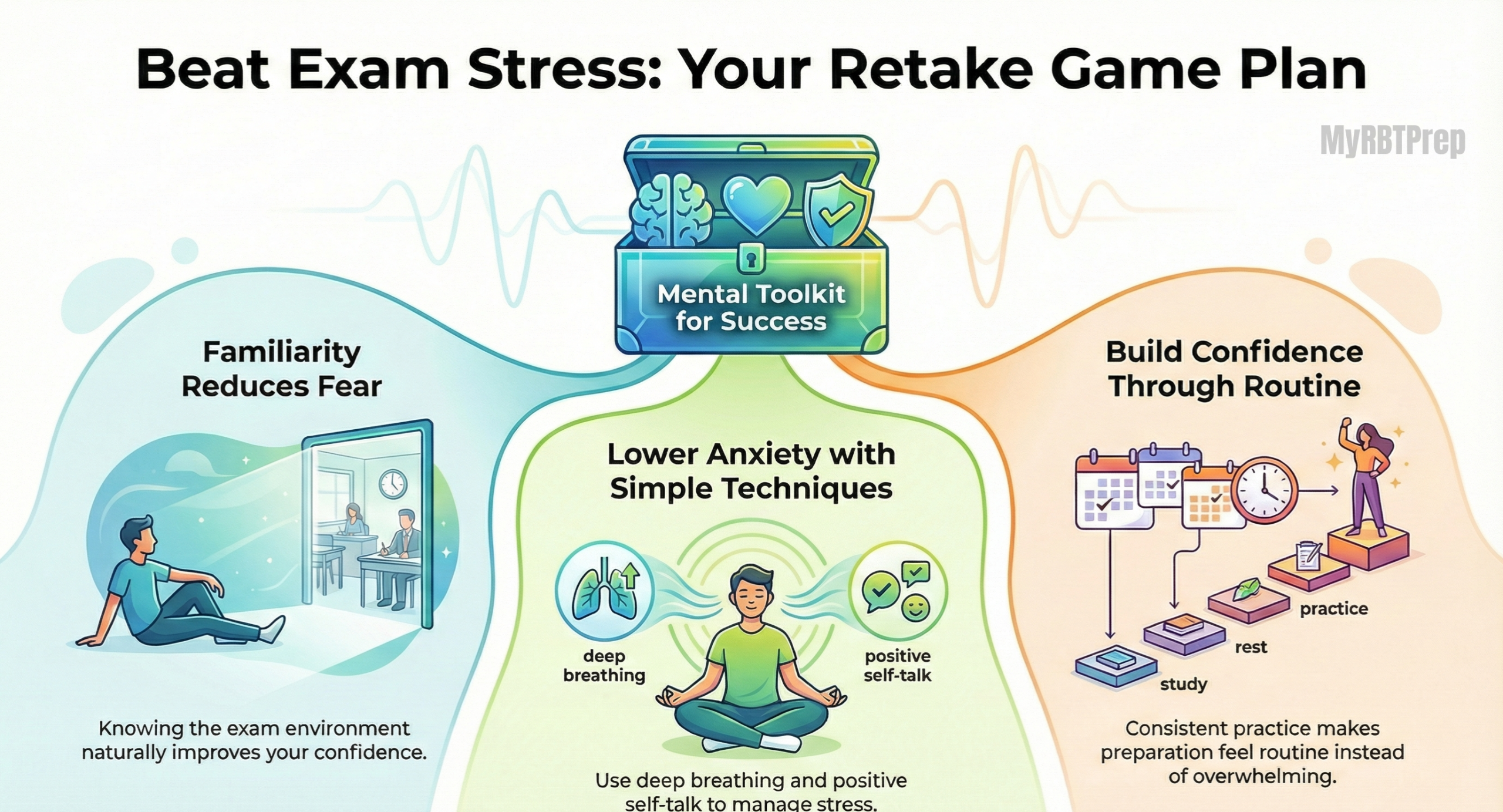
Stress is one of the biggest barriers to success. Familiarity reduces fear. When you know what the Pearson VUE RBT exam environment feels like, your confidence naturally improves.
Simple techniques like deep breathing, positive self-talk, and consistent practice can significantly lower anxiety. Confidence grows when preparation becomes routine instead of overwhelming.
Realistic Timeline to Prepare and Pass the RBT Exam
Most candidates need four to six weeks of focused preparation to feel ready for a retake. Those with strong backgrounds may succeed sooner, while others benefit from a longer review period.
The key is consistency. A realistic timeline helps you stay motivated and prevents burnout while keeping your progress steady.
| Topic | Details |
| Preparation Timeline | Most candidates need four to six weeks of focused preparation to feel ready for an RBT exam retake. |
| Individual Differences | Candidates with strong backgrounds may pass sooner, while others benefit from a longer review period. |
| Importance of Consistency | Consistent study habits help you stay motivated and improve retention over time. |
| Key Benefit | A realistic timeline prevents burnout and keeps progress steady, increasing the chances of passing the RBT exam. |
How Failing the RBT Exam Affects Your Career Path
Failing the RBT exam can feel like a major setback, but in reality, it has very little long-term impact on your career path if you handle it correctly. Many people working successfully as Registered Behavior Technicians today did not pass the exam on their first attempt. Employers, clinics, and supervisors know this. The BACB RBT exam is designed to be challenging because it measures applied judgment, not just memorization.
A single exam result does not define your ability to work with clients or support behavior plans. What truly matters is how you respond after the failure. When you take time to understand your mistakes, improve weak areas, and return prepared, it actually reflects professionalism and persistence. In some cases, candidates who pass after a retake perform better in real clinical settings because they have a deeper understanding of ethics, data collection, and decision-making.
Clinics are far more interested in your attitude, reliability, and willingness to learn than whether you passed on the first try. As long as you stay within BACB exam rules and maintain your RBT exam eligibility, a failed attempt does not block promotions, job offers, or future certification goals. Think of the failure as a detour, not a dead end. With the right preparation, your career momentum can continue without lasting damage.
When You Need to Reapply for the RBT Exam
Reapplying for the RBT exam is only required in specific situations, and understanding these rules can save you stress and time. After your application is approved, you receive a 12-month authorization window to test.
During this period, you are allowed multiple attempts under the RBT exam retake policy, as long as you follow the waiting period between attempts. If you fail several times but remain within this one-year window, you do not need to reapply. However, if your authorization expires before you pass, the BACB requires you to start the process again.
This means submitting a new application, paying the required fees, and completing a new RBT competency assessment with a qualified supervisor. Many candidates run into problems simply because they lose track of dates. Life, work schedules, and stress can cause delays that push them past the expiration deadline. Staying organized and planning your retakes early helps you avoid unnecessary reapplication.
Reapplying is not a punishment, but it does add extra steps and time. To avoid this, schedule your retakes thoughtfully and give yourself enough preparation time while your authorization is still active. Knowing when reapplication is required helps you stay in control of your certification journey.
| Topic | Details |
| When Reapplication Is Required | You only need to reapply for the RBT exam in specific situations. After approval, you receive a 12-month authorization window to test. |
| Retakes Within Authorization | During this period, multiple attempts are allowed under the RBT exam retake policy, as long as you follow the waiting period between attempts. |
| Authorization Expiration | If your authorization expires before you pass, the BACB requires a new application, fees, and a new RBT competency assessment. |
| Common Mistakes | Many candidates miss deadlines due to work, stress, or poor planning, which leads to unnecessary reapplication. |
| How to Avoid Reapplying | Stay organized, track important dates, and plan retakes early while your authorization is still active. |
How Supervisors and BCBAs Can Help You Pass the Retake

Your supervisor can provide support while you are taking the RBT exam for the second time, but many candidates fail to utilize their supervisor’s assistance to their full extent. As a BCBA or BCaBA, your supervisor has an extensive history of using the principles of ABA in practice with clients in real-world situations, which is critical in understanding the material that is being assessed on the RBT exam.
If you do not pass your first attempt at the RBT exam, your supervisor can assist you in understanding areas of the exam that were difficult for you, especially regarding ethics and scenario-based test questions/answer selections, which can lead to confusion for test-takers.
As you retake the RBT exam, your supervisor is able to provide you with feedback on the correct answers, along with what they mean in the “real world,” and not just what the definition of each term is in the textbook. Your supervisor’s level of knowledge about the RBT exam’s material will be greatly beneficial to you and more so than the RBT study guides available on the internet.
Your supervisor can also help you understand the patterns of mistakes you may have made by reviewing your RBT score report and relating the weak domain that was tested, to the skills you are currently using during your work or volunteer experience.
For instance, if your data collection score was relatively low when you took the RBT exam the first time around, your supervisor would provide guidance regarding data collection during your current sessions as well as ongoing guidance and feedback regarding data collection as you progress through your RBT exam preparation process.
About Failing the RBT Exam
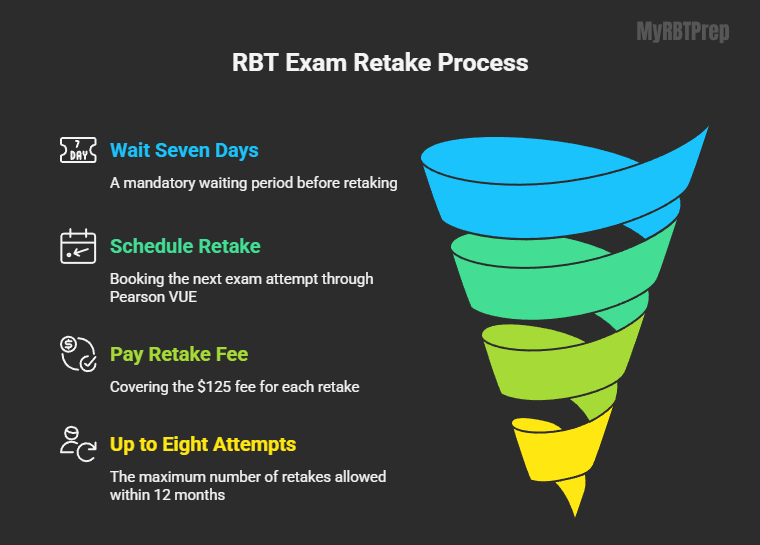
Many candidates ask how many times they can retake the RBT exam. The answer is up to eight attempts within a 12-month period, as long as your authorization remains active.
You must wait at least seven days between attempts and schedule the exam through Pearson VUE each time. The retake fee is $125 per attempt. Failing does not affect long-term RBT exam eligibility, and many successful RBTs today passed after a retake.
FAQs
What happens if you fail the RBT exam?
If you fail the RBT exam, there is no penalty or disqualification. You receive an official score report showing weak areas and can retake the exam after the required waiting period, as long as your authorization is active.
How many times can you retake the RBT test?
You can retake the RBT test up to eight times within a 12-month authorization period. Each attempt requires a new exam fee and scheduling through Pearson VUE.
How many people fail the RBT exam?
The BACB does not publish exact failure rates, but training providers estimate that a significant number of first-time test takers do not pass. Many successful RBTs pass after one or more retakes.
How many questions can you miss on the RBT exam and still pass?
The BACB does not release an exact passing score or number of missed questions. Passing depends on overall performance across exam domains, not a fixed number of correct answers.
What is the hardest part of the RBT exam?
Most candidates find ethics-related and scenario-based questions the hardest. These questions test judgment and real-life decision-making rather than memorized definitions.

Everything You Need to Pass Your RBT® Exam
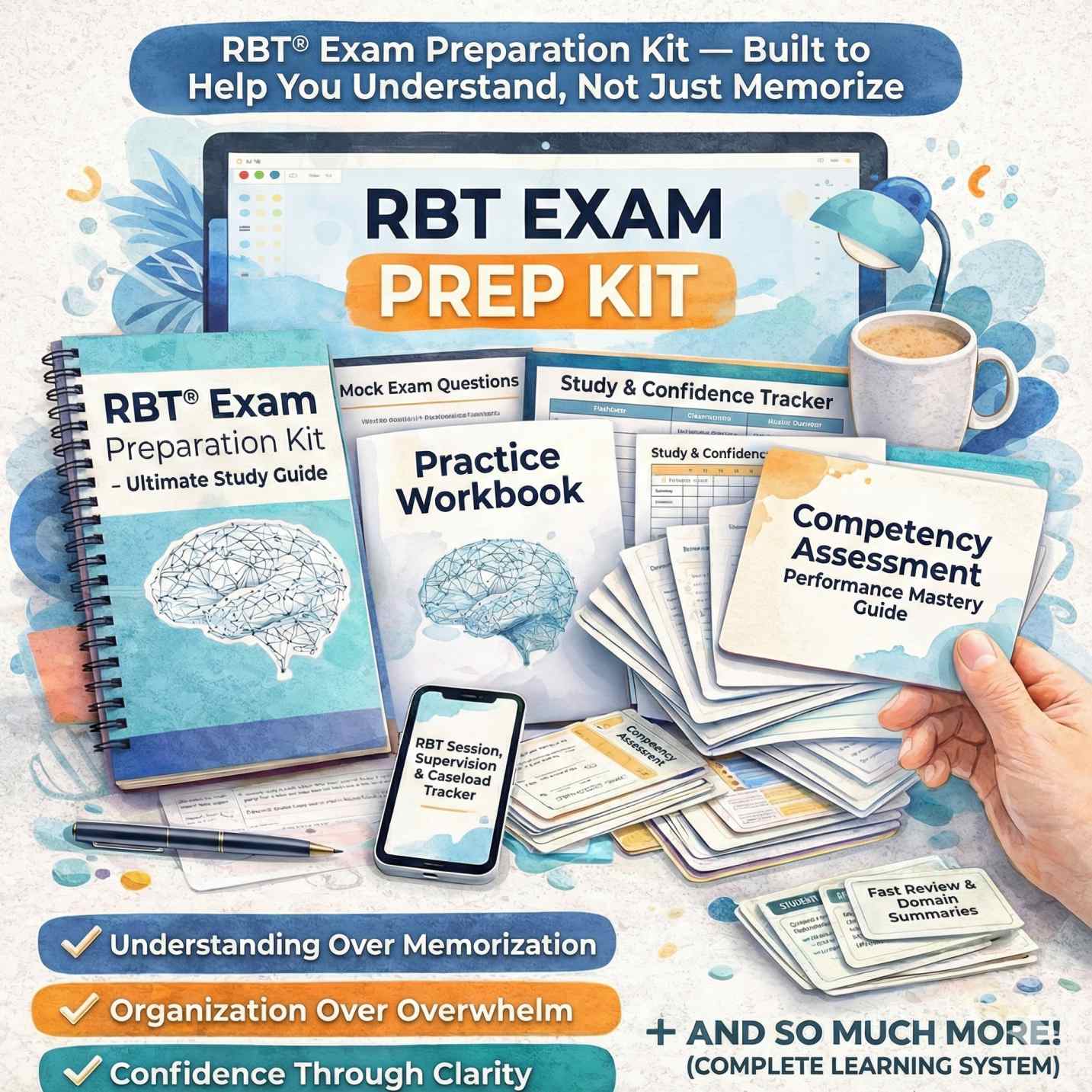
Study with our complete, all-in-one preparation package covering every task on the BACB Task List 3.0:
- 1,000+ Practice Questions & Timed Simulator
- 3rd Edition Task List Study Guide & Workbook
- Active Recall Flashcards System + Mobile App
- 20-Task Competency Assessment Mastery Guide