
Failing the RBT exam can feel discouraging, but it’s not the end of your journey toward becoming a Registered Behavior Technician. Many candidates face this challenge and later succeed with the right preparation and mindset.
Understanding why you failed the RBT exam helps you plan smarter for your next attempt. The test measures your knowledge of behavior analysis, ethics, and applied skills — all essential for your professional growth.
By reviewing the BACB guidelines, improving your study strategy, and using reliable RBT practice exam questions, you can boost your confidence and performance. Remember, every setback is a chance to learn, grow, and come back stronger.
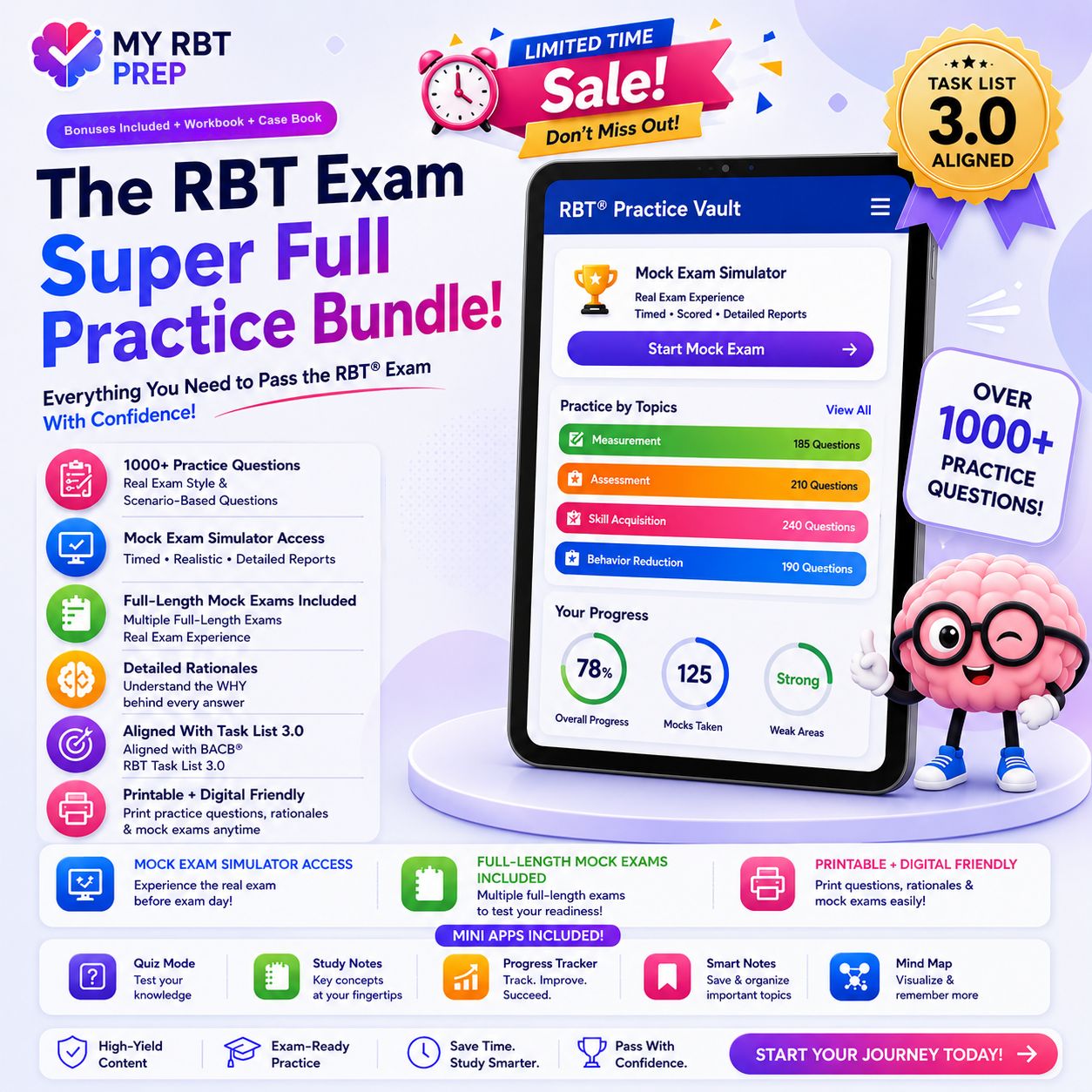
Pass Your RBT® Exam on the First Attempt
Practice with 1,000+ realistic scenario questions, multiple full-length timed mock exams, and detailed rationales formatted exactly like the real Pearson VUE test.
Components of the RBT Exam
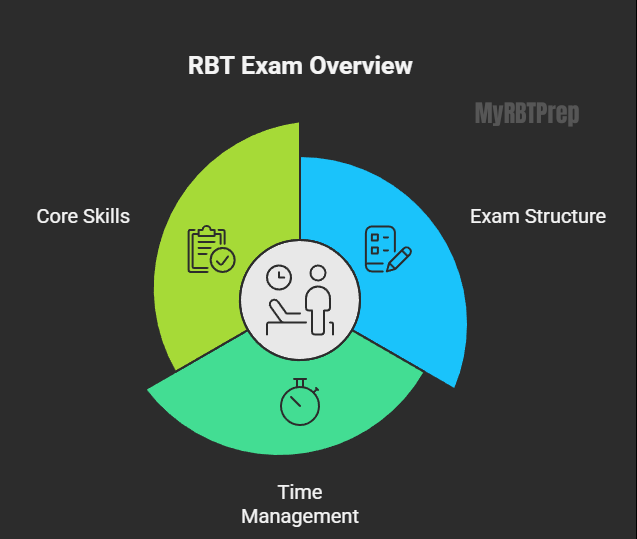
The exam’s structure includes a fixed number of questions and a defined time limit, consistent with the RBT certification process. According to recent data, the exam consists of 85 multiple-choice items, although only 75 of them are scored while the others serve as pilot questions.(True Progress Therapy)
This is the heart of the RBT exam test format. Knowing this helps you manage your time, plan your answers, and stay calm under timed conditions. For example, you might allocate about a minute per question to stay on track.
Each section of the exam is built around core skills such as data collection, analyzing behavior, teaching new skills, and following ethical guidelines. The better you know the RBT Task List, the more confident you will feel in tackling these components.
How the Scoring System Works

The scoring system for the exam uses a scaled score rather than a simple percentage. For instance, one source notes that the minimum passing score is a scaled 200 out of 300 points.(connectncareaba.com)

RBT® Exam Flashcards & Study App (3rd Edition)
Master essential ABA terminology and clinical discrimination across all 6 BACB task list areas with 500+ printable and digital flashcards, real exam cues, and full mobile app access.
This means you can’t simply aim for an arbitrary percentage; you must demonstrate solid competency across domains. The RBT exam passing score may vary based on the specific form of the exam you take, since the BACB uses statistical methods to ensure fairness.
Understanding this scoring format removes some of the mystery—and the stress—associated with your result. Rather than fixating on a “percentage,” focus on competency, understanding, application, and readiness for your role as a Registered Behavior Technician.
Common Reasons Candidates Fail

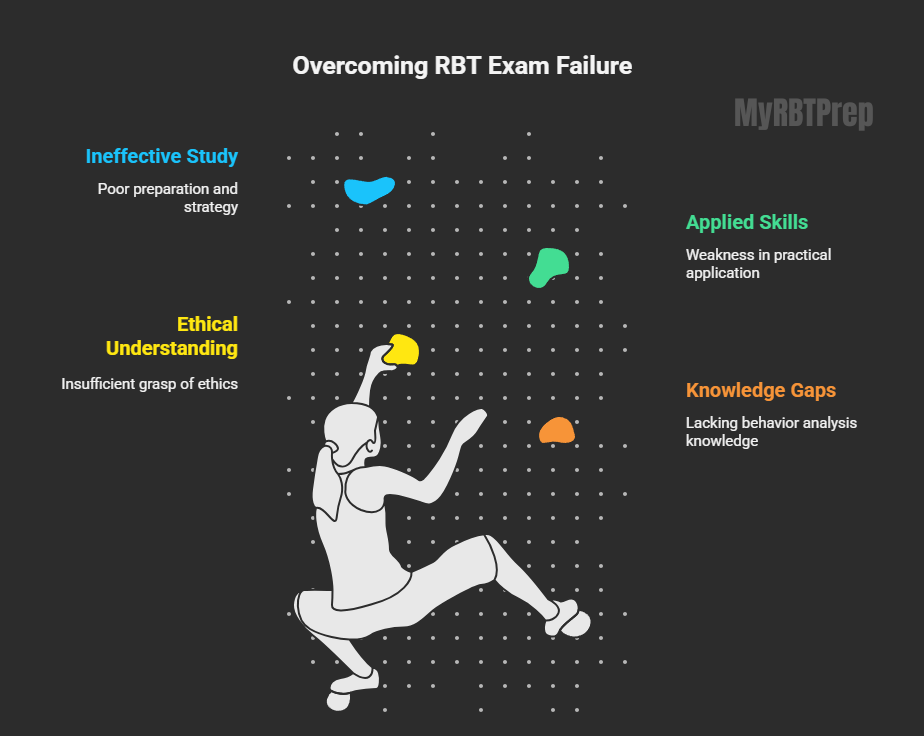
If you failed the RBT exam, you are certainly not alone—and many causes drive failure. One major reason is inadequate use of RBT exam online practice tests and not enough exposure to the real question formats.
Another is poor planning of the RBT study plan for retake—for example, just re-reading slides rather than actively engaging with mock questions. Additionally, when candidates rush into the exam without fully meeting the RBT exam requirements (including the 40-hour training and competency assessment) they often stumble.
The BACB handbook lays out these prerequisites.(Behavior Analyst Certification Board)
Exam anxiety, timing mistakes, and unfamiliarity with scenario-based questions are also frequent pitfalls.
Touching on each of these areas and building skill rather than just memorizing terms increases your chance of success markedly.
What Happens If You Fail the RBT Exam?
When you fail the RBT exam, it can feel like your progress halted—but in truth it’s just a bump in your journey. According to the BACB retake policy, you are allowed multiple attempts, but you must obey specific rules.(Behavior Analyst Certification Board)
The key is to treat this outcome as a learning opportunity and use it to refine your approach rather than give up.
You might ask: “Can I retake the RBT exam?” The answer is yes — and reviewing the rules helps you plan the next steps smartly. Each attempt can offer insights into your weak areas if you examine the result carefully.
BCBA and BACB Retake Policies

The policy from the BACB states that you may retake the exam up to eight times within the 12-month period following your original application once you meet the RBT application renewal process and other prerequisites.(Behavior Analyst Certification Board)
You must wait at least 7 days before scheduling the retake—this is the RBT retake waiting period. This policy gives you enough breathing space to rebuild your knowledge and preparation rather than jumping back in prematurely.
Make sure you also check any fee requirements for reapplication: the RBT exam fee and reapplication process are part of the cost of retaking.
Timing your retake smartly shows you respect the process and want to succeed rather than just re-attempt immediately out of frustration.
How Many Times You Can Retake?
You might wonder “How many times can you take the RBT exam?” According to the BACB, you may attempt up to eight times within the 12-month authorization period.(Behavior Analyst Certification Board)
If you exhaust those eight attempts without passing, you will need to wait until the year authorization period expires and then re-apply, which triggers the full requirement anew.
Knowing this limit helps you treat each attempt seriously and plan your study accordingly rather than repeating the same mistakes.
Waiting Period Between Attempts
After a failed attempt, the minimum waiting time before you can schedule your next attempt is 7 days—the RBT retake waiting period.(Behavior Analyst Certification Board) This interval is critical.
It gives you short-term space to pause, reflect, analyze your weak areas, and update your study strategy. Many candidates rush back too soon and end up failing again.
Use that week to shift gears—evaluate the RBT competency assessment results, target your weak domains, and rebuild your plan.
What Is the RBT Exam Pass Rate?

Understanding the statistics behind the exam gives perspective and realistic expectations. According to recent data from the BACB, the first-time pass rate hovers around the 70-80% range, and retake pass rates can be significantly lower.(connectncareaba.com)
You might ask: “What’s the RBT exam pass rate?” The answer is: it depends on your preparation—but knowing the averages helps.
When you realize the numbers, you may feel challenged—but also motivated. You now know you’re facing a tough but conquerable hurdle. The key is superior preparation, not just hoping to clear a low bar.
Current Pass Rate Statistics
For example, in 2022 the BACB reported that first-time test takers had a pass rate of approximately 77%.(Behavior Analyst Certification Board) More recent data indicate federal averages for first-time examinees at around 74%.(Behavior Analyst Certification Board) These numbers tell you that roughly a quarter of first-time takers fail, so your situation is not unusual—but you should treat it seriously.
Knowing this, set a goal higher than the average—to aim for mastery and comfort, not just passing. The competition and standard are real.
Factors That Affect Pass Rates
Several factors influence pass rates: the quality of your Registered Behavior Technician training, your level of hands-on practice, your exposure to RBT practice exam questions, and your study strategy—including using a robust RBT exam study guide.
Training providers vary: some report first-time pass rates above 90%.(bhbusiness.com) Other providers fall much lower, indicating how much your preparation environment matters.
Other factors include how well you use mock exams, your familiarity with the test format, your emotional readiness, and your data collection or behavior-analysis background. All of these feed into your final performance.
First-Time vs. Retake Pass Rates

It may feel discouraging, but the retake pass rate is typically lower than the first-time rate. In 2022, for example, retakes had a pass rate of only about 46%.(Behavior Analyst Certification Board)
That means you must treat your next attempt differently—do not simply repeat your prior approach. Instead update your plan, intensify your study, and use focused practice to break the cycle of failure.
How to Stay Positive After Failing the RBT Exam
Even though you didn’t pass this time, staying positive can radically change your next result. The journey toward your role as an RBT is more marathon than sprint. When you think “I failed my RBT exam, what should I do?”, the answer is: pause, reflect, and gear up with purpose.
Failure can be your stepping stone if you allow yourself to see it that way. Embracing the setback gives you much more control than letting it define you. Use it as impetus to prepare smarter, not just harder.
Manage Exam Stress and Emotions
Failing an exam often triggers fear, frustration, self-doubt. However this is entirely normal. To manage it, you might apply simple practices such as short daily walks, mindfulness breathing, journaling about what you learned and how you will act differently. Emotions still matter because when you face your next exam solidly, you will perform better if you are calm rather than tense.
Recalling “How to overcome RBT test anxiety” becomes key here. Lower stress improves focus, reduces mis-reading of questions, helps you trust your preparation. Take that 7-day RBT retake waiting period wisely: rest your brain, but then rebuild it.
Turn Failure into Motivation

Imagine your experience is like a map, and the red flag you encountered along your journey indicates the terrain you struggled with prior. Now you have a direction to follow. Use it. Ask yourself this: “What happens if I do not pass the RBT exam twice?” The answer is simple. You can still take it again … but with a different plan. This is why it is important to tweak your perspective to improvement … rather than punishment.
Many of the successful RBT’s were just like you, think about their experiences. They said, “I didn’t pass my first attempt, but I identified my weaknesses, created a new plan by following the beginner’s RBT Exam preparation, and passed on attempt two.” Experience on the forums supports this:
“I failed my first attempt because I did not practice enough questions before the test. I practiced all of the practice tests you provided and passed on my second attempt.”
You can be one of them.
Step-by-Step Guide: What To Do After Failing the RBT Exam

Now let’s shift into action-mode. You’ve asked, “How can I improve my RBT test score?” Here is a clear roadmap. Treat each step as a checkpoint on your recovery path.
Start with a foundation of honest reflection and build up to targeted mastery of your weak areas. Re-align with the RBT certification process, study smarter, not just longer, and make each minute count.
1. Relax and Reflect
First, give yourself a short break. Do not dive into fire-drill mode immediately. A clear mind is far more productive than one flooded with panic. After rest, reflect on what happened. Look at the score report, identify the domains where you lost points, and ask yourself where you felt weakest. This step is part of the RBT competency assessment strategy—understanding your weaknesses is the key to growth.
When you return to study, you will be more focused, more aware, and better organized.
2. Identify Weak Areas
Next, review your performance carefully. Which sections of the exam did you struggle with? Was it measurement, behavior reduction, documentation, or ethics? Make a list of areas with low confidence. Use reliable resources like the RBT exam study guide and target those topics.
The more specific you are, the better your next effort will be.
For example: If you missed questions on “shaping vs chaining” in skill acquisition, spend two sessions mastering that exactly rather than re-reading everything superficially.
3. Revise Your Study Materials
Now you update your resources. Choose new study aids if your previous one didn’t work. Consider a combination of textbook explanation, video tutorials, and interactive flashcards. Use RBT practice exam questions repeatedly.
Make sure you update older notes that may no longer match current standards in the RBT exam preparation tips world.
Structure your study into chunks—dedicate specific days to specific domains. Tracking your progress in a table helps keep you accountable.
4. Take Mock and Practice Tests
After material review, simulate the real exam. Take timed online mock exams that mimic the RBT exam online practice tests environment. This helps you master pacing, question reading speed, and builds stamina.
Each practice helps you practise the RBT exam attempts format without pressure. Identify recurring question types you got wrong, revisit them, and retake until you are consistently improving.
This iterative process bridges knowledge to performance.
5. Plan and Schedule Your Retake
Once your mock scores are solid, schedule your retake. Because of the RBT retake waiting period, you must wait at least 7 days. Use that time to fine-tune your weaker domains, sleep well, eat properly, and approach the appointment with confidence.
On the scheduling page be sure you have met all elements of the RBT application renewal process, and you have allowed time for any required fees or documentation.
Make the scheduling itself a commitment: block the date, commit the study time, and mentally accept the fact that you will pass this time.
Best Study Resources for RBT Retake Preparation
Having the right resources is a huge advantage in your journey to pass. Rather than relying on a single book, you’ll gain more from a multi-resource approach combining courses, flashcards, mock exams, and peer support.
Use the RBT study guide, but don’t stop there.
Your retake preparation should leverage every available tool to improve your chances of success and meet the RBT exam preparation tips standard.
Recommended Books and Courses
Look for updated texts and online courses that reflect the latest BACB guidelines and exam content. Make sure the provider lists recent real-test practice or question banks labelled for “2025” or the current year.
Choose courses with strong reviews and pass rates above national averages—these suggest solid coverage of the RBT exam requirements.
Replace weak or outdated texts with current versions to avoid studying obsolete content.
Online Mock Exams & Flashcards
Taking many RBT practice exam questions under timed conditions is essential. Use reputable platforms that mirror the real computer-based test interface.
Pair these with flashcards for rapid-fire recall of key terms (for example: “reinforcement”, “prompt hierarchy”, “functional behavior assessment”). This mix improves both knowledge depth and recall speed under pressure.
Make sure you track your performance: how many questions are you missing repeatedly? Build a “wrong-answer log” and review it each day until mistakes shrink.
Study Groups and Tutoring Options
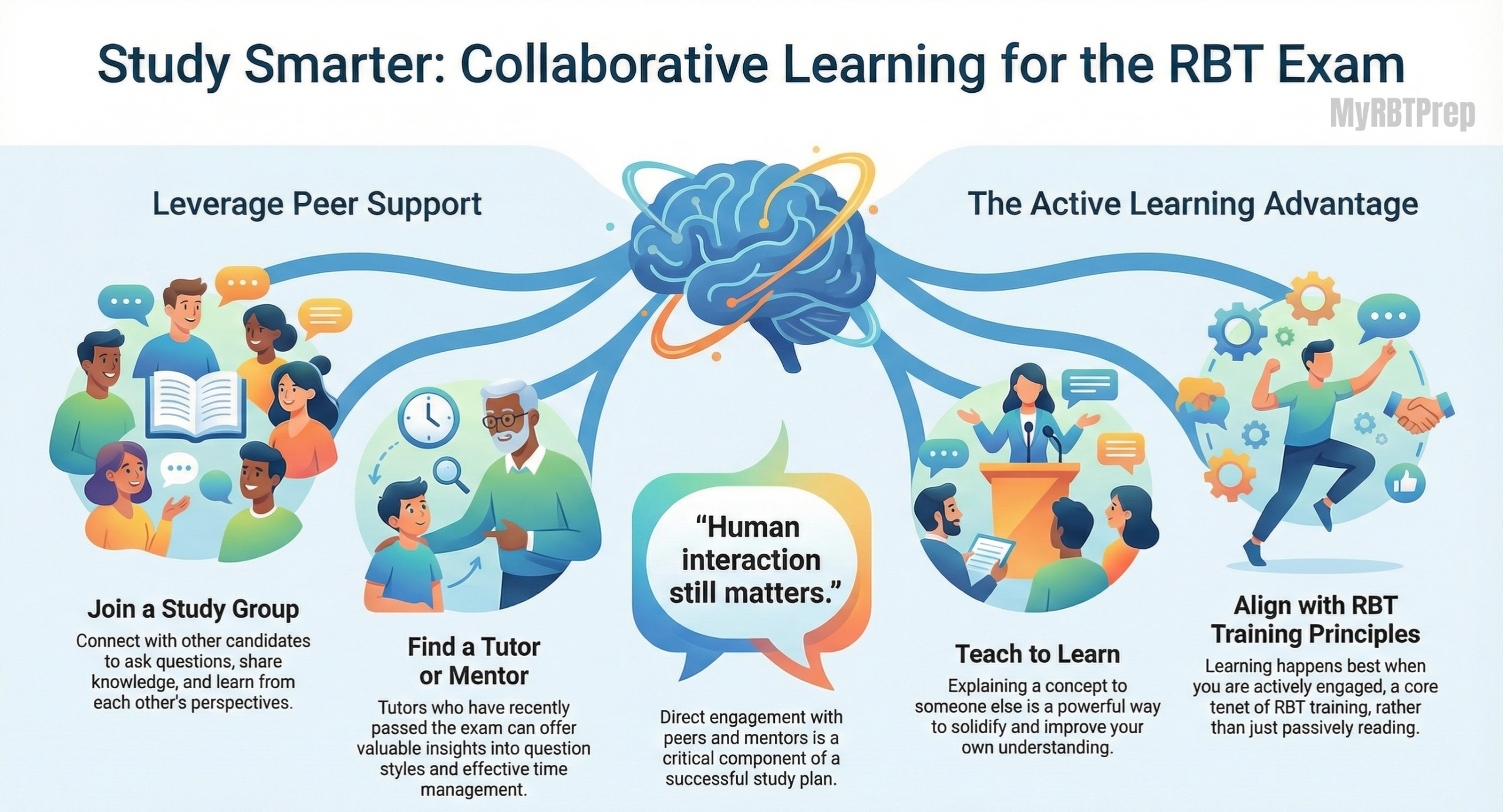
Human interaction still matters. Join a study group or connect with other candidates who ask questions like “Best study plan for RBT exam retake”.
Tutors or mentors who recently passed the exam offer insight into question styles and time management. Sometimes explaining a concept to someone else helps you understand it better yourself.
This peer support aligns with Registered Behavior Technician training principles—learning happens best when you’re actively engaged rather than passively reading.
How to Improve Your Test-Taking Strategy
Passing the exam isn’t just about what you know—it’s also about how you think during the test. Great candidates develop a test-taking strategy that aligns with their knowledge.
When you ask “Is the RBT exam hard to pass?” the answer is: yes—but with the right approach it becomes manageable.
Let’s shift from “what to study” to “how to perform” on exam day.
Time Management Tips
You have 90 minutes for approximately 85 questions. That means you need to keep a steady pace—about one minute per question, allowing brief review time at the end. Practice pacing in your mock exams until this rhythm feels natural.
If you find yourself stuck too long on early questions, you risk rushing at the end.
Keep an eye on the timer, skip quickly when stuck, mark for review, and return if time allows. This kind of discipline improves your efficiency significantly.
How to Read Questions Effectively

Test questions often include distractors and scenario details that are easy to misinterpret. Focus on reading carefully, isolating the relevant information, and ignoring irrelevant context—just like your tutors warn you.
When faced with a behavior-analysis scenario, ask: “What is the client doing? What is the antecedent? What is the consequence?” This helps you pick the correct answer rather than relying on memorisation alone.
Using such clarity is a cornerstone of RBT exam preparation for beginners and experienced alike.
Avoiding Common Mistakes
One common error is overthinking—changing initial instincts after rereading too much. Another is skipping questions completely and leaving too many unanswered.
Also, some candidates forget to review flagged items if they finish early. Recognising these pitfalls ahead of time helps you avoid them.
Your goal is to move forward steadily, mark uncertain items, and revisit them only if time allows. Avoid fixating on one tricky question and losing track of the clock.
Conclusion: Turning Your Setback into a Comeback
Failing the RBT exam is not a dead end—it is a detour with direction. You now know more about the RBT retake waiting period, the RBT exam passing score, the RBT certification process, and how to plan your retry intelligently. Your next move should be sharper: dive into active study, simulate real test conditions, update your study materials, refine your strategy, and schedule your retake ready to win.
Remember this: your journey to becoming a Registered Behavior Technician is meaningful. Your clients will depend on your skills. When you ask “How to pass RBT exam after failing once?”, the answer lies in preparation, retraining, and resolve. Now it’s time for your comeback—stronger, wiser, and ready to succeed.
FAQs About Failing and Retaking the RBT Exam
What happens if I don’t pass the RBT exam?
If you don’t pass the RBT exam, you can retake it after seven days by reapplying through your BACB account.
How many times can you retake the RBT exam?
You can retake the RBT exam up to eight times within 12 months under the BACB retake policy.
What happens if you fail the BCBA exam?
If you fail the BCBA exam, you may retake it in the next available testing window after submitting a new application and fee.
How many questions can be missed on the RBT exam?
You can miss about 13 to 15 questions and still pass, depending on the RBT exam passing score for that session.
What is the minimum score to pass the RBT exam?
The RBT exam passing score is around 200 out of 250, but it may slightly vary with each testing period.

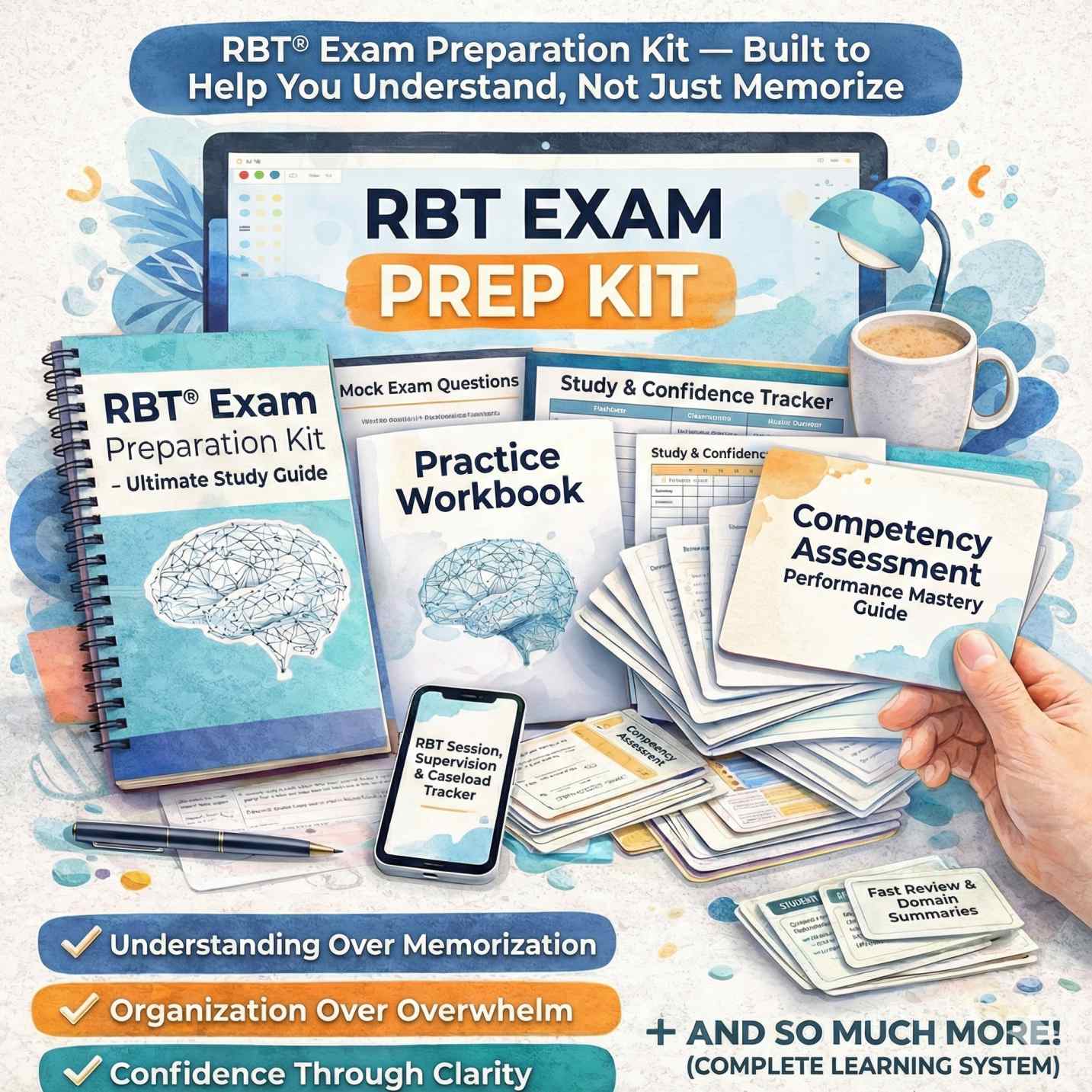
Everything You Need to Pass Your RBT® Exam
Study with our complete, all-in-one preparation package covering every task on the BACB Task List 3.0:
- 1,000+ Practice Questions & Timed Simulator
- 3rd Edition Task List Study Guide & Workbook
- Active Recall Flashcards System + Mobile App
- 20-Task Competency Assessment Mastery Guide


Using this platform has help me to pass the RBT exam. The question on here are very similar to the actual exam.