Registered Behavior Technicians (RBTs) play a vital role in delivering ABA therapy for autism. Beyond skill and training, adherence to an RBT ethics code ensures that therapy is safe, professional, and effective. RBTs work under BCBA supervision, implementing personalized autism intervention strategies that improve communication, social skills, and independence in children with ASD.
By following ethical standards, RBTs protect clients, maintain trust with families, and uphold the integrity of behavioral skills development. Understanding these rules helps parents, caregivers, and technicians ensure therapy is conducted responsibly while promoting long-term developmental outcomes.
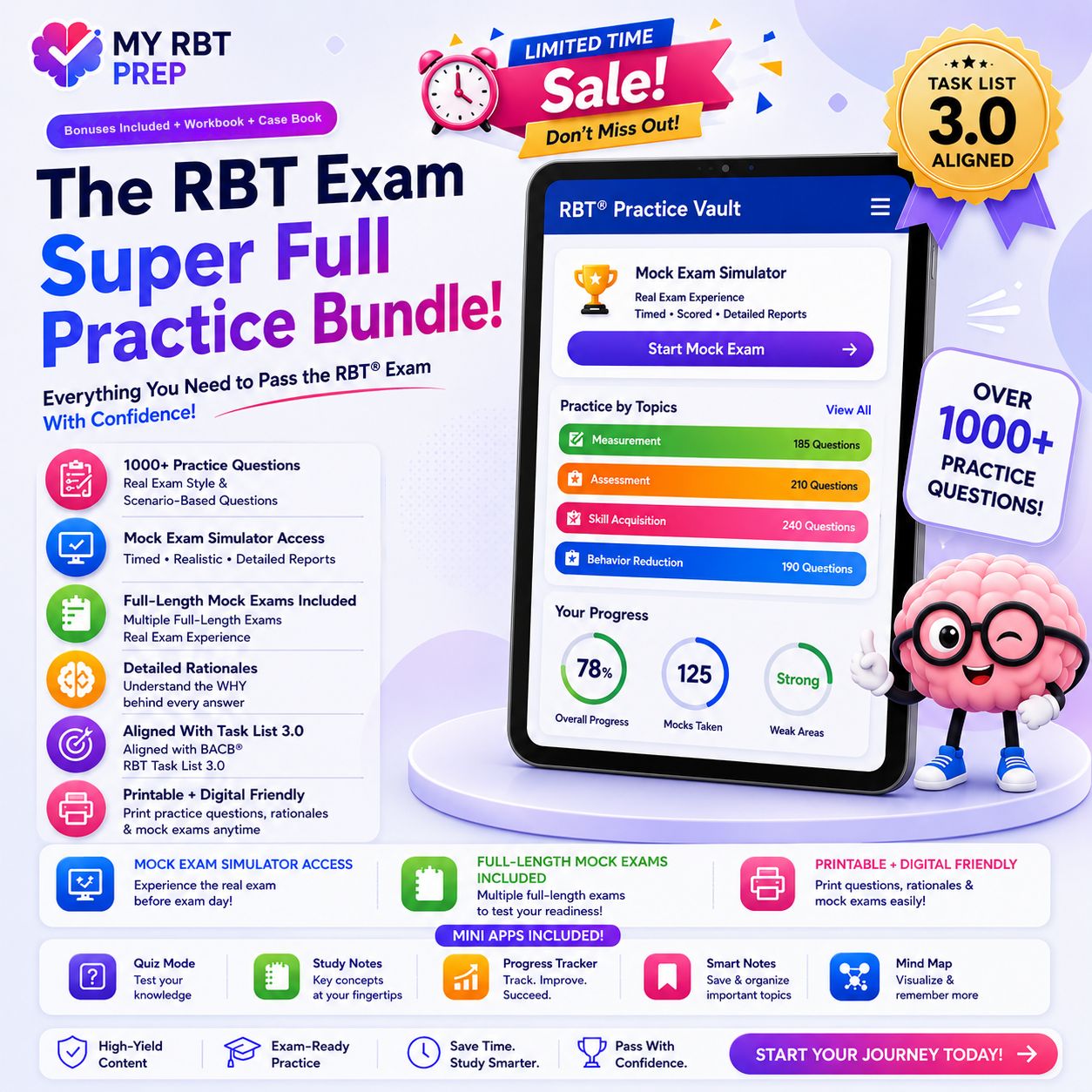
Pass Your RBT® Exam on the First Attempt
Practice with 1,000+ realistic scenario questions, multiple full-length timed mock exams, and detailed rationales formatted exactly like the real Pearson VUE test.
What Is the RBT Ethics Code?
The RBT ethics code is a set of professional standards created by the Behavior Analyst Certification Board (BACB). It outlines the responsibilities, boundaries, and conduct required for RBTs in ABA therapy programs. These rules guide direct therapy support for children with autism, including maintaining confidentiality, reporting ethical concerns, and prioritizing client welfare.
The code ensures that every intervention, whether using Verbal Behavior Therapy or Picture Exchange Communication System (PECS), is delivered with safety, respect, and accountability. RBTs must consistently demonstrate integrity while implementing behavior intervention plans and promoting positive reinforcement.
| Aspect | Details |
| Definition | A set of professional standards created by the Behavior Analyst Certification Board (BACB) for RBTs. |
| Purpose | Guides responsibilities, boundaries, and conduct in ABA therapy programs. |
| Key Responsibilities | Provide direct therapy support for children with autism, maintain confidentiality, report ethical concerns, prioritize client welfare. |
| Therapy Practices | Implement behavior intervention plans, use Verbal Behavior Therapy and PECS, and apply positive reinforcement. |
| Ethical Standards | Demonstrate integrity, safety, respect, and accountability in all interventions. |
Core Principles RBTs Must Follow
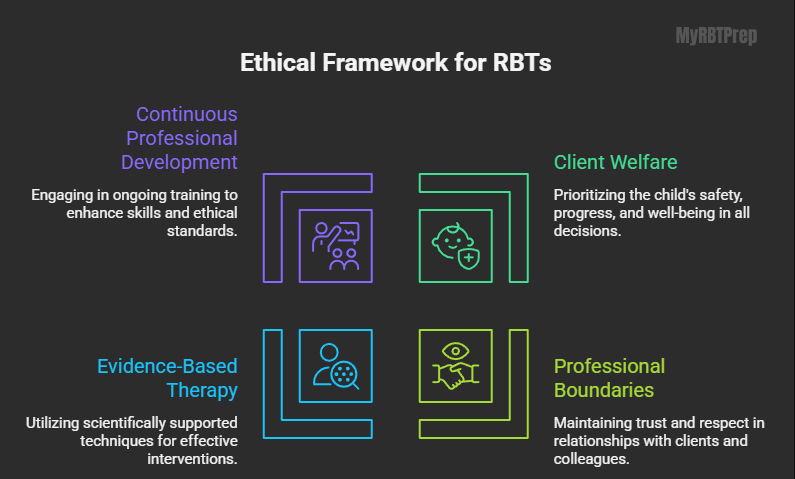
RBTs follow several core ethical principles that govern practice. First, client welfare is paramount, meaning all decisions prioritize the child’s safety, progress, and well-being. Second, maintaining professional boundaries ensures trust between RBTs, families, and other team members. Third, evidence-based therapy must guide interventions, ensuring techniques like behavior modification techniques are scientifically supported.
Finally, RBTs must engage in continuous professional development, including training in behavioral skills development, social skills training, and ethical standards. These principles create a foundation for high-quality autism support services and consistent, measurable improvements in ABA therapy outcomes.

RBT® Exam Flashcards & Study App (3rd Edition)
Master essential ABA terminology and clinical discrimination across all 6 BACB task list areas with 500+ printable and digital flashcards, real exam cues, and full mobile app access.
Maintaining Professional Boundaries
Maintaining professional boundaries is crucial in ABA therapy. RBTs must avoid dual relationships that could affect objectivity and therapy quality. They should clearly define roles, working under BCBA supervision, and focus on implementing individualized treatment plans. Boundaries include appropriate communication, respecting family dynamics, and avoiding conflicts of interest.
Proper boundaries also protect children with ASD from harm while fostering trust, making therapy more effective. By adhering to these rules, RBTs ensure that every session delivers hands-on ABA therapy sessions safely and ethically.
| Aspect | Details |
| Importance | Maintaining professional boundaries is essential for effective and safe ABA therapy. |
| Role Clarity | RBTs must clearly define their roles, work under BCBA supervision, and focus on implementing individualized treatment plans. |
| Communication | Boundaries include appropriate communication with children, families, and colleagues while respecting family dynamics. |
| Avoiding Conflicts | RBTs should avoid dual relationships or situations that could affect objectivity or therapy quality. |
| Impact on Therapy | Proper boundaries protect children with ASD, foster trust, and ensure hands-on ABA therapy sessions are safe and ethical. |
Confidentiality and Data Management
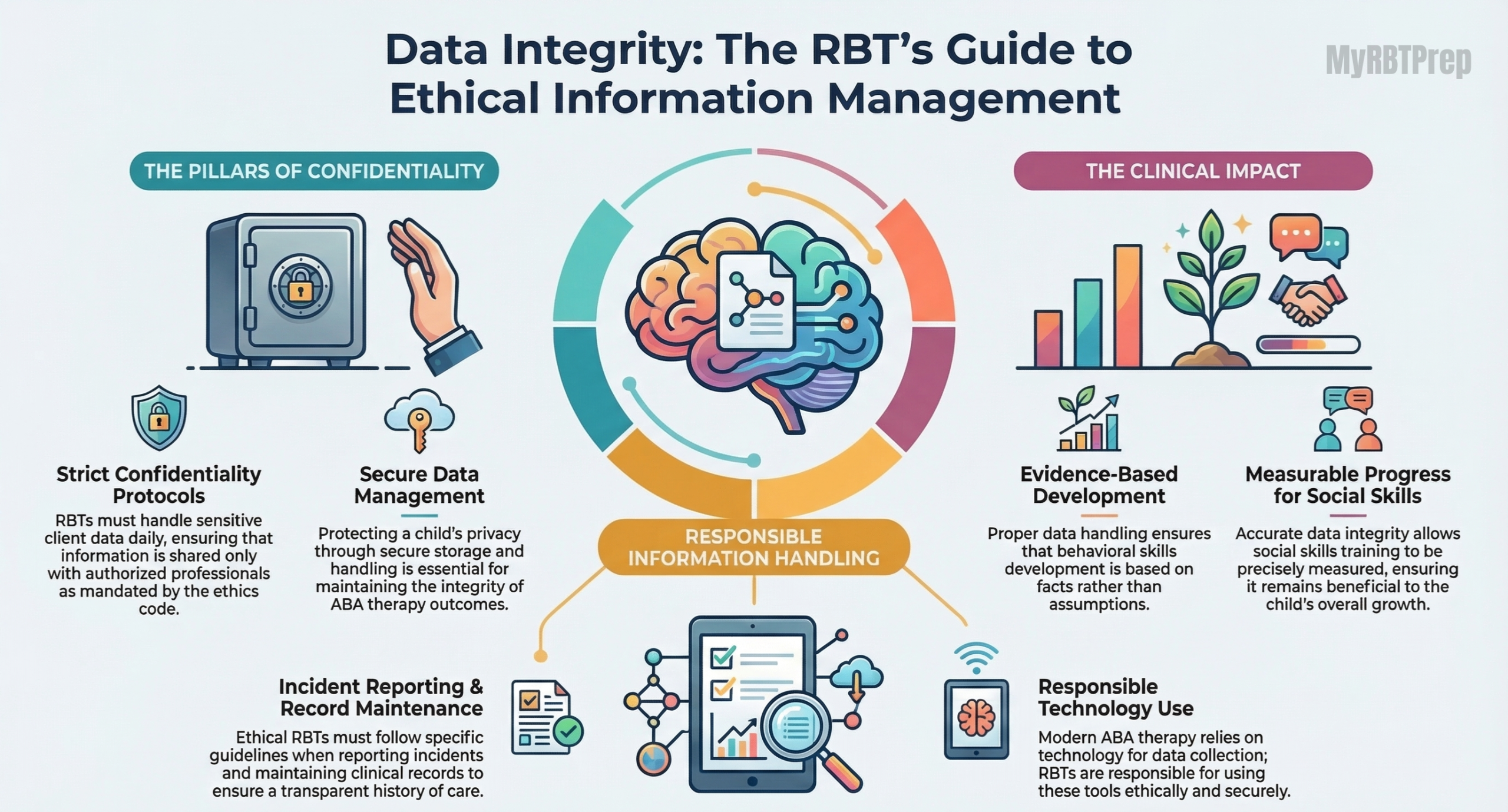
RBTs handle sensitive client information daily, from tracking progress through data collection to documenting therapy sessions. The ethics code requires strict confidentiality, only sharing information with authorized professionals. Secure data management protects children’s privacy and supports accurate ABA therapy outcomes.
Ethical RBTs also follow guidelines when reporting incidents, maintaining records, and using technology responsibly. Proper data handling ensures that behavioral skills development and social skills training are evidence-based, measurable, and beneficial to the child’s growth.
Ensuring Competence and Ongoing Education
RBTs must maintain competence by participating in continuing education and supervision. This includes staying updated on behavior modification techniques, positive reinforcement strategies, and evolving autism support services. Working with a supervising BCBA ensures that hands-on ABA therapy sessions are delivered correctly.
Ethical practice requires recognizing personal limitations and seeking guidance when necessary. Test your knowledge of client confidentiality, dual relationships, and mandatory reporting with our free RBT Ethics Quiz, or access complete exam prep tools in the RBT Exam Study Bundle.
| Aspect | Details |
| Importance | Maintaining competence is essential for delivering effective and safe ABA therapy. |
| Continuing Education | RBTs participate in ongoing training, workshops, and supervision to stay updated on behavior modification techniques, positive reinforcement strategies, and autism support services. |
| Supervision | Working with a supervising BCBA ensures hands-on ABA therapy sessions are delivered correctly and according to ethical standards. |
| Recognizing Limitations | Ethical practice requires acknowledging personal limitations and seeking guidance when needed. |
| Impact on Therapy | Commitment to professional growth enhances ABA therapy programs, promotes long-term developmental outcomes, and ensures safe, effective care. |
Reporting Unethical or Unsafe Practices
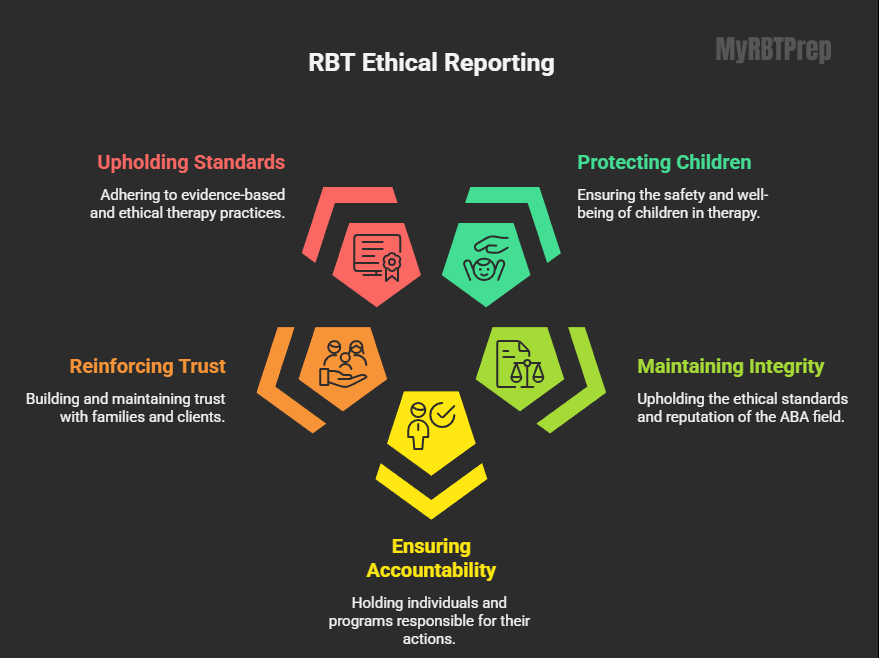
A critical aspect of the RBT ethics code is reporting concerns. RBTs must alert supervisors or BACB when they observe unethical behavior, unsafe practices, or breaches in confidentiality. This protects children in therapy and maintains the integrity of the field.
Clear reporting ensures accountability in ABA therapy programs, reinforces trust with families, and upholds ethical standards in evidence-based therapy. By doing so, RBTs contribute to a professional and safe environment for every child receiving autism treatment therapy.
Collaboration with Families and Caregivers
Ethical RBTs recognize that therapy is most effective when families are involved. They engage parents and caregivers in supporting independence and daily living skills, explaining interventions, and providing guidance on reinforcing skills at home. Collaboration ensures generalization of learned skills across settings and strengthens the impact of behavior intervention plans.
RBTs uphold ethical standards by communicating clearly, respecting family perspectives, and maintaining transparency throughout therapy sessions.
Table: Key RBT Ethics Rules
| Ethics Area | Rules for RBTs |
| Client Welfare | Prioritize child safety, progress, and well-being in all interventions. |
| Professional Boundaries | Avoid dual relationships, conflicts of interest, and maintain clear role definitions. |
| Confidentiality | Secure client data, share only with authorized professionals, and report breaches. |
| Competence | Engage in continuing education, recognize limitations, and seek supervision. |
| Reporting | Report unethical or unsafe practices promptly to BCBA or BACB. |
| Collaboration | Work with families and caregivers to reinforce skills and generalize learning. |
| Evidence-Based Practice | Use scientifically validated techniques and monitor ABA therapy outcomes. |
Upholding Integrity in Daily ABA Therapy
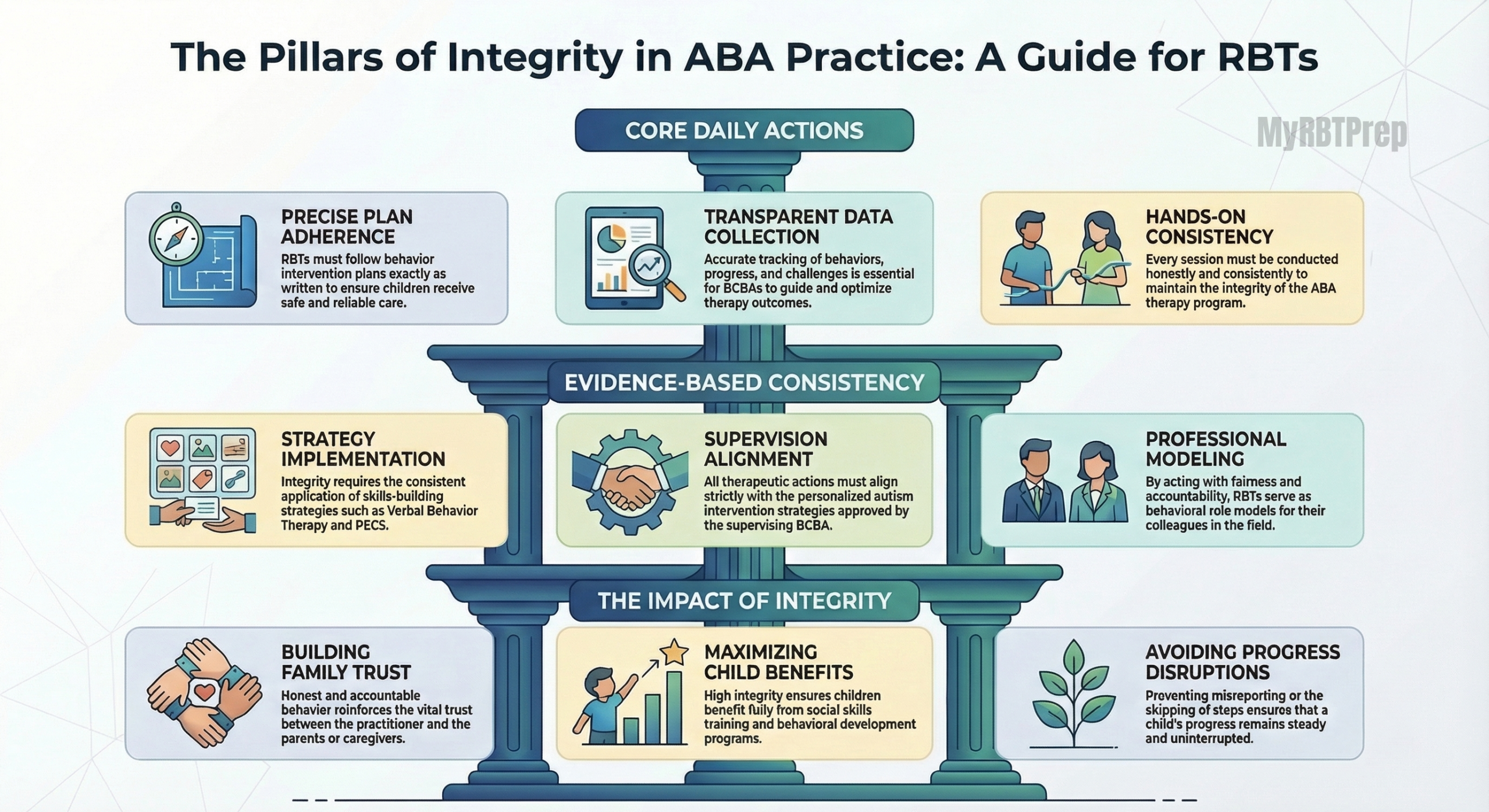
Integrity is the backbone of ethical practice for RBTs. Every session must be conducted honestly and consistently, ensuring that children with ASD receive safe, reliable care. This includes providing hands-on ABA therapy sessions, following behavior intervention plans precisely, and maintaining transparency in data collection in ABA. Accurate tracking of behaviors, progress, and challenges is essential to guide adjustments and optimize ABA therapy outcomes. Misreporting or skipping steps can disrupt a child’s progress and undermine the trust of families and supervisors.
RBTs also uphold integrity by applying evidence-based behavioral interventions consistently, whether using Verbal Behavior Therapy, PECS, or other skill-building strategies. They must ensure that all therapy aligns with personalized autism intervention strategies approved by the supervising BCBA.
By acting with honesty, fairness, and accountability, RBTs not only reinforce trust with parents and caregivers but also model professional behavior for colleagues. Upholding integrity ensures children benefit fully from behavioral skills development and social skills training, making ABA therapy programs effective and meaningful.
Balancing Professional and Emotional Demands
RBTs face unique emotional and professional challenges while working with children on the autism spectrum. Children may display challenging behaviors, struggle with communication, or resist daily routines, requiring RBTs to maintain patience, empathy, and professionalism. Ethical practice involves managing these emotional and professional demands of RBTs while ensuring a safe, supportive environment. By remaining composed, using positive reinforcement, and applying behavior modification techniques, RBTs help children stay engaged and make progress in skill acquisition.
Supervision from a BCBA provides guidance on handling complex cases, adjusting behavior intervention plans, and supporting generalization of learned skills across settings. Collaborating with families and caregivers is also essential, as it helps reinforce skills at home and school.
Balancing professional demands and emotional challenges ensures RBTs can consistently deliver direct therapy support for children with autism, maximize learning opportunities, and maintain personal well-being. This equilibrium directly impacts ABA therapy outcomes, fostering independence, improved social interaction, and long-term developmental success.
| Aspect | Details |
| Challenges | RBTs face emotional and professional challenges when children display difficult behaviors, struggle with communication, or resist routines. |
| Professional Skills | Maintaining patience, empathy, and professionalism is essential while applying positive reinforcement and behavior modification techniques. |
| Supervision | Guidance from a BCBA helps handle complex cases, adjust behavior intervention plans, and support generalization of learned skills across settings. |
| Family Collaboration | Working with families and caregivers reinforces skills at home and school, supporting consistency in therapy. |
| Impact on Therapy | Balancing these demands allows RBTs to deliver direct therapy support for children with autism, maximize learning, and promote independence, social interaction, and long-term developmental outcomes. |
Promoting Continuous Learning and Professional Development
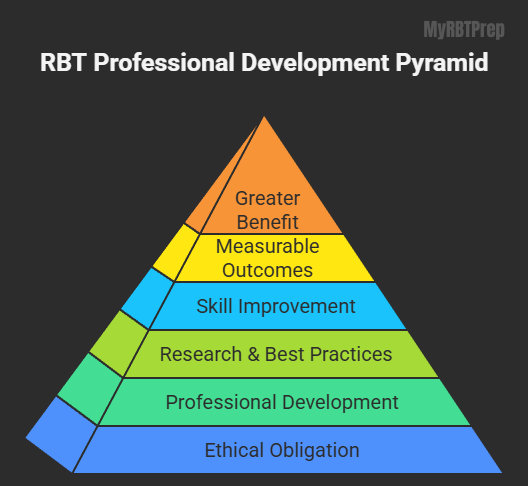
RBTs uphold their ethical obligation to continually educate themselves on how to provide better ABA therapy for individuals with autism (ASD). As Developed Professionals, RBTs use ongoing professional development to maintain competency in providing evidence-based Therapy for Autism, Social Skills Training and the development of behavioural skills.
Methods of Continued Professional Development may involve attending workshops and training programmes or receiving supervision from a BCBA. Staying current on recent research and best-practices see RBTs be effective in developing individualised ASD Interventions and allow for the RBT to adapt to meet the needs of the child they are working with.
Through Continued learning improve their methods of tracking the child’s progress via data collection, develop more effective methods of providing verbal behaviour therapy and PECS, and ensure that they are consistently complying with ethical guidelines. Through the continual improvement of RBTs’ knowledge and skills, they contribute to producing measurable ABA therapy outcomes for children with Autism in relation to their increasing independence and daily living skills. When an RBT is committed to their own development, they provide greater benefit to the child, their family or caregivers, and the broader autism support service system. Ethical RBTs that are knowledgeable provide high-quality ABA therapy that is consistent, safe and effective for the child’s long-term development.
FAQs
- What is the RBT ethics code?
It is a set of professional rules guiding RBTs to deliver safe, ethical, and effective ABA therapy for children with autism. - Why must RBTs follow ethical standards?
Ethical standards protect children, ensure therapy is evidence-based, and maintain trust with families. - How do RBTs maintain client confidentiality?
By keeping records secure, sharing information only with authorized professionals, and reporting breaches. - What happens if an RBT observes unsafe practices?
They must report concerns to a supervising BCBA or the BACB immediately. - How do ethical practices improve ABA therapy outcomes?
Following ethics ensures consistency, safety, and evidence-based interventions, leading to better behavioral skills development and long-term results.

Everything You Need to Pass Your RBT® Exam
Study with our complete, all-in-one preparation package covering every task on the BACB Task List 3.0:
- 1,000+ Practice Questions & Timed Simulator
- 3rd Edition Task List Study Guide & Workbook
- Active Recall Flashcards System + Mobile App
- 20-Task Competency Assessment Mastery Guide