Becoming a Registered Behavior Technician (RBT) is one of the most rewarding ways to start a career in Applied Behavior Analysis. Many learners today choose University & Online Programs Offering Accredited RBT Training because these programs combine flexible study options with professional credibility.
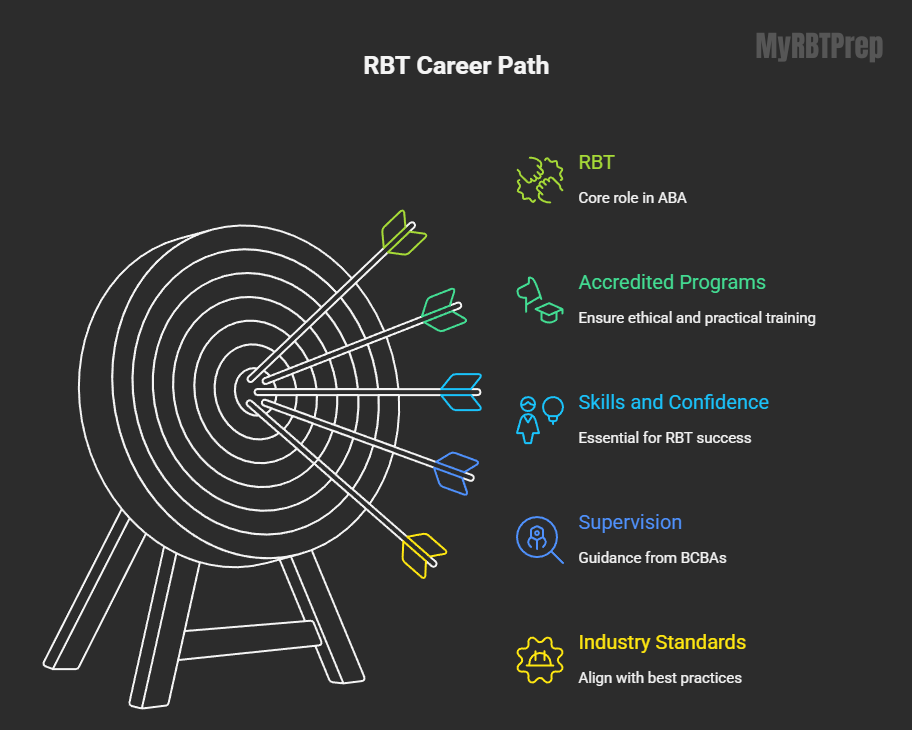
Whether you are entering the field for the first time or transitioning from another career, accredited RBT training provides the structure, skills, and confidence needed to support individuals with autism and developmental disabilities. RBTs work under the supervision of Board Certified Behavior Analysts, applying evidence-based strategies in therapy sessions, classrooms, and community programs.
Accredited programs ensure your training is ethical, practical, and fully aligned with industry standards, which makes them highly sought after by employers across the USA. This article provides a comprehensive guide to understanding, choosing, and excelling in accredited RBT programs.
Understanding What Accredited RBT Training Really Means
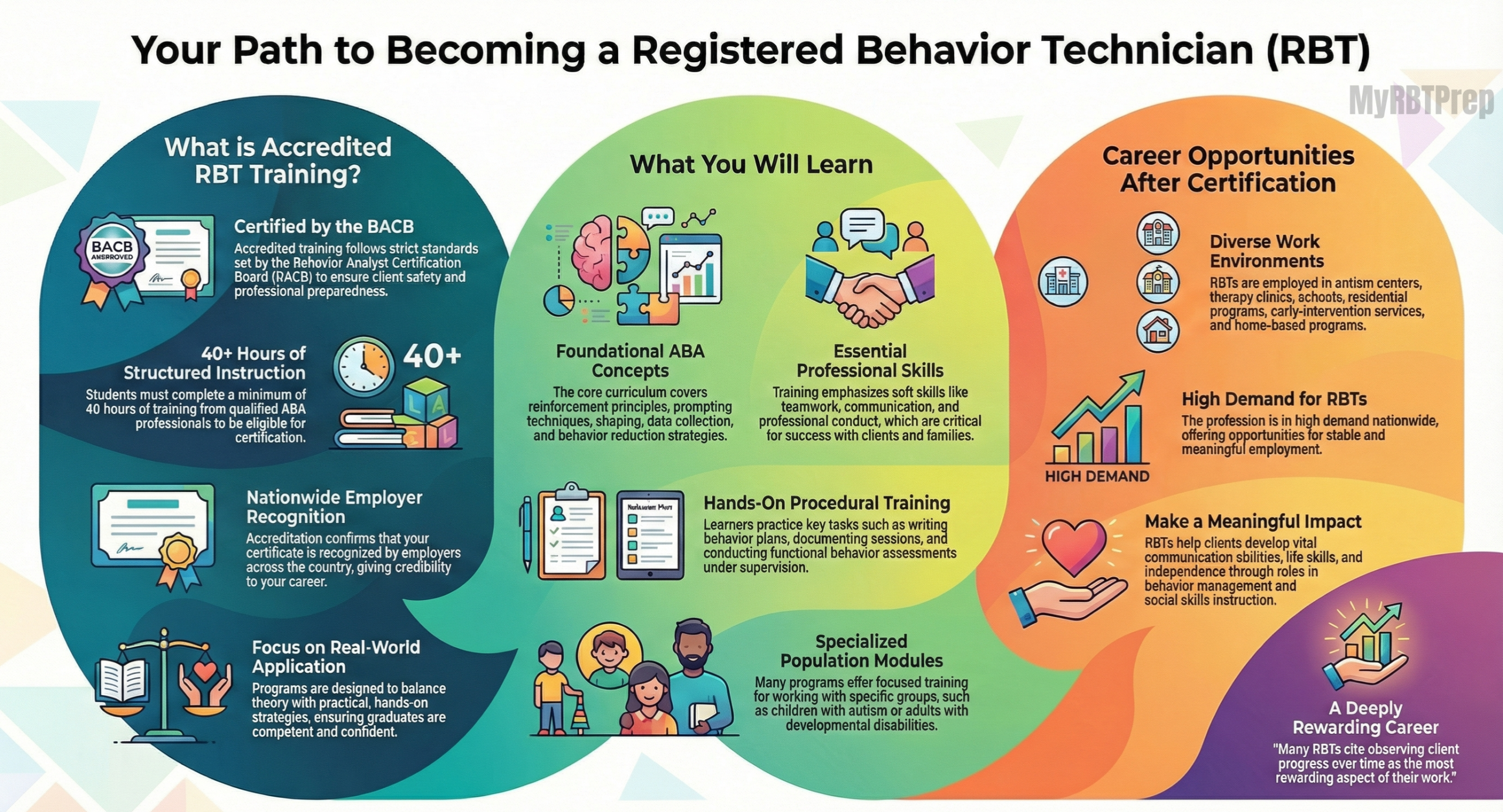
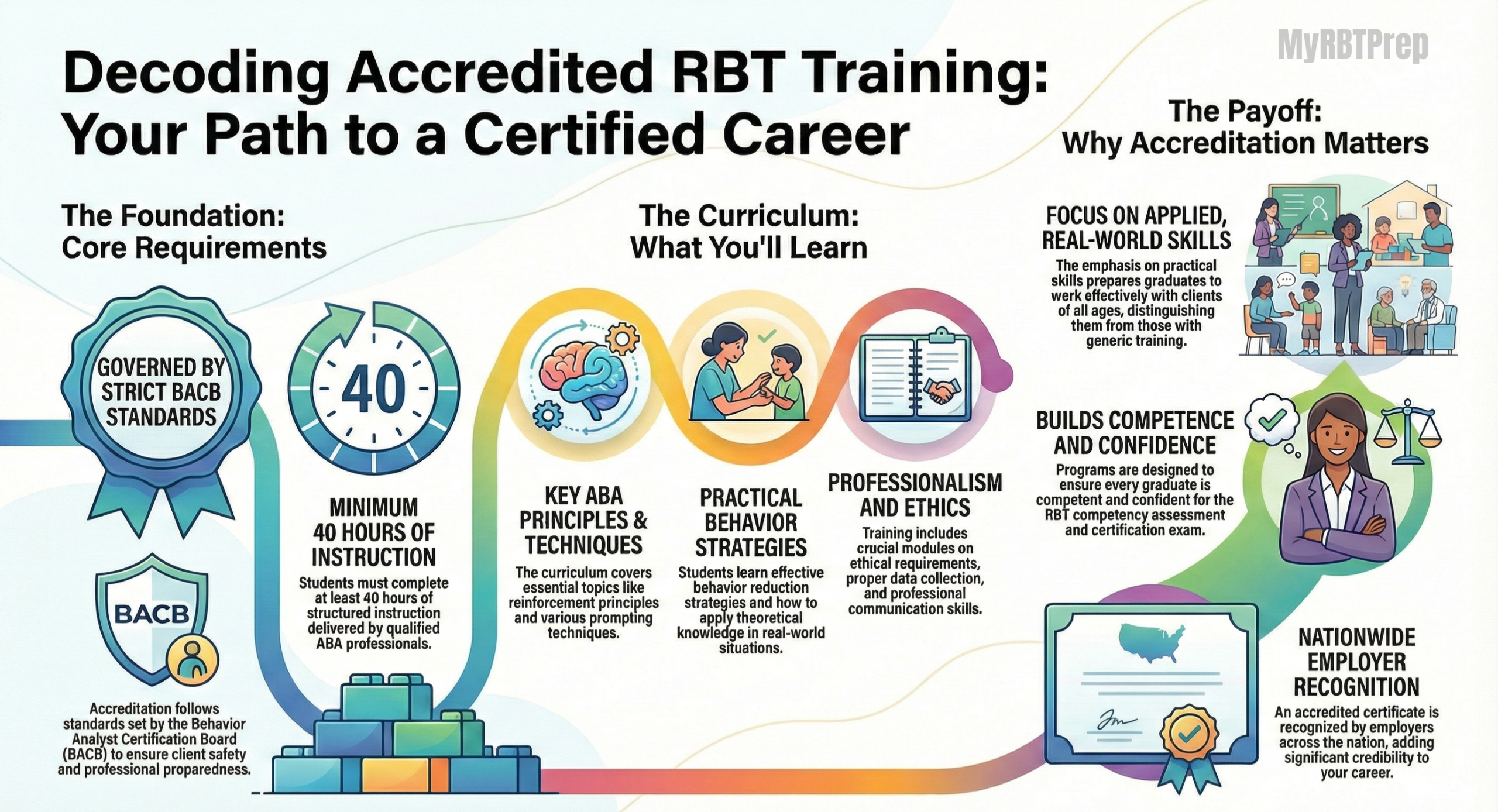
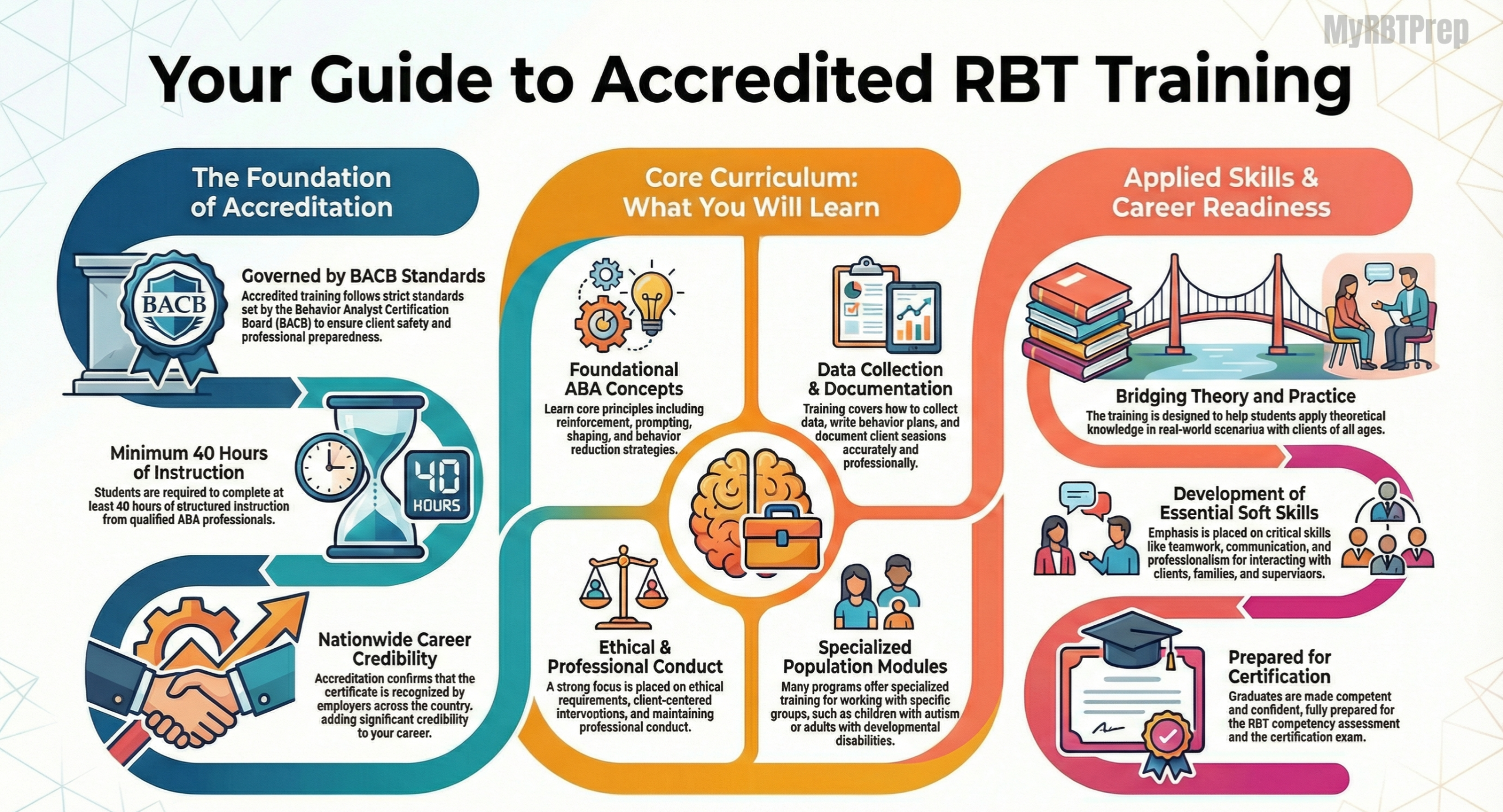
Accredited RBT training follows strict standards set by the Behavior Analyst Certification Board (BACB) to ensure client safety and professional preparedness. Students must complete at least 40 hours of structured instruction from qualified ABA professionals.
During University & Online Programs Offering Accredited RBT Training, learners cover topics such as reinforcement principles, prompting techniques, behavior reduction strategies, ethical requirements, data collection, and professional communication. This training ensures that students can apply theory in real-world scenarios.
Accreditation also confirms that the certificate is recognized by employers nationwide, giving credibility to your career. Programs are designed to balance practical hands-on strategies with theory, ensuring that every graduate is competent, confident, and ready for the RBT competency assessment and certification exam.
The focus on applied skills distinguishes accredited programs from generic online courses, ensuring that graduates are fully prepared to work with clients of all ages.
Why Students Prefer University & Online Programs Offering Accredited RBT Training
University and online programs are preferred by many learners because they balance academic rigor with convenience. University-based courses are designed by licensed behavior analysts and faculty members, ensuring lessons reflect current, real-world practices.
Students gain access to structured modules, tutorials, case examples, and interactive lessons. Online programs allow learners to study from home, revisit topics at their own pace, and balance training with other commitments.
This flexibility attracts working adults, parents, and career changers who want professional growth without disrupting daily life. Many students also report feeling more motivated and confident when their training includes interactive components such as quizzes, simulation exercises, and guided case studies.
| Benefit of Online RBT Programs | Why It Matters |
| Self-paced modules | Learn when it fits your schedule |
| Accessible nationwide | Train from anywhere in the USA |
| Expert-designed curriculum | Trustworthy and accurate content |
| Affordable tuition | Easier entry into healthcare careers |
| Interactive case studies | Enhances practical understanding |
| Supportive instructor feedback | Improves exam and competency outcomes |
The Role of Universities in RBT Education
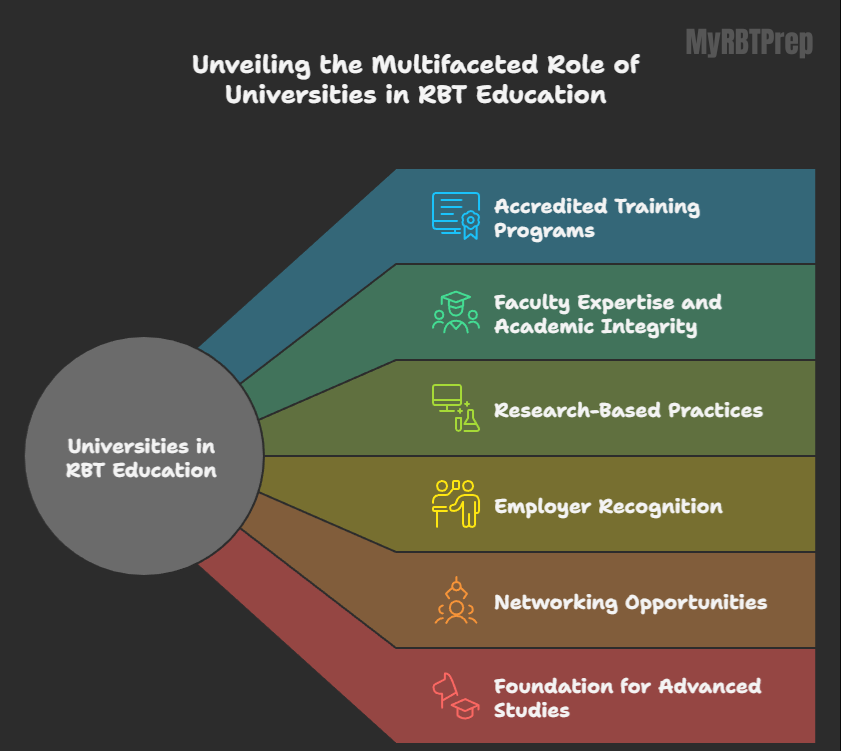
Universities play a significant role in delivering quality RBT training. Many psychology and education departments now offer University & Online Programs Offering Accredited RBT Training as part of professional development programs. Students benefit from faculty expertise, structured lessons, and academic integrity.
Universities connect learners with research-based practices, ensuring they gain both theoretical and practical knowledge. Employers recognize university-issued certificates as highly credible, making it easier for graduates to secure jobs in therapy clinics, schools, or residential programs.
University programs also provide networking opportunities with professionals and alumni, which can lead to mentorship and job placements. For students pursuing further education, such as BCaBA or BCBA certification, university-based training provides a strong academic foundation and smoother transition into advanced ABA roles.
Private Online Platforms Offering RBT Certification Preparation
In addition to universities, many private online platforms offer University & Online Programs Offering Accredited RBT Training with interactive features such as video demonstrations, quizzes, downloadable worksheets, and exam-prep tools. These platforms simplify complex ABA concepts, allowing learners to progress at their own pace.
Instructor support is often available to answer questions and guide students through completing hours and preparing for the certification exam. Many platforms also provide community forums, live Q&A sessions, and virtual study groups, creating opportunities to collaborate with peers and learn from shared experiences.
| Type of Program | Key Strength |
| University-based | Strong academic reputation |
| Private online platform | User-friendly and flexible |
| Hybrid training | Mix of live and recorded instruction |
| Employer-sponsored programs | Direct pathway to ABA clinic employment |
| Self-paced platforms | Ideal for working adults or parents |
| Mentorship-focused programs | Personalized guidance and support |
What You Will Learn in Accredited RBT Training
The curriculum covers foundational ABA concepts, including reinforcement, prompting, shaping, data collection, and behavior reduction. Students learn to implement ethical, client-centered interventions while maintaining professional conduct.
Programs also emphasize soft skills such as teamwork, communication, and professionalism, which are critical for successful interactions with clients, families, and supervisors. Learners practice writing behavior plans, documenting sessions, and conducting functional behavior assessments under supervision.
By the end of the program, students are capable of implementing strategies safely, accurately, and ethically in a variety of settings. Many programs also provide specialized modules focused on specific populations, such as children with autism, adults with developmental disabilities, or clients with complex behavioral challenges.
Admission Requirements for RBT Programs
Enrollment is generally open to adults from diverse backgrounds. To qualify for University & Online Programs Offering Accredited RBT Training, students typically must:
| Requirement | Reason |
| Minimum age 18+ | Ensures adult professional responsibility |
| High school diploma/GED | Establishes baseline education level |
| Background check | Protects client safety |
| Completion of training | Required for exam eligibility |
| Reliable internet access | Necessary for online coursework |
| Commitment to supervised practice | Ensures successful skill application |
These requirements protect clients and ensure that trainees are ready to take on professional responsibilities. Programs often provide guidance to ensure students are prepared for both coursework and assessments, including mentorship and practice hours.
How Long Does Accredited RBT Training Take?
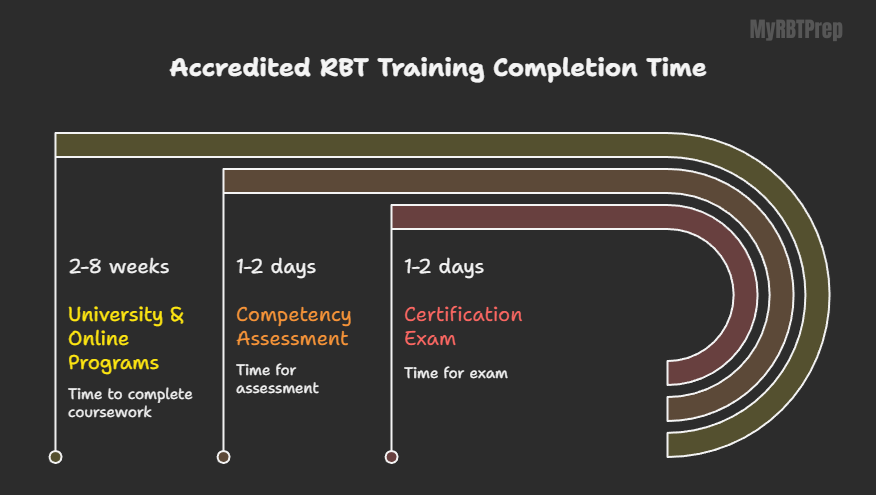
Most students complete University & Online Programs Offering Accredited RBT Training in 2–8 weeks, depending on part-time or full-time study. Self-paced programs allow faster completion for motivated learners. After finishing coursework, students participate in a competency assessment under supervision, followed by the certification exam.
This process ensures that RBTs entering the workforce are capable, ethical, and prepared to support clients safely. Many students find that spreading their study over 6–8 weeks allows them to balance work, personal commitments, and practice hours effectively while retaining information long-term.
Cost of Accredited RBT Programs
Tuition varies depending on program type, format, instructor involvement, and learning resources. University programs may cost slightly more due to faculty oversight and certification administration, while private platforms often offer lower fees or payment plans. Despite differences, RBT certification remains one of the most affordable entry-level healthcare credentials, with strong career growth opportunities. Some programs also provide bundled resources such as exam prep, practice tests, and mentorship support at no extra cost, increasing value for students.
| Program Type | Typical Cost Range |
| University program | Moderate to higher |
| Private platform | Lower to moderate |
| Corporate training | Employer-sponsored |
| Financial aid option | Sometimes available |
| Bundled programs | May include exam prep and mentoring |
Job Opportunities After Completing RBT Certification
RBTs work in autism centers, therapy clinics, schools, residential programs, and early-intervention services. They help clients develop communication, life skills, and independence. The profession is in high demand nationwide, offering stable, meaningful employment.
Many graduates also work in private therapy practices or home-based intervention programs, providing flexibility in hours and work location. Observing client progress over time is often cited as the most rewarding aspect of the career. Additionally, RBTs can pursue specialized roles in behavior management, social skills instruction, and academic support for children with developmental challenges.
Long-Term Career Growth After RBT Certification
RBT certification is often the first step toward advanced ABA careers. Many RBTs pursue BCaBA or BCBA roles or take on supervisory and training positions. Skills gained as an RBT, such as observation, communication, and problem-solving, remain valuable across behavioral health, counseling, education, and social services.
Some professionals transition into specialized areas like early intervention, pediatric therapy, or school-based ABA, expanding career options and earning potential. Experienced RBTs may also serve as mentors to new technicians, contributing to training programs and enhancing overall quality of care in their workplaces.
| Aspect | Details |
| Next Career Steps | Many RBTs pursue BCaBA or BCBA roles, or take on supervisory/training positions. |
| Transferable Skills | Observation, communication, and problem-solving skills are valuable across behavioral health, counseling, education, and social services. |
| Specialized Areas | Early intervention, pediatric therapy, and school-based ABA expand career options and earning potential. |
| Mentorship & Leadership | Experienced RBTs may mentor new technicians, contribute to training programs, and improve quality of care. |
Choosing the Right Accredited RBT Program
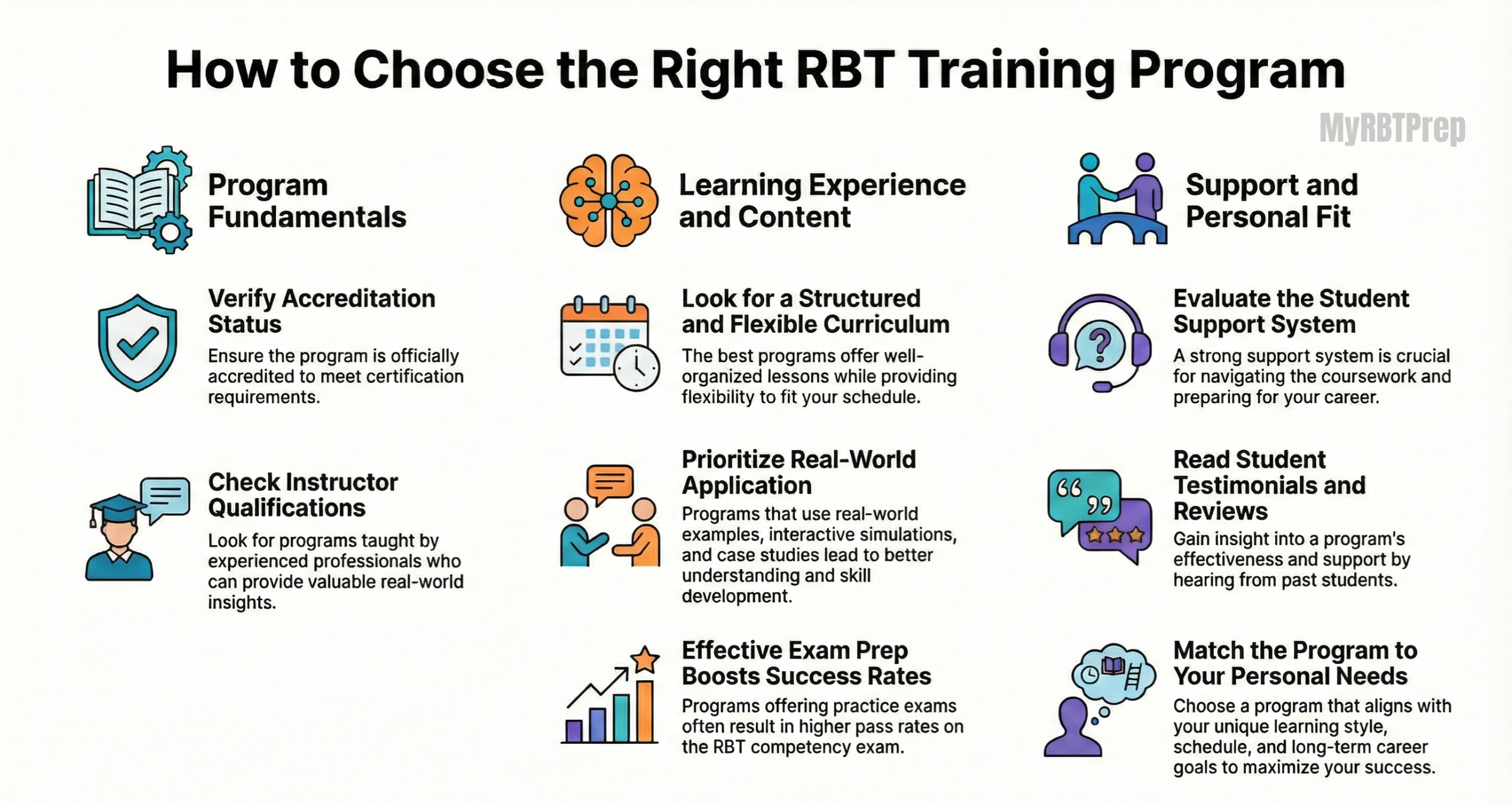
When selecting a program, consider accreditation status, instructor qualifications, course structure, flexibility, and student support. The best University & Online Programs Offering Accredited RBT Training provide real-world examples, structured lessons, and exam preparation.
Programs with interactive simulations, case studies, and practice exams often result in higher competency exam success rates. Learners should choose a program that matches their learning style, schedule, and career goals to maximize success. Reading student testimonials and reviews can also provide insight into the program’s effectiveness and support system.
The Real-World Impact of RBT Training
Training in RBT programs goes beyond exams. RBTs help clients gain essential skills, communicate, and achieve independence. Families often describe RBTs as integral members of their support team. Knowing your work has a tangible impact adds purpose to the career.
Case studies consistently show that trained RBTs improve client outcomes faster, demonstrating the importance of quality training. The confidence and professional skills gained through accredited programs also lead to higher job satisfaction and long-term career growth. RBTs often witness small improvements in client behavior daily, which accumulate over months to create meaningful life changes for clients and families.
| Aspect | Details |
| Client Impact | RBTs help clients gain essential skills, improve communication, and achieve independence. |
| Family Perspective | Families view RBTs as integral members of their support team. |
| Purpose & Fulfillment | Seeing tangible results adds meaning and purpose to the career. |
| Evidence from Case Studies | Trained RBTs improve client outcomes faster, showing the value of quality training. |
| Professional Development | Accredited programs build confidence, skills, and lead to higher job satisfaction and long-term career growth. |
| Daily Progress | Small daily improvements in client behavior accumulate over time to create meaningful life changes. |
Case Study: Success in Real-World RBT Practice
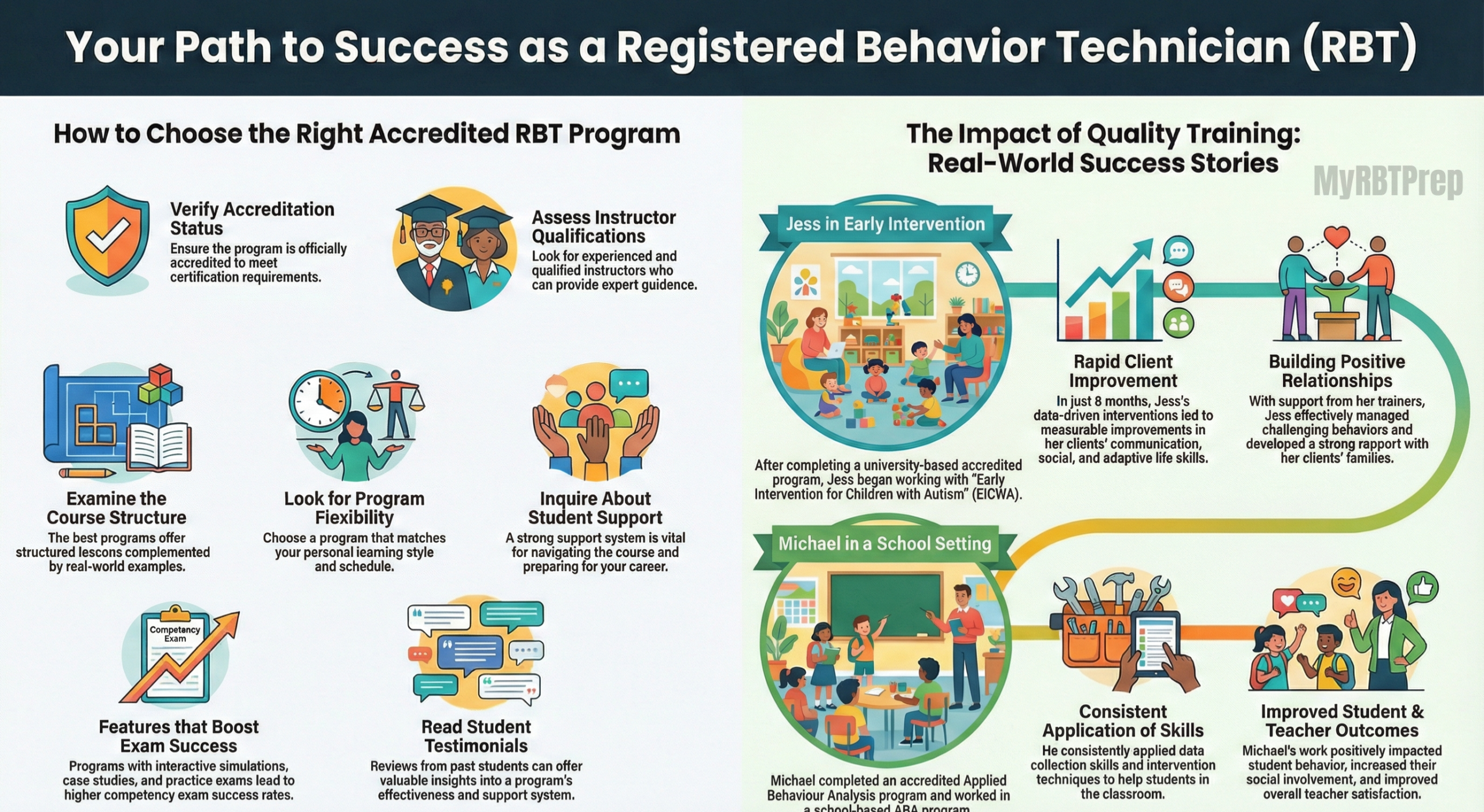
Jess, who has recently become certified as an RBT, started working for Early Intervention for Children with Autism (EICWA) shortly after completing a university-based accredited programme and learning how to implement the behavioural intervention programs and collect accurate data.
Data reflected how much Jess’ behaviour intervention for her clients was improving their Communication Skills, Social Interaction Skills, Adaptive Skills (Life Skills), and many other areas of their development, in just 6 months into the programme. With the help of her trainers and support staff, Jess was able to effectively treat her clients’ potentially difficult behaviours and develop a good rapport with their families.
This example of Jess, and the degree she earned, demonstrates how accredited training programmes provide individuals with the education, training, and tools needed to successfully transition into the workforce. An example of an individual who has completed an accredited programme in Applied Behaviour Analysis is Michael. Michael worked in a school-based ABA programme, helping students develop their behaviours in the classroom, as well as promoting their increased involvement in social activities. By using data collection consistently, applying data collection skills effectively and delivering intervention techniques consistently, he positively impacted the students he worked with, and improved teacher satisfaction.
Frequently Asked Questions
Is RBT training fully online?
Yes, many accredited programs allow you to complete all 40 training hours online. Some also offer optional in-person sessions for hands-on practice.
Do I need a college degree to enroll?
No, a high school diploma or equivalent is usually enough to enroll in accredited RBT programs.
How long does certification take?
Most students finish training and certification within 1–3 months, depending on pacing and program type.
Is RBT work stressful?
Like any support role, it can be challenging, but most RBTs find it deeply rewarding to see client progress and success.
Are RBT jobs in demand?
Yes, demand continues to grow across schools, clinics, and therapy centers nationwide.