What Is RBT Training and Why It Matters

Finding Free RBT Training Near Me in 2026 has become easier than ever, especially with new online programs and community-based options supporting future behavior technicians.
Many learners want simple, affordable ways to start their career in autism services, so free and low-cost courses have become extremely popular. These programs teach essential skills, follow the BACB RBT task list, and prepare you for real work in ABA therapy.

Whether you prefer online learning or local support centers, today’s RBT training modules and digital classrooms give you strong learning flexibility. You can even explore free 40-hour RBT course choices that help you meet official requirements.

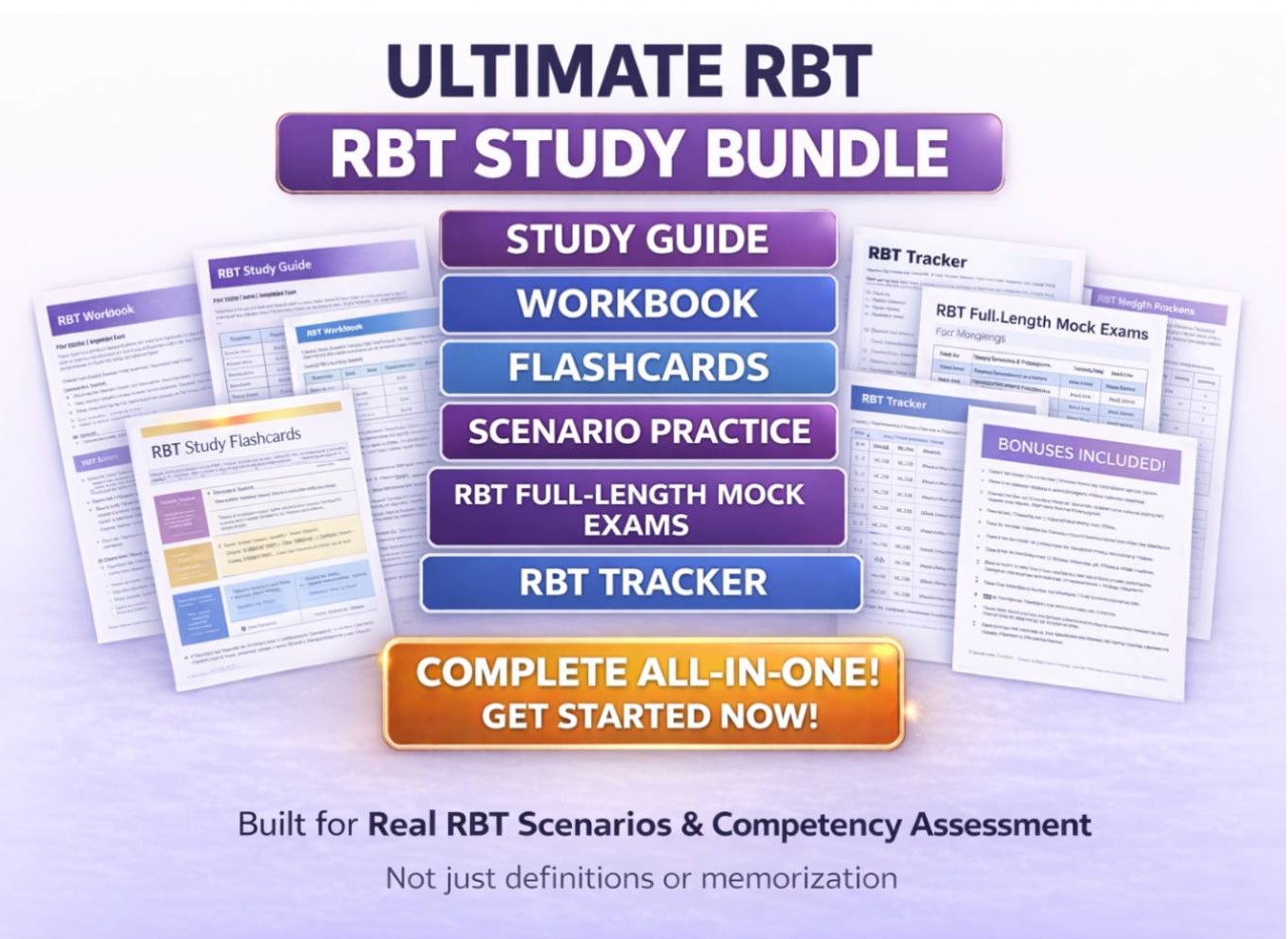
Prepare the right way, before your competency assessment.
Benefits of Becoming a Registered Behavior Technician
Becoming an RBT gives you a stable and meaningful career path where you use applied behavior analysis skills every day.
You gain hands-on experience with real clients, learn how to support those with autism, and build confidence in your ability to guide behavior change.
This career attracts people who enjoy helping others and want to work in education, therapy, or healthcare. With high demand across the United States, you will find strong RBT job opportunities once you complete your certification.
Another benefit is flexibility. Some RBTs work in schools while others work in clinics or homes. You can shape your own schedule and choose a work environment that fits your lifestyle.
Many people who start with ABA therapy training later move into more advanced roles in the field. Some even pursue BCaBA or BCBA credentials after gaining experience. Understanding RBT vs BCBA roles helps you plan long-term growth, and this pathway often opens doors you never expected.
| Benefit | Description | Example / Application | Key Insight |
| Hands-On Experience | Work directly with clients using ABA techniques | Support children with autism in schools, clinics, or homes | Builds practical skills and confidence in behavior guidance |
| Career Stability | High demand across the U.S. for certified RBTs | Opportunities in education, therapy, healthcare, and early intervention programs | Provides reliable employment with room for advancement |
| Flexibility | Choose work environment and schedule | Work part-time in clinics or full-time in home-based ABA therapy | Supports lifestyle needs and personal commitments |
| Professional Growth | Pathway to advanced ABA roles | Move from RBT to BCaBA or BCBA with experience and additional certification | Offers long-term career planning and upward mobility |
| Meaningful Work | Apply ABA to improve lives | Teach functional communication, reduce problem behaviors, and encourage independence | Provides personal satisfaction and impact on client outcomes |
Requirements for RBT Certification (Step-by-Step)
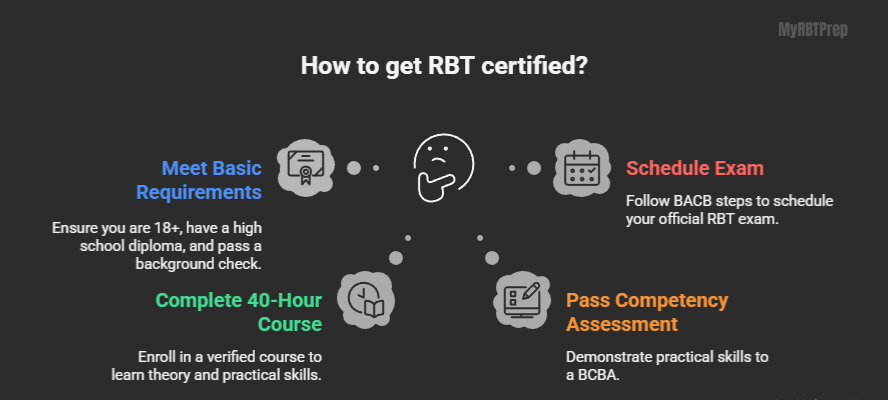
To earn your RBT credential, you must meet several RBT certification requirements. You need to be at least 18 years old, have a high school diploma, and pass the RBT background check requirement.
These basic steps ensure that you meet the ethical standards needed to work with vulnerable individuals. Once you qualify, you must complete a verified free 40-hour RBT course, which teaches both theory and hands-on strategies you will use every day.
After training, you complete an RBT competency assessment with a BCBA who evaluates your practical skills.
This shows whether you can work safely, ethically, and effectively. When these steps are done, you follow the RBT certification steps on the BACB website and schedule your official exam.
Many students also use an RBT study guide free to prepare, especially when learning complex concepts like data collection in ABA or prompt fading techniques.
Where to Find Free RBT Training Near You
Finding Free RBT Training Opportunities Near You often feels difficult, yet many places offer hidden options. Local ABA clinics sometimes sponsor full training, especially in areas where the need for RBTs is high.
These clinics want trained staff, so they cover your entire cost if you agree to work with them afterward. Searching for RBT training providers in your state helps you spot these programs faster than you expect.
University centers, autism nonprofits, and state disability agencies also support people who need autism support programs but cannot pay for training.
Another great place to search for free support is your state’s workforce development office. Many states use government funding to train new professionals, especially in fields like autism therapy certification.
Some states even have autism training programs free for residents who qualify. Job boards, Facebook groups, and even community colleges sometimes offer free ABA training courses, so checking local listings each month increases your chances of finding a program close to you.
| Source | Description | Example / Application | Key Benefit |
| Local ABA Clinics | Clinics sponsor full RBT training for future staff | Complete 40-hour training in exchange for working at the clinic | Reduces training cost and guarantees employment opportunity |
| University Centers | Offer structured training programs | Attend ABA modules as part of a university outreach or continuing education program | Provides credible, instructor-led learning at low or no cost |
| Autism Nonprofits | Support individuals seeking ABA careers | Nonprofit covers training for eligible residents | Makes training accessible for those with financial barriers |
| State Disability Agencies | Fund training for residents | Participate in state programs for disability or autism support careers | Opens opportunities for free, state-backed training |
| Workforce Development Offices | Government funding for in-demand jobs | Search local workforce programs for ABA or RBT training | Encourages career growth without personal expense |
| Online & Community Resources | Job boards, Facebook groups, or community colleges | Free online modules or workshops offered periodically | Increases accessibility and flexibility for learners |
Best Free Online RBT Training Programs (Reviewed)
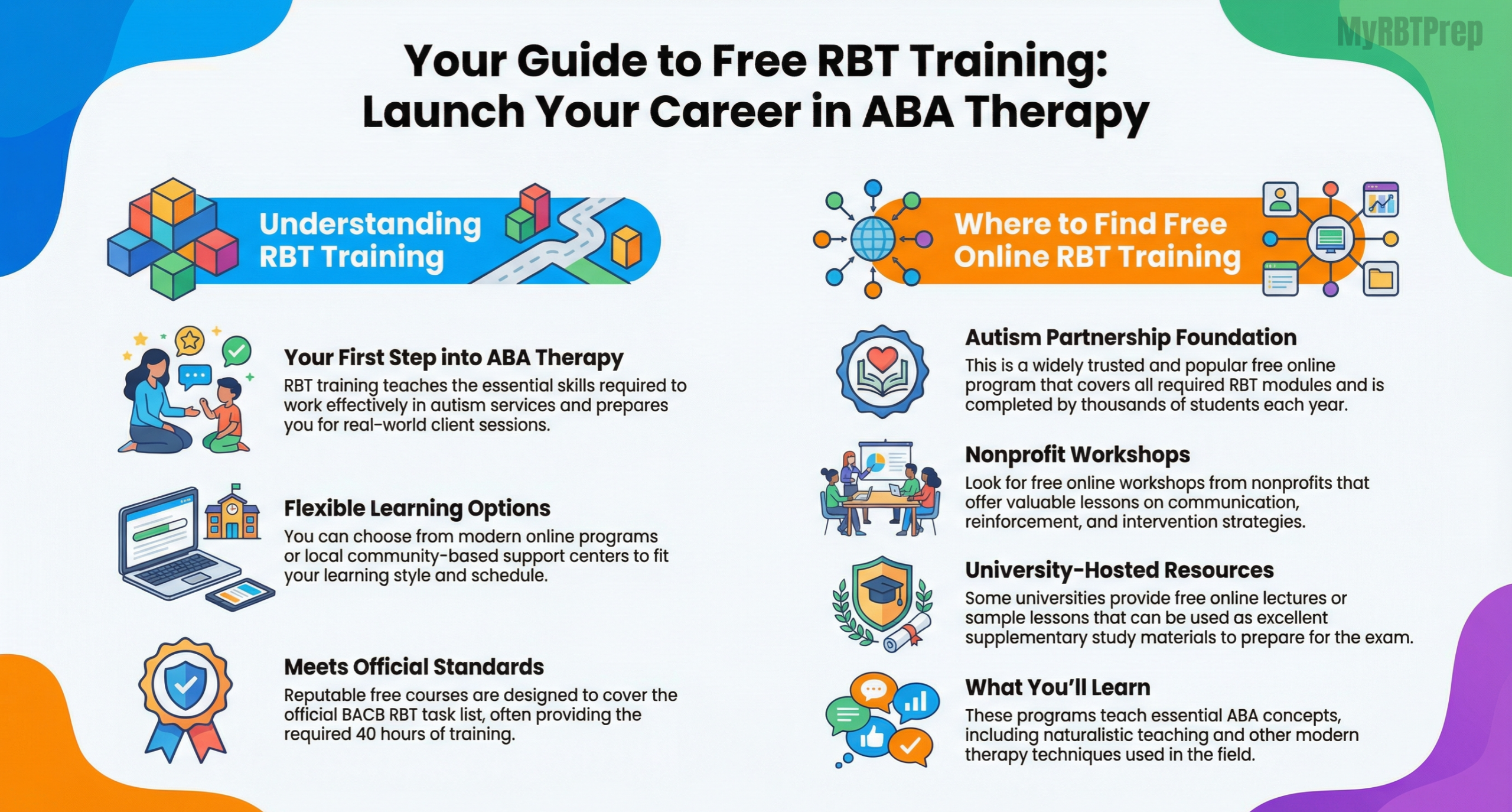
One of the most popular free options is the Autism Partnership Foundation RBT training, widely trusted for its high-quality instruction. Thousands of students complete this program every year, and it covers all required RBT training modules.
The course teaches essential ABA concepts and prepares you for real sessions with clients. Because it is online, many people choose it when searching for RBT certification online free, especially if local options are limited.
Many new RBTs also rely on nonprofit programs that occasionally release free online workshops.
These programs share lessons on communication, reinforcement, and ABA intervention strategies, making them valuable extra study materials. Some include teachings on naturalistic teaching ABA and other techniques used in modern therapy settings.
You can also find university-hosted RBT coursework online, which sometimes includes free lectures or sample lessons. These extra resources complement your official training and help you prepare for the exam.
How to Choose the Right RBT Training Program
Choosing the right program requires you to think about your learning style, schedule, and long-term goals. If you prefer detailed instruction, choose programs that offer extra videos and real-life examples, especially those with strong sections on clinical judgment in ABA or working with autism spectrum disorder.
Some programs offer downloadable workbooks, while others focus on lectures. If you like structured study, pick the option with extra quizzes and review sheets.
Another factor is support. Some RBT programs provide live instructors who answer questions and help you understand tougher lessons like ABA intervention strategies. Others simply provide recorded videos.
Students who want immediate help may prefer live support, while flexible learners choose self-paced lessons. Check the provider’s reputation, make sure the program follows the RBT task list 2nd edition, and verify that the training aligns with BACB standards.
| Factor | Description | Example / Application | Key Benefit |
| Learning Style | Match program to how you learn best | Extra videos, real-life examples, or downloadable workbooks | Ensures better understanding and retention of ABA concepts |
| Schedule Flexibility | Choose based on availability | Self-paced online courses vs. structured live sessions | Allows completion without disrupting work, school, or personal life |
| Support Availability | Instructor guidance and help | Live Q&A sessions, email support, or discussion boards | Helps clarify difficult lessons like behavior intervention strategies |
| Content Quality | Alignment with official standards | Uses RBT Task List 2nd edition and BACB-approved curriculum | Ensures training is recognized and valid for certification |
| Study Tools | Extra quizzes, review sheets, and practice scenarios | Downloadable worksheets or interactive modules | Reinforces knowledge and prepares for RBT competency assessment |
Costs, Scholarships & Financial Aid Options

Although the training may be free, other expenses like exam fees, application costs, and competency assessments often make people worried about RBT training cost.
Fortunately, many organizations now offer full sponsorships that cover all expenses, including materials and the exam. If you plan to work for an ABA company, you can often receive funding upfront.
Many clinics want committed employees and will pay for everything, even if you are new to the field.
If you prefer to complete training independently, you can still apply for scholarships for RBT training, especially through autism support organizations.
Some states provide vouchers for people working in schools or developmental programs. This financial help makes it easier for anyone, regardless of their income, to complete RBT training.
Searching for how to become an RBT for free often leads you to these scholarship lists, especially those managed by state agencies.
Preparing for the RBT Exam Successfully
Preparing for the exam requires steady practice, time management, and careful review of key concepts. Many students use free online tools and an RBT study guide free to reinforce their knowledge.
Reviewing examples of data collection in ABA helps you understand how to track progress during therapy sessions. Reading about reinforcement, prompting, shaping, and generalization prepares you for the test questions that measure your understanding of ABA fundamentals.
Another strong strategy is practicing with examples from case studies. Many training programs include short scenarios that show you how to solve problems using ABA methods.
Reviewing lessons on behavior measurement, ethical conduct, and treatment implementation helps strengthen your confidence. Using these tools regularly makes the test feel less overwhelming and easier to manage.
| Strategy | Action Taken | Example / Application | Key Benefit |
| Practice Regularly | Use RBT study guides and online tools | Review free practice questions on data collection, reinforcement, and prompting | Reinforces knowledge and builds test confidence |
| Review ABA Concepts | Focus on behavior measurement and intervention strategies | Study shaping, generalization, and ethical conduct | Strengthens understanding of core ABA principles |
| Case Study Practice | Solve real-world ABA scenarios | Analyze situations with attention-seeking or escape behaviors | Improves problem-solving skills for exam-style questions |
| Focus on Data Collection | Understand how to track and summarize behavior | Practice entering session data and updating behavior graphs | Ensures competence in behavior data recording and behavior graphing in ABA |
| Time Management | Schedule study sessions leading up to the exam | Break lessons into daily manageable modules | Reduces stress and improves retention for exam day |
Skills You Will Learn in RBT Training

As an RBT, you learn many practical skills that help you support individuals with autism. Training introduces you to reinforcement strategies, session planning, and behavior technician skills.
You also learn how to work with children who struggle with communication, emotional control, or social skills. Many lessons focus on autism behavior intervention, especially methods used in early intervention programs.
You also learn how to follow treatment plans made by your supervising BCBA. Topics like progress monitoring, ethical conduct, and implementing prompt fading techniques help you deliver sessions safely and effectively.
These skills allow you to create meaningful changes in your clients’ daily lives.
Career Path & Future Outlook for RBTs
The ABA field continues to grow rapidly in the United States, and the need for trained RBTs is higher than ever.
Many clinics cannot hire enough RBTs to meet demand, which is why they offer free training programs for newcomers. Once certified, you enter a career with strong advancement opportunities. You can grow into roles with more responsibility over time, especially if you stay committed to learning.
Many RBTs eventually pursue degrees in psychology, education, or behavioral science. Others become BCaBAs or BCBAs after gaining experience.
Understanding RBT vs BCBA roles helps you plan your path and stay focused on long-term goals. The field promises both stability and fulfillment, especially for those who enjoy making a difference.
| Aspect | Description | Example / Application | Key Benefit |
| Job Demand | High need for trained RBTs across the U.S. | Clinics, schools, and home-based ABA programs actively hire certified RBTs | Strong employment opportunities and job security |
| Career Advancement | Pathway to higher roles | RBT → BCaBA → BCBA or pursue degrees in psychology, education, or behavioral science | Provides long-term growth and professional development |
| Training Opportunities | Employers may offer free training to meet staffing needs | Complete 40-hour training provided by clinics for new hires | Reduces cost barriers and accelerates career entry |
| Skill Development | Hands-on experience with clients | Implement behavior plans, track progress, and teach alternative behaviors | Builds expertise and readiness for advanced ABA roles |
| Long-Term Outlook | Growing ABA field with consistent demand | Opportunities in schools, clinics, and early intervention programs nationwide | Stability, fulfillment, and meaningful work for dedicated professionals |
How Free RBT Training Opens Doors to Inclusive Autism Support Careers
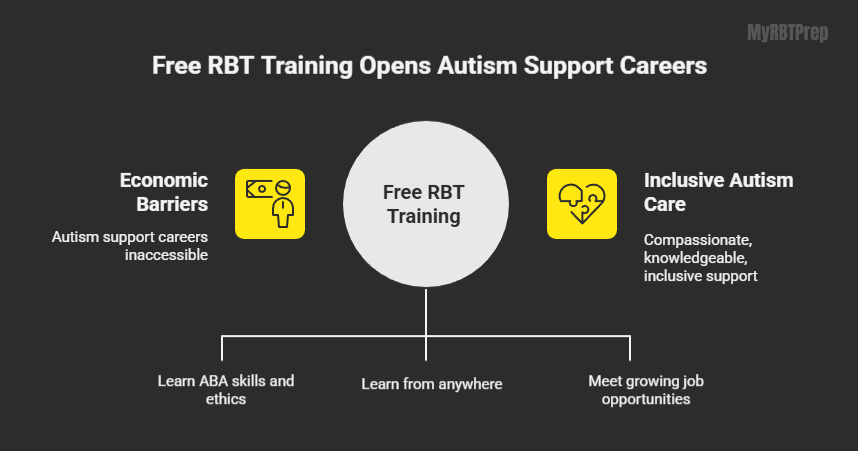
Free RBT training courses are more than just a way to get certified; they are a gateway into rewarding careers in the field of autism support.
Free 40-hour RBT courses take future professionals through applied behavior analysis skills in prompt fading techniques, data collection, and ABA intervention methodologies that make them competent to work with individuals at any point on the autism spectrum.
Further, the courses teach more than just the foundational skills but also RBT ethics and clinical judgment in ABA to make sure learners develop reflective, safe, evidence-based practices while starting therapy implementation.
Free RBT training provides opportunities for people of various backgrounds to engage in a profession that might have previously had economic barriers.
Virtual options, such as the Autism Partnership Foundation RBT training course, allow participants to learn skills from anywhere for the RBT using the RBT task list 2nd edition.
Free programs become a more viable option for new graduates as they enter the workforce around schools, clinics, and private therapy companies that employ RBTs and thus help satisfy the growing job opportunities for RBTs, and as the demand increases for remote and in-person developmental disabilities support training.
In other words, free RBT training will equip participants with professional and career skills while developing routes to compassionate, knowledgeable, and inclusive autism care in the community.
Additional Resources for Aspiring RBTs
If you want to strengthen your training, you can use additional learning materials from universities, autism organizations, and ABA research centers.
Many websites share free modules that explain autism therapy certification concepts in greater depth. Some also release sample assessments and worksheets you can use to practice.
These tools deepen your understanding and help you prepare for both the exam and real-world sessions.
The table below shows useful resources for RBT students.
RBT Learning Resources
|
Free RBT Training Opportunities Near You
Searching for Free RBT Training Opportunities Near You opens the door to a rewarding future where you support growth, learning, and independence.
Many people begin this journey with uncertainty, yet free programs, scholarships, and strong training materials make the process easier.
With the rising need for skilled professionals, now is the perfect time to take your first step into this meaningful career.
Faqs
Can I get my RBT certification for free?
Yes, you can complete the 40-hour training for free through providers like the Autism Partnership Foundation, but the BACB exam and application fees still apply.
How much does it cost to get RBT training?
RBT training usually costs between $50 and $300, though several reputable programs offer it completely free.
Can I take the RBT exam without taking the course?
No, you must complete an approved 40-hour RBT course before you qualify for the RBT exam.
How to become an RBT with no experience?
You only need a high school diploma, the 40-hour training, a competency assessment, and a background check to start with no prior experience.
How much is an RBT salary?
Most RBTs in the U.S. earn between $18 and $28 per hour depending on location, experience, and employer.